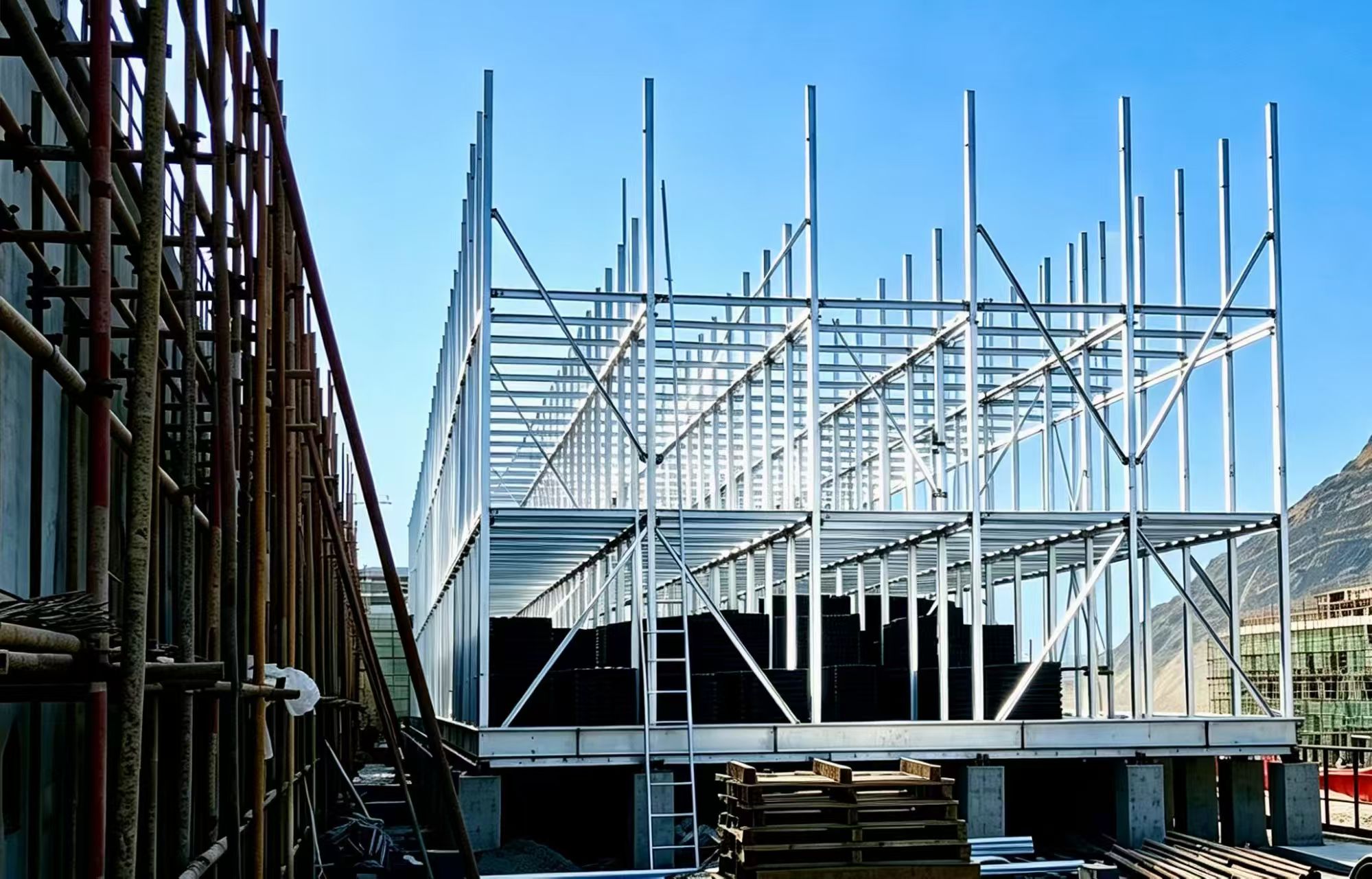
If your BAC cooling tower is no longer delivering the cooling performance you expect, worn, clogged, or damaged fill may be part of the problem. Over time, scale buildup, biological growth, suspended solids, and material deterioration can reduce the effectiveness of cooling tower fill. Replacing it can help restore heat transfer performance and improve the reliability of your cooling system.
However, finding the right replacement is not always as simple as ordering a standard product. Different cooling tower models may require different fill dimensions, sheet configurations, materials, and installation arrangements. That is where custom BAC cooling tower fill becomes worth considering.
Whether you are maintaining an existing BAC cooling tower, replacing aging fill packs, or comparing compatible alternatives, understanding the available materials and replacement options can help you make a better purchasing decision.
In this guide, we will explain how custom cooling tower fill works, how to choose the right size and material, what information suppliers need for a quotation, and how to avoid common replacement mistakes. We will also introduce Power Tower Cooling Technology (Shaoxing) Co., Ltd. as a potential supplier for cooling tower fill solutions.
What Is BAC Cooling Tower Fill?
BAC cooling tower fill refers to the heat-transfer media used inside cooling towers manufactured by Baltimore Aircoil Company (BAC). Its primary purpose is to increase the contact area between circulating water and air, allowing heat to transfer more efficiently.
When warm water enters the cooling tower, the fill spreads it across a larger surface area. Air passes through the fill, and a portion of the water evaporates. This evaporation removes heat from the remaining water, helping lower its temperature before it returns to the cooling system.
The design of the fill directly affects water distribution, airflow resistance, heat transfer, and maintenance requirements.
When buyers search for custom BAC cooling tower fill, they may be looking for original replacement components or compatible third-party fill designed for an existing BAC tower. These are different purchasing options, so it is important to clarify which one you need before requesting a quotation.
How Does Cooling Tower Fill Work?
Cooling tower fill creates more opportunities for water and air to interact. Instead of allowing water to fall freely through an empty tower, the fill spreads the water across a series of surfaces or breaks it into droplets, depending on the design.
Two common types are film fill and splash fill.
Film fill distributes water over closely spaced surfaces, creating thin water films that promote heat transfer. Splash fill uses repeated surfaces to break falling water into smaller droplets.
The appropriate design depends on the cooling tower configuration, water quality, operating conditions, and performance requirements. A replacement that looks similar to the original may not perform identically if its geometry, spacing, or material differs.
Why Does Fill Condition Matter?
Cooling tower fill operates in a demanding environment. It is continuously exposed to circulating water, temperature changes, treatment chemicals, and airborne contaminants.
Over time, several problems may develop:
Scale deposits restrict water passages.
Biological growth reduces the effective contact area.
Dirt and suspended solids contribute to clogging.
Cracked or deformed sheets affect water distribution.
Aging materials may become brittle or lose structural stability.
These problems can contribute to reduced cooling performance, uneven water distribution, and increased maintenance requirements.
However, poor cooling performance does not always mean the fill needs replacement. Blocked nozzles, fan problems, insufficient water flow, and other system issues can produce similar symptoms. Inspect the cooling tower before deciding which components need attention.
When Do You Need Custom BAC Cooling Tower Fill?
Custom cooling tower fill is useful when standard replacement products do not match the dimensions or configuration of the existing installation.
For example, an older cooling tower may contain fill packs with dimensions that are difficult to source. Previous maintenance work may also have changed the internal arrangement, making standard replacement products unsuitable.
Customization may involve:
Fill pack length, width, and height
Individual sheet dimensions and thickness
Fill geometry and channel spacing
PVC or PP material selection
Pack configuration and installation arrangement
Other agreed manufacturing specifications
Customization does not mean every design can be changed without limitations. The proposed product must still be suitable for the tower's airflow, water distribution, support structure, and thermal requirements.
Replacing Damaged or Aging Fill
If the existing fill is heavily fouled, cracked, deformed, or deteriorating, replacement may be more practical than continued cleaning.
Start by inspecting the fill packs and recording any visible damage. Look for collapsed sheets, blocked passages, broken edges, and areas where water no longer spreads evenly.
Photographs taken before removal can help a supplier understand the existing configuration. If possible, keep a sample of the old fill or prepare a drawing showing its dimensions.
This information can make the replacement process more accurate and reduce the risk of ordering the wrong product.
Handling Nonstandard Dimensions
Cooling towers with similar capacities do not necessarily use identical fill packs. Different models, tower generations, and internal arrangements can require different dimensions.
A fill pack that is too large may not fit the available space. A pack that is too small can leave gaps that interfere with water distribution or airflow.
Custom fill allows buyers to specify dimensions based on the actual installation. Before production begins, confirm the measurements against drawings, samples, or the approved technical specification.
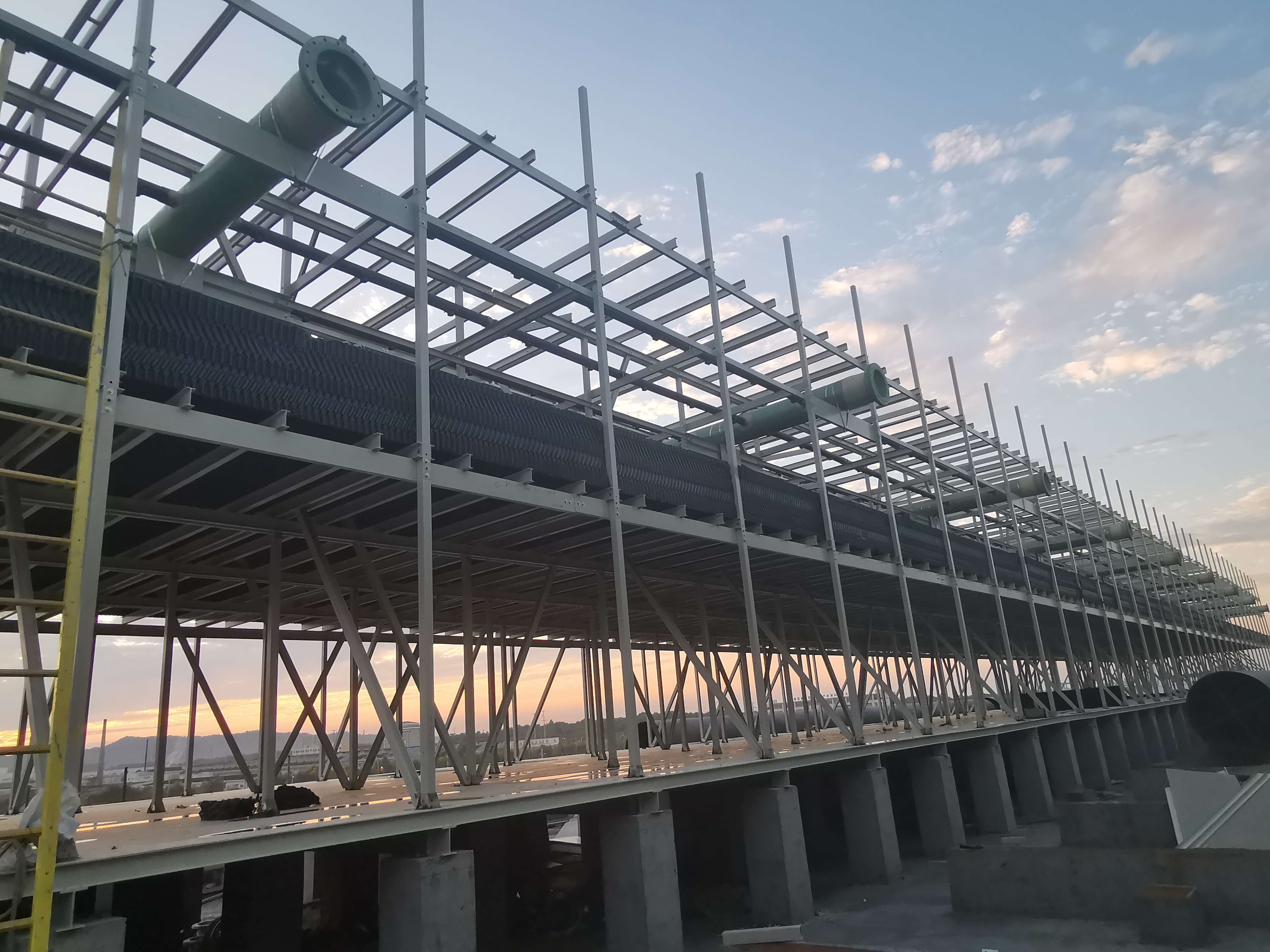
Common Materials for Custom Cooling Tower Fill
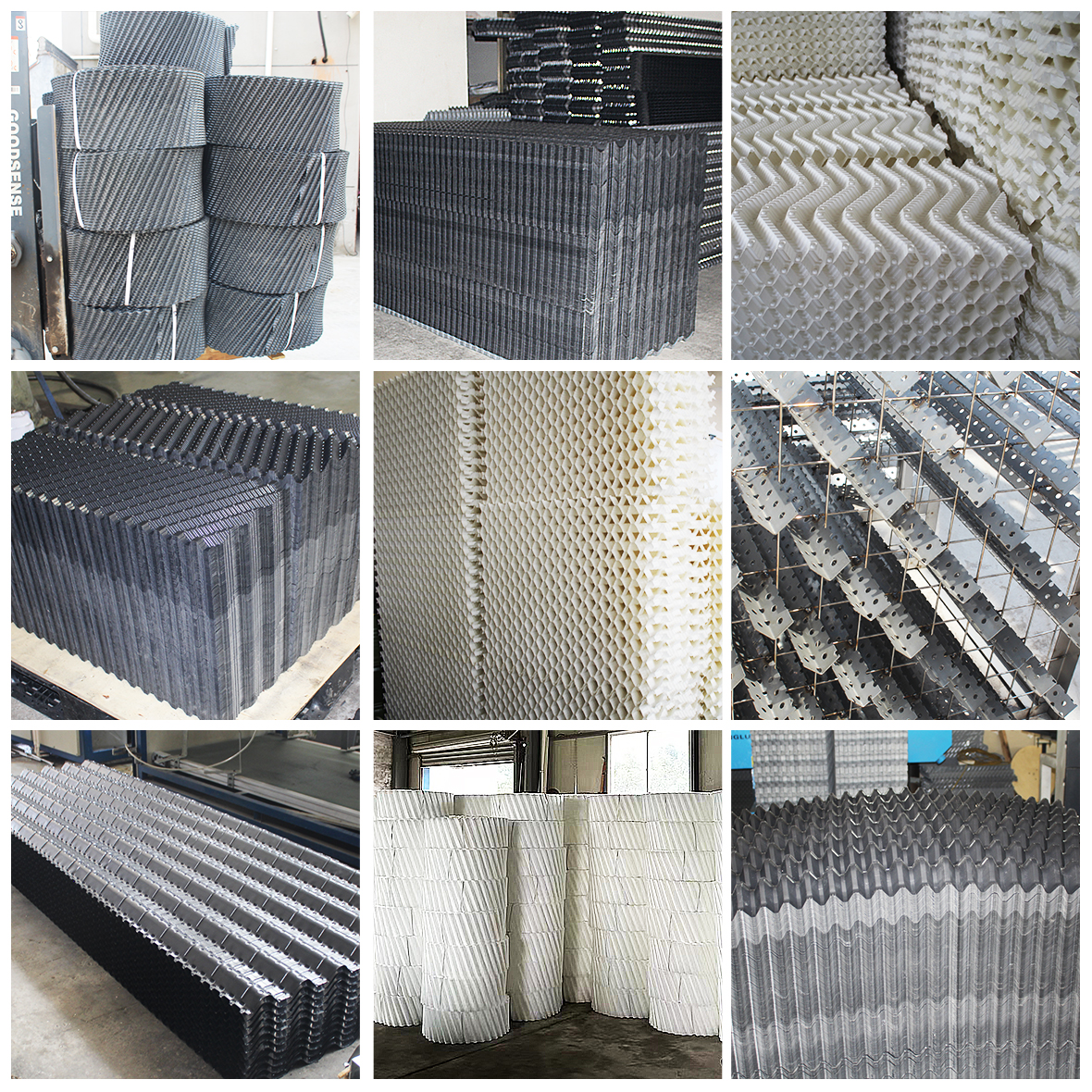
PVC and polypropylene (PP) are two common plastic materials used in cooling tower fill. Both can be suitable for particular applications, but neither is the best choice for every operating environment.
The right material depends on water temperature, water chemistry, treatment chemicals, mechanical requirements, and expected service conditions.
PVC Cooling Tower Fill
PVC cooling tower fill is widely used in conventional cooling applications because it offers a practical balance of cost, formability, and heat-transfer surface design.
It is available in different configurations for various cooling tower arrangements, including crossflow and counterflow systems.
For a custom BAC fill replacement, buyers should verify the PVC grade, sheet thickness, temperature limits, and chemical compatibility. PVC should not automatically be selected for every high-temperature or chemically aggressive application.
The product specification matters just as much as the material name.
PP Cooling Tower Fill
Polypropylene cooling tower fill may be worth considering when operating conditions require different temperature or chemical-resistance characteristics.
Depending on the specific grade and design, PP can provide useful performance in demanding industrial environments. However, buyers should verify the manufacturer's stated operating limits, dimensional stability, mechanical properties, and compatibility with water-treatment chemicals.
PP may also differ from PVC in cost and manufacturing characteristics.
Rather than choosing a material based on general claims, compare the documented properties of the available products against your actual operating conditions.
How to Choose Between PVC and PP
Before selecting a material, review the normal and maximum water temperatures, water chemistry, suspended solids, treatment program, and cleaning procedures.
Also consider whether the cooling tower handles process water that may contain contaminants or chemicals beyond those found in conventional HVAC systems.
If your facility operates under demanding conditions, provide the supplier with as much technical information as possible. A suitable material should support reliable operation throughout the expected service period, not simply offer a low initial purchase price.
Understanding Cooling Tower Fill Sizes and Dimensions
Correct sizing is essential when ordering custom BAC cooling tower fill. Even a high-quality product may create problems if it does not fit the existing installation properly.
Before requesting a quotation, collect the following measurements whenever possible:
Overall fill pack length
Overall fill pack width
Overall fill pack height
Individual sheet dimensions
Sheet thickness
Channel spacing or flute geometry
Number of packs required
Support and installation arrangement
Depending on the design, the supplier may also need information about the fill orientation, water-flow direction, and available installation space.
A tower model number can help identify the equipment, but it should not replace physical measurements or technical documentation when these are available.
Fill Sheet Thickness and Spacing
Sheet thickness and spacing influence the physical characteristics of the fill and can affect airflow resistance, water distribution, and fouling behavior.
Closely spaced surfaces may provide a large contact area, but they may be less suitable for water containing high levels of suspended solids. Wider passages can be easier to maintain in some applications, although thermal performance depends on the complete fill design.
Do not change sheet thickness or channel spacing simply to reduce cost. Any proposed change should be evaluated against the tower's performance requirements and existing configuration.
Fill Pack Length, Width, and Height
The pack dimensions determine how the replacement fits inside the tower.
A pack that is too tall may interfere with adjacent components. A pack that is too short can leave gaps or create uneven coverage. Incorrect length or width can also complicate installation and support.
If your cooling tower contains multiple fill sections, measure and label each section separately. This is especially important when the tower has been repaired or modified previously.
A simple dimension sheet, combined with clear photographs, can help the supplier prepare a more accurate quotation.
Crossflow vs. Counterflow Fill
Crossflow and counterflow cooling towers have different water and airflow arrangements.
In a crossflow tower, air typically moves horizontally across descending water. In a counterflow tower, air generally moves upward against descending water.
These differences affect the fill configuration and installation requirements. A product designed for one arrangement should not automatically be assumed suitable for the other.
When requesting custom BAC cooling tower fill, identify the tower type and confirm the proposed configuration with the supplier before ordering.
Custom BAC Fill Replacement Options
Buyers generally have three main options: a like-for-like replacement, a customized replacement pack, or partial versus complete fill replacement.
The right choice depends on the condition of the existing fill, available specifications, maintenance requirements, and budget.
Option 1: Like-for-Like Replacement
A like-for-like replacement aims to match the original fill dimensions and configuration as closely as possible.
This approach can reduce the need to modify internal supports or surrounding components. It is particularly useful when the existing fill design has performed well and the main problem is age, fouling, or physical damage.
However, matching dimensions does not guarantee identical thermal performance. Material grade, sheet thickness, surface geometry, and manufacturing tolerances may differ.
Before ordering, compare the technical specifications and confirm the proposed replacement's suitability for the application.
Option 2: Customized Fill Packs
Customized fill packs can be manufactured to agreed dimensions and material requirements when standard products are unsuitable.
Depending on the supplier's capabilities, customization may cover pack dimensions, sheet configuration, material selection, and packaging.
To improve accuracy, provide drawings, sample dimensions, or physical samples whenever possible. Ask the supplier to confirm which specifications can be customized and which must remain fixed for manufacturing or performance reasons.
Before production, approve the final technical drawing or specification sheet. This should include the main dimensions, material, configuration, and applicable tolerances.
Option 3: Partial or Complete Fill Replacement
Partial replacement may be appropriate when damage is limited to a specific area and the remaining fill is in acceptable condition.
Complete replacement may be more suitable when deterioration is widespread, fill sections differ significantly in age, or consistent performance is difficult to maintain.
Consider more than the material cost. Labor, installation access, downtime, and the risk of leaving fouled or damaged sections in place can all influence the decision.
Inspect the entire fill area before choosing between partial and complete replacement. If you replace only part of the fill, confirm that the new sections are compatible with the remaining media and the existing water distribution system.

How to Choose the Right Custom BAC Cooling Tower Fill
Choosing the right fill starts with understanding the cooling tower's actual requirements.
First, confirm the tower type, existing fill configuration, dimensions, and operating conditions. Next, determine whether the replacement needs to match the original design or whether a compatible alternative is acceptable.
Then compare suppliers based on their ability to meet the technical requirements.
Important factors include:
Material grade and operating temperature limits
Fill geometry and channel spacing
Pack dimensions and manufacturing tolerances
Compatibility with water chemistry
Expected fouling and maintenance conditions
Installation requirements
Delivery time and packaging
Technical documentation and after-sales support
Ask suppliers to explain how their proposed products meet your requirements. Compare quotations on a like-for-like basis rather than choosing the lowest price without checking the specifications.
A cheaper fill pack may not offer better value if it requires extensive field modification or creates avoidable maintenance problems.
What Information Is Needed for a Custom Fill Quote?
Providing complete information helps suppliers assess the project and prepare a more accurate quotation.
Before contacting a supplier, try to prepare the following details.
1. Cooling tower information: Provide the brand, model, tower type, and available equipment documentation.
2. Fill dimensions: Include the overall pack length, width, height, and individual sheet details where available.
3. Material preference: State whether you prefer PVC, PP, or need a recommendation based on your operating conditions.
4. Operating conditions: Include water temperature, water quality, chemical treatment, and any known fouling problems.
5. Required quantity: Specify the number of packs or the total fill area that needs replacement.
6. Photographs or drawings: Show the existing fill, installation arrangement, and any damaged areas.
7. Delivery requirements: Provide the destination and expected delivery schedule.
If you do not have complete drawings, start with measurements and photographs. The supplier can review the information and identify what else is needed before confirming a suitable solution.
Common Mistakes to Avoid When Ordering Custom Fill
One common mistake is choosing replacement fill based only on cooling tower capacity. Capacity alone does not establish the correct dimensions, geometry, or compatibility.
Another mistake is selecting a material without checking operating temperature and water chemistry. A material that works well in one cooling system may not be appropriate for another.
Buyers should also avoid assuming that all fill products are interchangeable between crossflow and counterflow towers. Differences in airflow direction, water distribution, support structures, and fill geometry can affect suitability.
Finally, do not assume that a custom product will automatically match the original thermal performance. Request technical confirmation and review the specifications before approving production.
Taking time to verify these details can help reduce ordering errors, installation delays, and unnecessary maintenance costs.
Power Tower Cooling Technology (Shaoxing) Co., Ltd.: Custom Cooling Tower Fill Solutions

Power Tower Cooling Technology (Shaoxing) Co., Ltd. is a potential supplier for buyers exploring cooling tower fill and related replacement components.
Through CoolingTowerPart.com, buyers can explore cooling tower component options and contact the company about their project requirements.
For a custom BAC cooling tower fill inquiry, provide the existing tower model, fill dimensions, material preference, operating conditions, and required quantity. This information helps the supplier assess the application and confirm which products or customization options may be available.
If you are considering a compatible third-party replacement, clearly identify your requirements. Confirm the product's origin, technical specifications, and compatibility before placing an order. A compatible replacement should not be described as an original BAC product unless its origin and authorization support that claim.
Why Discuss Your Requirements Before Ordering?
Customization works best when the supplier understands the application before manufacturing begins.
Sharing accurate dimensions and operating details helps establish whether a proposed fill configuration is feasible. It also gives both parties an opportunity to identify installation constraints, material requirements, and specification gaps early.
For an older cooling tower, a physical sample or detailed photograph can be particularly useful. If you have original equipment drawings, include them with your inquiry.
The more clearly you define the requirements, the easier it is to compare quotations and avoid misunderstandings during production.
How Much Does Custom BAC Cooling Tower Fill Cost?
The price of custom cooling tower fill depends on several factors, including material, sheet thickness, pack dimensions, fill geometry, order quantity, manufacturing requirements, packaging, and shipping.
Special configurations may require additional production setup or engineering review. Freight can also represent a significant portion of the total cost because cooling tower fill packs can be bulky.
To compare suppliers fairly, request quotations based on the same technical specifications. Check whether the quoted price includes packaging, export preparation, and delivery, and confirm whether any customization charges apply.
It is also worth considering the total installed cost. A slightly more expensive product may offer better value if it fits properly, requires less modification, and meets the required operating conditions.
Installation and Maintenance Tips for Replacement Fill
Before installing replacement fill, inspect the cooling tower's support structure and remove debris that could obstruct airflow or water distribution.
Confirm the pack orientation and follow the approved installation instructions. Avoid forcing fill packs into place or cutting away large sections without checking the design, as excessive modification may affect fit and performance.
After installation, inspect the water distribution system and monitor relevant operating indicators, such as inlet and outlet water temperatures and overall cooling performance.
For long-term reliability, maintain an appropriate water-treatment program and inspect the fill regularly. Follow the facility's cleaning procedures and the material manufacturer's recommendations.
Routine inspection can help identify fouling, damage, or water distribution problems before they develop into more serious operating issues.
Frequently Asked Questions
Can I Use Custom Fill in a BAC Cooling Tower?
Potentially, yes. A compatible replacement may be an option if its dimensions, configuration, material, and operating characteristics meet the tower's requirements. Confirm compatibility before ordering.
Is Custom Fill Always Cheaper Than Original Replacement Fill?
No. The final cost depends on specifications, quantity, material, manufacturing requirements, freight, and supplier. Compare quotations using equivalent technical requirements rather than price alone.
Is PVC or PP Better for BAC Cooling Tower Fill Replacement?
Neither material is universally better. PVC may suit many conventional applications, while PP may be worth considering for certain temperature or chemical-resistance requirements. The choice should be based on actual operating conditions and documented product specifications.
What Information Should I Provide for a Custom Fill Quote?
Provide the tower brand and model, fill dimensions, photographs or drawings, material preference, operating conditions, quantity, and delivery destination. More complete information generally makes it easier to evaluate the application.
Does Compatible Fill Mean It Is Manufactured by BAC?
No. A compatible third-party replacement is not automatically an original BAC product. Confirm the manufacturer, product origin, and compatibility before purchasing.
Can I Replace Only Part of the Cooling Tower Fill?
Yes, partial replacement may be possible when the damage is limited and the remaining fill is in acceptable condition. Inspect the entire fill area first and confirm that the new and existing sections can work together properly.
Conclusion
Choosing custom BAC cooling tower fill involves more than matching a few measurements. Material selection, sheet geometry, pack dimensions, airflow arrangement, water quality, and installation conditions all influence whether a replacement is suitable.
Start by inspecting the existing fill, collecting accurate measurements, and defining your operating requirements. Then compare original replacement components with compatible alternatives using clear technical specifications and written quotations.
Power Tower Cooling Technology (Shaoxing) Co., Ltd., through CoolingTowerPart.com, is a potential contact for buyers exploring customized cooling tower fill options.
By confirming product specifications, customization feasibility, and compatibility before ordering, you can make a more informed replacement decision and help keep your cooling tower operating reliably.


