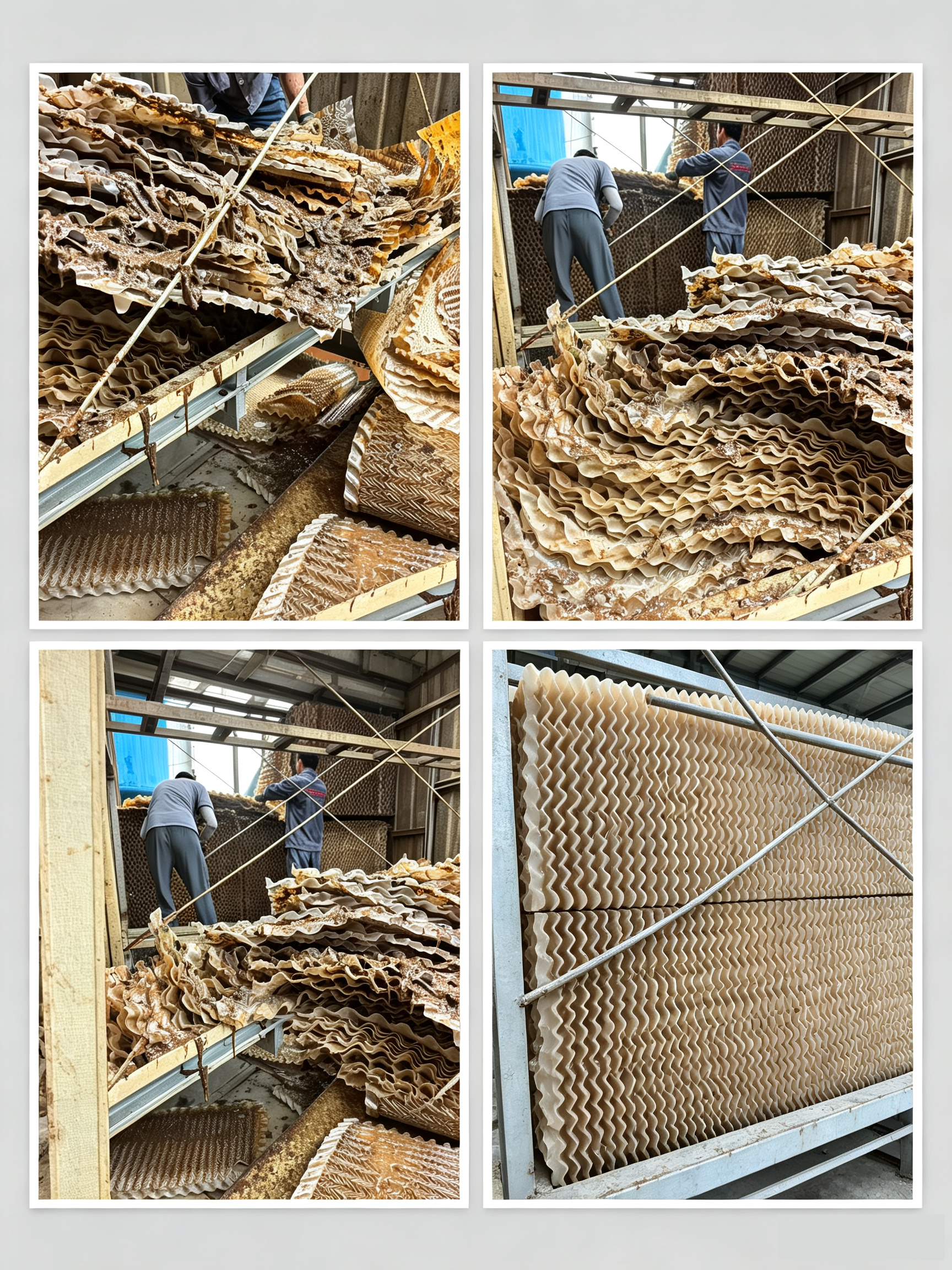
Cooling Tower Fill Material Cleaning Service in Singapore: Complete Guide
Cooling towers are essential for heat rejection in many commercial buildings and industrial facilities in Singapore. They are widely used in data centers, semiconductor plants, chemical facilities, manufacturing factories, hotels, hospitals, commercial buildings, and district cooling systems.
At the center of an evaporative cooling tower is the cooling tower fill material. Also called cooling tower packing or cooling tower filler, this component provides a large contact area where hot circulating water interacts with air. Efficient fill performance is therefore critical to the cooling tower's overall heat-transfer capacity.
However, cooling tower fill operates continuously in a wet environment. Over time, scale, algae, biofilm, sludge, dirt, suspended solids, and other contaminants can accumulate on the fill surface and inside its passages.
A professional cooling tower fill material cleaning service in Singapore can help restore water and airflow passages, improve heat transfer, reduce operating problems, and extend the service life of cooling tower packing.
This guide explains cooling tower fill cleaning methods, fill specifications, Singapore applications, supplier considerations, maintenance requirements, and common buyer questions.
Why Cooling Tower Fill Material Needs Cleaning
Cooling tower fill is designed to maximize the contact between water and air. When its surfaces become contaminated, the effective heat-transfer area decreases.
Common contaminants include:
Calcium carbonate scale
Mineral deposits
Algae
Biofilm and slime
Mud and sediment
Dust
Organic debris
Corrosion products
Suspended solids
These contaminants can create several operating problems.
Reduced Heat Transfer
Scale and biological deposits can form an insulating layer over the fill. This reduces water-to-air contact and may cause higher cooling-water temperatures.
Blocked Fill Passages
Film fill contains narrow channels designed to distribute water across a large surface area. Deposits can partially or completely block these passages.
Poor Water Distribution
Fouled fill can contribute to uneven water flow. Some sections may receive excessive water while other areas remain inadequately wetted.
Increased Airflow Resistance
Debris and biological growth can restrict airflow through the fill, potentially increasing fan energy requirements.
Higher Operating Costs
When a cooling tower cannot reject heat efficiently, operators may need increased fan or pump operation to maintain process or condenser-water temperatures.
Cooling Tower Fill Cleaning Service in Singapore
A professional cleaning project should begin with inspection rather than immediately applying chemicals or high-pressure water.
1. Cooling Tower Inspection
Technicians should inspect:
Cooling tower fill
Spray nozzles
Water distribution pipes
Drift eliminators
Air inlet louvers
Cold-water basin
Fan assembly
Fan motor
Structural supports
The fill should be examined for deposits, blockage, deformation, cracking, brittleness, and missing sections.
2. Identify the Contamination
Different deposits require different cleaning approaches.
Loose dirt and sediment may be removed mechanically or with controlled water washing. Mineral scale may require a compatible chemical treatment, while algae and biofilm may require biological control.
3. Controlled Water Cleaning
Low- or moderate-pressure water cleaning can remove loose deposits from PVC and PP fill.
The pressure should be carefully controlled. Excessive pressure can damage thin film-fill sheets, especially older PVC packing.
4. Chemical Cleaning
Where mineral scale is significant, a suitable cleaning chemical may be required.
Before chemical cleaning, technicians should verify:
The cleaning chemical should never be selected solely on the basis of cleaning strength.
5. Biological Cleaning
Algae, slime, and biofilm can be particularly persistent in warm, wet cooling towers. Appropriate biocidal treatment may be incorporated into the maintenance program.
Cleaning should be combined with an effective water-treatment strategy to minimize recurrence.
6. Final Rinsing and Inspection
After cleaning, the fill should be thoroughly rinsed and inspected.
Technicians should check whether:
Fill passages are open
Water distribution is uniform
Scale has been removed
Biological growth has been controlled
Fill sheets remain structurally sound
Damaged modules need replacement
Cooling Tower Fill Material Specifications
Cooling tower fill is available in several designs and materials.
| Fill Type | Common Material | Typical Characteristics | Cleaning Considerations |
| Film Fill | PVC | High surface area and compact design | Controlled cleaning required |
| Film Fill | PP | Good chemical and temperature resistance | Check chemical compatibility |
| Cross-Fluted Fill | PVC/PP | Promotes water-air mixing | Avoid damaging flutes |
| Honeycomb Fill | PVC/PP | Large contact surface | Narrow passages require careful cleaning |
| Splash Fill | PP/PVC | More open structure | Suitable for applications with higher solids |
| Grid Splash Fill | PP/PVC | Robust construction | Can be cleaned mechanically in some applications |
PVC Cooling Tower Fill
PVC is widely used for evaporative cooling tower film fill because it offers a combination of low cost, formability, and suitable heat-transfer characteristics.
However, prolonged exposure to elevated temperatures, aggressive chemicals, ultraviolet radiation, or mechanical damage can eventually affect PVC fill.
PP Cooling Tower Fill
Polypropylene fill can be selected for applications where higher chemical or temperature resistance is required.
The actual operating limits depend on the specific product design and manufacturer.
Singapore Applications for Cooling Tower Fill Cleaning
Singapore's dense commercial environment and strong industrial sector make cooling tower maintenance an important part of facility management.
Data Centers
Singapore is a major data-center market. Cooling systems must operate reliably and continuously, and fouled cooling tower fill can reduce heat rejection capacity.
Preventive inspection and cleaning can therefore be important components of cooling-system maintenance.
Semiconductor and Electronics Manufacturing
Manufacturing processes often require tightly controlled cooling conditions. Cooling towers may support chilled-water systems or process cooling equipment.
Chemical and Petrochemical Facilities
Industrial cooling systems can experience mineral deposits, biological contamination, and process-related fouling.
Regular fill inspection and water-treatment management can help maintain cooling efficiency.
Commercial Buildings
Hotels, hospitals, shopping centers, office buildings, and other large facilities commonly use cooling towers as part of their central HVAC systems.
Manufacturing Plants
Singapore's manufacturing sector includes pharmaceutical, precision engineering, food processing, and other industries that may use cooling towers for process or HVAC cooling.
Cooling Tower Fill Cleaning vs. Replacement
Cleaning is not always the best solution.
Cleaning Is Recommended When:
Fill remains structurally strong
Deposits are removable
Fill sheets are not severely damaged
Water passages can be restored
Fill has not become excessively brittle
The packing remains compatible with the tower design
Replacement May Be Required When:
Fill is cracked or broken
PVC sheets have become brittle
Modules are permanently deformed
Passages remain blocked after cleaning
Fill has collapsed
Chemical degradation is severe
The fill has reached the end of its useful service life
An experienced contractor should provide a condition assessment before recommending complete fill replacement.
Cooling Tower Fill Supplier and Service Provider Profiles
When sourcing a cooling tower fill cleaning service in Singapore, buyers may encounter several types of suppliers.
1. Cooling Tower Maintenance Contractors
These companies specialize in on-site tower maintenance and may provide:
Fill cleaning
Basin cleaning
Nozzle cleaning
Drift eliminator cleaning
Fan maintenance
Water distribution inspection
Cooling tower disinfection
Preventive maintenance
They are appropriate when the customer needs a complete maintenance project.
2. Cooling Tower Fill Suppliers
Specialized fill suppliers focus on replacement packing.
They should be able to provide compatible:
PVC film fill
PP film fill
Splash fill
Honeycomb fill
Fill support components
When purchasing replacement fill, provide tower dimensions and existing fill specifications whenever possible.
3. Cooling Tower Parts Suppliers
Industrial cooling tower parts suppliers can provide fill together with associated components such as:
This can be useful when cleaning reveals multiple components requiring replacement.
4. OEM and Compatible Replacement Suppliers
For older cooling towers, OEM-compatible aftermarket suppliers can sometimes provide replacement fill and other components based on the original dimensions and performance requirements.
Buyers should verify technical compatibility rather than purchasing solely based on appearance.
How to Select a Cooling Tower Fill Cleaning Company in Singapore
Choosing a service provider based only on the lowest quotation can create unnecessary risk.
Technical Experience
Ask whether the company has experience with your cooling tower type and fill material.
Cleaning Technology
Confirm whether the contractor uses appropriate pressure, cleaning chemicals, mechanical methods, or combinations of these techniques.
Safety Management
Cooling tower maintenance can involve chemicals, wet surfaces, electrical equipment, rotating machinery, elevated areas, and potentially confined spaces.
The contractor should have appropriate safety procedures and site controls.
Water Treatment Knowledge
Fill cleaning should be part of a broader water-treatment and cooling-tower maintenance program.
Reporting
A useful service report should document the fill condition before and after cleaning and identify any components requiring further attention.
Replacement Support
If cleaning cannot restore the fill, the supplier should be able to recommend suitable replacement packing.
Cooling Tower Fill Maintenance Best Practices
A proactive maintenance program should include:
Regular visual inspections
Water-quality monitoring
Scale control
Biological control
Basin cleaning
Nozzle inspection
Fill inspection
Drift eliminator inspection
Airflow assessment
Periodic deep cleaning
The exact maintenance frequency should depend on the cooling tower's operating conditions rather than following a universal schedule.
Signs That Cooling Tower Fill Needs Cleaning
Operators should investigate the fill when they notice:
Higher cooling-water temperatures
Visible algae
Slime formation
Heavy scale
Uneven water distribution
Blocked passages
Reduced cooling capacity
Increased fan operating requirements
Excessive sediment in the basin
Abnormal airflow resistance
Early inspection can help prevent minor fouling from becoming a major performance problem.
Cost Factors for Cooling Tower Fill Cleaning in Singapore
The price of a cooling tower fill cleaning project depends on several factors.
Major cost drivers include:
For an accurate quotation, buyers should provide photographs, tower dimensions, fill type, contamination details, and the desired scope of work.
Buyer Considerations Before Ordering
Before selecting a service provider, ask the following questions:
Does the contractor understand the existing fill?
The cleaning method must be suitable for PVC, PP, or another packing material.
Can the contractor distinguish cleaning from replacement?
A competent supplier should not recommend replacement automatically when cleaning is technically viable.
Are chemicals compatible?
Ask for information about the proposed chemical treatment and its compatibility with the fill.
Is wastewater handled properly?
Industrial cleaning can generate contaminated wastewater. Disposal and treatment requirements should be addressed before work begins.
Is the service documented?
Request before-and-after photographs and a written inspection report.
Can the supplier provide replacement fill?
This can simplify procurement if cleaning reveals permanent fill damage.
Frequently Asked Questions
What is cooling tower fill material cleaning?
Cooling tower fill cleaning removes scale, dirt, algae, sludge, biofilm, and other deposits from cooling tower packing to restore water and air passages and improve heat-transfer performance.
How often should cooling tower fill be cleaned in Singapore?
There is no universal cleaning interval. Frequency depends on water chemistry, operating hours, biological activity, airborne contamination, and the effectiveness of the water-treatment program.
Can PVC film fill be pressure washed?
PVC film fill can generally be cleaned with controlled water pressure, but excessive pressure can damage thin sheets or separate fill modules. The appropriate pressure depends on the fill design and condition.
Should I clean or replace my cooling tower fill?
If the fill is structurally sound and deposits are removable, cleaning may be sufficient. Severely damaged, brittle, collapsed, or permanently blocked fill should generally be considered for replacement.
Can chemical cleaning damage cooling tower fill?
Yes. Incorrect chemicals, excessive concentrations, high temperatures, or excessive exposure times can damage some fill materials. Chemical compatibility should be verified before treatment.
What information is required for a cleaning quotation?
Provide the tower manufacturer and model, tower dimensions, fill type, photographs, contamination type, operating conditions, and whether you require cleaning only or cleaning plus inspection and replacement.
Can a Singapore supplier support cooling tower projects in Indonesia?
Some regional suppliers and manufacturers can support projects in Indonesia, but availability depends on their service area, logistics capabilities, and local project arrangements.
Cooling Tower Fill Cleaning Buyer Checklist
Before signing a service agreement, confirm:
-
Cooling tower type identified
-
Existing fill material identified
-
-
Contamination type identified
-
Cleaning method specified
-
Chemical compatibility confirmed
-
Safety procedures reviewed
-
Wastewater handling discussed
-
Before-and-after inspection included
-
Replacement fill availability confirmed
-
Service scope clearly defined
-
-
Conclusion
A reliable cooling tower fill material cleaning service in Singapore can help industrial and commercial facilities maintain heat-transfer performance and reduce the risk of cooling-system deterioration.
The most effective approach combines inspection, controlled cleaning, appropriate chemical or biological treatment, thorough rinsing, post-cleaning inspection, and proper water-treatment management.
For facilities in Singapore's data-center, manufacturing, pharmaceutical, chemical, commercial HVAC, and industrial sectors, cooling tower fill maintenance should be treated as part of the overall cooling-system maintenance strategy.
Where packing remains structurally sound, professional cleaning may extend its service life. Where the fill has become brittle, damaged, collapsed, or permanently fouled, replacing it with compatible PVC or PP cooling tower fill may provide a better long-term solution.


