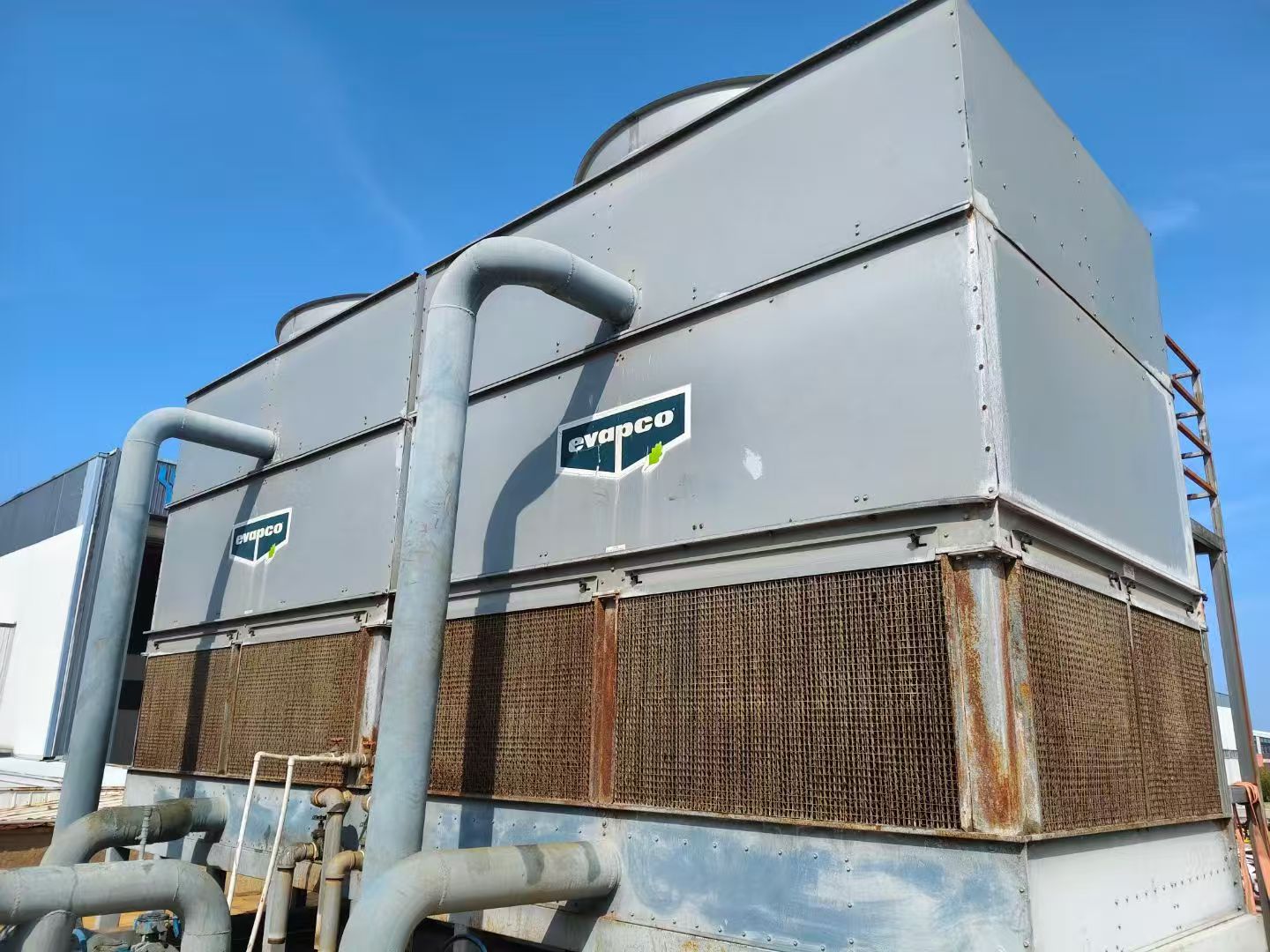
Let’s be real: in the world of industrial cooling, a closed circuit cooling tower is a bit of a superstar. It gives you the efficiency of evaporative cooling with the cleanliness of a closed loop, protecting your sensitive process fluid from the big, bad outside world . It’s a robust piece of kit, but let’s not kid ourselves—it’s not invincible. When things go wrong, they tend to go wrong fast, leading to overheating, production halts, and some truly eye-watering repair bills.
Think of this guide as your trusty stethoscope. We’re going to play doctor, diagnose the common ailments of these workhorses, and get into some hands-on closed circuit cooling tower troubleshooting. No jargon-filled manuals here—just straight talk, practical advice, and a healthy dose of "been there, done that" wisdom. So, roll up your sleeves, and let's get started.
Understanding the "Closed Loop"
First, a quick anatomy lesson. Unlike an open tower where the process water is splashed out in the open, a closed circuit tower keeps its main fluid (usually water or a water/glycol mix) sealed inside a coil. Heat is rejected by spraying water over that coil and blowing air through it . This "closed loop" is great for preventing contamination, but it also means that when trouble hits, it's often hidden inside that coil or in the complex interaction between the air, the spray water, and the sealed system. Our job is to figure out where the breakdown in this delicate dance is happening.
The Prime Suspect: Reduced Cooling Efficiency
This is the big one. You check your gauges and the outlet temperature is creeping up. Your process is getting hotter than a two-dollar pistol. What gives? When your tower isn’t shedding heat like it should, there are usually three usual suspects to round up.
The Scale of the Problem
Troubleshooting Step: First, look at your heat exchanger coil. If it looks like it’s been dipped in a calcium-flavored milkshake, you’ve found your culprit. Scale buildup acts as an insulator, physically blocking heat transfer from the internal fluid to the water spraying on the outside . You wouldn't try to cool down with a winter coat on, right? Same thing here. Solution: This requires a good cleaning. Depending on the severity, you might need a chemical descale to dissolve the mineral deposits . Prevention is better (and easier) than cure: look into water softening or better water treatment for your spray loop .
Airflow Obstruction: The Silent Killer
Troubleshooting Step: Pop your head up near the fan deck. Is the fan struggling? Is the airflow weak? Check the fan blades for a thick layer of dust, pollen, or debris . It’s amazing how a little bit of crud on the blades can turn your efficient fan into an expensive, whooshing paperweight. Also, check the inlet louvers—are they clogged with leaves, plastic bags, or years of neglect? No air in means no heat out .
When the Spray is the Problem
Troubleshooting Step: Look at the spray distribution through the sight glass or access door. Is it a uniform, gentle rain over the entire coil, or are there dry spots where the water is just dribbling through? Clogged nozzles are a frequent flyer in the troubleshooting world . They get blocked by sediment and debris from the spray water sump. Solution: This means a trip inside to remove and clean those nozzles . Don't just poke them out with a wire; soak them in a mild descaling solution to really get them clean .
Water, Water Everywhere: Dealing with Leaks
A puddle under your tower is never a good sign. It means you’re losing expensive treated water, and it could point to a more serious structural issue.
Location, Location, Location
Troubleshooting Step: You need to play detective and find the source.
- Is it at the joints and connections? This is often the easiest fix. Flanges and threaded connections can loosen over time due to thermal expansion and vibration. Sometimes, a simple tightening of a bolt or replacing a worn-out gasket does the trick .
- Is it a pinhole leak in the coil itself? This is the nightmare scenario. Coil leaks are usually caused by corrosion from the inside out (due to poor water treatment in the closed loop) or from the outside in (due to constant spray water attack) . Solution: Small pinholes can sometimes be repaired with a specialized epoxy or by brazing, but you must drain the coil first . If the coil is old and frail, you might be looking at a partial or full replacement. A pressure test after any repair is non-negotiable .
The Freeze Factor
If you’re in a cold climate and didn't properly winterize, a leak in the spring is a dead giveaway. Water expands when it freezes, and it has no mercy on copper tubes . Troubleshooting Step: If you suspect freeze damage, you'll likely see split tubes, usually on the bottom rows of the coil where water settles. Solution: Unfortunately, this often means cutting out the damaged section and splicing in a new piece, or replacing the entire coil assembly.
The Noisy Critic: Fan and Motor Troubles
Your cooling tower shouldn’t sound like a thrash metal concert. If it’s groaning, screeching, or rattling, it’s trying to tell you something.
Vibration and Imbalance
Troubleshooting Step: A violent shake usually points to the fan. Has a blade accumulated dirt unevenly, throwing off the balance? Is one blade chipped or bent? . Solution: Clean the blades thoroughly. If the vibration persists, the fan assembly may need a professional dynamic balance. Also, check the foundation—if the tower itself is sitting on an uneven surface, it can transmit vibration throughout the whole structure .
Belt Drive Breakdowns
If your tower is belt-driven, this is a high-maintenance item. Troubleshooting Step: A squealing sound often means loose belts. A flapping or slapping sound might mean they're shredded. Solution: Check belt tension frequently . A new belt will stretch after the first 24 hours of operation, so you need to re-tension it then . If belts are cracked, glazed, or frayed, just replace them. While you're at it, give the pulleys a once-over to make sure the grooves aren't worn down.
The Heart of the System: Pump and Circulation Issues
The pump is what keeps the spray water moving. If it fails, the tower turns into a very expensive, very useless dry cooler.
Troubleshooting Step: Is the pump motor running but the water isn't flowing? Check the suction strainer—it’s probably clogged with debris . Clean it out! Is the pump itself making a grinding noise? That could be a failing bearing . Are you seeing water dripping from the pump shaft? That means the mechanical seal is on its way out . Solution: Keep spare seals and bearings on hand if this is a critical piece of your operation. Monitoring the pressure gauges on either side of the pump can also give you an early warning; a big difference between suction and discharge pressure indicates a problem .
Electrical and Control System Glitches
Sometimes the problem isn't mechanical, it's in the brains of the operation. The tower trips the breaker, or the temperature controller is showing nonsense readings.
Troubleshooting Step: First, check the simple stuff. Is the control cabinet clean and dry? Moisture is the number one enemy of electrical components in a cooling tower . Loose wires can cause intermittent issues and even short circuits . If a motor is tripping on overload, don't just reset it. Find out *why* it overloaded—is the pump seized? Are the fan bearings shot? . As for flaky temperature readings, check the sensor probe. Is it loose? Is the wiring chewed up or corroded? . Sometimes, the probe is just picking up heat from the sun or a nearby hot pipe instead of the actual water temperature.
The Water Quality Factor
This isn't a one-time fix; it's an ongoing battle. If your spray water looks like pea soup or smells like rotten eggs, you've got biological growth . Algae and slime can clog nozzles and coat the coil, killing efficiency just as surely as scale.
Troubleshooting Step: Implement a water treatment program. This means biocides to kill the bugs and corrosion inhibitors to protect your precious copper coil and steel casing . Keep an eye on the conductivity of the water; if it's too high, you need to increase the bleed-off rate to prevent scale formation .
Preventive Maintenance: Your Best Troubleshooting Tool
Look, the best troubleshooting is the kind you never have to do. A solid preventive maintenance schedule is cheaper and less stressful than any emergency repair.
Daily and Weekly Checks
- Visual & Auditory: Just walk by and look at it. Any new leaks? Any funny noises? Is the water level in the basin good? .
- The Float: Check the make-up valve. Is it getting stuck? This prevents the sump from running dry or overflowing .
Monthly and Quarterly Tasks
- Nozzle and Strainer Cleaning: Get in there and clean those nozzles and the pump strainer .
- Belt Tension: Check and adjust those fan belts .
- Coil Rinse: Use a low-pressure hose to gently wash the outside of the coil from the top down, knocking off any loose dust or debris .
The Annual Deep Clean
This is the big one. Shut the tower down and give it some love.
- Descaling: If you have a scale problem, this is when you do a full chemical clean of the coil .
- Sump Cleaning: Drain the basin and shovel out all the sludge and sediment that has accumulated over the year .
- Bearing Grease: Repack the fan and pump bearings with fresh grease .
- Structural Check: Look at the casing and frame. Any rust spots? Sand them down and repaint them before they turn into holes .
Conclusion: Staying Cool Under Pressure
Troubleshooting a closed circuit cooling tower doesn't have to be a dark art. It’s about understanding the basic principles—heat transfer, water flow, and air movement—and then using your senses to figure out which one is broken. Is it scaled? Is it clogged? Is it worn out?
By being proactive, keeping a detailed logbook of maintenance activities , and tackling small problems before they become big ones, you can keep your tower running efficiently for years. And when something does go wrong, you’ll have the confidence and the know-how to dive in, diagnose the issue, and get your process back to that perfect, cool operating temperature. Happy troubleshooting