You are here: Home » Blog » Industry News » Bulk Cooling Tower Fill Media Replacement: Pricing, Packaging, And Shipping
Bulk Cooling Tower Fill Media Replacement: Pricing, Packaging, And Shipping
Views: 0 Author: Lisa Publish Time: 2026-11-02 Origin: Site
For plant operators, cooling tower contractors and industrial distributors, buying cooling tower fill media replacement in bulk is one of the smartest ways to cut unit cost and secure supply for ongoing retrofit and maintenance programs. But bulk buying is not just about ordering more panels. Getting the best value depends on how pricing is structured, how the product is packaged, and how it is shipped safely across long distances. This guide covers the three pillars of successful bulk procurement — pricing, packaging and shipping — so you can order with confidence, avoid hidden costs and protect your fill from damage in transit.
Bulk Cooling Tower Fill Media Replacement: Pricing, Packaging, and Shipping
Part 1: How Bulk Fill Media Pricing Works
Understanding how manufacturers price fill media helps you negotiate better and avoid surprises.
1. Unit Price Tiers and MOQ
Bulk orders generally unlock lower per-unit pricing. Manufacturers apply tiered pricing based on volume, often tied to minimum order quantity (MOQ). Clarify the MOQ for your target price tier: some factories set a low MOQ for standard PVC film fill, while custom-moulded splash fill may require larger batches.
2. What the Price Includes
Always confirm what the quoted price covers:
Material grade: virgin vs recycled resin (virgin costs more but lasts far longer)
Thickness and UV stabilization
Fire-retardancy rating, if specified
Tooling or customization fees, where a non-standard flute profile is required
Packaging, which is often a separate line item
Ask for an itemized quote so you can see exactly where costs sit and compare suppliers fairly.
3. Price-Lock and Resin Volatility
Polymer resin prices fluctuate with oil markets. For long-term programs, ask whether the supplier can lock pricing for a defined contract period or a fixed number of shipments. This protects your margin and keeps your own quotations to end clients stable.
4. Freight and Incoterms
Freight is frequently the biggest hidden cost in bulk fill. Agree on the delivery term — EXW, FOB, CIF, DDP — and confirm who pays for ocean or land freight, insurance and customs clearance. For cross-border distribution, a clear Incoterm protects both sides from unexpected charges.
Part 2: Packaging — The Often-Underrated Cost and Risk
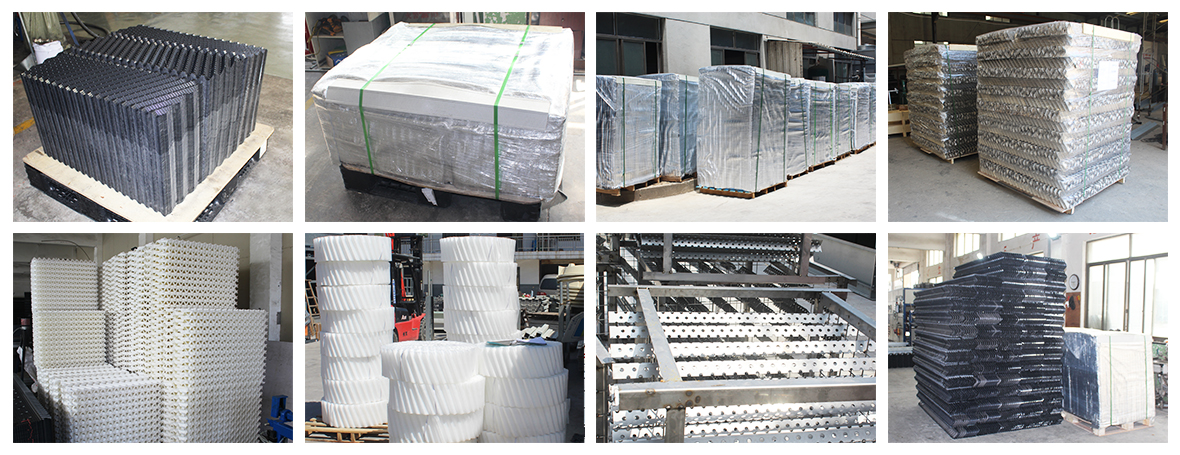
Fill media is bulky, lightweight and easily damaged by compression, bending and impact. Poor packaging is one of the most common causes of on-site problems.
1. Why Fill Needs Heavy-Duty Packaging
Corrugated PVC and PP sheets can bend, crack or crush if stacked carelessly. A deformed panel cannot be installed properly and forces rework or rejection at a critical shutdown window. Proper packaging protects your investment and your schedule.
2. Standard vs Export Packaging
Standard (carton) packaging: adequate for short domestic or palletized land transport.
Export-grade packaging: plywood crates, palletization and strapping, often fumigation-free and ISPM 15-compliant for ocean and international air freight.
For sea shipments, confirm the crates are sturdy enough to bear stacking weight without compressing the fill inside.
3. What to Specify in Your Purchase Order
Palletized loading with vertical stacking (fill panels upright) to prevent bending
Crating or carton type, with corner protection
Strapping and shrink-wrap for load stability
Moisture protection, where humidity and condensation are a risk
Export packaging adds cost per volume, but it is small compared to the cost of replacing damaged fill or delaying an installation. Weigh packaging quality against the distance and handling stages your shipment will pass through.
Part 3: Shipping Bulk Fill Media — Lead Times and Logistics
Reliable delivery is as important as price. Bulk fill projects are often tied to fixed shutdown windows, so on-time arrival matters.
1. Production Lead Times
Stock standard sizes: often ship within 3–7 days.
Custom-sized orders: typically 10–25 days, depending on volume and tooling.
Large OEM-scale orders: may require longer production schedules; confirm before committing to your own client deadline.
Always confirm lead time in writing and build a buffer for customs and port delays.
2. Shipping Methods
Sea freight (LCL/FCL): most economical for large volumes, with transit times from Asia ranging several weeks.
Air freight: fastest but costly; reserved for urgent replacements.
Land/rail freight: practical for regional distribution within continents.
Choose the method that balances cost and the urgency of your installation window.
3. Incoterms and Documentation
For international orders, prepare in advance:
Commercial invoice and packing list
Bill of lading / airway bill
Certificate of origin
Material test certificates and fire-rating reports, where required
Any customs or import permits for your destination country
A knowledgeable supplier provides these documents correctly, saving you delays and demurrage charges.
4. Planning for the Whole Chain
Build your bulk order timeline back from the required on-site installation date: add production time, transit time, customs clearance, and a safety buffer. Communicate the deadline to your supplier so they can schedule production accordingly.
Common Mistakes in Bulk Fill Procurement
Neglecting packaging spec. Damaged fill from poor crating causes costly rework and missed shutdown windows.
Basing decisions on unit price alone. Freight, packaging, tooling and warranty add real cost; compare total landed cost.
Ignoring resin volatility. Unprotected pricing can inflate later shipments in a multi-batch program.
Unclear Incoterms. Ambiguity over freight and duties creates disputes and unexpected charges.
Under-buffering lead time. Customs and port delays easily push a tight installation window.
FAQ
What is the typical MOQ for bulk fill media orders?MOQ varies by supplier and product. Standard PVC film fill often has flexible MOQs; custom-moulded splash fill and special profiles usually require larger batches.
How long does production and delivery take for a bulk order?Stock sizes can ship in 3–7 days; custom orders typically take 10–25 days plus transit time, depending on destination and shipping method.
What packaging should I request for sea freight?Export-grade plywood crates, palletized with vertical stacking, strapping and moisture protection, ideally ISPM 15-compliant for ocean transit.
Is bulk fill media cheaper per unit?Yes, higher volumes typically unlock tiered pricing and reduce freight cost per unit, but compare total landed cost including packaging, tooling and customs.
Can I combine different fill types in one bulk order?Yes, many suppliers accept mixed orders for PVC film fill, PP fill and splash fill across different project sites.
Conclusion
Bulk cooling tower fill media replacement is a cost-effective strategy when approached carefully. Master pricing tiers and Incoterms to control total landed cost, specify export-grade packaging to protect your panels, and plan production and shipping with realistic buffers around your shutdown window. By applying these pricing, packaging and shipping principles, you reduce waste, avoid damaged-goods claims and keep your retrofit projects on schedule.
Recommended internal links for CoolingTowerPart.com: