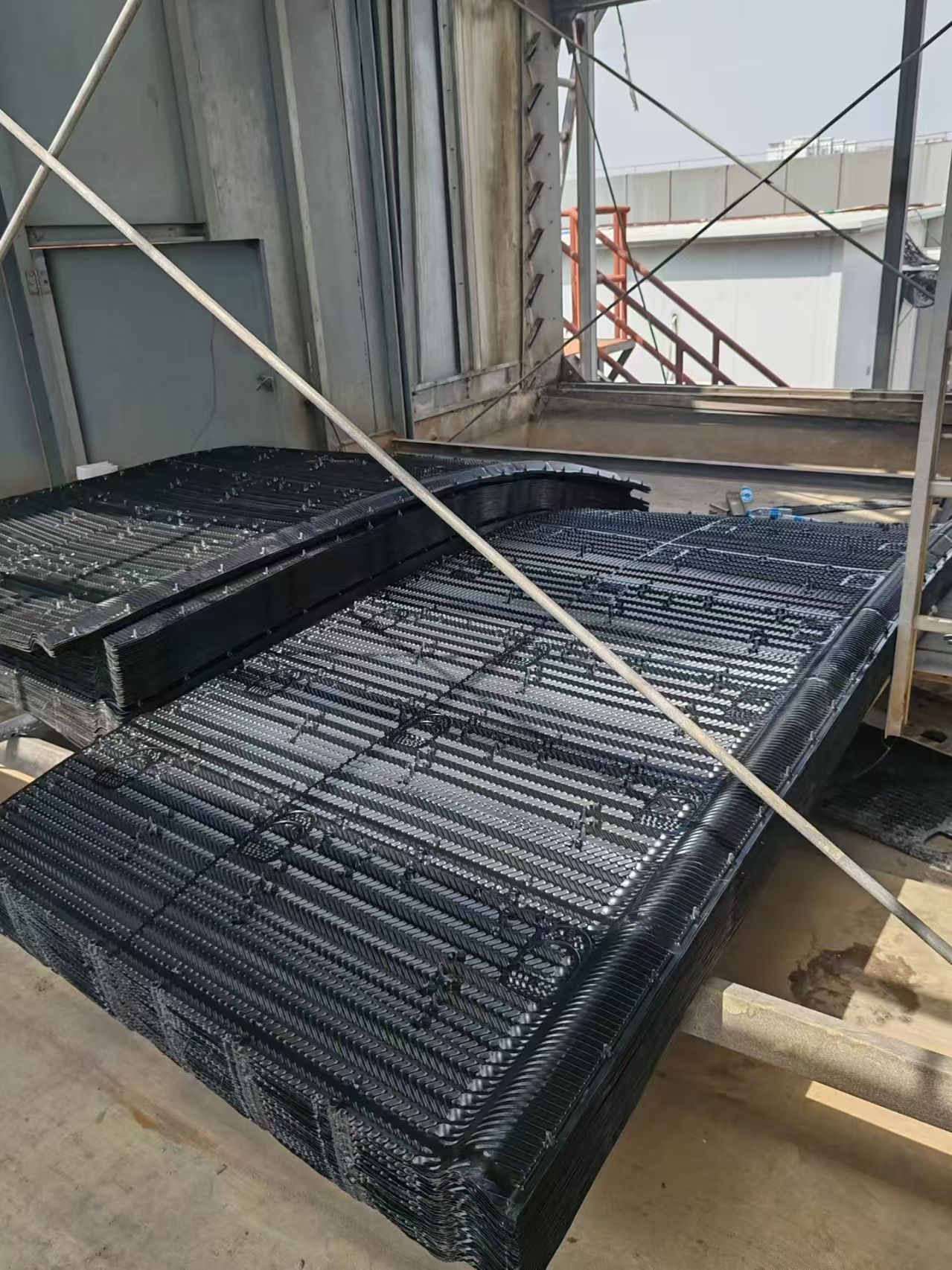
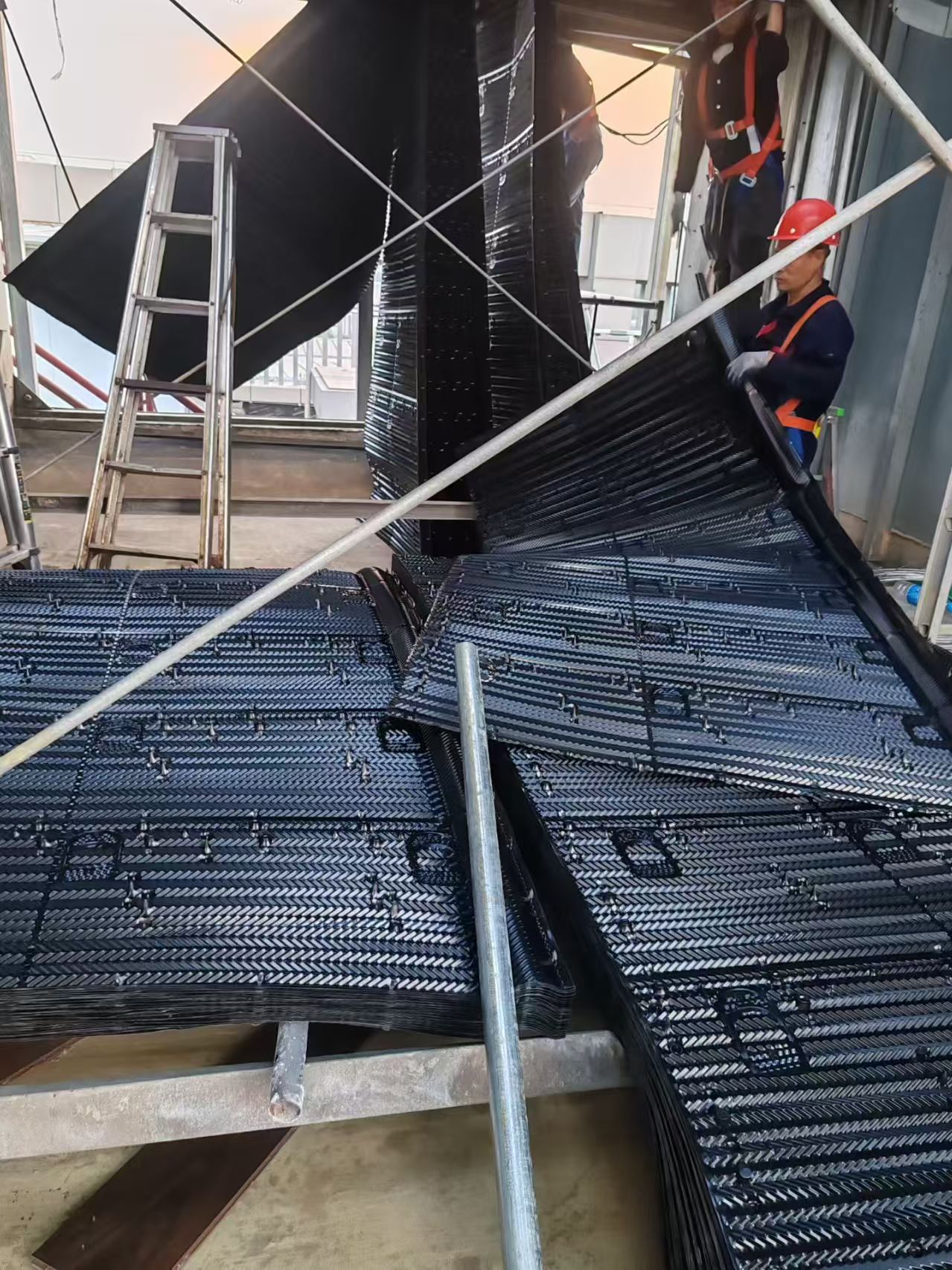
Introduction to BAC Cooling Tower Fill Replacement
BAC cooling tower fill replacement is an important maintenance task for facilities that depend on reliable heat rejection and efficient cooling water circulation. Baltimore Aircoil Company (BAC) cooling towers are used in commercial HVAC systems, industrial manufacturing, power generation, refrigeration, and other applications where stable cooling performance is essential.
Cooling tower fill media increases the contact area between air and water, helping heat transfer occur more effectively through evaporation. Over time, mineral scale, biological growth, suspended solids, and mechanical damage can reduce fill performance. When cleaning can no longer restore the required operating condition, replacing the fill may be a practical way to improve cooling efficiency and extend the useful service life of the cooling tower structure.
For owners and maintenance engineers, selecting the right BAC cooling tower fill replacement involves more than purchasing new plastic sheets. The replacement media must match the tower's design, dimensions, operating temperature, water quality, airflow requirements, and heat-transfer demands.
This guide explains how BAC cooling tower fill works, when replacement is necessary, which materials to consider, how the replacement process works, and how to select a reliable cooling tower fill replacement supplier.
What Is BAC Cooling Tower Fill and Why Does It Matter?
Cooling tower fill is an internal component designed to increase the effective contact area between circulating water and moving air. By distributing water across a large surface, the fill supports evaporation and heat transfer, allowing the cooling tower to reduce the temperature of the circulating water.
How Does BAC Cooling Tower Fill Work?
Warm water enters the cooling tower and flows over or through the fill media. Air moves through the fill section, creating conditions that support evaporative cooling.
Increasing Water and Air Contact
The geometry of the fill creates numerous surfaces over which water can spread. This increases the opportunity for heat and mass transfer between water and air.
Supporting Cooling Tower Thermal Performance
Properly selected fill helps the tower achieve its intended thermal performance when water distribution, airflow, water quality, and operating conditions are also suitable.
Maintaining Appropriate Airflow
Fill design influences airflow resistance. Replacement media should therefore provide the necessary heat-transfer characteristics without introducing excessive pressure drop or disrupting the tower's original airflow arrangement.
Why Is Correct Replacement Fill Important?
Using compatible replacement fill helps maintain the intended cooling tower performance. Incorrectly selected media may create uneven water distribution, excessive airflow resistance, poor fit, or reduced thermal capacity.
For BAC cooling towers, buyers should identify the exact model and configuration before ordering replacement materials.
When Should BAC Cooling Tower Fill Be Replaced?
Cooling tower fill does not have one universal replacement interval. Its service life depends on water treatment, operating temperature, suspended solids, biological activity, cleaning practices, material quality, and the severity of operating conditions.
1. Severe Scale and Mineral Deposits
Mineral deposits can accumulate on fill surfaces when circulating water contains dissolved minerals that precipitate during operation.
How Scale Affects Fill Performance
Heavy deposits may reduce the effective contact area, obstruct fill passages, and interfere with water distribution. They can also increase airflow resistance and contribute to poor cooling performance.
If suitable cleaning methods cannot remove the deposits without damaging the media, replacement may be necessary.
2. Biological Growth and Persistent Fouling
Algae, biofilm, and other biological deposits may develop when water treatment and maintenance are inadequate.
When Is Cleaning No Longer Enough?
Cleaning may restore performance when the fill remains structurally sound. However, severely blocked passages, persistent fouling, or damaged fill surfaces may justify replacement.
Facilities should also review water treatment and cleaning procedures to reduce the likelihood of recurring problems.
3. Cracked, Brittle, or Deformed Fill Sheets
Plastic fill can deteriorate under unsuitable temperatures, chemical exposure, prolonged service, or mechanical stress.
Common Signs of Physical Damage
Inspect for the following conditions:
Cracked or broken fill sheets.
Sagging fill blocks or collapsed sections.
Distorted passages and separated sheets.
Brittle material that breaks during normal handling.
Damaged support structures or loose fill assemblies.
Damaged media should be evaluated promptly because continued operation may worsen water distribution and thermal performance.
4. Declining Cooling Performance
A cooling tower that cannot maintain its required cold-water temperature may have a fill-related problem, but fill deterioration is not the only possible cause.
Check Other Components Before Replacement
Maintenance personnel should also inspect:
Water distribution nozzles and piping.
Fans, motors, drives, and airflow conditions.
Drift eliminators and air inlets.
Water flow rate and circulating pump performance.
Heat load, ambient wet-bulb temperature, and water chemistry.
A systematic inspection helps prevent unnecessary replacement and identifies the actual cause of reduced cooling capacity.
Which Materials Are Suitable for BAC Cooling Tower Fill Replacement?
PVC and polypropylene (PP) are common materials for cooling tower fill. The most appropriate option depends on the original tower design, operating temperature, water chemistry, mechanical requirements, and the replacement product's specifications.
PVC Cooling Tower Fill Replacement
PVC cooling tower fill is widely used in conventional HVAC and many industrial cooling applications. Its balance of cost, formability, and heat-transfer performance makes it a common choice.
Main Advantages of PVC Fill
Suitable for many standard cooling tower operating conditions.
Available in different sheet profiles and fill configurations.
Can provide effective heat-transfer surface area when correctly designed.
Often offers an economical solution for replacement projects.
Available in customized dimensions from specialist manufacturers.
What Should Buyers Check?
Confirm the PVC material grade, sheet thickness, operating temperature limits, chemical compatibility, and fire-performance requirements where applicable.
PVC should not be selected solely because the existing fill is plastic. The replacement product must also match the tower's geometry and operating conditions.
PP Cooling Tower Fill Replacement
Polypropylene fill may be suitable for applications requiring different temperature or chemical-resistance characteristics from those offered by a particular PVC product.
Benefits of PP Fill Media
Depending on the grade and design, PP fill may offer:
Suitability for selected higher-temperature applications.
Useful chemical resistance under compatible operating conditions.
Options for different fill geometries and block configurations.
Potential benefits in demanding industrial cooling environments.
Is PP Always Better Than PVC?
No. PP is not automatically superior in every cooling tower application. The correct selection depends on actual water temperature, chemical exposure, structural requirements, and the manufacturer's documented performance limits.
Buyers should compare complete product specifications rather than relying on general material descriptions.
Film Fill and Splash Fill Options
Cooling tower fill can also be classified according to its design and the way it promotes contact between air and water.
Film Fill
Film fill spreads water into thin films over closely spaced surfaces. It can provide a large effective contact area in suitable applications, but narrow passages may be more susceptible to blockage when water contains substantial suspended solids or deposits.
Splash Fill
Splash fill breaks falling water into droplets as it contacts successive fill elements. Certain splash-fill designs are suitable for operating conditions in which fouling resistance is important.
The appropriate choice depends on the original BAC tower design and the water quality. A different fill type should not be substituted without checking the tower's engineering requirements.
How to Identify the Correct BAC Cooling Tower Fill Replacement
Correct identification is essential for achieving a suitable fit and maintaining the cooling tower's intended performance.
Find the Cooling Tower Model and Serial Number
Start by locating the equipment nameplate and recording the model and serial number. These details can help the manufacturer or an experienced replacement supplier identify the original configuration.
Information to Prepare Before Contacting a Supplier
Provide the following information whenever available:
BAC cooling tower model and serial number.
Tower type and airflow configuration.
Existing fill material and profile.
Fill block length, width, and height.
Fill sheet thickness and approximate quantity.
Operating water temperature and flow rate.
Water quality and treatment conditions.
Required delivery date and installation location.
Photographs of the existing fill and internal support arrangement can help clarify the application.
Measure Existing Fill Blocks Carefully
When original documentation is unavailable, measurements may help identify a compatible replacement.
Dimensions That Matter
Measure the overall fill section, individual block dimensions, installation orientation, support spacing, and clearances around adjacent components.
The supplier should also verify whether the existing assembly contains multiple block sizes or specially shaped sections.
Confirm Crossflow or Counterflow Configuration
BAC manufactures different cooling tower configurations, so buyers should not assume that fill designed for one arrangement will fit another.
Crossflow Cooling Towers
In crossflow towers, air generally moves horizontally through the fill while water flows downward. Replacement media must suit the original airflow path, water distribution arrangement, and support system.
Counterflow Cooling Towers
In counterflow towers, air generally moves upward against descending water. Replacement fill must match the tower's internal dimensions, airflow requirements, and water loading.
The tower model and engineering documentation should be used to verify the correct configuration.
How Does BAC Cooling Tower Fill Replacement Improve Performance?
Replacing deteriorated fill can restore some of the cooling tower's intended performance when fill condition is a major cause of reduced efficiency.
Restore Effective Heat Transfer
Clean, correctly designed fill provides suitable surfaces for water-air contact.
Improve Water Distribution
Properly fitted fill allows water to flow through the intended passages. This helps reduce uneven wetting and supports more consistent use of the fill surface.
Support Stable Cooling Operation
When the fill is compatible with the tower, replacement may help restore cold-water temperatures and thermal capacity under comparable operating conditions.
Actual results depend on heat load, water flow, ambient conditions, airflow, and other equipment components.
Reduce Excessive Airflow Resistance
Blocked passages can increase resistance to airflow. Replacing heavily fouled media may reduce this restriction if the fill is the main source of the problem.
Consider Fan and Motor Performance
After replacement, confirm that the fill arrangement does not obstruct airflow and that the fan system operates within the equipment's design limits.
Any claimed energy savings should be supported by measurements rather than assumed from the fill replacement alone.
Reduce Unplanned Maintenance
New fill may reduce the need for repeated interventions when existing media is damaged beyond economical cleaning.
Combine Replacement With Preventive Maintenance
Inspect nozzles, drift eliminators, fill supports, and water distribution components during the same maintenance shutdown. Addressing related problems can help protect the new fill from premature deterioration.
Step-by-Step Guide to BAC Cooling Tower Fill Replacement
A successful replacement project requires planning, safe work procedures, careful removal, accurate installation, and performance verification.
Step 1 — Inspect the Existing Cooling Tower
Before ordering materials, inspect the fill condition and determine the extent of the problem.
Decide Between Cleaning and Replacement
Cleaning may be more economical when deposits are removable and the fill remains structurally sound. Replacement is generally more appropriate when the media is cracked, deformed, severely blocked, or no longer meets operating requirements.
Record inspection findings to support purchasing decisions.
Step 2 — Select and Order Compatible Fill
Send the tower identification, dimensions, material requirements, and operating conditions to the supplier.
Review the Technical Quotation
Check the proposed material, sheet profile, thickness, block dimensions, estimated quantity, and compatibility with the original design.
Ask for drawings or samples when needed, especially for large orders or nonstandard replacement projects.
Step 3 — Prepare the Cooling Tower for Maintenance
Schedule the work during an appropriate shutdown and follow the facility's safety procedures.
Apply Isolation and Safe Access Procedures
Ensure that electrical and mechanical equipment is isolated as required. Follow applicable confined-space, fall-protection, chemical-handling, and biological-exposure controls.
Cooling towers may contain hazardous biological aerosols and chemical residues, so cleaning and removal should be performed by trained personnel using suitable protective measures.
Step 4 — Remove the Old Fill
Remove deteriorated fill carefully to avoid unnecessary damage to the tower casing, structural supports, piping, and other internal components.
Inspect Supporting Structures
Check beams, brackets, support grids, and adjacent components for corrosion, deformation, or other damage before installing new media.
Any structural defects should be assessed and corrected before the replacement fill is loaded.
Step 5 — Install the New Fill Media
Follow the fill manufacturer's installation instructions and the tower's approved engineering requirements.
Ensure Correct Alignment and Support
Confirm that fill blocks are oriented correctly, supported securely, and installed without unintended gaps or excessive compression.
Maintain the required clearances around water distribution components and other internal equipment.
Step 6 — Test and Verify Performance
After installation, inspect the fill arrangement and restart the system according to the facility's operating procedures.
What Should Be Checked After Installation?
Water distribution and wetting patterns.
Airflow and fan operating conditions.
Water leakage and unusual vibration.
Fill stability and support integrity.
Hot-water and cold-water temperatures.
Overall cooling performance under comparable operating conditions.
Document the results to establish a baseline for future maintenance.
Common Mistakes to Avoid During BAC Cooling Tower Fill Replacement
Choosing Fill Based Only on Price
Low-cost media may not meet the tower's dimensional, thermal, or durability requirements.
Evaluate Total Lifecycle Cost
Compare material quality, expected service conditions, delivery, installation, maintenance requirements, and warranty terms before making a purchasing decision.
Ignoring Operating Temperature and Water Chemistry
A material that performs well in one cooling tower may not be suitable for another.
Verify Material Compatibility
Provide accurate water temperature and chemical information to the supplier. Confirm that the proposed product is suitable for continuous operation under the expected conditions.
Using Incorrect Fill Dimensions
Oversized or undersized blocks may create gaps, interfere with supports, or disrupt water distribution.
Request Drawings Before Production
For customized orders, approve the technical drawing and dimensional details before manufacturing begins.
Replacing Fill Without Investigating the Root Cause
If scale or biological growth caused premature fill failure, installing new media without addressing water treatment may lead to similar problems.
Review the Water Treatment Program
Check filtration, blowdown, chemical treatment, water quality, and cleaning frequency. Coordinate any changes with qualified water treatment professionals.
How to Choose a Reliable BAC Cooling Tower Fill Replacement Supplier
The supplier should understand cooling tower fill design and be able to demonstrate that the proposed product is compatible with the intended application.
Check Product Range and Technical Expertise
Look for suppliers that can explain fill material choices, dimensions, airflow characteristics, and application limitations.
Questions to Ask Potential Suppliers
Can you supply replacement fill compatible with my specific BAC tower model?
Do you offer PVC and PP fill options?
Can you manufacture fill blocks to the required dimensions?
What operating temperature limits apply to the proposed material?
Can you provide technical drawings and material specifications?
What is the production lead time and minimum order quantity?
What quality checks and warranty terms are available?
Evaluate Manufacturing and Quality Control
Consistent quality is particularly important for large projects involving multiple fill blocks or repeated orders.
Important Quality Indicators
Review dimensional tolerances, material consistency, sheet thickness, block assembly, packaging protection, and inspection documentation.
For large orders, consider requesting representative samples or a pre-shipment inspection.
Compare Delivery and After-Sales Support
A supplier should provide clear commercial terms and realistic delivery schedules.
Understand the Full Scope of Supply
Confirm whether the quotation covers fill media only or also includes engineering assistance, installation instructions, drift eliminators, packaging, freight, and other components.
Clarifying responsibilities in advance helps prevent unexpected costs and project delays.
Why Consider a Specialist Cooling Tower Fill Manufacturer?
A specialist manufacturer may offer advantages for replacement projects that require customized dimensions, multiple material choices, or bulk orders.
Customized Replacement Solutions
Specialist manufacturers may be able to produce fill sheets and blocks to suit existing tower dimensions, subject to product design and manufacturing capabilities.
Support for Different Cooling Tower Brands
Third-party replacement fill may be available for BAC and other cooling tower brands, but compatibility must be verified for the exact model and configuration.
A product should not be described as an original BAC component unless its original-equipment status is confirmed.
Flexible Material and Product Selection
A specialist supplier may provide different PVC and PP profiles for various water temperatures, fouling conditions, and cooling tower arrangements.
Match Product Design to the Application
The goal is not simply to purchase new fill. It is to select media that provides appropriate heat-transfer characteristics, acceptable airflow resistance, structural stability, and reliable operation.
Better Planning for Bulk Procurement
For large cooling tower refurbishment projects, direct communication with the manufacturer may help coordinate production, quality inspections, packaging, and shipping.
Prepare a Complete Request for Quotation
Include the tower model, fill dimensions, material preference, quantity, destination, required delivery date, and any technical documents available.
A complete request helps the supplier provide a more accurate and useful proposal.
Maintenance Tips to Extend the Service Life of Replacement Fill
Proper maintenance can help reduce premature fouling and protect the investment in new cooling tower fill.
Conduct Regular Visual Inspections
Inspect fill condition at intervals appropriate to the operating environment and maintenance program.
Look for Early Warning Signs
Monitor scale formation, biological growth, blocked passages, broken sheets, uneven water distribution, and unusual changes in cooling performance.
Addressing developing problems early may reduce the need for extensive repairs.
Maintain Effective Water Treatment
Water chemistry strongly influences scale, corrosion, and biological growth in cooling tower systems.
Control Deposits and Fouling
Follow a suitable water treatment plan, monitor circulating water quality, and maintain filtration and blowdown practices as required by the system design.
Cleaning chemicals and methods should be compatible with the fill material and approved for the intended application.
Keep Water Distribution Components in Good Condition
Blocked or damaged nozzles may create dry areas and uneven water loading across the fill.
Inspect Nozzles and Distribution Piping
Check for blockages, wear, and incorrect spray patterns during scheduled maintenance. Correcting water distribution problems helps the fill perform as intended.
Monitor Operating Performance
Track cold-water temperature, hot-water temperature, circulating water flow, fan conditions, and other relevant operating data.
Establish a Performance Baseline
Compare readings under similar heat-load and ambient conditions. This helps maintenance teams distinguish fill-related problems from changes caused by weather, equipment condition, or operating demand.
Frequently Asked Questions About BAC Cooling Tower Fill Replacement
How Often Should BAC Cooling Tower Fill Be Replaced?
There is no fixed replacement interval for every BAC cooling tower. Fill life depends on water quality, operating temperature, material, maintenance practices, and the severity of fouling.
Regular inspection should determine whether cleaning remains effective or replacement is justified.
Can Third-Party Fill Replace Original BAC Fill?
Potentially, yes. Third-party fill can be suitable when its dimensions, material, geometry, and operating characteristics are compatible with the original tower design.
Always verify the specific model and technical requirements before ordering. Third-party compatibility does not automatically mean the product is manufactured or endorsed by BAC.
Is PVC Fill Suitable for BAC Cooling Towers?
PVC fill may be suitable for many applications, provided that its operating temperature limits, material grade, and geometry meet the tower's requirements.
For higher-temperature or chemically demanding applications, evaluate alternative materials such as suitable PP grades with the supplier.
Can I Replace Only a Section of the Cooling Tower Fill?
Partial replacement may be possible if the damaged section can be isolated and the new media can be integrated correctly with the existing fill.
However, differences in material condition, dimensions, and performance should be considered. Extensive deterioration may make a complete replacement more practical.
Does New Fill Always Improve Cooling Capacity?
No. New fill can help when deteriorated or blocked media is a major cause of poor performance, but it cannot automatically correct problems caused by insufficient airflow, damaged fans, poor water distribution, incorrect water flow, or excessive heat load.
A full system assessment is recommended before attributing all performance losses to the fill.
What Information Is Needed to Obtain a Replacement Fill Quotation?
Provide the BAC tower model and serial number, tower configuration, existing fill dimensions, preferred material, operating temperature, quantity, delivery location, and required schedule.
Photographs and drawings can further improve the accuracy of the quotation.
Conclusion: Choose the Right BAC Cooling Tower Fill Replacement Solution
BAC cooling tower fill replacement can be an effective maintenance strategy when fill media becomes damaged, heavily fouled, or unable to support the cooling tower's required performance.
The best results come from identifying the original tower configuration, confirming the correct fill dimensions, choosing a suitable material, and following proper installation procedures. PVC and PP fill can both be appropriate options, depending on operating temperature, water chemistry, and product design.
Before purchasing replacement media, evaluate the supplier's technical capabilities, manufacturing quality, documentation, delivery schedule, and warranty conditions. Addressing water treatment and distribution problems at the same time can also help protect the new fill and reduce the risk of premature fouling.
For industrial facilities, commercial HVAC operators, and cooling tower maintenance contractors, a well-planned replacement project can help restore reliable operation and support long-term cooling system performance.