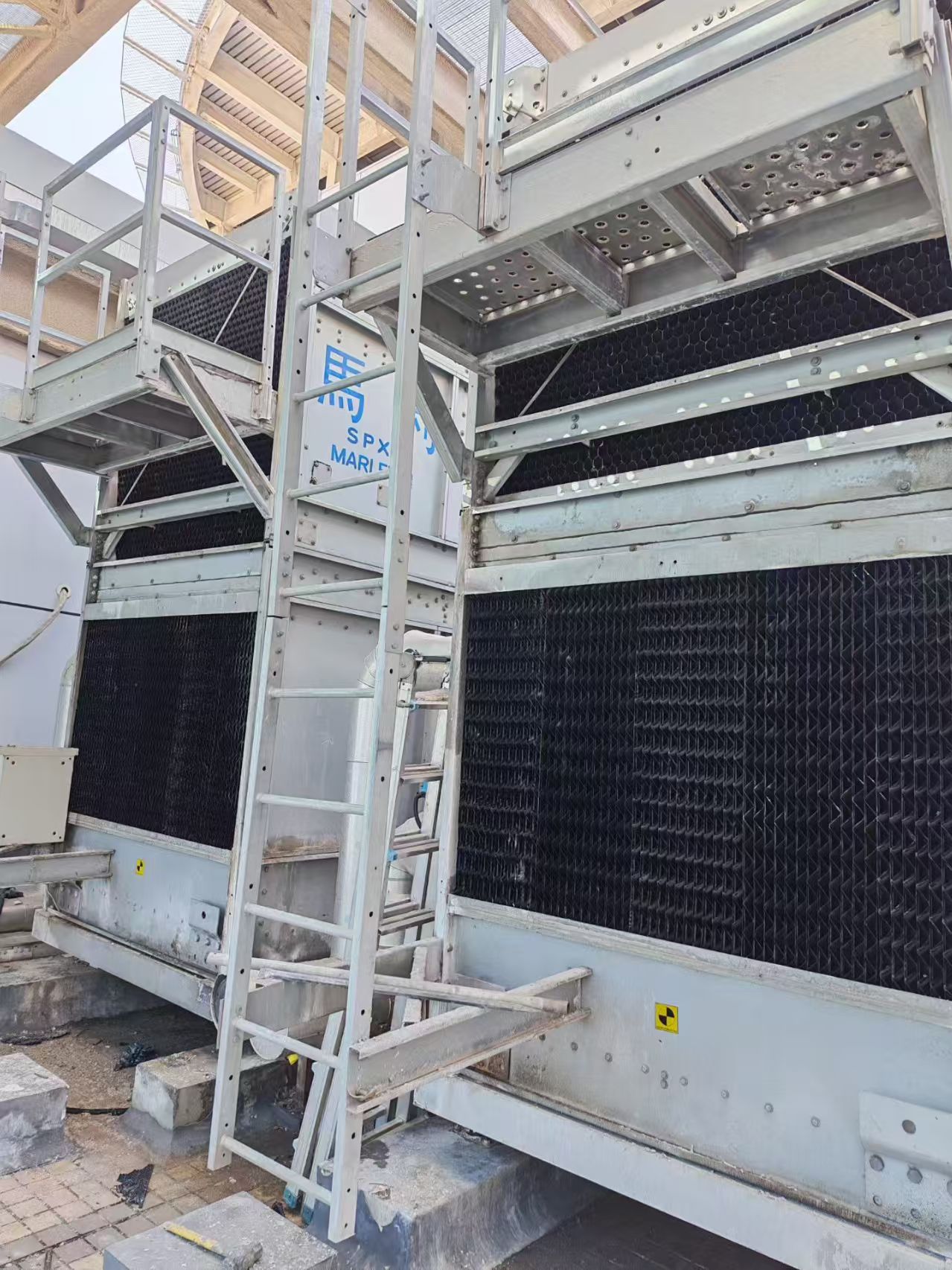
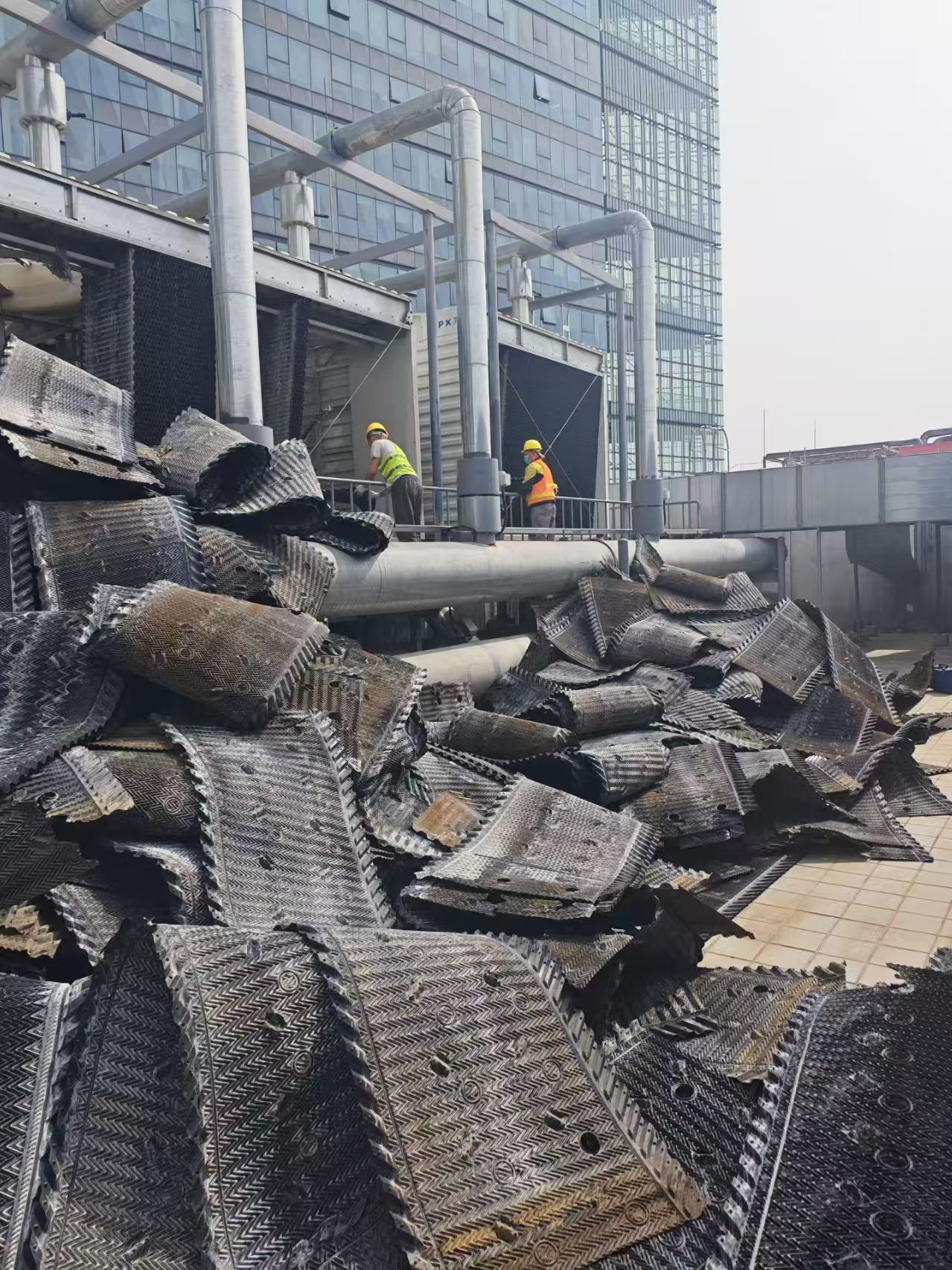
Why Is Marley Cooling Tower Fill Replacement Important for Cooling Tower Performance?
Marley cooling tower fill replacement is an important maintenance solution for restoring heat transfer efficiency, improving cooling capacity, and extending the operating life of an industrial cooling tower. Cooling tower fill provides a large surface area for warm circulating water to contact moving air, allowing heat to dissipate through evaporation and sensible heat transfer.
During long-term operation, cooling tower fill may accumulate mineral deposits, biological growth, dust, and other contaminants. High water temperatures, unsuitable water treatment, mechanical stress, and natural material aging can also affect fill performance. These problems may restrict airflow, disrupt water distribution, and reduce the overall efficiency of the cooling system.
Replacing deteriorated fill with compatible replacement cooling tower fill can help restore the tower's original performance when fill deterioration is a major cause of reduced efficiency. However, the replacement material must match the tower configuration, operating conditions, and water quality requirements.
How Does Cooling Tower Fill Improve Heat Exchange Efficiency?
Cooling tower fill is designed to increase the contact area between water and air. As hot water flows over the fill surfaces, it spreads into thin films or smaller droplets, depending on the fill design. Air passing through the tower removes heat and supports evaporation.
A properly selected cooling tower fill replacement can help improve several operating conditions.
Better Water Distribution
Uniform water distribution allows more of the fill surface to participate in heat exchange. When the fill becomes deformed or blocked, water may flow through certain areas while other sections remain underused.
Improved Airflow
Clean, properly installed fill maintains the designed airflow passages. Excessive deposits and damaged sheets can increase airflow resistance and affect fan performance.
More Stable Cold Water Temperature
Efficient heat transfer helps the cooling tower maintain the required cold water temperature under suitable operating conditions. This is particularly important for industrial production lines, HVAC systems, refrigeration equipment, and power generation facilities.
What Are the Common Signs That Marley Cooling Tower Fill Needs Replacement?
Cooling tower fill does not always require replacement simply because it has been operating for several years. Inspection results, operating data, and the physical condition of the fill should guide the decision.
Reduced Cooling Capacity
If the tower cannot achieve the required outlet water temperature, the fill may be clogged, damaged, or poorly distributed. Other possible causes include insufficient airflow, nozzle blockage, high ambient wet-bulb temperature, and excessive heat load.
Visible Cracks and Deformation
PVC or PP fill sheets can become warped, brittle, cracked, or separated from their original configuration. Severe deformation changes the designed water passages and may compromise heat transfer performance.
Persistent Scaling and Biological Fouling
Mineral scale, algae, and biofilm can accumulate on fill surfaces. When deposits cannot be effectively removed through an appropriate cleaning program, replacement may be necessary.
Uneven Water Flow
Water channeling, dry sections, and excessive water accumulation in certain areas may indicate blocked fill passages, damaged modules, or problems with the water distribution system.
Increased Operating Costs
Reduced cooling efficiency may cause the overall system to use more energy or require additional maintenance. Comparing current performance with historical operating data helps determine whether fill replacement is economically justified.
What Types of Replacement Fill Are Suitable for Marley Cooling Towers?
Selecting replacement fill requires more than matching the external dimensions of the original material. Buyers should consider the tower model, fill arrangement, water quality, operating temperature, airflow resistance, and required cooling performance.
PVC Cooling Tower Fill Replacement
Polyvinyl chloride (PVC) is widely used in cooling tower fill manufacturing because it offers a practical balance of cost, formability, chemical resistance, and heat transfer performance.
PVC cooling tower fill is commonly used in commercial HVAC systems and many industrial cooling applications where the operating conditions are compatible with the selected material grade.
Advantages of PVC Fill
PVC fill offers several benefits:
Lightweight construction for easier handling and installation.
Good heat transfer performance when the fill design is appropriate.
Resistance to many chemicals commonly encountered in treated cooling water.
Flexible manufacturing options for different sheet patterns and module dimensions.
Competitive material costs for large-scale replacement projects.
What Should Buyers Check Before Selecting PVC Fill?
Buyers should confirm the maximum operating water temperature, chemical exposure, material specifications, and flame-retardant requirements where applicable. Standard PVC fill is not suitable for every high-temperature or chemically aggressive application.
PP Cooling Tower Fill Replacement
Polypropylene (PP) fill is often considered when the operating environment requires higher temperature capability than conventional PVC fill can provide.
The actual temperature limit depends on the PP grade, fill geometry, mechanical loading, and operating conditions. Buyers should obtain technical data from the manufacturer rather than relying on a general material comparison.
Main Advantages of PP Fill
PP fill can provide:
Higher temperature capability than many standard PVC fill products.
Good resistance to a range of chemicals.
Low weight and practical installation characteristics.
Manufacturing flexibility for different cooling tower configurations.
When Is PP Fill a Better Option?
PP may be suitable for selected industrial cooling systems with elevated water temperatures or specific chemical requirements. However, PP should not automatically be considered the best option for every tower. Compatibility, fire performance, structural stability, and thermal conditions must all be evaluated.
Film Fill and Splash Fill: Which Design Is Better?
Cooling tower fill can generally be divided into film fill and splash fill according to how it distributes water and promotes heat exchange.
Film Fill for High-Efficiency Applications
Film fill spreads water over corrugated or specially formed surfaces, creating thin water films that increase the effective contact area between water and air.
Film fill is often used where high thermal performance and compact design are priorities. Its narrow passages, however, may be more vulnerable to clogging when circulating water contains substantial suspended solids.
Splash Fill for More Challenging Water Conditions
Splash fill repeatedly breaks falling water into smaller droplets as it passes over fill bars or other structural elements.
Depending on its design, splash fill may be more tolerant of certain fouling conditions because it does not rely on the same narrow film passages. Nevertheless, no fill design is immune to fouling, and water quality management remains essential.
How to Choose Between Film Fill and Splash Fill
The decision should be based on the original tower design, water contamination level, cooling requirements, and maintenance capabilities. Replacing one fill type with another without engineering review may change airflow resistance and thermal performance.
How to Select the Correct Marley Cooling Tower Fill Replacement?
Correct selection is essential for maintaining cooling capacity and avoiding installation problems. Replacement fill should be chosen through a structured evaluation of dimensions, materials, design, and operating conditions.
Confirm the Cooling Tower Model and Existing Fill Configuration
Start by identifying the cooling tower model, serial number, fill arrangement, and available technical documentation.
If the original documentation is unavailable, collect photographs and measurements of the existing fill, support structure, and water distribution system.
Which Dimensions Should Be Measured?
Important measurements may include:
Overall fill block length, width, and height.
Individual sheet dimensions and thickness.
Corrugation profile and sheet spacing.
Fill block arrangement and orientation.
Support beam spacing and available installation clearance.
Accurate measurements reduce the risk of receiving replacement media that cannot be installed correctly.
Evaluate Operating Temperature and Water Quality
Water temperature and chemical conditions directly influence material selection.
Temperature Requirements
Determine the normal operating temperature, maximum water temperature, and any temporary temperature peaks. Select a material and design rated for the actual operating conditions.
Water Chemistry
Review pH, conductivity, hardness, suspended solids, and the chemicals used in the water treatment program. These factors can affect scaling, biological growth, and material compatibility.
Fouling Potential
If the system has a history of sediment accumulation or biological fouling, investigate the causes before selecting the replacement fill. Improving filtration, cleaning, and water treatment may help prevent premature deterioration.
Verify Thermal and Hydraulic Compatibility
Replacement fill must support the required heat transfer performance without creating excessive airflow resistance.
Cooling Performance
Consider the required water flow, entering and leaving water temperatures, heat load, and local design wet-bulb temperature.
Airflow Resistance
Different fill geometries produce different pressure drops. A replacement design with excessive airflow resistance may increase fan energy consumption or reduce airflow.
Water Distribution Compatibility
The fill must work with the existing nozzles, distribution basins, and piping arrangement. Changes to the fill geometry may affect how evenly water reaches the fill surface.
Request Technical Documentation from the Supplier
A professional cooling tower fill supplier should be able to provide relevant product information.
Useful documentation includes material specifications, dimensional drawings, operating temperature recommendations, installation instructions, and available thermal or hydraulic performance data.
For projects involving critical process cooling, technical review by a qualified cooling tower engineer is recommended before the replacement design is approved.
What Are the Main Steps in Marley Cooling Tower Fill Replacement?
A well-planned replacement project can reduce downtime, protect existing equipment, and improve installation quality. The exact procedure depends on the tower design, fill support arrangement, and site conditions.
Step 1: Shut Down and Prepare the Cooling Tower
Before work begins, follow the facility's shutdown and isolation procedures. Electrical equipment, fans, pumps, and other relevant systems must be secured against unexpected startup.
Establish a Safe Work Area
Cooling tower interiors may present risks associated with confined or restricted access, wet surfaces, biological exposure, falling objects, and chemical residues. Use the site's approved risk assessment and work permit procedures.
Where required, implement lockout/tagout, fall protection, respiratory protection, and confined-space controls. Work should be performed by trained personnel.
Step 2: Remove the Existing Fill Media
Carefully remove the old fill blocks without damaging the support beams, structural members, casing, or nearby piping.
Inspect the Removed Fill
Examine the old media to identify the main failure mechanisms, including:
Severe mineral scaling.
Biological fouling.
Brittle or cracked sheets.
Heat-related deformation.
Mechanical damage caused by improper support.
Localized blockage caused by uneven water distribution.
These observations can help improve the maintenance strategy after replacement.
Step 3: Clean and Inspect the Internal Structure
Once the old fill has been removed, clean the relevant areas and inspect the supporting structure.
Check Fill Support Beams
Look for corrosion, deformation, cracking, loose connections, and damaged support surfaces. A structurally unsound support system should be repaired before the new fill is installed.
Inspect Water Distribution Components
Check nozzles, distribution basins, piping, and water outlets for blockages or damage. Installing new fill without addressing distribution problems may result in uneven water flow and reduced performance.
Remove Residual Deposits
Clean accumulated sediment and debris using methods compatible with the tower materials and site environmental requirements. Cleaning chemicals and wastewater must be handled according to applicable safety and environmental procedures.
Step 4: Install the New Cooling Tower Fill
Install the replacement fill according to the approved drawings and manufacturer instructions.
Maintain the Correct Orientation
Film fill usually has a specified orientation that influences water flow and airflow. Incorrect positioning may affect heat transfer and increase pressure drop.
Fit the Fill Blocks Correctly
Place the blocks securely on the intended support structure. Keep module joints and spacing consistent with the approved design.
Avoid Gaps and Unapproved Modifications
Unintended gaps can allow water to bypass the effective fill surface. Cutting, trimming, or modifying modules should only be done where permitted by the supplier's installation instructions.
Step 5: Check the Drift Eliminators and Water Distribution System
Fill replacement provides an opportunity to inspect other components that affect cooling tower performance.
Inspect Drift Eliminators
Drift eliminators reduce the amount of circulating water carried out of the tower as airborne droplets. Check for missing sections, damaged blades, poor alignment, and incorrect installation.
Check Nozzles and Distribution Basins
Confirm that the nozzles are clear and that water can be distributed evenly over the fill. Repair damaged components before the tower returns to service.
Step 6: Test the Cooling Tower After Installation
After completing installation, follow the site's startup and commissioning procedures.
Verify Water Distribution
Observe the water distribution pattern and look for dry areas, abnormal pooling, and obvious channeling.
Check Airflow and Fan Operation
Confirm that the fan operates in accordance with the equipment specifications and that there are no unusual vibrations, noises, or signs of airflow restriction.
Record Operating Performance
Measure relevant operating parameters, such as entering and leaving water temperatures, circulating water flow, ambient wet-bulb temperature, and fan operating conditions.
Compare results with the design requirements or reliable baseline data. Cooling performance should be evaluated under comparable operating conditions rather than by water temperature alone.
How Can Regular Maintenance Extend Cooling Tower Fill Service Life?
Maintenance after Marley cooling tower fill replacement is essential for protecting the investment and maintaining stable performance. The most effective program combines routine inspections, water treatment, cleaning, and operating data analysis.
Develop a Regular Inspection Schedule
Inspection frequency should reflect water quality, operating hours, environmental conditions, and manufacturer recommendations.
Visual Inspection
Look for loose modules, deformation, cracks, sediment buildup, algae, and uneven water distribution.
Performance Monitoring
Track changes in cold water temperature, fan power, airflow, and overall cooling performance. Sudden changes may indicate fouling, distribution problems, or other equipment issues.
Seasonal Maintenance
Before periods of high cooling demand, inspect the fill, nozzles, drift eliminators, and support structure. Preparing the tower in advance can reduce the likelihood of unexpected maintenance during peak operation.
Maintain Proper Cooling Water Quality
Water quality management is one of the most important factors affecting cooling tower fill life.
Control Scale Formation
Appropriate water treatment and blowdown management can reduce mineral deposition. Treatment settings should be based on the system's water chemistry and professional recommendations.
Manage Biological Growth
Algae and biofilm can obstruct water passages and contribute to fouling. Use an effective water management program that complies with applicable requirements for controlling microorganisms, including Legionella risk.
Reduce Suspended Solids
Filtration, basin cleaning, and effective debris management can reduce the amount of sediment reaching the fill.
Use Suitable Cleaning Methods
Cleaning methods should match the fill material, contamination type, and manufacturer's instructions.
Remove Loose Deposits Carefully
Low-pressure rinsing or other approved cleaning methods may remove loose debris. Excessive water pressure can damage thin fill sheets or separate bonded sections.
Avoid Incompatible Chemicals
Some cleaning chemicals can damage PVC, PP, adhesives, or adjacent components. Verify chemical compatibility before treatment and follow all safety instructions.
Evaluate Cleaning Results
After cleaning, inspect the fill again and assess whether water passages have been restored. Fill that remains severely deformed, brittle, or blocked may require replacement rather than repeated cleaning.
How Often Should Marley Cooling Tower Fill Be Replaced?
There is no universal replacement interval for all Marley cooling towers. The actual service life depends on material quality, water treatment, operating temperature, environmental exposure, maintenance practices, and the original fill design.
Factors That Influence Replacement Frequency
Water Quality and Fouling
Systems with high suspended solids, heavy scaling, or persistent biological growth may require more frequent cleaning and earlier replacement.
Operating Temperature
Continuous operation near or above the recommended temperature limit can accelerate deformation and material aging.
Maintenance Quality
Regular inspection and effective water treatment can help extend service life. Neglected fouling and untreated distribution problems may shorten it.
Mechanical and Environmental Conditions
Vibration, poor support, sunlight exposure during storage, and improper handling can damage fill before or during installation.
When Is Cleaning Enough, and When Is Replacement Necessary?
Cleaning may be appropriate when the fill remains structurally sound and deposits can be removed safely.
Replacement is more likely to be necessary when the fill has extensive cracks, permanent deformation, broken sections, severely restricted passages, or damage that prevents reliable operation.
A documented inspection and performance assessment can help determine the most cost-effective approach.
What Factors Affect Marley Cooling Tower Fill Replacement Cost?
The total cost of a replacement project includes more than the purchase price of the fill media. Material selection, manufacturing requirements, installation labor, transportation, and downtime all influence the final budget.
Fill Material and Product Specifications
PVC and PP products may have different costs depending on raw material grade, thickness, geometry, and manufacturing requirements.
Standard and Customized Fill
Standard fill dimensions may be economical for compatible installations. Customized blocks may be required when the original configuration has specific dimensions or structural requirements.
Fill Quantity and Packaging
Large replacement projects require careful calculation of total volume, shipping weight, packaging dimensions, and container loading arrangements.
Installation and Maintenance Expenses
Additional costs may include removal of old fill, cleaning, support structure repairs, equipment rental, waste handling, and commissioning.
Minimize Unplanned Downtime
Planning the replacement during a scheduled maintenance shutdown can reduce disruption to production. For critical industrial facilities, buyers should also consider whether temporary cooling capacity or spare fill materials are necessary.
Evaluate Long-Term Operating Costs
The lowest purchase price does not always represent the lowest total cost. A suitable replacement design can help reduce fouling, maintenance requirements, and energy losses associated with poor airflow or heat transfer.
However, energy savings should be estimated using the actual operating conditions and verified performance data.
How to Choose a Reliable Marley Cooling Tower Fill Replacement Supplier?
Selecting a dependable supplier helps ensure that the replacement product matches the cooling tower's technical requirements and arrives in suitable condition.
Assess Manufacturing Capability and Quality Control
A qualified cooling tower fill manufacturer should maintain consistent production standards and provide clear product specifications.
Raw Material Quality
Ask about PVC or PP material grades, material thickness, temperature suitability, and any relevant chemical or fire-performance requirements.
Dimensional Consistency
Consistent dimensions and forming quality help ensure that the fill blocks fit the intended support structure and maintain the designed airflow passages.
Inspection and Quality Documentation
Depending on the project, request dimensional inspection records, material documentation, product drawings, and other applicable quality records.
Confirm Customization and Engineering Support
Different cooling tower models may require different fill configurations. The supplier should be able to review drawings, measurements, photographs, and operating conditions before confirming compatibility.
Customized Dimensions
Custom manufacturing can help match the original fill arrangement and reduce on-site modifications.
Material Recommendations
The supplier should explain the differences between PVC and PP options based on temperature, water chemistry, and operating requirements.
Installation Guidance
Clear installation instructions help contractors position and secure the fill correctly, reducing the risk of performance problems after startup.
Evaluate Delivery and Export Experience
For international projects, buyers should confirm production lead times, packaging methods, shipping arrangements, and documentation requirements.
Protective Packaging
Cooling tower fill is lightweight but can be vulnerable to deformation if poorly packaged or handled. Appropriate packaging helps protect the product during transport and storage.
Communication and After-Sales Support
A responsive supplier can help resolve dimensional questions, provide installation guidance, and support future replacement requirements.
Why Should Buyers Consider Customized Cooling Tower Fill Solutions?
Customized cooling tower fill may be useful when standard products cannot adequately match the existing tower configuration.
Improve Compatibility With Existing Equipment
Correctly sized replacement blocks can fit the available space and support arrangement, reducing unnecessary cutting and installation adjustments.
Match Specific Operating Conditions
Customization may address requirements related to water temperature, water quality, fill depth, sheet spacing, and airflow resistance.
Support Planned Maintenance and Bulk Purchasing
Industrial operators and cooling tower service contractors may benefit from consistent specifications across multiple replacement projects. Keeping approved drawings and product records can simplify future procurement.
What Other Cooling Tower Components Should Be Checked During Fill Replacement?
Fill replacement is an opportunity to evaluate the condition of other internal components. Even high-quality new fill cannot compensate for serious problems elsewhere in the cooling tower.
Drift Eliminators
Damaged drift eliminators may increase water droplet carryover. Inspect their condition, installation orientation, and fit to ensure that they function as intended.
Water Distribution Nozzles
Blocked or damaged nozzles can create uneven water distribution and reduce the effective performance of the new fill.
Fill Support Structure
Corroded or deformed beams may compromise the stability of the replacement modules. Structural repairs should be completed before installation.
Fans, Motors, and Gearboxes
Although these components are separate from the fill, their performance affects tower airflow and overall cooling capacity. Check for unusual vibration, abnormal noise, and maintenance issues according to the equipment manufacturer's instructions.
Cooling Tower Basin
Sediment and debris in the basin can enter the circulating water system and contribute to further fouling. Clean the basin and review the water treatment program as part of the maintenance plan.
Common Mistakes to Avoid During Marley Cooling Tower Fill Replacement
Avoiding common mistakes can improve installation quality and prevent premature performance problems.
Choosing Fill Based Only on Price
A low-cost product may not provide the correct dimensions, temperature capability, or airflow characteristics. Compare technical specifications and total project cost rather than purchase price alone.
Ignoring the Original Fill Design
Different fill profiles and arrangements produce different thermal and hydraulic performance. Do not assume that visually similar products are interchangeable.
Installing New Fill Without Cleaning the Tower
Residual sediment and biological material can quickly contaminate new fill. Clean and inspect the tower before installation.
Overlooking Water Distribution Problems
Replacing the fill without correcting blocked nozzles or uneven water flow may leave the original cooling problem unresolved.
Skipping Post-Installation Testing
A successful installation should be followed by operational checks and performance records. Without testing, incorrect orientation, poor module fit, and water distribution problems may go unnoticed.
Frequently Asked Questions About Marley Cooling Tower Fill Replacement
Can Generic Cooling Tower Fill Replace Original Marley Fill?
Generic replacement fill may be suitable if its dimensions, material, thermal performance, airflow resistance, and installation arrangement are compatible with the specific cooling tower.
Buyers should confirm the tower model and technical requirements before purchasing. A product should not be considered a direct replacement simply because it fits within the same space.
Is PVC or PP Better for Marley Cooling Tower Fill Replacement?
Neither material is universally better. PVC is widely used for many standard cooling applications, while PP may be preferable where higher temperature capability or particular chemical resistance is required.
The correct choice depends on the material grade, operating temperature, water chemistry, and mechanical requirements.
Can Cooling Tower Fill Be Cleaned Instead of Replaced?
Yes. Cleaning can restore performance when the fill remains structurally sound and deposits can be safely removed. Severely cracked, deformed, brittle, or persistently blocked fill may need replacement.
Does New Cooling Tower Fill Reduce Energy Consumption?
New fill may improve cooling performance if the existing media is significantly fouled or damaged. Actual energy savings depend on the tower's overall condition, fan and pump operation, airflow resistance, water distribution, and heat load.
Can Fill and Drift Eliminators Be Replaced Together?
Yes. Replacing both components during the same maintenance shutdown can be practical when both are damaged or approaching the end of their useful service life. Their dimensions and arrangement should be checked together to ensure compatibility.
What Information Should Buyers Provide When Requesting a Quote?
To obtain an accurate quotation, provide the following information whenever available:
Cooling tower brand and model.
Existing fill dimensions and configuration.
Required material, such as PVC or PP.
Operating water temperature and water quality conditions.
Required quantity and delivery destination.
Photographs, drawings, or samples of the existing fill.
Required delivery schedule and packaging preferences.
Complete information helps the supplier recommend a compatible product and prepare a more accurate quotation.
Conclusion: Improve Cooling Tower Reliability With Proper Marley Fill Replacement
Marley cooling tower fill replacement is an important part of maintaining efficient heat transfer, reliable operation, and long-term cooling tower performance. The right replacement strategy begins with a thorough inspection of the existing fill, an evaluation of operating conditions, and confirmation of the required dimensions and material specifications.
Choosing suitable PVC or PP cooling tower fill, preparing the support structure, installing the media correctly, and testing water distribution after installation can help restore cooling performance. Regular cleaning, effective water treatment, and routine inspections can further reduce fouling and extend service life.
For industrial operators, maintenance contractors, and international buyers, working with an experienced cooling tower fill manufacturer can simplify product selection, customization, and procurement. By prioritizing technical compatibility and quality control, businesses can make better replacement decisions and maintain dependable cooling tower operation over the long term.