Why Is a Professional Cooling Tower Filler Manufacturer Important for Industrial Applications?
Cooling tower filler is one of the most important components in an industrial cooling tower because it directly influences heat transfer, water distribution, and overall cooling performance. By increasing the contact area between circulating water and air, cooling tower fill media helps remove heat from process water and supports stable operation across a wide range of industrial environments.
From power generation and chemical processing to metal manufacturing and HVAC systems, industrial facilities depend on reliable cooling equipment to maintain production efficiency. When cooling tower filler becomes damaged, clogged, or incompatible with operating conditions, the entire cooling system may experience reduced performance.
Choosing an experienced cooling tower filler manufacturer allows industrial buyers to obtain products designed around their equipment configuration, water quality, operating temperature, and maintenance requirements. Rather than simply purchasing replacement sheets, customers can evaluate fill geometry, material properties, dimensional accuracy, and long-term service requirements before making a decision.
What Does a Cooling Tower Filler Manufacturer Actually Do?
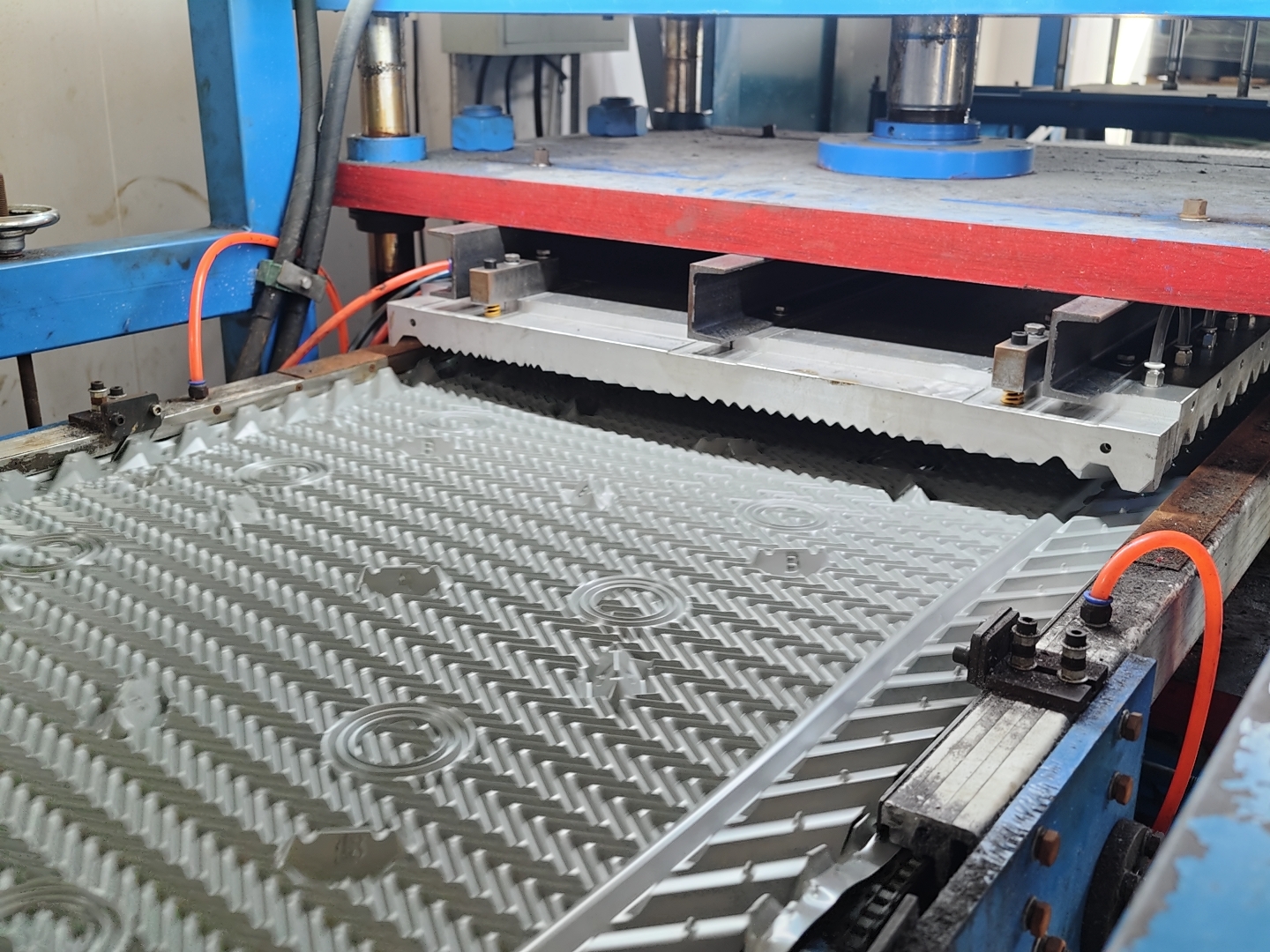
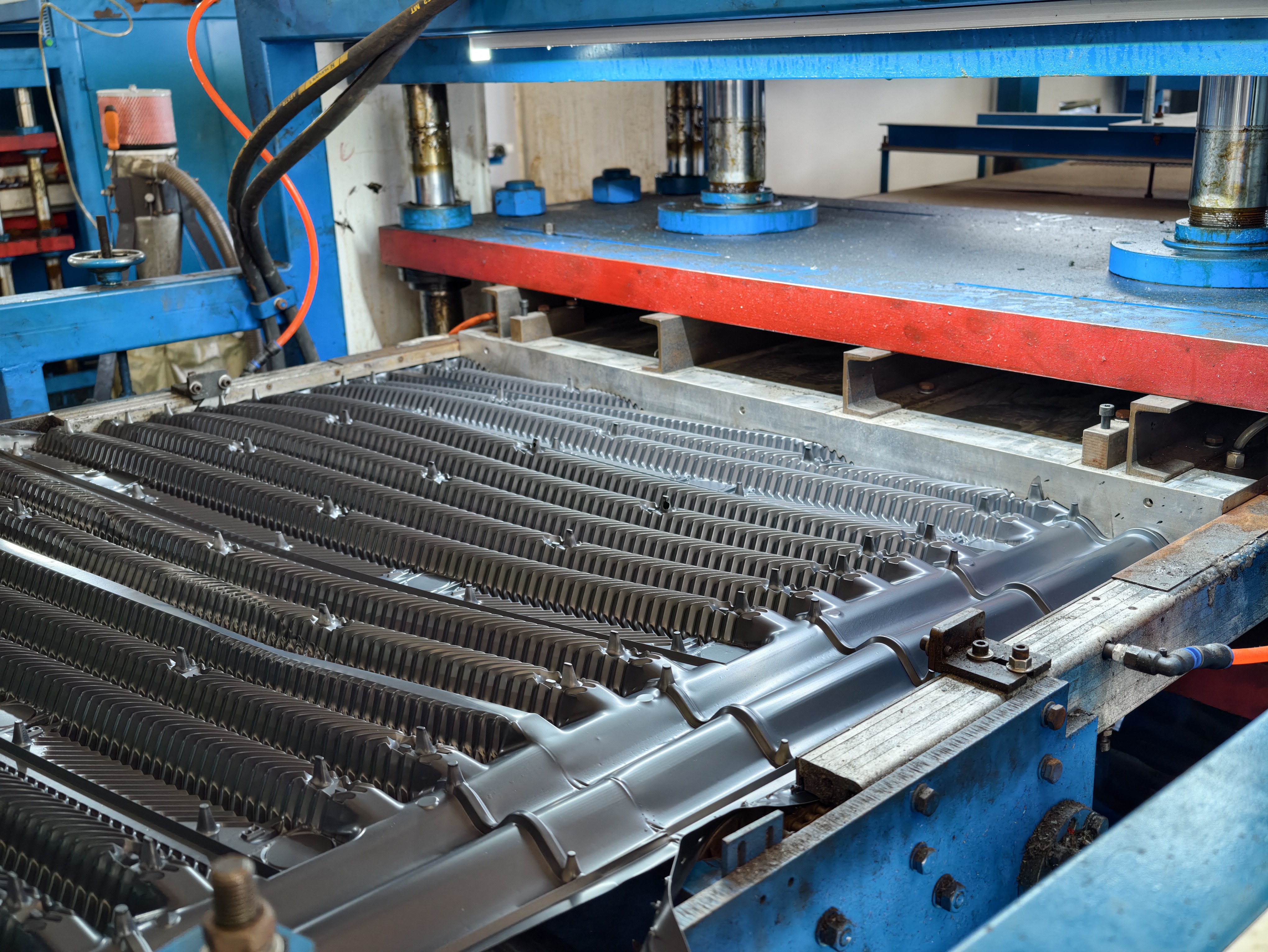
A professional manufacturer transforms raw plastic materials into engineered fill products that support the thermal and hydraulic requirements of cooling towers.
Product Design and Material Selection
Manufacturers select suitable materials and forming processes according to the intended application. PVC and PP are widely used for cooling tower fill, while the appropriate choice depends on temperature limits, chemical exposure, mechanical requirements, and project specifications.
Customized Manufacturing
Industrial cooling towers differ in size, structure, and internal configuration. Manufacturers may provide customized sheet dimensions, flute patterns, block heights, and assembly arrangements to match new installations or existing equipment.
Quality Control and Technical Support
Reliable production involves checking material specifications, sheet thickness, dimensions, forming quality, and finished product condition. Technical support also helps buyers confirm compatibility before placing large orders.
Which Industrial Applications Require High-Quality Cooling Tower Filler?
Cooling tower filler requirements vary according to the heat load, water quality, operating schedule, and cooling tower design. A suitable product must meet the needs of the actual application rather than follow a one-size-fits-all approach.
Cooling Tower Filler for Power Plants
Power plants use cooling systems to remove heat from steam condensers, auxiliary equipment, and other process systems. Cooling tower performance can influence overall plant operation and water temperature control.
Important Requirements for Power Generation
Fill selection should consider continuous operating conditions, circulating water characteristics, structural support, and the required thermal performance.
For large installations, dimensional consistency is especially important because even small variations can complicate installation across extensive fill areas.
Cooling Tower Filler for Chemical and Petrochemical Facilities
Chemical plants may operate cooling towers under demanding thermal and chemical conditions. The circulating water may contain treatment chemicals, dissolved minerals, or process-related contaminants.
Selecting Materials for Chemical Compatibility
PVC and PP can both be suitable for certain chemical environments, but compatibility must be verified for the specific chemical composition, concentration, temperature, and exposure duration.
Manufacturers should evaluate these factors before recommending a material for a specialized application.
Cooling Tower Filler for Steel and Metal Processing
Steel mills, foundries, and metal processing facilities often require continuous heat removal from production equipment. Cooling towers may operate under high thermal loads and challenging water conditions.
Managing Fouling and Thermal Stress
Suspended solids, scale, and biological deposits can reduce fill effectiveness. Where fouling is a significant concern, buyers should evaluate passage geometry, cleaning access, water treatment, and the suitability of alternative fill designs.
Cooling Tower Filler for HVAC and Commercial Facilities
Commercial buildings, hospitals, industrial parks, and data centers use cooling towers to support air-conditioning and process cooling systems.
Balancing Cooling Efficiency and Maintenance
For HVAC applications, the selected fill should provide suitable heat transfer while remaining compatible with the tower's airflow, water distribution system, and maintenance schedule.
A well-matched fill design can help support stable cooling operation without introducing unnecessary airflow resistance.
What Types of Cooling Tower Filler Can Manufacturers Supply?
Different cooling tower designs require different fill configurations. An experienced cooling tower filler manufacturer should understand how product geometry interacts with airflow, water distribution, and operating conditions.
Film Fill for High Heat Transfer Performance
Film fill spreads water into thin layers across specially formed surfaces, increasing the area available for heat and mass transfer.
How Film Fill Works
As water flows over the fill surface, it forms a thin film that comes into contact with moving air. The increased contact area supports heat transfer and evaporation within a relatively compact volume.
Where Film Fill Is Commonly Used
Film fill is widely used in HVAC and industrial cooling towers where circulating water quality and treatment practices help prevent excessive blockage.
Its narrow passages may be less suitable for some heavily contaminated water applications, so water quality must be considered during selection.
Splash Fill for Challenging Water Conditions
Splash fill uses specially designed bars or grids to break falling water into droplets. The resulting droplets repeatedly contact the surrounding air, supporting heat transfer.
Advantages of Splash Fill
Can be suitable for certain applications with higher suspended-solid loads.
Provides a fill configuration that differs from closely spaced film passages.
May offer practical maintenance advantages in appropriately designed systems.
Important Selection Considerations
Splash fill is not automatically the best option for every dirty-water application. Thermal performance, airflow resistance, tower dimensions, and the existing support arrangement must all be evaluated.
Crossflow Cooling Tower Filler
In a crossflow cooling tower, air moves horizontally through the fill while water flows downward.
Crossflow Fill Design Features
Crossflow fill must work with the tower's water distribution arrangement and horizontal airflow path. Replacement products should match the available installation space and support configuration.
Counterflow Cooling Tower Filler
In a counterflow cooling tower, air moves upward against the downward flow of water.
Counterflow Fill Selection
Manufacturers should consider flute geometry, fill height, water distribution, and airflow resistance. The selected product must be compatible with the tower's internal arrangement and operating requirements.
How Do Manufacturers Choose Between PVC and PP Cooling Tower Filler?
Material selection influences manufacturing characteristics, operating limits, durability, and purchasing costs. Although PVC and PP are both common materials, they should not be treated as interchangeable in every application.
PVC Cooling Tower Filler for General Industrial Use
PVC cooling tower filler is widely used because it can be formed into different surface patterns and fill configurations.
Main Benefits of PVC Fill
Suitable for many conventional industrial and HVAC cooling systems.
Available in a range of sheet thicknesses and flute geometries.
Supports customized dimensions for replacement and new installations.
Often provides a cost-effective option for standard operating conditions.
What Should Buyers Check Before Selecting PVC?
Buyers should confirm the product's rated operating temperature, chemical compatibility, fire performance requirements, and dimensional specifications. Actual suitability depends on the formulation and the conditions inside the cooling tower.
PP Cooling Tower Filler for Specialized Requirements
Polypropylene fill can be considered when an application requires particular chemical resistance or operating characteristics that are not adequately addressed by a proposed PVC product.
Key Characteristics of PP Fill
PP offers good resistance to many chemicals, although performance depends on the specific chemical, concentration, temperature, and material grade. Certain PP products may also support higher operating temperatures than conventional PVC products.
When Is PP a Suitable Alternative?
PP may be appropriate for selected industrial applications involving specialized water chemistry or elevated temperatures. The manufacturer should verify the intended operating range rather than relying on the material name alone.
PVC vs. PP: A Practical Comparison
| Selection factor | PVC cooling tower filler | PP cooling tower filler |
| Common applications | General industrial and HVAC cooling | Specialized industrial applications |
| Temperature limits | Must meet the product's rated limits | Depends on grade and product design |
| Chemical resistance | Depends on formulation and exposure | Depends on chemical and operating conditions |
| Product customization | Available in multiple configurations | Available in multiple configurations |
| Cost considerations | Often economical for standard requirements | Depends on material grade and specifications |
| Key purchasing priority | Cost, compatibility, and thermal performance | Specific chemical or thermal requirements |
The best choice depends on the complete operating environment. A professional manufacturer should compare material performance against the customer's actual requirements.
How Does a Cooling Tower Filler Manufacturer Ensure Product Quality?
Consistent quality is essential for industrial cooling tower projects, especially when large quantities of fill must fit together accurately.
Raw Material Control and Manufacturing Consistency
Material quality influences forming behavior, mechanical properties, and product stability during service.
Material Specification Verification
Manufacturers should establish clear raw material specifications and verify that the selected material is appropriate for the intended application.
Where required, buyers can request relevant technical data and quality documentation.
Sheet Thickness and Forming Accuracy
Sheet thickness and flute geometry affect the finished fill's dimensions and structural characteristics. Consistent forming helps reduce variation between sheets and assembled blocks.
Dimensional Inspection and Finished Product Checks
Manufacturing inspections should confirm that the finished product meets the agreed specification.
What Should Be Inspected?
Important inspection items include:
Sheet length, width, and thickness.
Fill block height and assembled dimensions.
Flute pattern and forming quality.
Cracks, deformation, and visible manufacturing defects.
Packaging condition and quantity before shipment.
Packaging and Transportation Protection
Cooling tower fill is often lightweight but bulky. Poor packaging can result in deformation or damage during transportation.
Packaging for Domestic and International Projects
Manufacturers should select packaging according to the fill configuration, shipment distance, container loading plan, and handling requirements. Export orders should also include accurate packing lists and product identification where needed.
Why Is Customized Cooling Tower Filler Important for Industrial Projects?
Standard fill dimensions may not fit older towers, specialized equipment, or replacement projects involving discontinued products. Custom manufacturing can help address these challenges.
Customized Dimensions for Existing Cooling Towers
A manufacturer can evaluate drawings, samples, photographs, and measurements to determine the required product dimensions.
Matching Existing Fill Blocks
Important details include block length, width, height, sheet thickness, flute spacing, and installation orientation. Correct dimensions help reduce the need for field modification and improve installation efficiency.
Customized Fill Geometry for Specific Operating Conditions
Fill geometry influences both the available heat transfer surface and the resistance encountered by moving air.
Balancing Thermal Performance and Airflow
Increasing surface area does not always guarantee better overall cooling. If the design creates excessive airflow resistance, fan energy consumption and cooling performance may be affected.
Manufacturers should consider thermal requirements and hydraulic characteristics together when developing customized fill.
Replacement Solutions for Older Equipment
Industrial cooling towers can remain in service long after their original fill model becomes difficult to source.
Using Samples and Technical Drawings
When original documentation is unavailable, physical samples and careful measurements can help establish a replacement specification. A technical review is recommended before mass production, especially when the original fill geometry is unknown.
How Can the Right Cooling Tower Filler Improve Operating Efficiency?
Cooling tower efficiency depends on multiple factors, including fill design, airflow, water distribution, ambient wet-bulb temperature, and the condition of the complete system.
Improving Water-Air Contact
Suitable fill geometry helps distribute water across the available surface area and supports effective contact between water and air.
Reducing Uneven Water Distribution
Poor distribution can create dry areas and localized water accumulation. Selecting compatible fill and maintaining the water distribution system can help improve the use of the available fill surface.
Managing Airflow Resistance
Fill must allow air to pass through while providing sufficient contact with the water.
Why Pressure Drop Matters
Excessive resistance may increase the load on the fan system or reduce airflow. Manufacturers should evaluate the intended fill geometry in relation to the tower's airflow requirements.
Supporting Consistent Cooling Performance
Clean, structurally sound fill helps maintain the intended cooling process.
The Role of Preventive Maintenance
Even a well-manufactured product can lose performance when scale, sediment, or biological growth accumulates. Appropriate water treatment, regular inspections, and timely cleaning remain essential throughout the fill's service life.
What Should Buyers Consider When Choosing a Cooling Tower Filler Manufacturer?
Selecting a supplier requires more than comparing unit prices. Industrial buyers should assess manufacturing capability, product compatibility, quality procedures, and delivery reliability.
Manufacturing Capacity and Product Range
A suitable manufacturer should be able to supply the required fill type, material, dimensions, and order quantity.
Questions to Ask a Potential Manufacturer
Can you manufacture both PVC and PP cooling tower filler?
Do you supply film fill and splash fill?
Can you support crossflow and counterflow tower configurations?
Can products be manufactured according to drawings or samples?
What quality inspections are performed before shipment?
Can you provide technical specifications and installation guidance?
Technical Communication and Engineering Support
Clear communication helps prevent errors involving dimensions, material selection, and installation requirements.
Confirming Specifications Before Production
Buyers should obtain written confirmation of the material, dimensions, quantity, product design, packaging, and delivery schedule. For complex projects, a drawing review or sample approval can reduce uncertainty before bulk production.
Delivery Planning and Export Experience
International industrial projects often depend on coordinated manufacturing and shipping schedules.
Managing Bulk Orders
A manufacturer should provide realistic lead times, appropriate packaging, and clear shipment documentation. Buyers should also confirm loading arrangements and delivery terms to avoid unexpected logistical costs.
How to Prepare a Cooling Tower Filler Replacement Inquiry
Providing complete technical information helps a manufacturer recommend an appropriate product and prepare an accurate quotation.
Essential Information for a Technical Quotation
Before contacting a supplier, prepare the following details where available:
Cooling tower manufacturer and model.
Cooling tower type: crossflow or counterflow.
Existing fill material and dimensions.
Required material: PVC, PP, or an alternative.
Operating water temperature and water quality.
Required quantity and installation location.
Drawings, photographs, or physical samples.
Destination port and preferred delivery schedule.
What If the Original Specifications Are Unavailable?
A replacement project can still begin with photographs, measurements, and a description of the cooling tower's operating conditions. The manufacturer can review the available information and identify what additional details are needed before confirming the final specification.
Conclusion: Choose a Cooling Tower Filler Manufacturer for Long-Term Performance
Selecting the right cooling tower filler manufacturer for industrial applications is an important step toward maintaining reliable cooling performance, controlling maintenance requirements, and supporting efficient plant operation.
The right solution depends on more than the material alone. Buyers should evaluate fill geometry, tower configuration, water quality, operating temperature, airflow resistance, and dimensional compatibility before choosing a product.
PVC and PP fill offer different advantages, while film fill and splash fill address different operating requirements. A qualified manufacturer can help compare these options, develop customized dimensions, and establish suitable product specifications for new installations or replacement projects.
For industrial buyers, a successful purchasing decision combines reliable manufacturing, consistent quality control, accurate technical communication, and practical delivery planning. By evaluating these factors together, businesses can select cooling tower filler that matches their equipment requirements and supports dependable operation over the long term.