If you are looking for a cooling tower infill supplier in Malaysia, you may think the buying process is straightforward: find a supplier, compare prices, place an order, and wait for delivery.
In reality, it is not quite that simple.
Cooling tower infill is one of the most important internal components of a wet cooling tower. It directly affects how water and air interact, how efficiently heat is transferred, how much airflow resistance the tower creates, and how reliably the cooling system operates.
Choose the wrong fill, and you may end up with poor cooling performance, excessive fouling, difficult installation, or unnecessary replacement costs.
Choose the right fill, however, and an old cooling tower can often regain a surprising amount of its original performance.
So, what should Malaysian buyers look for when choosing cooling tower infill?
This guide walks you through the key considerations, from PVC and PP fill to crossflow and counterflow designs, custom dimensions, water quality, supplier capability, OEM manufacturing, pricing, and delivery.
What Is Cooling Tower Infill?
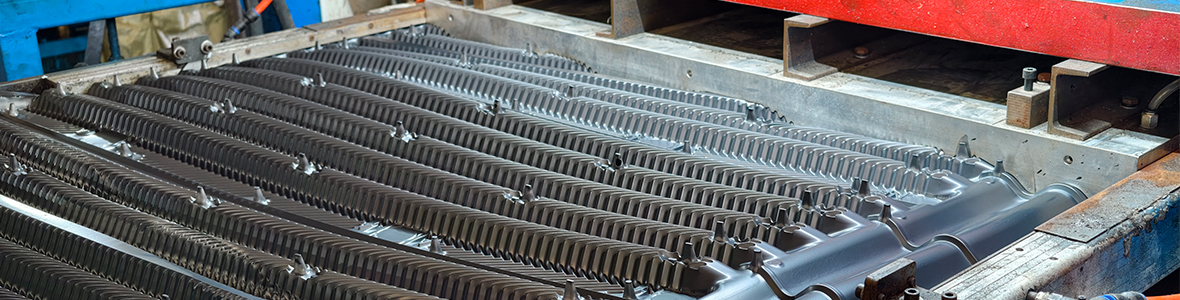
Cooling tower infill, also called cooling tower fill or fill media, is the heat-transfer material installed inside an evaporative cooling tower.
Its job sounds simple: increase the contact area between circulating water and air.
But that simple function is extremely important.
Imagine pouring a bucket of hot water into a pool. The water has contact with air, but the contact area is relatively limited. Now imagine spreading the same water across thousands of thin, closely arranged surfaces. The available contact area becomes much larger.
That is essentially what cooling tower fill does.
Hot water flows through the fill while air passes through it. The increased contact area allows heat and moisture to move more effectively between the water and air.
How Cooling Tower Infill Works
The basic cooling process depends on both heat transfer and evaporation.
Hot circulating water enters the tower and is distributed over the fill. Air moves through the fill section. As the water spreads or breaks into droplets, the contact area between water and air increases.
A small portion of the water evaporates, carrying heat away from the circulating water.
The cooled water then collects in the basin and returns to the process or HVAC system.
This makes the infill something like the working surface of the cooling tower.
The fan, motor, spray system and basin are all important, but the fill is where a large part of the air-water interaction takes place.
Why Fill Geometry Matters
Not all cooling tower infill looks or performs the same way.
The sheet thickness, flute pattern, flute angle, spacing, height and block arrangement can all affect performance.
These factors influence:
That is why replacing old fill with a product that merely "looks similar" is not always enough.
Why Infill Quality Matters
Good-quality cooling tower fill should provide an appropriate balance between thermal performance, airflow resistance, structural stability and service life.
If the fill passages become blocked with scale, dirt or biological growth, air cannot move through the tower as intended.
If the fill becomes brittle or deformed, water distribution may become uneven.
If the fill dimensions are incorrect, installation can become a nightmare.
Think of the fill as the lungs of the cooling tower. You can have a powerful fan, but if the passages are blocked, the whole system struggles to breathe.
This is why choosing a reliable cooling tower infill supplier in Malaysia is not simply a purchasing decision. It is an operational decision.
Main Types of Cooling Tower Infill
The most common cooling tower fill options include:
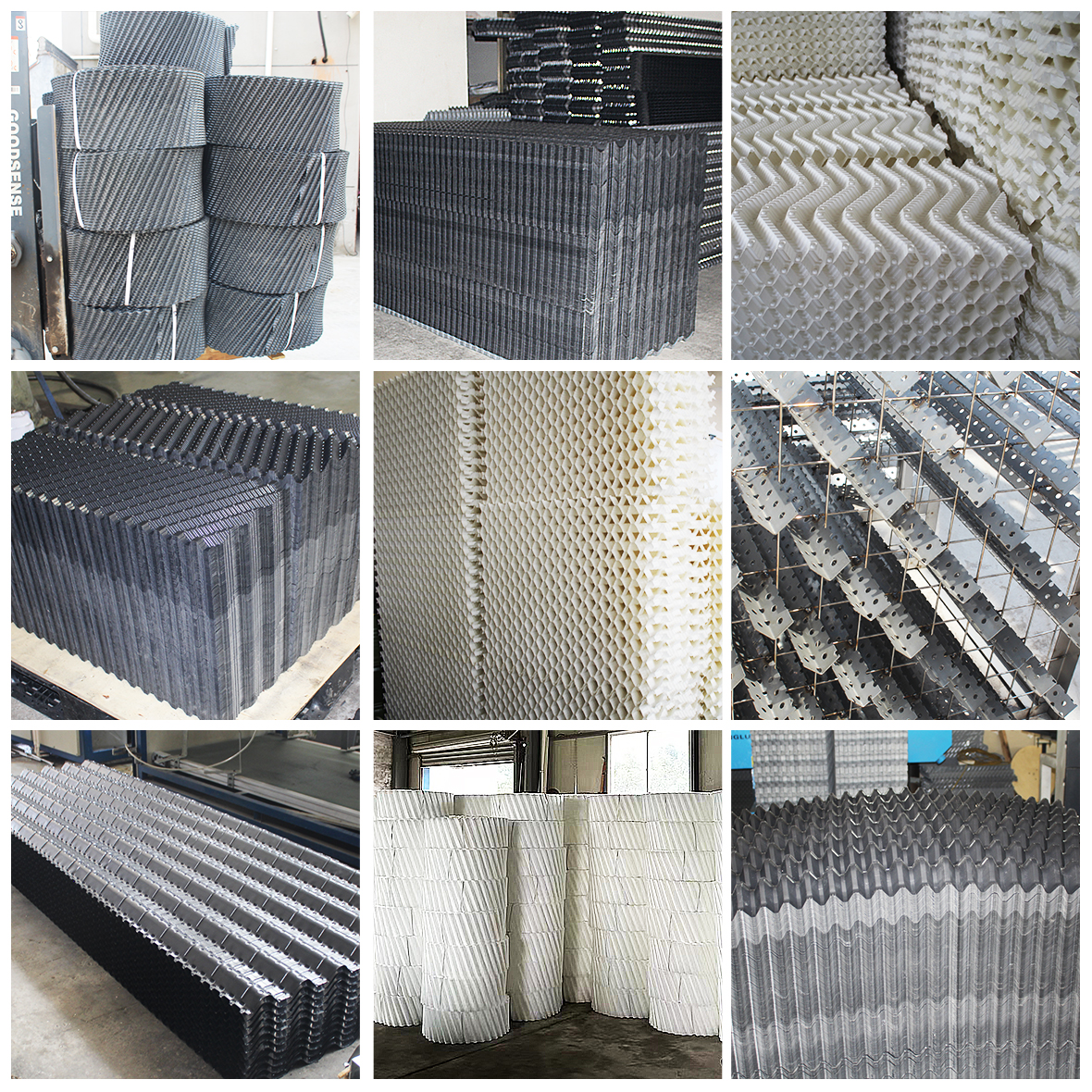
PVC film fill
PP film fill
Splash fill
Specialized replacement fill
Custom-engineered fill for specific tower configurations
The correct option depends on the tower design and operating conditions.
PVC Film Fill
PVC film fill is widely used in conventional cooling tower applications.
It consists of formed PVC sheets arranged to create a large effective surface area. Water spreads across the structured surfaces while air passes through the fill.
PVC is popular because it offers a practical combination of:
For many HVAC and industrial cooling applications, PVC film fill can be an economical choice.
However, PVC is not automatically suitable for every application. Operating temperature, chemical exposure and water quality should always be evaluated.
PP Cooling Tower Fill
PP, or polypropylene, is another important material used for cooling tower infill.
PP can be considered for applications where operating conditions are more demanding, particularly where higher temperature or chemical resistance is important.
Does that mean PP is always better than PVC?
Not necessarily.
It is better to think of PVC and PP as different tools in the toolbox.
If your application is conventional and the operating conditions are suitable for PVC, PVC may offer excellent value.
If the operating environment is more demanding, PP may justify its additional cost.
Splash Fill
Splash fill works differently from film fill.
Instead of spreading water across a continuous film surface, splash fill breaks falling water into smaller droplets as the water moves through the tower.
This type of fill can be particularly useful when water contains high levels of suspended solids or when fouling is a major concern.
Its more open structure can provide larger passages for water and air.
For difficult industrial water conditions, splash fill may sometimes provide better maintainability than tightly spaced film fill.
However, changing from film fill to splash fill should never be treated as a simple one-for-one replacement. Tower geometry, water loading, airflow and support structure all need to be checked.
Crossflow vs Counterflow Infill
Before ordering replacement cooling tower infill, identify whether your tower is crossflow or counterflow.
This is one of the first questions a professional supplier should ask.
Crossflow Cooling Tower Infill
In a crossflow cooling tower, air generally travels horizontally through the fill while water flows downward.
The fill therefore needs to work with the tower's existing air inlet and water distribution arrangement.
Crossflow systems can use different types of structured fill depending on the tower design.
Replacing existing crossflow fill with an unsuitable configuration can change airflow resistance and water distribution.
Counterflow Cooling Tower Infill
In a counterflow tower, water flows downward while air moves upward.
The two streams move in opposite directions, creating a countercurrent heat and mass transfer process.
Counterflow fill therefore needs to be matched carefully to:
Fill height
Water loading
Airflow
Flute geometry
Tower dimensions
Pressure drop
Operating conditions
Crossflow and counterflow fill should not be treated as interchangeable products.
Cooling Tower Infill for Malaysia’s Climate
Malaysia's warm and humid climate creates year-round demand for cooling systems.
Cooling towers can be found in factories, commercial buildings, HVAC systems, manufacturing facilities, power-related applications, process plants and other industrial environments.
The climate itself is not necessarily the biggest problem.
The bigger issue is the combination of warm temperatures, humidity, airborne dust, biological growth, mineral deposits and continuous operation.
This means Malaysian buyers should pay close attention to water treatment and fouling resistance when selecting cooling tower infill.
A technically excellent fill can still perform poorly if the tower's water quality is poorly controlled.
How Water Quality Affects Infill Selection
Water quality is one of the most overlooked factors when buying cooling tower fill.
Why?
Because two identical cooling towers can have completely different fill service lives if they operate with different water conditions.
High TSS and Suspended Solids
High total suspended solids can come from makeup water, dust, process contamination, corrosion products and inadequate filtration.
As solids accumulate, the passages inside the fill become narrower.
Airflow resistance can increase while heat-transfer performance declines.
If your cooling tower has a history of high TSS, discuss this with your supplier before selecting a tightly structured film fill.
Scale and Mineral Deposits
Scale can gradually cover the fill surface.
Even a thin layer can affect the way water spreads across the fill.
Heavy scaling can reduce open passages and increase airflow resistance.
If scaling is a recurring problem, replacing the fill without improving water treatment may only provide a temporary solution.
Algae and Biological Growth
Warm, wet cooling tower environments can encourage biological growth when water treatment is inadequate.
Algae and biofilm can block passages and reduce effective heat-transfer area.
This is why fill replacement should often be viewed as part of a broader cooling tower maintenance strategy.
What to Check Before Buying Cooling Tower Infill
Before asking a supplier for a quotation, collect as much technical information as possible.
The more accurate your information is, the less guessing the supplier has to do.
At minimum, prepare:
If drawings are available, send them as well.
Measuring Existing Cooling Tower Infill
Measurement is particularly important for replacement projects.
Measure the length, width and height of the existing fill section. Also check the support structure around the fill.
If possible, measure an individual fill sheet or block rather than estimating from the tower casing.
Take photographs from several angles.
A good set of photographs can tell a supplier a great deal about the existing fill geometry.
Dimensions, Thickness and Flute Geometry
Don't focus only on overall dimensions.
Two fill products may have exactly the same external dimensions but very different internal structures.
Check:
Sheet thickness
Flute angle
Flute spacing
Wave pattern
Block configuration
Material
Fill orientation
These characteristics can influence heat transfer, water distribution and pressure drop.
Choosing the Right Material
Choosing between PVC and PP should be based on the actual application.
PVC is often a strong choice for conventional cooling tower applications where temperature and chemical conditions are within the material's suitable range.
PP may be worth considering for applications involving higher temperatures or more demanding chemical conditions.
The question should not be:
"Which material is better?"
Instead, ask:
"Which material is better for my cooling tower?"
That small change in thinking can prevent expensive procurement mistakes.
Why Custom-Size Infill Matters
Many cooling tower replacement projects involve old equipment.
Perhaps the tower has been running for fifteen or twenty years.
Maybe the original fill model is no longer available.
Perhaps the tower has already been modified.
Or maybe the existing fill was custom-made from the beginning.
This is where custom-size cooling tower infill becomes valuable.
A standard product may look perfect on paper but still fail to fit the actual tower.
It is similar to replacing a custom-made window with an off-the-shelf frame. The new frame may be excellent, but if the dimensions are wrong, it still will not fit.
When Should You Consider Custom Fill?
Custom manufacturing is especially useful when:
The original fill is discontinued
The tower is an older model
Existing dimensions are non-standard
The tower has been modified
OEM replacement is expensive
Multiple tower brands are involved
A contractor needs repeat production
A specific fill geometry is required
For industrial maintenance teams, custom manufacturing can turn a difficult replacement project into a much more manageable one.
OEM Cooling Tower Infill Solutions
OEM manufacturing is another important consideration for B2B buyers.
OEM does not necessarily mean buying directly from the original cooling tower manufacturer.
A specialized cooling tower component manufacturer may be able to manufacture replacement fill according to drawings, dimensions, samples or technical requirements.
This can be particularly useful for contractors and distributors.
OEM Replacement for Existing Tower Brands
A supplier may be able to review:
The goal is simple: produce replacement fill that is technically appropriate for the existing tower.
Private Label and Repeat Orders
OEM manufacturing can also help distributors create consistent product specifications.
For example, suppose a Malaysian cooling tower service company handles ten or twenty replacement projects every year.
Instead of buying whatever generic fill is available each time, the company can establish standard specifications with a manufacturer.
This can improve:
Product consistency
Repeat ordering
Packaging
Inventory management
Private labeling
Project planning
For B2B buyers, that flexibility can be more valuable than saving a few dollars on a single order.
How to Choose a Cooling Tower Infill Supplier in Malaysia
Now we reach the most important question.
How do you actually choose the right supplier?
Don't evaluate suppliers based only on price.
Instead, look at the complete package.
Manufacturing Capability
A capable supplier should understand more than simply selling plastic fill.
Ask whether the manufacturer can provide different materials, configurations and dimensions.
Customization capability becomes particularly important when replacing old or non-standard cooling tower fill.
Quality Control
Ask how the supplier controls:
Raw material consistency
Sheet thickness
Fill dimensions
Flute geometry
Bonding
Block assembly
Packaging
Final inspection
Consistency matters.
If one block is slightly different from another, installation can become difficult.
Technical Support
A good supplier should ask questions before giving you a final quotation.
If a supplier immediately gives you a price without asking about the tower type, fill dimensions, material or operating conditions, be careful.
A professional quotation starts with understanding the application.
Price vs Total Project Cost
The cheapest fill is not necessarily the cheapest solution.
Consider the complete cost:
Product + shipping + installation + downtime + maintenance + service life
For example, a cheaper product that requires significant modification during installation may ultimately cost more than a slightly more expensive product that fits correctly.
Lead Time and Shipping to Malaysia
For industrial projects, delivery time can be just as important as product price.
A cooling tower that cannot operate properly may affect an entire production process.
Before ordering, confirm:
Production lead time
Packing method
Shipping method
Export documentation
Quantity
Delivery location
Estimated transit time
Replacement schedule
For urgent maintenance projects, tell the supplier your required delivery date at the beginning of the quotation process.
Power Tower Cooling Technology (Shaoxing) Co.,Ltd

For Malaysian buyers searching for a cooling tower infill supplier, Power Tower Cooling Technology (Shaoxing) Co.,Ltd is a practical manufacturer to consider for replacement and customized cooling tower components.
The company focuses on cooling tower parts and replacement solutions, including cooling tower infill for different tower configurations and project requirements.
Its product scope can support applications involving:
PVC cooling tower fill
PP cooling tower fill
Film fill
Splash fill
Crossflow cooling tower fill
Counterflow cooling tower fill
Replacement fill
Custom-size fill
Other cooling tower components
For a replacement project, buyers can provide the existing fill dimensions, photographs, tower information and operating conditions so the supplier can evaluate the appropriate configuration.
For Malaysian contractors, distributors and industrial maintenance teams, this type of manufacturer-direct sourcing can also simplify procurement when multiple cooling tower components are required.
Website: Power Tower Cooling Technology (Shaoxing) Co.,Ltd

Cooling Tower Infill Applications in Malaysia
Cooling tower infill is used across a wide range of Malaysian applications.
Industrial Manufacturing
Manufacturing plants may use cooling towers for process cooling, compressors, heat exchangers, machinery, injection molding and other equipment.
In these applications, reliability is critical.
A fill that becomes severely fouled after a short period can create operational headaches, even if its initial thermal performance looks good.
HVAC and Commercial Buildings
Hotels, shopping centers, office buildings and large commercial facilities commonly use cooling towers for centralized air conditioning.
These applications generally prioritize:
Stable cooling
Energy efficiency
Low maintenance
Water management
Long service life
For conventional HVAC systems, appropriately selected PVC film fill can be a practical option.
Chemical and Process Industries
Chemical and process applications require additional attention to material compatibility.
Water chemistry, operating temperature and chemical exposure should be discussed with the supplier before selecting PVC or PP.
Never assume that a material is suitable simply because it worked in another tower.
Common Buying Mistakes
Let's look at some of the mistakes buyers make most often.
Mistake 1: Buying Only on Price
A low unit price is attractive.
But what happens if the product does not fit?
You may pay more for cutting, modification, additional labor and downtime.
Mistake 2: Ignoring Water Quality
New fill cannot solve an untreated water-quality problem.
If scale, algae and suspended solids remain uncontrolled, new fill can deteriorate much faster than expected.
Mistake 3: Choosing by Appearance
Two black PVC fill blocks may look almost identical.
That does not mean they have identical flute geometry or thermal characteristics.
Mistake 4: Forgetting the Tower Configuration
Crossflow and counterflow towers have different airflow and water-flow arrangements.
Always confirm the tower configuration before ordering.
Mistake 5: Not Providing Measurements
If the supplier does not know the actual dimensions, quotation accuracy becomes much more difficult.
Photos and measurements are cheap insurance.
How to Order Cooling Tower Infill
The purchasing process can be surprisingly simple if you prepare the right information.
Step 1: Identify the Tower
Record the manufacturer, model and tower type.
Step 2: Inspect the Existing Fill
Check for scaling, blockage, deformation, cracks, brittleness and biological growth.
Step 3: Measure the Fill
Record length, width, height, thickness and other relevant dimensions.
Step 4: Take Photos
Photograph the complete tower, fill section, individual sheets or blocks, support structure and water distribution system.
Step 5: Describe Operating Conditions
Provide:
Step 6: Request a Technical Quotation
Ask the supplier to confirm:
Step 7: Verify Before Production
For custom products, carefully confirm the drawings, dimensions and specifications before manufacturing starts.
This simple step can prevent a surprisingly expensive mistake.
Maintenance After Infill Replacement
Installing new fill is only half the job.
The other half is keeping it in good condition.
Regularly inspect the fill for:
Also inspect the nozzles and water distribution system.
Why?
Because even excellent fill cannot perform properly if water is distributed unevenly across the fill.
Water treatment should also remain part of the overall cooling tower maintenance program.
Think of it this way: replacing the fill gives your cooling tower a fresh start. Poor water treatment can simply recreate the same problem.
Frequently Asked Questions
What is cooling tower infill used for?
Cooling tower infill increases the effective contact area between water and air. This promotes heat and mass transfer and helps the tower reject heat more efficiently.
What is the difference between PVC and PP cooling tower fill?
PVC is widely used for conventional cooling tower applications because of its balance of performance, cost and manufacturability. PP may be considered for applications involving more demanding temperature or chemical conditions.
Is film fill or splash fill better?
Neither is universally better.
Film fill can provide high effective surface area and is widely used in conventional applications. Splash fill can be advantageous in some applications involving dirtier water or higher fouling risks.
The correct choice depends on the tower and water conditions.
Can cooling tower fill be custom-made?
Yes. Custom cooling tower fill can be manufactured according to dimensions, material, flute geometry, block configuration and other project requirements, depending on the supplier's manufacturing capabilities.
What information should I send to a supplier?
Provide the tower model, tower type, fill dimensions, fill quantity, material if known, operating temperatures, water flow, water quality and photographs.
Drawings or an existing fill sample can make the evaluation even easier.
Can Power Tower supply cooling tower infill to Malaysia?
Power Tower Cooling Technology (Shaoxing) Co.,Ltd is a manufacturer and supplier of cooling tower components and replacement fill for international B2B applications. Malaysian buyers can provide project specifications to discuss suitable fill configurations and supply requirements.
How can I get an accurate quotation?
The best approach is to send detailed measurements, photographs, tower information and operating conditions instead of asking for a price based only on "cooling tower fill."
The more technical information you provide, the more accurately the supplier can evaluate the product and quantity.
Conclusion
Finding the right cooling tower infill supplier in Malaysia is about much more than comparing two prices.
You need to look at the complete picture.
Start with the tower configuration. Is it crossflow or counterflow?
Then evaluate the water conditions. Is the system clean, or does it contain high TSS, scale, algae or process contaminants?
Next, choose the right material. PVC may be ideal for many conventional applications, while PP or splash fill may deserve consideration under more demanding conditions.
For replacement projects, pay close attention to dimensions. A fill that does not fit correctly can turn a simple maintenance project into an expensive installation problem.
Finally, evaluate the supplier itself.
Look for manufacturing capability, customization, quality control, technical support, reliable packaging and reasonable lead times.
For Malaysian industrial buyers, contractors and distributors, Power Tower Cooling Technology (Shaoxing) Co.,Ltd can be considered as a manufacturer-direct sourcing option for cooling tower infill and related components.
The smartest purchase is rarely the product with the lowest price tag.
It is the product that fits correctly, performs reliably, survives the operating environment and arrives when you need it.
That is the real goal of choosing the right cooling tower infill supplier.


