Cooling tower filler plays an important role in heat transfer, water distribution, and overall cooling system performance. In industrial facilities, worn, clogged, or damaged fill media can reduce cooling efficiency, increase maintenance requirements, and affect production reliability. Replacing existing fill or retrofitting an older cooling tower can help restore performance when the new media is correctly selected and installed.
China cooling tower filler manufacturers and suppliers offer PVC film fill, polypropylene (PP) fill, splash fill, and customized replacement packs for a wide range of industrial cooling applications. For international buyers, sourcing from China can provide access to multiple product options, customized dimensions, and bulk supply services.
This guide explains how to select China cooling tower filler for industrial replacement and retrofit projects, including material selection, compatibility, technical considerations, and supplier evaluation.
Why Replace or Retrofit Industrial Cooling Tower Fill?
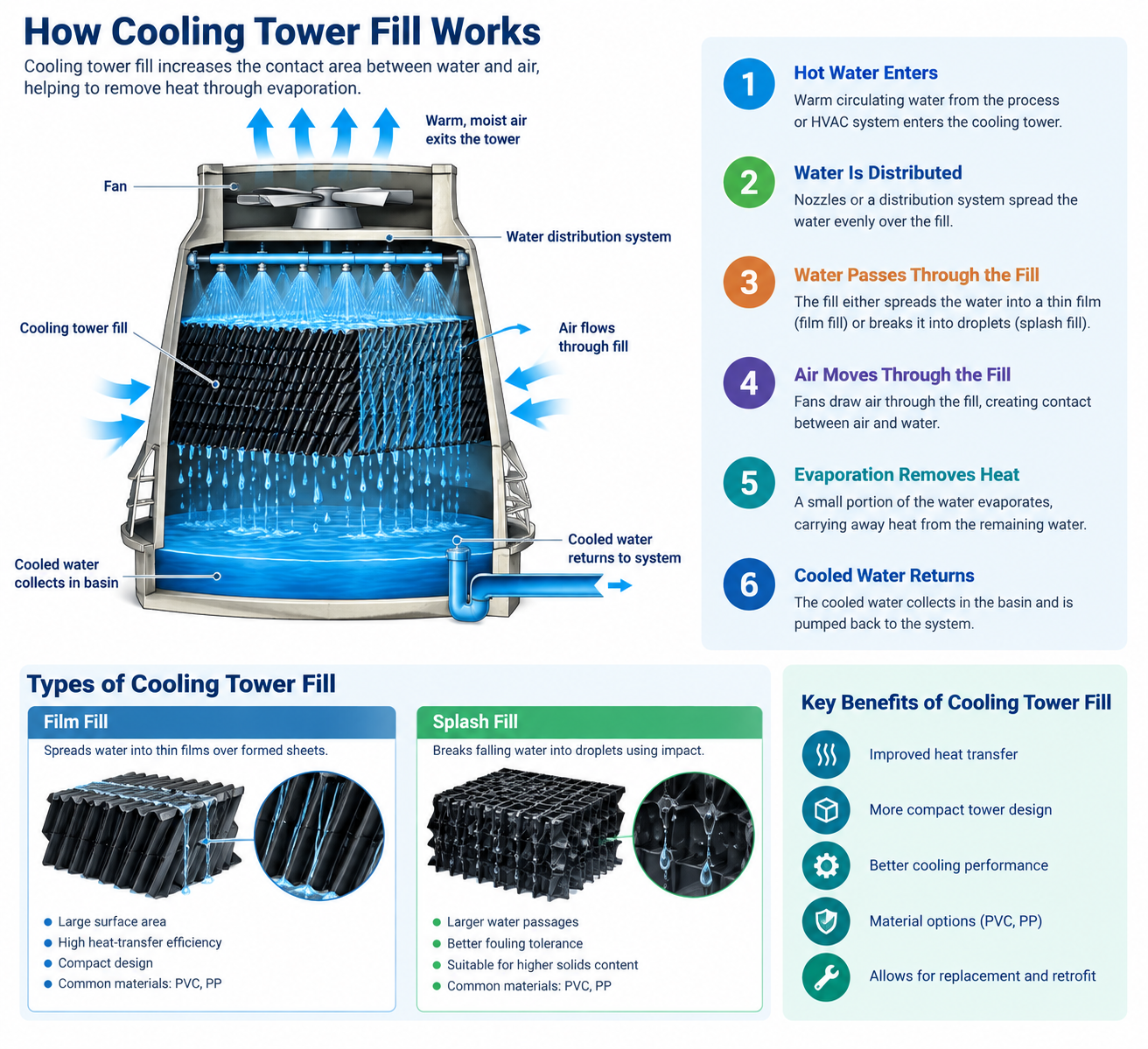
Cooling tower fill increases the contact area between water and air, supporting heat transfer as warm water passes through the tower. Over time, operating conditions can damage the fill or reduce its effectiveness.
Common reasons for replacement include:
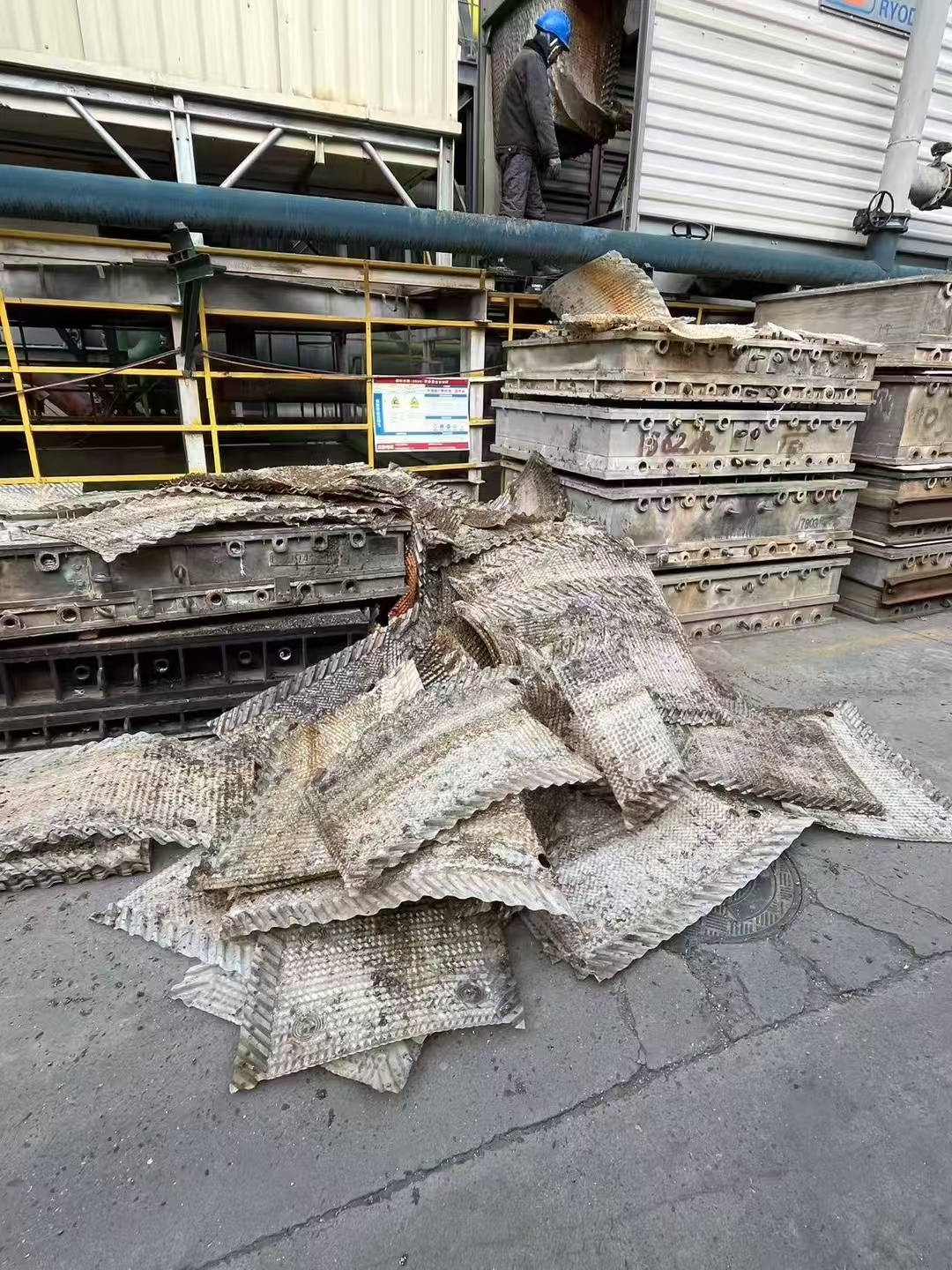
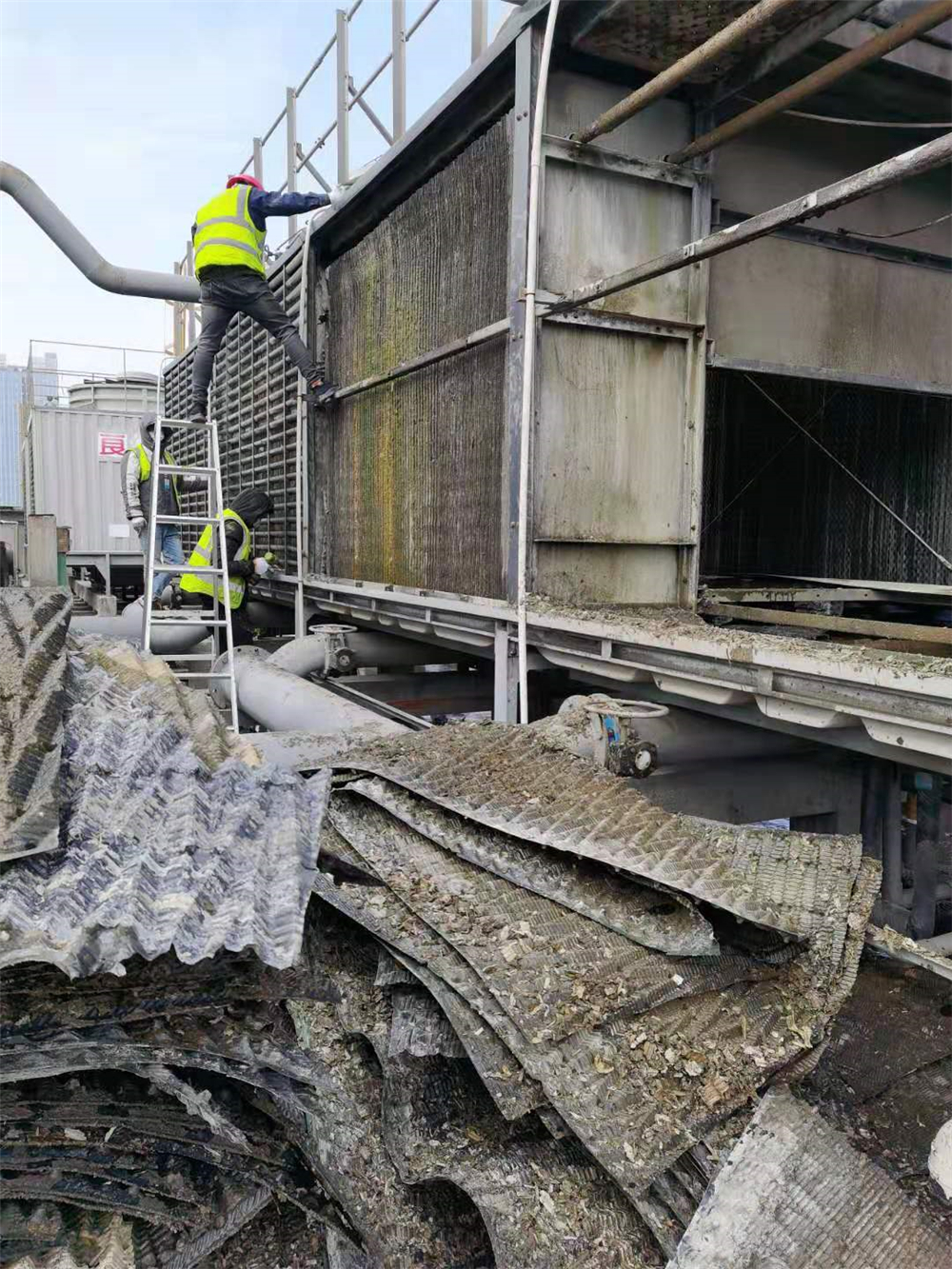
Scaling and fouling: Mineral deposits, sediment, and biological growth restrict water flow and reduce effective contact area.
Structural deterioration: Fill sheets may become brittle, warped, cracked, or collapsed.
Reduced cooling performance: Damaged or clogged media can contribute to poor thermal performance.
Maintenance challenges: Repeated cleaning may become costly or ineffective.
System upgrades: An industrial facility may need to improve cooling capacity or adapt an existing tower to changed operating conditions.
A retrofit may involve replacing fill alone or modifying other components, such as fill supports, water distribution equipment, and drift eliminators. The appropriate scope depends on the tower's condition and engineering requirements.
Types of China Cooling Tower Filler for Replacement Projects
Selecting the correct fill type is essential. Film fill and splash fill have different operating characteristics and should not be treated as interchangeable without technical review.
PVC Cooling Tower Film Fill
<AsyncImage query="industrial cooling tower PVC film fill replacement packs corrugated plastic sheets close up" aspectRatio="5:4" width="100%" />
PVC film fill uses formed sheets to spread water into thin films, increasing the contact area between water and air. It is widely used in industrial and commercial cooling towers.
Key considerations include:
Sheet profile and thickness
Operating water temperature
Water quality and fouling tendency
Pack dimensions and installation arrangement
Airflow resistance and thermal performance
PVC film fill is often considered for standard replacement projects where operating conditions are compatible with the selected product.
PP Cooling Tower Fill
<AsyncImage query="polypropylene PP cooling tower fill media corrugated sheets industrial replacement packing" aspectRatio="5:4" width="100%" />
PP fill may be appropriate when polypropylene's material properties meet the application's temperature, chemical, and mechanical requirements.
Buyers should request product-specific operating limits rather than assume all PP fill products provide the same performance. Material grade, sheet design, and manufacturing quality all matter.
Splash Cooling Tower Fill
<AsyncImage query="industrial cooling tower splash fill plastic grid bars fill media replacement" aspectRatio="5:4" width="100%" />
Splash fill promotes water-air contact by repeatedly breaking falling water into droplets. It may be considered for certain applications with higher suspended-solids loads or fouling risks, depending on the tower design.
Before changing from film fill to splash fill, assess the thermal design, water distribution, airflow, and available installation space.
Key Requirements for Industrial Cooling Tower Fill Replacement
Successful replacement starts with understanding the existing installation.
Confirm Fill Dimensions
Record the pack length, width, height, sheet thickness, profile, and installation orientation. Also check the spacing and condition of the supporting structure.
Incorrect dimensions can lead to gaps, unstable installation, bypass airflow, or interference with water distribution.
Check Material Compatibility
Review water temperature, chemical treatment, suspended solids, biological growth, and any process contaminants. Select PVC, PP, or another suitable material based on documented operating limits.
Maintain Thermal and Hydraulic Performance
Fill geometry affects heat transfer and airflow resistance. A different profile or pack configuration may change the tower's performance, even if the replacement fits physically.
For major retrofits, ask a qualified cooling tower engineer or the fill manufacturer to review the proposed design against the tower's required thermal duty and airflow conditions.
Inspect Related Components
A fill replacement project is also an opportunity to inspect water distribution pipes and nozzles, drift eliminators, fill supports, air inlets, and other components. Damaged or poorly functioning components may limit the benefits of new fill.
Cooling Tower Retrofit: Replacement Fill vs. Performance Upgrade
Not every project requires a complete cooling tower redesign.
| Project approach | Typical objective | Key consideration |
| Like-for-like fill replacement | Restore the original configuration | Match dimensions, material, and design |
| Custom replacement fill | Fit a non-standard or aging tower | Verify geometry and support compatibility |
| Fill media retrofit | Address changing operating requirements | Review thermal and hydraulic performance |
| Combined component upgrade | Improve overall tower condition | Check interactions between fill, distribution, and airflow |
| Partial fill replacement | Replace localized damaged sections | Avoid uneven performance and incompatible pack arrangements |
A like-for-like replacement is generally the simplest approach when the original design remains suitable. A retrofit that changes fill geometry or material requires more technical evaluation.
How to Choose a China Cooling Tower Filler Manufacturer
Industrial buyers should evaluate suppliers on more than price.
Manufacturing capability: Confirm whether the supplier manufactures fill media directly or sources it from another factory. Request evidence of relevant production capabilities.
Technical support: Ask whether the supplier can review drawings, confirm pack dimensions, and provide material specifications.
Quality control: Establish inspection requirements for dimensions, assembly, material, and visible defects. For larger orders, consider sample approval and pre-shipment inspection.
Customization: Confirm whether the supplier can produce the required profiles, dimensions, and packaging.
Export experience: Check shipping arrangements, export documentation, packaging protection, and delivery schedules.
After-sales support: Clarify how the supplier handles non-conforming products, damage, or discrepancies between approved specifications and delivered goods.
A reliable supplier should be able to explain how the proposed fill matches your application and identify any information still needed before production.
What Affects China Cooling Tower Filler Prices?
The cost of replacement fill for industrial projects depends on several factors:
Material: PVC and PP have different costs and operating characteristics.
Fill type and profile: Film fill and splash fill use different designs and production processes.
Dimensions and thickness: Larger packs or higher material consumption affect the unit price.
Order quantity: Bulk orders may provide better production efficiency.
Customization: Special dimensions, tooling, and sample production may increase initial costs.
Project scope: Removal, disposal, installation, support repairs, and related components affect total retrofit expenditure.
Shipping: Packaging, freight, insurance, and destination handling contribute to landed cost.
When comparing China cooling tower filler quotations, make sure each supplier prices the same material, dimensions, quantity, and delivery terms. The lowest unit price may not represent the lowest overall project cost.
Recommended Procurement Process for Replacement and Retrofit Projects
Follow these steps to reduce purchasing risks:
Inspect the tower: Document existing fill condition, operating problems, and maintenance history.
Collect specifications: Record dimensions, material, cooling requirements, and water conditions.
Define project scope: Decide whether the project requires like-for-like replacement or an engineered retrofit.
Request quotations: Ask shortlisted Chinese suppliers for itemized pricing and technical documentation.
Review samples and drawings: Confirm compatibility before authorizing bulk production.
Plan installation: Coordinate delivery, shutdown timing, removal, and installation requirements.
Verify performance: After installation, check water distribution, airflow, leakage or bypass issues, and cooling performance under appropriate operating conditions.
Documenting the approved specifications can also make future replacement orders easier and more consistent.
Source Industrial Cooling Tower Filler from China
Power Tower Cooling Technology supports industrial buyers looking for cooling tower fill media and replacement components for maintenance, refurbishment, and retrofit projects.
Available sourcing requirements may include PVC film fill, PP fill, splash fill, custom fill pack dimensions, and bulk orders. Buyers should provide the tower model, existing fill measurements, operating conditions, quantity, and delivery destination to help identify suitable options.
Contact Power Tower Cooling Technology with your technical drawings, photographs, or replacement specifications to discuss cooling tower filler solutions for your industrial project.
Frequently Asked Questions
When should industrial cooling tower fill be replaced?
Consider replacement when the fill is structurally damaged, persistently clogged, or unable to support acceptable cooling performance after appropriate cleaning and maintenance. Inspection findings and operating data should guide the decision.
Can China cooling tower filler be customized for an existing tower?
Many suppliers offer custom dimensions and profiles, subject to their manufacturing capabilities. Provide drawings or samples and obtain written confirmation of specifications before production.
Is PVC or PP better for industrial cooling tower retrofit projects?
Neither material is universally better. The choice depends on operating temperature, water chemistry, fouling conditions, mechanical requirements, and the original tower design.
Can replacement fill increase cooling capacity?
Replacement fill may restore lost performance if the existing media is damaged or fouled. Increasing design capacity, however, requires engineering evaluation of the complete system, including airflow, water distribution, fan capability, and thermal requirements.
What should I send a supplier to get an accurate quotation?
Provide the fill type, material, dimensions, quantity, operating conditions, installation details, destination country, and delivery schedule. Photos, drawings, and samples can help reduce specification errors.
Recommended internal links for CoolingTowerPart.com: