Professional Cooling Tower Fill Media Supplier for Power & HVAC
Cooling tower fill media plays an important role in heat rejection for power plants, commercial buildings, and industrial cooling systems. By increasing the contact area between circulating water and air, cooling tower fill helps promote heat transfer and evaporation, allowing cooling towers to operate under different load and environmental conditions. Selecting the right fill media is essential for maintaining reliable cooling performance, controlling maintenance requirements, and supporting long-term system efficiency.
For power plants and HVAC facilities, choosing a professional cooling tower fill media supplier involves more than comparing product prices. Buyers need to evaluate material quality, fill design, thermal performance, dimensional accuracy, water quality compatibility, and the supplier's ability to provide consistent products for installation or replacement projects.
A reliable supplier should understand the different requirements of power generation facilities and building cooling systems. Power plants may operate under demanding thermal loads and strict maintenance schedules, while HVAC cooling towers often need dependable seasonal performance and manageable operating costs. The right cooling tower fill media solution should match the actual equipment configuration, operating temperature, water distribution arrangement, and maintenance strategy.
This article explores how professional cooling tower fill media suppliers support power plants and HVAC systems, what materials and designs are available, and how buyers can select suitable products for new projects and existing cooling towers.
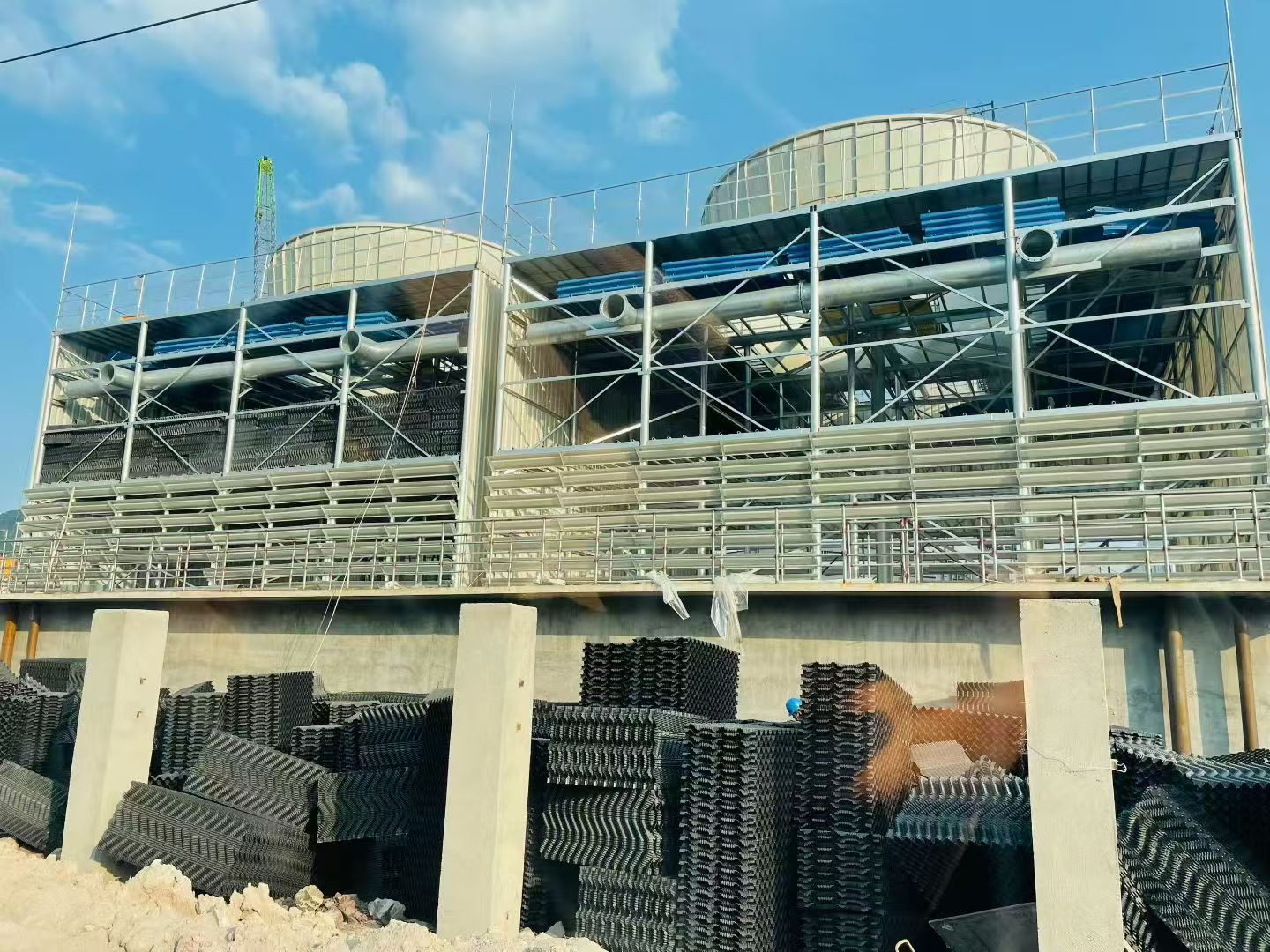
Why Is Cooling Tower Fill Media Important for Power Plants and HVAC Systems?
Cooling tower fill media is designed to increase the effective contact between air and water inside a cooling tower. Its surface structure helps spread circulating water and creates conditions that support heat exchange.
How Does Cooling Tower Fill Media Improve Heat Transfer?
When hot water enters a cooling tower, it passes through the fill section while air moves through the tower. A portion of the water evaporates, carrying heat away from the circulating water. Sensible heat transfer also occurs as water and air exchange heat due to temperature differences.
Increasing the Effective Contact Area
Structured fill provides more contact area than an arrangement in which water simply falls through open space. By encouraging water to spread across the fill surfaces, it helps make better use of the available tower volume.
Supporting Uniform Water Distribution
Uniform water distribution is important for consistent cooling. If some sections receive too little water, the available fill surface may not be fully utilized. Excessive concentration in other areas can create uneven operating conditions.
A suitable fill design works together with the tower's distribution system to promote more consistent wetting.
Balancing Heat Transfer and Airflow Resistance
High-performance fill must balance effective contact area with airflow resistance. Fill with overly restrictive passages may interfere with airflow, while a design with insufficient contact area may not achieve the required thermal performance.
A professional supplier should consider the cooling tower's original design and operating requirements when recommending a replacement product.
Why Do Power Plants Require Reliable Fill Media?
Power plants use cooling towers to reject heat from condensers and auxiliary cooling systems. Depending on the facility, cooling tower performance can influence the operating conditions of important heat exchange equipment.
Supporting Continuous Heat Rejection
Power generation facilities may operate for extended periods under changing thermal loads. Fill media must be suitable for the tower's water flow, temperature range, airflow arrangement, and maintenance requirements.
Reducing the Risk of Unplanned Maintenance
Blocked passages, damaged fill, and uneven water distribution can affect cooling performance. Proper material selection, regular inspection, and effective water treatment help reduce the likelihood of premature deterioration.
For projects with limited shutdown windows, a professional cooling tower fill media supplier should provide clear specifications and realistic production and delivery schedules.
What Makes HVAC Cooling Tower Fill Different?
HVAC cooling towers are commonly used in commercial buildings, hospitals, hotels, shopping centers, office complexes, and district cooling systems.
Meeting Seasonal Cooling Requirements
HVAC systems often experience changing cooling demand throughout the year. Fill media must support the intended cooling duty while remaining compatible with the tower's airflow and water distribution systems.
Supporting Practical Maintenance
Building operators generally need cooling tower components that are easy to inspect and maintain. Fill selection should account for water quality, seasonal operating patterns, access for cleaning, and the availability of replacement components.
What Services Should a Professional Cooling Tower Fill Media Supplier Provide?
A professional supplier should help buyers identify products that meet the technical and commercial requirements of their projects. Product availability alone is not enough; specification review and clear communication are also important.
Technical Consultation and Product Selection
Different cooling towers require different fill dimensions, surface geometries, and material specifications. Suppliers should review the application before recommending a product.
Reviewing Existing Cooling Tower Specifications
Useful information includes the cooling tower manufacturer and model, existing fill type, dimensions, material, water flow rate, operating temperature, and airflow direction.
Photographs, drawings, and physical samples can help suppliers understand the original configuration when complete technical documentation is unavailable.
Matching Products to Operating Conditions
The supplier should consider water quality, temperature, expected cooling duty, and maintenance requirements. This is particularly important when replacing old fill with a product that has a different sheet pattern or passage configuration.
Customized Cooling Tower Fill Media Manufacturing
Power plants and HVAC facilities may use cooling towers from different manufacturers, each with its own fill dimensions and internal arrangements.
Custom Dimensions and Block Configurations
A supplier may offer customized sheet sizes, block dimensions, and assembly configurations according to its manufacturing capabilities. The goal is to ensure that the replacement media fits the available installation space and matches the intended tower arrangement.
Material and Design Options
Depending on the application, buyers may consider PVC or PP fill media, as well as different fill geometries. Any proposed change should be evaluated for thermal compatibility, airflow resistance, and water distribution.
Quality Control and Product Consistency
Consistent manufacturing quality helps reduce installation problems and supports predictable product performance.
Dimensional Inspection
Fill sheets and blocks should meet the agreed dimensions and tolerances. Incorrect dimensions may lead to gaps, interference with surrounding components, or difficulties during installation.
Material Verification
Buyers should request clear material specifications and confirm that the product is suitable for the expected temperature, water chemistry, and mechanical conditions.
Packaging and Transportation Protection
Cooling tower fill sheets and blocks may be damaged by crushing, deformation, or improper handling. Appropriate packaging and stable loading arrangements help protect the product during storage and transportation.
Types of Cooling Tower Fill Media for Power Plants and HVAC Systems
Cooling tower fill media is available in different materials and configurations. The appropriate option depends on operating conditions, water quality, required cooling performance, and the existing tower design.
PVC Cooling Tower Fill Media
Polyvinyl chloride, or PVC, is widely used for many conventional cooling tower applications. It can be formed into structured sheets that support water distribution and heat transfer.
Key Advantages of PVC Fill
PVC fill media offers several practical advantages when used within its specified operating limits.
Available in different sheet patterns and dimensions
Suitable for many commercial HVAC and industrial cooling applications
Provides design flexibility for replacement projects
Offers practical material costs for many conventional installations
Can be manufactured in customized configurations according to supplier capabilities
PVC Fill for HVAC Systems
PVC fill is often considered for building cooling systems where operating temperatures and water chemistry are compatible with the selected material.
For HVAC applications, buyers should also consider seasonal operating conditions, water treatment practices, ease of inspection, and the cost of future replacement.
PVC Fill for Power Plant Applications
PVC may be suitable for selected power plant cooling tower applications, provided that the operating temperature, chemical exposure, and other service conditions remain within the product's documented limits.
Power plant buyers should verify the proposed product's specifications rather than assuming that all PVC fill products have identical performance characteristics.
PP Cooling Tower Fill Media
Polypropylene, or PP, is another material used in cooling tower fill manufacturing. Depending on its grade and formulation, PP may provide useful chemical resistance for selected operating environments.
Benefits of PP Fill Media
Potential advantages include:
Resistance to many chemicals, depending on the material grade
Flexibility in customized product design
Availability for selected industrial cooling applications
Potential suitability where a particular PVC formulation is not preferred
When Should Buyers Consider PP Fill?
PP may be considered when the operating temperature, chemical exposure, or process environment makes its properties attractive. However, buyers should confirm the material's temperature limits, mechanical properties, and compatibility with cleaning chemicals.
PVC and PP should be compared using actual technical specifications rather than material names alone.
Film Fill and Splash Fill
Cooling tower fill can also be classified by the way it brings air and water into contact.
Film Fill for Efficient Heat Transfer
Film fill uses structured surfaces to spread water into thin films. This creates a relatively large contact area and can support effective heat transfer when water distribution is uniform.
However, the suitability of film fill depends on water quality and fouling risk. Narrow passages may become blocked by scale, sediment, or biological growth.
Splash Fill for Selected Operating Conditions
Splash fill breaks falling water into smaller droplets using bars, grids, or other structures. It may be considered for applications where water conditions create concerns about blockage.
The choice between film fill and splash fill should be based on the cooling tower's original design, thermal requirements, and water quality. The two configurations should not be treated as interchangeable without engineering review.
Cooling Tower Fill Media Solutions for Power Plants
Power plants often require careful planning because cooling tower performance is closely connected to heat rejection and equipment operating conditions.
Fill Media for Condenser Cooling Towers
Condenser cooling towers remove heat from circulating water associated with steam condensers or other heat exchange equipment.
Matching Fill to the Required Cooling Duty
The fill configuration should be compatible with the required water flow, hot-water temperature, target cold-water temperature, ambient wet-bulb conditions, and airflow arrangement.
A supplier should request sufficient technical information to assess whether the proposed fill is appropriate for the existing tower.
Considering Operating Reliability
Power generation facilities may have limited opportunities for major maintenance. Product consistency, accurate dimensions, and reliable delivery can be important when replacement work must be completed during a planned shutdown.
Fill Media for Auxiliary Cooling Systems
Power plants may also use cooling towers for auxiliary systems, including selected equipment cooling and industrial utility processes.
Reviewing Different Water Conditions
Auxiliary systems can have different water chemistry, operating temperatures, and contamination risks. Fill selection should reflect the actual conditions rather than assuming that one product is suitable for every cooling tower at the facility.
Planning Fill Replacement During Plant Shutdowns
Replacement work may require coordination between maintenance teams, contractors, and suppliers.
Confirming Quantity and Delivery Schedules
Buyers should confirm the required fill quantity, packing dimensions, shipping arrangements, and installation schedule well before the planned shutdown.
Inspecting Supporting Components
A fill replacement project is also an opportunity to inspect support structures, water distribution components, drift eliminators, and other internal parts.
Damaged components should be evaluated and repaired or replaced as necessary before the tower returns to service.
Cooling Tower Fill Media Solutions for HVAC Systems
HVAC cooling towers serve a broad range of buildings and central cooling installations. Their fill media should match the equipment design, seasonal load, and maintenance resources available to the facility.
Fill Media for Commercial Air Conditioning
Commercial HVAC systems use cooling towers to reject heat from chiller condenser water.
Maintaining Consistent Cooling Performance
If fill passages become blocked or water distribution becomes uneven, the cooling tower may struggle to achieve its intended cold-water temperature under comparable operating conditions.
Appropriate fill selection, regular water treatment, and periodic inspection help support reliable performance.
Considering Seasonal Operating Patterns
Some HVAC systems experience significant seasonal changes in load. Maintenance teams should consider how the tower operates during peak cooling periods and during periods of reduced demand.
Fill selection must still meet the tower's design requirements across its intended operating range.
Fill Media for Hospitals, Hotels, and Shopping Centers
Facilities with continuous cooling requirements often prioritize operational reliability and predictable maintenance.
Reducing Maintenance Disruption
Cooling tower maintenance can affect building comfort and operational schedules. Buyers should consider replacement access, installation time, packaging, and spare component availability when selecting a supplier.
Supporting Water Treatment Programs
Commercial towers may experience scale, sediment, and biological growth if water treatment is inadequate. Fill selection should reflect the water quality and the facility's ability to perform routine cleaning.
Fill Media for District Cooling Systems
District cooling installations serve multiple buildings and may operate with substantial cooling loads.
Evaluating System-Level Performance
The cooling tower is part of a larger system involving chillers, pumps, heat exchangers, and distribution networks. Fill media should be selected to match the tower's design and operating conditions rather than evaluated as an isolated component.
Where a replacement involves a change in fill geometry, the potential effect on airflow and thermal performance should be reviewed.
How to Select the Right Cooling Tower Fill Media
A structured selection process helps buyers avoid incompatible products and unnecessary replacement costs.
Step 1: Identify the Cooling Tower Model and Configuration
Start with the manufacturer's name, tower model, original fill type, and existing internal arrangement.
Collect Essential Information
Prepare the following details when possible:
Cooling tower manufacturer and model
Fill material and configuration
Existing sheet and block dimensions
Required cooling capacity
Circulating water flow rate
Normal and maximum water temperatures
Airflow direction and fan arrangement
Water quality and treatment method
Photographs, drawings, or samples of the existing fill
Complete information helps suppliers evaluate compatibility and prepare a more accurate quotation.
Step 2: Evaluate Operating Temperature and Water Chemistry
Material selection must reflect the actual service environment.
Confirm Material Temperature Limits
Normal and peak water temperatures should be compared with the manufacturer's documented limits. Buyers should not assume that all PVC or PP products have the same temperature resistance.
Review Chemical Compatibility
Water treatment additives, cleaning chemicals, and process contaminants can affect material suitability. Where chemical exposure is significant, provide the supplier with details of the substances and their concentrations.
Step 3: Assess Fouling Risk and Maintenance Requirements
Water quality influences the choice of fill geometry and the expected maintenance workload.
Identify Potential Blockage Sources
Common sources include suspended solids, mineral deposits, biological growth, and contamination from industrial processes.
Balance Thermal Performance and Cleanability
A fill design with high effective contact area may perform well under suitable water conditions but may require more attention if its passages are vulnerable to fouling.
Buyers should consider the facility's water treatment program, inspection access, and cleaning procedures when selecting a product.
Step 4: Verify Dimensions and Installation Compatibility
Dimensional accuracy is essential for replacement projects.
Measure the Installation Space
Confirm the available length, width, height, support arrangement, and access restrictions. Check how the fill blocks fit together and whether nearby components could interfere with installation.
Confirm Any Design Changes
If the replacement product differs from the original fill, request confirmation that the new geometry is appropriate for the tower's airflow and water distribution arrangement.
Step 5: Compare Supplier Quality and Total Cost
The lowest initial quotation does not necessarily offer the best overall value.
Compare Equivalent Products
Evaluate quotations using consistent specifications, including material, dimensions, quantity, packaging, and technical requirements.
Consider the Full Project Cost
Total cost may include product price, shipping, installation labor, maintenance, and future replacement requirements. Delivery reliability and product consistency are especially important when downtime is expensive.
Installation Guidelines for Cooling Tower Fill Media
Correct installation helps ensure that the selected fill fits the cooling tower and performs as intended.
Prepare the Installation Area
Before removing existing fill, follow the facility's shutdown and isolation procedures. Ensure safe access, appropriate protective equipment, and suitable handling arrangements.
Inspect the Internal Structure
Check support rails, brackets, distribution components, and other internal structures for damage, corrosion, or obstructions.
Repair identified problems according to the facility's procedures before installing the replacement fill.
Install Fill Blocks According to the Approved Arrangement
Fill blocks should be installed according to the supplier's instructions and the approved tower configuration.
Check Alignment and Spacing
Incorrect alignment can create gaps, interfere with airflow, or prevent the fill from sitting properly on its supports.
Avoid forcing blocks into position or modifying structural components without appropriate engineering approval.
Inspect Water Distribution After Installation
Once the fill is installed, verify that distribution components are correctly positioned and that water can reach the intended fill area.
Check for Uneven Wetting
During commissioning, inspect water distribution for obvious dry areas, concentrated flow, or other abnormalities. Correct any problems before returning the tower to normal operation.
Verify Cooling Tower Operation
After restarting the tower, monitor water temperatures, airflow, water flow, vibration, and other relevant operating indicators.
Performance should be evaluated under comparable conditions, taking into account ambient wet-bulb temperature and heat load.
Maintenance Strategies for Longer Cooling Tower Fill Service Life
Regular maintenance helps preserve fill condition and supports reliable cooling tower operation.
Establish a Preventive Inspection Program
Inspection frequency should reflect water quality, operating hours, seasonal load, and manufacturer recommendations.
Look for Physical Damage
Inspect for cracks, deformation, collapsed sections, and damaged supports. Record any changes to help identify deterioration over time.
Monitor Blockage and Uneven Water Distribution
Check for sediment, scale, biological growth, and sections that are not being wetted properly.
If deposits return repeatedly, investigate the cause rather than relying only on repeated cleaning.
Maintain Effective Water Treatment
Water treatment helps manage scale, corrosion, and biological growth.
Monitor Relevant Water Parameters
Depending on the system, parameters may include pH, conductivity, hardness, suspended solids, and microbiological indicators. Appropriate targets should be established by qualified water treatment personnel.
Correct the Underlying Cause of Fouling
Repeated blockage may indicate problems with filtration, makeup water quality, treatment controls, or process contamination. Addressing these issues can help protect the replacement fill.
Use Compatible Cleaning Methods
Cleaning methods should be suitable for the fill material and deposit type.
Avoid Damage During Cleaning
Excessive mechanical force or incompatible chemicals can damage fill surfaces and shorten service life. Follow the supplier's instructions and the site's safety procedures.
Monitor Cooling Performance Over Time
Track relevant operating data, including hot-water temperature, cold-water temperature, water flow, and fan operation.
Compare Performance Under Similar Conditions
Cooling tower results vary with ambient wet-bulb temperature, heat load, and airflow. Consistent measurement methods help maintenance teams distinguish actual deterioration from changes in operating conditions.
Quality Standards and Manufacturing Control for Cooling Tower Fill Media
Manufacturing control helps ensure that the delivered product matches the agreed specification and can be installed as intended.
Raw Material Quality
Material properties influence thermal limits, mechanical strength, chemical compatibility, and durability.
Request Material Documentation
Buyers should confirm the material grade and documented operating limits. For specialized applications, request supporting technical information relevant to the actual operating conditions.
Dimensional Accuracy and Production Consistency
Consistent sheet dimensions and block configurations help reduce installation problems.
Inspect Customized Orders
For customized projects, confirm the approved drawings, dimensions, tolerances, and quantities before production. Any proposed changes should be reviewed and accepted before manufacturing continues.
Final Inspection and Packaging
Before dispatch, the supplier should verify the finished products against the agreed requirements.
Protect Products During Shipping
Appropriate packaging and loading methods help reduce the risk of deformation or crushing during transportation. Buyers should confirm packing quantities, shipment dimensions, and handling requirements in advance.
How to Choose a Professional Cooling Tower Fill Media Supplier
A professional supplier should combine product knowledge, manufacturing capability, communication, and dependable delivery arrangements.
Assess Technical Experience
Ask whether the supplier has experience with the type of cooling tower and application involved.
Confirm Product Compatibility
The supplier should review dimensions, material requirements, water conditions, and airflow arrangements before confirming a replacement recommendation.
Review Customization Capabilities
Different towers may require different dimensions and fill configurations.
Provide Drawings and Samples
Drawings, photographs, or samples can help reduce misunderstandings. Confirm the final specification in writing before production.
Evaluate Communication and Documentation
Clear communication helps buyers compare products and manage projects efficiently.
Request a Detailed Quotation
A quotation should clearly state material, dimensions, quantity, configuration, packaging, lead time, shipping terms, and relevant technical information.
Confirm Delivery and After-Sales Support
For international procurement, production lead time and transportation planning can be just as important as product price.
Plan Around Project Deadlines
Confirm delivery requirements early, particularly when the fill must arrive before a scheduled plant shutdown or HVAC maintenance window.
Frequently Asked Questions About Cooling Tower Fill Media Suppliers
What Does a Cooling Tower Fill Media Supplier Provide?
A supplier may provide PVC or PP fill media, customized sheets or blocks, replacement products, technical specifications, and project-related support, depending on its capabilities.
Which Cooling Tower Fill Media Is Best for Power Plants?
There is no single material or design suitable for every power plant. Selection depends on the tower configuration, operating temperatures, water chemistry, thermal duty, airflow requirements, and maintenance strategy.
Is PVC Fill Suitable for HVAC Cooling Towers?
PVC fill is commonly used in many HVAC cooling tower applications when the selected product's material limits are compatible with the operating environment. Buyers should verify temperature limits, water chemistry, and installation requirements.
Can Cooling Tower Fill Media Be Customized for Existing Towers?
Many suppliers can offer customized dimensions and configurations. Buyers should provide the tower model, measurements, drawings, photographs, and operating conditions to confirm compatibility.
How Often Should Cooling Tower Fill Media Be Replaced?
Replacement intervals vary according to water quality, operating temperature, material condition, maintenance practices, and mechanical damage. Regular inspection and performance monitoring are more reliable than applying one fixed interval to every tower.
Can New Fill Media Reduce Cooling Tower Energy Consumption?
Suitable fill may help restore intended heat transfer performance when the existing media is blocked or deteriorated. However, actual energy consumption depends on the complete system, including fans, pumps, water distribution, heat load, and operating conditions.
What Information Should Be Included in a Supplier Inquiry?
Include the cooling tower model, fill dimensions, material preference, quantity, operating temperatures, water quality, delivery destination, and target delivery date. Photographs or drawings are useful when available.
Conclusion: Your Professional Cooling Tower Fill Media Supplier for Power Plants and HVAC Systems
Choosing a professional cooling tower fill media supplier is an important step in maintaining dependable cooling tower operation. Power plants require fill solutions that match their thermal duty and maintenance schedules, while HVAC facilities need products compatible with their cooling loads, operating patterns, and maintenance resources.
A successful procurement process starts with accurate measurements and a clear understanding of the existing tower. Buyers should compare PVC and PP options, verify material compatibility, review fill geometry, assess water quality, and confirm installation requirements before approving an order.
A capable supplier should provide consistent products, clear technical specifications, appropriate customization, protective packaging, and realistic delivery schedules. These factors help reduce procurement uncertainty and support smoother installation and replacement work.
Whether you are sourcing fill media for a power plant, commercial HVAC system, or industrial cooling tower, prioritize product compatibility, manufacturing quality, and long-term maintenance needs. The right cooling tower fill media solution can help maintain effective heat transfer, support reliable operation, and contribute to better management of overall cooling system costs.


