Liang Chi Cooling Tower Fill: Design, Performance and Benefits
Liang Chi cooling tower fill is an important heat-transfer component used in wet cooling towers to improve contact between circulating water and air. By increasing the effective surface area available for heat and mass transfer, cooling tower fill helps reduce the temperature of circulating water and supports stable cooling performance.
For cooling tower owners, operators, distributors, and maintenance companies, choosing the right Liang Chi cooling tower filler can be important when upgrading an existing tower or replacing damaged fill media. The correct fill design must match the tower configuration, water distribution system, airflow, operating temperature, and water quality.
This guide explains the design, materials, performance characteristics, applications, maintenance considerations, and replacement factors associated with Liang Chi cooling tower fill.
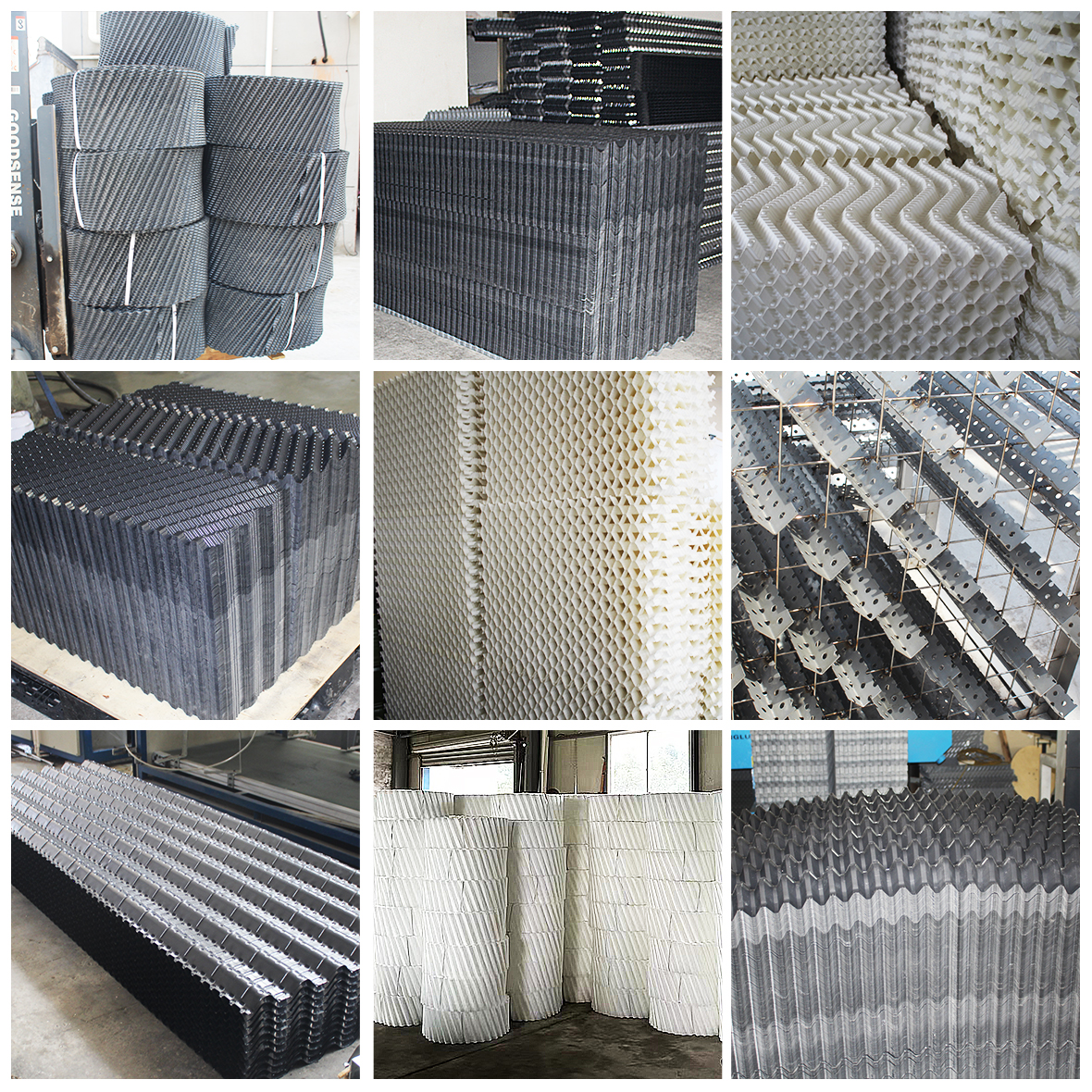
What Is Liang Chi Cooling Tower Fill?
Liang Chi cooling tower fill is the heat-transfer media installed inside a cooling tower to increase the contact area between water and air.
When warm water enters the tower, it flows over or through the fill while air passes through the tower. The fill helps distribute water across a larger surface area, allowing heat to transfer from the water to the air more efficiently.
Why Is Cooling Tower Fill Important?
Without an effective fill system, water would have relatively limited contact with moving air.
A properly designed cooling tower filler can help provide:
Greater water-air contact area
Improved heat transfer
More uniform water distribution
Better cooling efficiency
Compact tower design
Stable thermal performance
The Basic Cooling Process
Step 1: Hot Water Enters the Tower
Warm process water or condenser water enters the cooling tower through the distribution system.
Step 2: Water Reaches the Fill
The distribution system spreads water over the cooling tower fill.
Step 3: Air Passes Through the Fill
Fans or natural draft move air through the tower.
Step 4: Heat and Moisture Transfer Occur
Heat transfers from the water to the air, while a portion of the water evaporates.
Step 5: Cooled Water Returns to the System
The cooled water collects in the basin and returns to the industrial or HVAC system.
How Does Liang Chi Cooling Tower Fill Work?
The primary function of Liang Chi cooling tower fill is to improve the interaction between water and air.
Increasing Effective Surface Area
Cooling tower fill divides water into thin films or smaller streams, depending on the fill design.
This creates significantly more water-air contact area than a simple open water stream.
Improving Water Distribution
A properly designed fill encourages water to spread across the available surface.
Uniform distribution helps reduce dry areas and allows more of the fill to participate in the cooling process.
Supporting Evaporative Cooling
As air passes through the wet fill, a small amount of water evaporates.
The evaporation process removes heat from the remaining water.
Why Evaporation Matters
Evaporative cooling can remove substantial amounts of heat without requiring the same amount of energy that would be needed for purely mechanical cooling.
This is why fill design plays such an important role in the thermal performance of a wet cooling tower.
What Are the Main Design Features of Liang Chi Cooling Tower Fill?
The performance of a cooling tower filler depends heavily on its geometry.
Film-Type Fill Design
Film fill creates a thin layer of water across structured surfaces.
This design can provide a large effective surface area within a relatively compact volume.
Surface Pattern
The corrugated or textured pattern can encourage water spreading and increase turbulence.
Water Film Formation
The objective is to maintain a relatively continuous water film over the fill surface.
A stable water film provides more opportunities for heat and mass transfer.
Cross-Flow Cooling Tower Fill
Many cooling towers use a cross-flow configuration in which air moves horizontally across the falling water.
In this arrangement, the fill must be compatible with the tower's airflow and water distribution design.
Benefits of Cross-Flow Fill
Cross-flow fill can provide:
Effective water-air contact
Accessible maintenance areas
Flexible tower layouts
Efficient use of fill volume
Counterflow Cooling Tower Fill
Counterflow towers move air upward while water flows downward.
The fill geometry must support effective countercurrent contact between air and water.
Counterflow Performance
When properly designed, counterflow fill can achieve strong thermal performance within a compact tower footprint.
What Materials Are Used for Liang Chi Cooling Tower Fill?
Cooling tower fill is commonly manufactured from thermoplastic materials, with PVC being widely used in many applications.
PVC Cooling Tower Fill
PVC is popular because it offers a practical combination of:
Why Is PVC Suitable for Cooling Towers?
Cooling tower environments can expose fill media to moisture, treatment chemicals, minerals, and biological contaminants.
Properly selected PVC can provide reliable performance under many standard operating conditions.
PP Cooling Tower Fill
Polypropylene can also be used when applications require different temperature or chemical-resistance characteristics.
PVC vs. PP
The selection between PVC and PP should consider:
Operating temperature
Water chemistry
Required service life
Mechanical requirements
Cost
Tower design
How Does Liang Chi Cooling Tower Fill Improve Tower Performance?
A well-designed fill system can influence several aspects of tower operation.
Improved Heat Transfer
More effective water-air contact allows heat to move from the circulating water into the air more efficiently.
Better Cooling Capacity
When the fill is properly matched to the tower, the system can achieve the required cooling range more consistently.
More Uniform Water Distribution
Uniform wetting helps prevent unused or poorly wetted sections of fill.
Compact Heat Transfer Area
Film fill can provide a large effective surface area within a relatively small physical volume.
Balancing Heat Transfer and Airflow Resistance
Higher surface area does not automatically mean better overall performance.
The fill should provide an appropriate balance between:
Heat-transfer efficiency
Airflow resistance
Water distribution
Fouling resistance
Operating cost
Why Pressure Drop Matters
If fill geometry creates excessive airflow resistance, the fan may need to consume more energy to maintain the required airflow.
Therefore, fill design should consider both thermal and aerodynamic performance.
What Factors Affect Liang Chi Cooling Tower Fill Performance?
Even high-quality fill can perform poorly when operating conditions are unsuitable.
Water Flow Rate
The circulating water flow must be compatible with the fill design.
Too little water can result in incomplete wetting, while excessive water loading can increase hydraulic resistance.
Airflow
Airflow determines how effectively heat and moisture can be transferred away from the water.
Water Temperature
Operating temperature affects evaporation, material durability, and overall cooling performance.
Water Quality
Poor water quality can lead to scaling, biological growth, and sediment accumulation.
Common Water Quality Problems
Scaling
Mineral deposits can cover the fill surface and reduce the effective heat-transfer area.
Biological Fouling
Algae, bacteria, and other biological growth can restrict water and air passages.
Suspended Solids
Sediment can accumulate inside fill channels and increase airflow resistance.
How Does Fill Design Affect Cooling Tower Efficiency?
The relationship between fill geometry and tower efficiency is critical.
Surface Area
A larger effective surface area generally provides more opportunities for water-air contact.
Channel Geometry
The size and shape of fill channels influence water distribution and airflow.
Contact Time
The fill should provide sufficient interaction between air and water without unnecessarily restricting airflow.
Water Film Thickness
Film thickness affects the rate of heat and mass transfer.
Optimizing the Fill Structure
An experienced cooling tower fill manufacturer considers multiple factors rather than optimizing only one parameter.
Important Design Parameters
Surface area
Flute angle
Channel size
Sheet spacing
Thickness
Water loading
Airflow resistance
Fouling potential
What Are the Applications of Liang Chi Cooling Tower Fill?
Liang Chi cooling tower fill can be used in a variety of cooling applications, depending on the tower configuration and fill specification.
HVAC Cooling Towers
Commercial and industrial HVAC systems use cooling towers to reject heat from chilled-water or condenser-water systems.
Industrial Process Cooling
Manufacturing facilities may use cooling towers for:
Machinery cooling
Process water cooling
Compressor cooling
Heat exchanger systems
Production equipment
Power and Energy Facilities
Cooling towers are widely used to remove waste heat from energy-related systems.
Chemical and Petrochemical Industries
Process industries often require continuous and reliable cooling.
In these applications, fill material must be selected according to temperature, water chemistry, and contamination conditions.
How to Choose the Right Liang Chi Cooling Tower Fill?
Selecting replacement or new fill should be based on the actual cooling tower conditions.
Check the Tower Type
First determine whether the tower is:
Cross-flow
Counterflow
Induced draft
Forced draft
Mechanical draft
Natural draft
Confirm Fill Dimensions
Accurate dimensions are essential for replacement projects.
Important measurements include:
Length
Width
Height
Sheet thickness
Block configuration
Flute direction
Why Are Dimensions Important?
Incorrect dimensions can create gaps or installation difficulties.
They may also interfere with water distribution and airflow.
Check Operating Temperature
Temperature is particularly important when selecting thermoplastic fill materials.
Standard Applications
Standard PVC fill is suitable for many conventional cooling tower applications.
Higher-Temperature Applications
For higher-temperature systems, alternative materials or specialized fill designs may be required.
Consider Water Quality
If the cooling water contains high levels of suspended solids, biological contaminants, or scale-forming minerals, a fill with appropriate fouling resistance may be preferable.
When Should Liang Chi Cooling Tower Fill Be Replaced?
Cooling tower fill does not necessarily need to be replaced according to a fixed calendar schedule.
Instead, operators should evaluate its physical condition and cooling performance.
Signs of Damaged Fill
Look for:
Cracked sheets
Broken sections
Collapsed fill blocks
Severe deformation
Excessive scaling
Biological growth
Blocked passages
Signs of Reduced Thermal Performance
A tower may require fill inspection when operators observe:
Higher outlet water temperature
Reduced cooling range
Increasing fan operation
Higher approach temperature
Uneven water distribution
Performance-Based Replacement
If cleaning no longer restores acceptable performance, replacement may be more economical than continued maintenance.
How Can Liang Chi Cooling Tower Fill Be Maintained?
Regular maintenance can help preserve fill performance.
Control Water Chemistry
Proper water treatment is one of the most important ways to protect cooling tower fill.
It can help control:
Scale
Corrosion
Biological growth
Sediment
Inspect Water Distribution
Even high-quality fill cannot perform effectively if water distribution is poor.
Check the Distribution System
Inspect:
Pipes
Headers
Nozzles
Valves
Spray patterns
Why Nozzles Matter
Blocked or damaged nozzles can create dry areas on the fill, reducing the effective heat-transfer area.
Clean the Fill
Cleaning should be performed according to the type and severity of contamination.
Avoid Aggressive Cleaning
Excessive mechanical force or unsuitable chemicals may damage PVC fill.
Use a Controlled Cleaning Procedure
A suitable procedure should consider:
Liang Chi Cooling Tower Fill Replacement Considerations
Replacing cooling tower fill is a practical way to restore thermal performance when existing media has deteriorated.
Measure the Existing Fill
Before ordering replacement fill, measure the existing blocks carefully.
Check the Installation Direction
Film fill has specific orientation requirements.
Incorrect installation can affect water distribution and airflow.
Confirm Support Structure
Replacement fill should fit the existing support beams and structural arrangement.
Check Compatibility With Water Distribution
The replacement fill should work effectively with the existing nozzles and distribution system.
Replacement Fill Checklist
Technical Information
Tower model
Fill type
Fill dimensions
Material
Operating temperature
Water flow
Airflow
Cooling range
Installation Information
Support structure
Fill orientation
Block arrangement
Access requirements
Replacement method
How to Compare Liang Chi Cooling Tower Fill With Other Fill Media?
Different fill products can have different thermal and hydraulic characteristics.
PVC Film Fill
PVC film fill is often selected for its combination of heat-transfer efficiency, lightweight construction, and cost effectiveness.
PP Film Fill
PP may be selected for applications where higher temperature or specific chemical resistance is required.
Splash Fill
Splash fill breaks water into droplets rather than relying primarily on thin water films.
It can be advantageous in applications where fouling or suspended solids are major concerns.
Which Fill Is Better?
There is no universal answer.
The best fill depends on:
Why Work With an Experienced Cooling Tower Fill Manufacturer?
For replacement and customized applications, technical experience can be as important as product price.
Customized Dimensions
A manufacturer can produce fill according to the required dimensions.
Material Selection
Manufacturers can help select suitable PVC or other materials based on operating conditions.
Production Consistency
Stable manufacturing processes help maintain consistent thickness and geometry.
Technical Support
Experienced suppliers can assist with:
Fill selection
Replacement measurements
Product specifications
Installation direction
Packaging
Shipping
What Should Buyers Ask a Liang Chi Cooling Tower Fill Supplier?
Before placing an order, buyers should request complete technical information.
Product Questions
Ask about:
Material
Thickness
Fill type
Dimensions
Temperature range
Fill pattern
Application
Manufacturing Questions
Ask about:
Production capacity
Quality control
Customization
Lead time
Packaging
Replacement Questions
For replacement projects, provide photographs and detailed dimensions whenever possible.
Why Are Photos Useful?
Photos can help the manufacturer identify:
Final Thoughts on Liang Chi Cooling Tower Fill
Liang Chi cooling tower fill plays an important role in the heat-transfer process of wet cooling towers. Through carefully designed fill geometry, water can be spread over a larger effective surface area, increasing contact between water and air and supporting efficient evaporative cooling.
The performance of a cooling tower filler depends on much more than the fill material itself. Water flow, airflow, temperature, water chemistry, fill geometry, installation orientation, and maintenance all influence the final result.
For a new cooling tower project, the fill should be selected according to the tower's thermal and hydraulic requirements. For a replacement project, accurate measurement and compatibility with the existing structure and distribution system are essential.
Whether the application involves PVC cooling tower fill, cross flow cooling tower fill, counterflow cooling tower fill, or customized cooling tower fill media, choosing the right design and maintaining proper operating conditions can help improve cooling efficiency and extend the service life of the tower.
For distributors, contractors, and cooling tower operators, working with an experienced cooling tower fill manufacturer can make it easier to source consistent products, customize dimensions, and develop suitable replacement solutions for different Liang Chi cooling tower systems.


