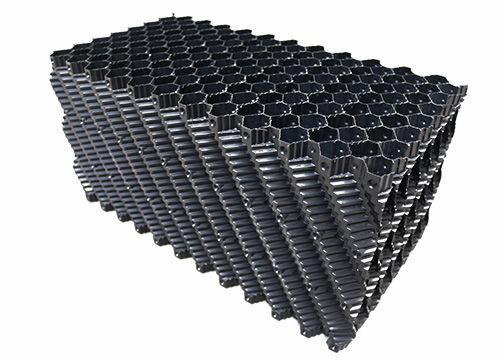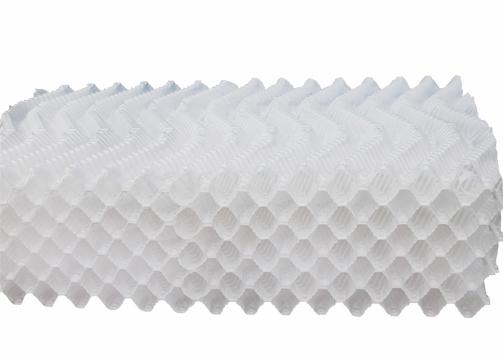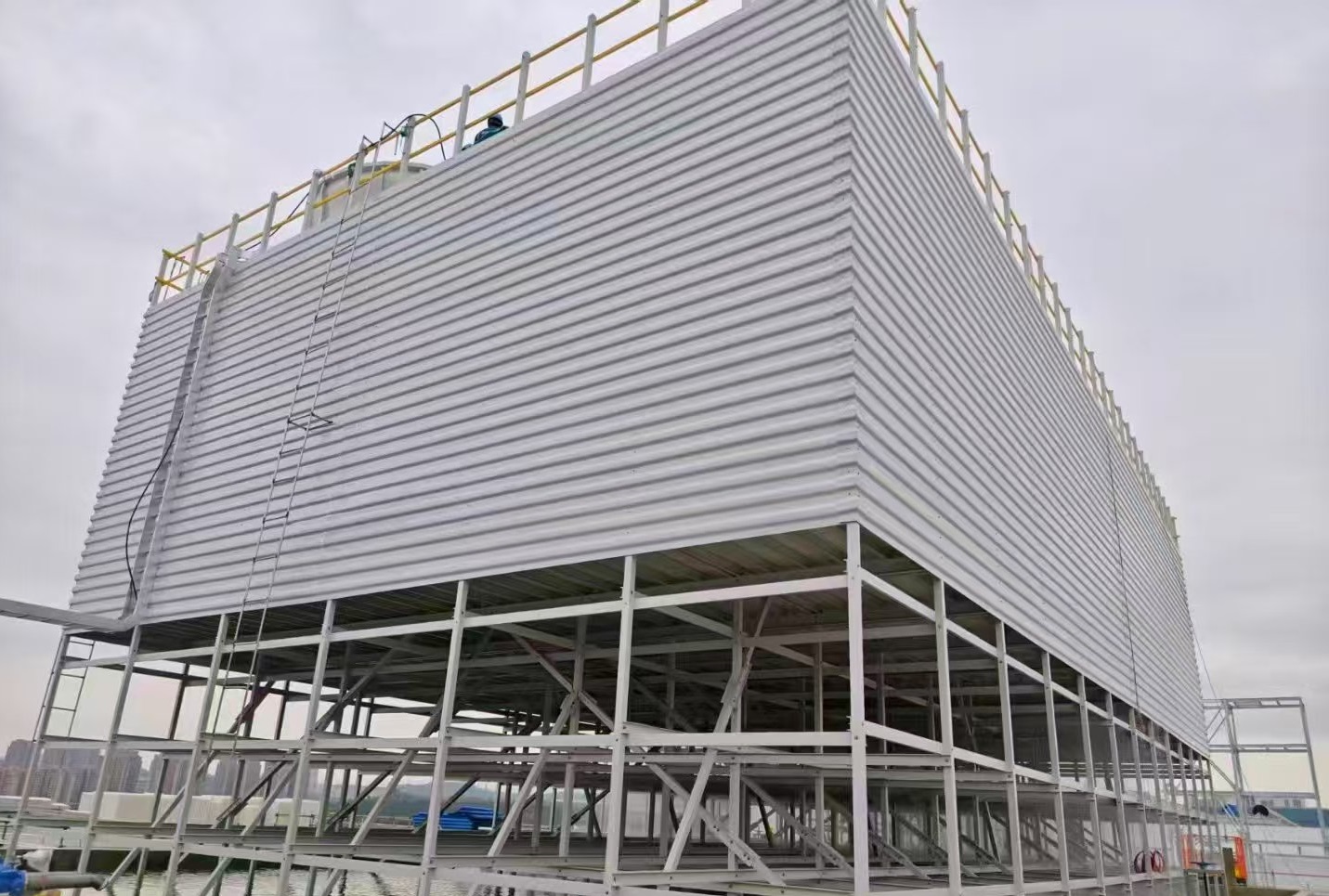
Cooling tower fill media replacement is an important maintenance and retrofit solution for industrial cooling towers operating in manufacturing plants, power stations, chemical facilities, steel mills, and other process industries. Over time, cooling tower fill can become clogged with mineral scale, biological growth, and suspended solids. Plastic sheets may also crack, deform, or lose their structural integrity due to operating temperatures and chemical exposure.
Replacing deteriorated fill media can help restore heat-transfer performance, improve water distribution, and support reliable cooling operations. However, industrial cooling tower projects require careful attention to fill design, material selection, water quality, and compatibility with existing equipment.
This guide explains how to select cooling tower fill media replacement for industrial applications, compare available materials, estimate project costs, and source replacement fill from a qualified manufacturer.
Why Industrial Cooling Towers Need Fill Media Replacement
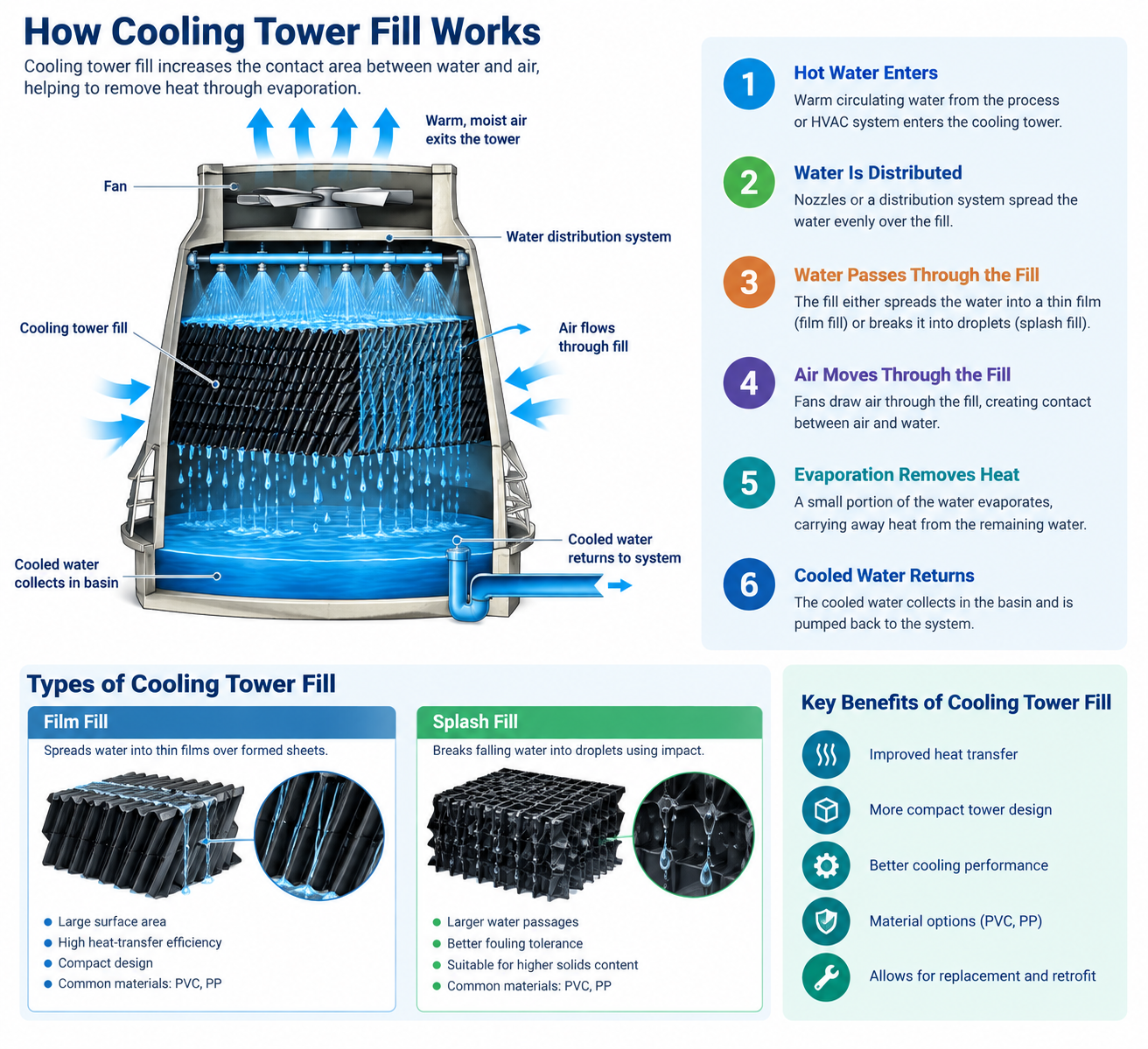
Cooling tower fill increases the contact area between water and air, allowing heat to transfer more effectively through evaporation. When fill becomes damaged or fouled, the cooling tower may struggle to achieve its required outlet water temperature.
Common reasons for replacement include:
Reduced heat-transfer efficiency: Deposits and damaged surfaces reduce effective water-air contact.
Severe fouling: Scale, algae, biofilm, and sediment block fill passages.
Structural deterioration: Cracked, brittle, sagging, or collapsed sheets disrupt water distribution.
Increased airflow resistance: Blocked passages restrict airflow and may affect fan performance.
Repeated maintenance costs: Frequent cleaning and repairs may become less economical than replacement.
Industrial process changes: Increased cooling demand or different operating conditions may require a revised fill design.
Before replacing the fill, inspect the water distribution system, spray nozzles, drift eliminators, and airflow path. These components can also contribute to poor cooling performance.
Types of Cooling Tower Fill for Industrial Applications
Choosing the correct fill type is essential for balancing thermal performance, fouling resistance, and operating costs.
Film Fill
Film fill consists of closely spaced sheets that spread water into thin layers. The large contact area supports efficient heat transfer within a relatively compact installation.
Advantages:
High heat-transfer surface area
Compact design
Efficient cooling performance when properly maintained
Suitable for many industrial process cooling systems
Applications: Manufacturing facilities, HVAC systems, refrigeration plants, and industrial cooling towers with suitable water quality.
Film fill is often a good choice when thermal efficiency is a priority. However, narrow passages may be vulnerable to blockage when circulating water contains high levels of suspended solids or biological contaminants.
Splash Fill
Splash fill uses bars, grids, or molded elements to break falling water into droplets, increasing contact between water and air.
Advantages:
Can accommodate suspended solids better than some fine-passage film fills
Available in different configurations
Suitable for selected fouling-prone environments
Can simplify maintenance in appropriate installations
Applications: Heavy industrial cooling, selected wastewater-related applications, and cooling towers operating with challenging water quality.
Splash fill is not automatically suitable for every dirty-water application. Its capacity and performance must be evaluated against the tower's thermal requirements.
Hybrid Fill
Hybrid fill combines characteristics of film and splash designs to balance heat-transfer performance and fouling resistance.
It may be considered for industrial retrofit projects where conventional film fill experiences recurring blockage but efficient cooling remains essential.
PVC vs. PP Cooling Tower Fill Replacement
Material selection affects the fill's temperature limits, chemical compatibility, service life, and purchase price.
| Factor | PVC Fill | PP Fill |
| Material | Polyvinyl chloride | Polypropylene |
| Main advantage | Cost-effective for many conventional applications | Suitable for selected higher-temperature applications |
| Typical uses | General industrial and HVAC cooling | Industrial cooling under specified demanding conditions |
| Chemical resistance | Depends on formulation and exposure | Depends on grade and exposure |
| Cost | Often economical | Varies by grade and design |
PVC Cooling Tower Fill
PVC cooling tower fill is widely used because it offers a practical balance of cost, formability, and heat-transfer performance.
It is commonly selected for industrial cooling towers operating within the specified temperature and chemical limits of the material.
PP Cooling Tower Fill
Polypropylene fill may be preferable when a specific application requires greater temperature resistance than the available PVC grade provides. It can also offer resistance to certain chemicals, depending on the material formulation.
Buyers should confirm the manufacturer's continuous operating temperature rating, chemical compatibility data, and dimensional specifications before ordering either material.
How to Select Replacement Fill for an Industrial Cooling Tower
Industrial replacement projects should begin with an evaluation of the existing tower and its operating requirements.
Confirm Tower Design
Identify the tower manufacturer, model, serial number, and whether the system uses a crossflow or counterflow configuration. The arrangement affects fill geometry, water distribution, and installation.
Measure Existing Fill
Record the block length, width, height, sheet spacing, flute geometry, and assembly method. Check support dimensions and available installation clearance.
Evaluate Thermal Requirements
Consider water flow rate, inlet and outlet water temperatures, required cooling capacity, and airflow conditions. Replacement fill should meet the project's thermal requirements without creating excessive air resistance.
Assess Water Quality
Review suspended solids, mineral scaling, biological growth, and chemical treatment. Fouling-prone systems may require wider-passage or splash-fill designs.
Verify Compatibility
Confirm that the replacement fill works with the existing support structure, distribution nozzles, drift eliminators, and tower configuration.
Important: A replacement block that fits the tower physically does not necessarily provide equivalent cooling performance. Differences in geometry and airflow resistance can affect the entire cooling system.
Benefits of Industrial Cooling Tower Fill Replacement
Replacing deteriorated fill can provide several benefits when the existing media is contributing to performance problems.
Improved Cooling Performance
New fill can restore effective heat-transfer area and more uniform water distribution when old media is damaged or heavily fouled.
More Reliable Industrial Operations
Appropriately specified fill helps the tower maintain stable cooling conditions, supporting temperature control for manufacturing and process equipment.
Potential Energy Savings
If old fill creates excessive airflow resistance, replacement with a suitable design may improve airflow conditions and reduce fan energy requirements. Actual savings depend on system design, operating conditions, and fan controls.
Reduced Maintenance Requirements
New fill can reduce recurring cleaning and repair needs when deterioration is the main cause of maintenance problems. Effective water treatment remains essential for preventing premature fouling.
Extended Equipment Service Life
Replacing fill can help extend the useful life of an existing cooling tower, avoiding the need for complete tower replacement when the structure and other major components remain serviceable.
Cooling Tower Fill Replacement Cost for Industrial Projects
The total cost depends on fill specifications, order volume, site conditions, and installation requirements.
| Cost Factor | Consideration |
| Material and fill type | PVC, PP, film, and splash designs have different costs |
| Quantity | Larger towers require more fill and packaging |
| Custom manufacturing | Special dimensions or configurations may increase costs |
| Freight and packaging | Shipping volume and destination affect landed cost |
| Installation labor | Removal, access, lifting, and assembly add expenses |
| Downtime | Production interruptions can increase total project costs |
For an accurate quotation, provide tower specifications, existing fill dimensions, material requirements, estimated quantity, and delivery destination.
Compare the total project cost rather than selecting a supplier based only on the initial price of the fill media.
Industrial Cooling Tower Fill Replacement Process
A well-planned project helps reduce downtime and installation risks.
Inspect the existing fill and identify the cause of deterioration.
Record dimensions, operating conditions, and required cooling performance.
Select the appropriate fill type and material.
Verify compatibility with the manufacturer or supplier.
Shut down and isolate the equipment according to site safety procedures.
Remove old fill and inspect the supports and water distribution system.
Install the replacement media according to the manufacturer's instructions.
Restart the tower and check water distribution, airflow, and cooling performance.
Replacement should be carried out by qualified personnel following applicable site safety requirements.
How to Choose a Reliable Industrial Cooling Tower Fill Manufacturer
For industrial maintenance teams, contractors, and distributors, supplier capability can directly affect project quality and delivery.
Look for a manufacturer that offers:
PVC and PP cooling tower fill options
Film, splash, and selected hybrid designs
Custom dimensions for retrofit projects
Technical drawings and material specifications
Dimensional inspections and quality control
Bulk production and export packaging
Technical assistance for replacement applications
For branded equipment, request documented compatibility with the existing tower. Confirm manufacturing capacity, delivery schedules, quality requirements, and warranty terms before placing an order.
Frequently Asked Questions
How often should industrial cooling tower fill be replaced?
There is no universal replacement interval. Service life depends on water quality, operating temperature, chemical exposure, material, and maintenance practices. Regular inspection helps identify when cleaning is no longer sufficient.
Which fill is best for heavy industrial cooling towers?
The choice depends on thermal duty and water quality. Film fill suits many efficient cooling applications, while splash fill may be preferable for some fouling-prone systems. Technical evaluation is necessary before switching designs.
Can aftermarket fill replace the original industrial cooling tower fill?
Yes, if it meets the required dimensions, material specifications, installation requirements, and thermal and hydraulic performance. Verify compatibility before purchase.
Can I replace only part of the fill?
Partial replacement may be possible if the remaining media is structurally sound and compatible with the new fill. Inspect the entire fill pack to avoid uneven performance.
What information is needed for a quotation?
Provide the tower model, fill type, dimensions, material preference, quantity, operating conditions, photographs or drawings, and delivery location.
Conclusion
Cooling tower fill media replacement for industrial cooling towers helps address fouling, structural damage, and declining cooling performance. Selecting the right solution requires matching fill type, PVC or PP material, dimensions, water quality, and thermal requirements to the existing tower.
For industrial facilities, contractors, and distributors, working with a qualified cooling tower fill manufacturer can simplify retrofit planning and support reliable bulk supply. Evaluate technical compatibility, quality control, and total project costs before making a purchasing decision.
Looking for industrial cooling tower fill media replacement? Send your tower specifications, existing fill dimensions, required quantity, and operating conditions to request a suitable replacement recommendation and quotation.
Internal Links for Other CoolingTowerParts
Cooling Tower Nozzles
Cooling Tower Drift Eliminators
Cooling Tower Louvers
Cooling Tower Fan Blades
Cooling Tower Motors