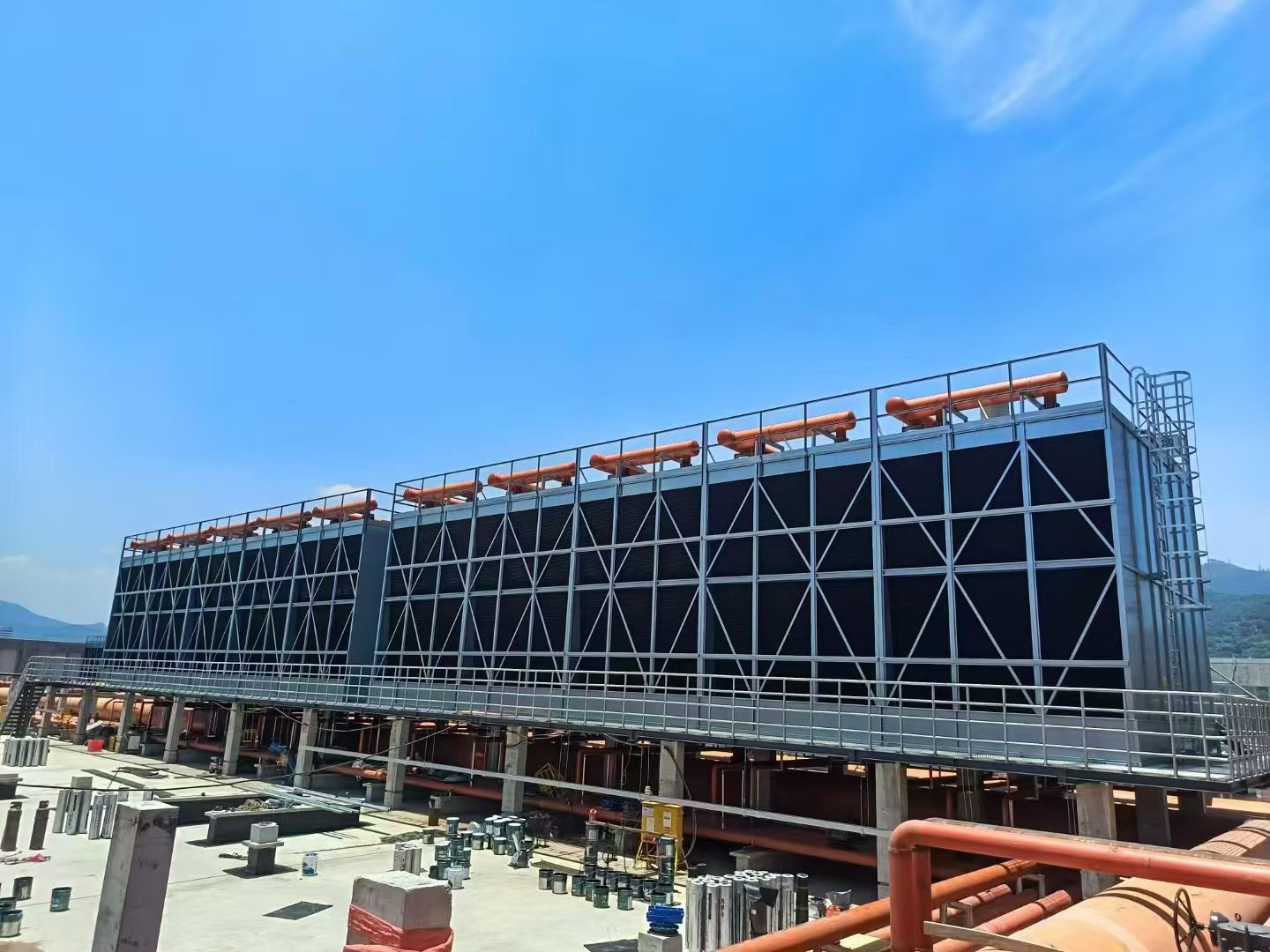
China cooling tower film filler is widely used in industrial cooling towers, HVAC systems, power plants, and manufacturing facilities that require efficient heat transfer and reliable cooling performance. Manufactured from materials such as PVC and polypropylene (PP), film fill media increases the contact area between water and air, helping cooling towers remove heat more effectively.
For industrial buyers, cooling tower contractors, distributors, and maintenance companies, sourcing film filler from China can provide access to customized production, competitive pricing, and bulk supply options. However, successful purchasing depends on selecting the correct material, confirming dimensions, understanding manufacturing quality, and ensuring compatibility with the existing cooling tower.
This guide explains China cooling tower film filler manufacturing, material selection, replacement procedures, and supplier evaluation.
What Is Cooling Tower Film Filler?
Cooling tower film filler, also called cooling tower film fill, film packing, or film fill media, is installed inside a cooling tower to improve the heat exchange between circulating water and air.
Unlike splash fill, which breaks water into droplets, film fill uses closely spaced sheets with formed surfaces. Water spreads across these surfaces as thin films, creating a large contact area for heat transfer and evaporation.
Cooling tower film filler is commonly used in:
Industrial process cooling systems
Commercial HVAC cooling towers
Power generation facilities
Chemical and petrochemical plants
Manufacturing and processing facilities
Cooling tower refurbishment and replacement projects
When properly selected and installed, film fill can help improve cooling performance and make effective use of the available tower volume. Its suitability depends on water quality, operating temperature, airflow, and the original tower design.
China Cooling Tower Film Filler Manufacturing Process
The manufacturing process affects dimensional accuracy, material consistency, pack strength, and product performance.
Material Selection
Manufacturers commonly use PVC or PP sheets to produce cooling tower film filler.
PVC is widely used in conventional cooling systems because of its cost-effectiveness and formability. PP may be preferred for applications requiring different temperature or chemical resistance characteristics.
Material selection should consider continuous operating temperature, water chemistry, mechanical requirements, and applicable fire-performance specifications.
Sheet Extrusion and Forming
Plastic material is processed into sheets with a specified thickness. The sheets are then formed into corrugated, embossed, or other engineered profiles that help distribute water and promote contact between water and air.
Sheet thickness, profile geometry, and spacing influence structural strength, airflow resistance, and thermal performance.
Cutting and Pack Assembly
Formed sheets are cut to the required dimensions and assembled into packs. Depending on the product design, sheets may be bonded or assembled using other suitable manufacturing methods.
Pack dimensions must match the intended installation space and support arrangement.
Quality Inspection
Quality checks may include:
Sheet thickness and dimensional tolerances
Surface condition and forming consistency
Bonding strength or assembly integrity
Pack dimensions and overall stability
Packaging condition before shipment
For large industrial orders, buyers should request technical drawings, material specifications, and inspection records where available.
PVC vs. PP Cooling Tower Film Filler
Choosing the correct material is essential for replacement and new installation projects.
| Feature | PVC Film Filler | PP Film Filler |
| Material cost | Often economical for conventional applications | Depends on grade and specifications |
| Chemical resistance | Suitable for many common cooling water conditions | Resistant to many chemicals, subject to compatibility |
| Temperature suitability | Depends on the specific PVC formulation | May suit certain higher-temperature applications |
| Manufacturing options | Available in various sheet profiles | Available in various sheet profiles |
| Typical applications | HVAC and general industrial cooling | Selected industrial and chemically demanding applications |
Neither material is universally better. Buyers should confirm the manufacturer's operating limits and chemical compatibility data before making a selection.
Key Specifications for China Cooling Tower Film Filler
Before requesting a quotation, prepare the technical specifications required for the project.
Dimensions: Confirm the length, width, height, and arrangement of each fill pack. Incorrect dimensions may cause installation problems or gaps in the fill section.
Sheet thickness: Thickness affects material consumption and mechanical characteristics. The correct value depends on the manufacturer's design and operating requirements.
Sheet profile and spacing: These features influence water distribution, heat-transfer surface area, airflow resistance, and fouling risk.
Material type: Specify PVC or PP and identify any required temperature, chemical resistance, or fire-performance properties.
Cooling tower configuration: Confirm whether the tower uses crossflow or counterflow airflow.
Operating conditions: Provide water flow rate, operating temperature, water quality, and available thermal performance information.
Installation requirements: Check support beams, pack orientation, access openings, and clearance.
For replacement work, photographs, drawings, and samples of the existing fill can help the manufacturer verify compatibility.
China Cooling Tower Film Filler Replacement Guide
Replacing damaged or inefficient fill can help restore cooling tower performance, but the replacement should be based on an assessment of the existing system.
Step 1: Inspect the Existing Fill
Look for deformation, broken sheets, excessive scaling, biological growth, blocked passages, and damaged pack bonds. Determine whether cleaning can restore performance or replacement is necessary.
Step 2: Confirm the Original Specifications
Record the fill dimensions, material, sheet profile, pack arrangement, and tower configuration. Also check whether the original fill design remains suitable for current operating conditions.
Step 3: Select Compatible Replacement Fill
Choose a product that meets the required dimensions, material limits, hydraulic characteristics, and thermal requirements. A replacement with a different profile may affect airflow resistance and cooling performance even if the external dimensions match.
Step 4: Check the Supporting Structure
Inspect fill supports, distribution pipes, nozzles, drift eliminators, and other nearby components. Damaged supports or uneven water distribution can reduce the effectiveness of new fill.
Step 5: Install and Verify
Follow the manufacturer's installation instructions. Ensure that packs are correctly positioned, supported, and secured, with no unintended gaps or obstructions.
After installation, verify water distribution, airflow, operating temperatures, and other available performance indicators under suitable operating conditions.
Compatible Aftermarket Film Filler for Major Cooling Tower Brands
Industrial buyers may need replacement fill for Marley, BAC, EVAPCO, SPX, and other cooling tower systems.
China cooling tower film filler manufacturers may offer aftermarket products designed to match specific existing tower configurations. However, compatibility must be verified rather than assumed.
Before ordering, confirm:
Original tower model and fill arrangement
Required pack dimensions and sheet profile
PVC or PP material requirements
Water distribution and support configuration
Thermal and airflow requirements
Aftermarket compatibility does not automatically mean the product is original or officially approved by the cooling tower brand. Request supporting technical documentation when this distinction matters to the project.
How to Choose a Reliable China Cooling Tower Film Filler Manufacturer
Selecting a capable manufacturer helps reduce sourcing risks and improve replacement project planning.
Evaluate the following factors:
Manufacturing capability: Confirm whether the supplier produces film fill in-house or resells products.
Material quality: Request information on PVC or PP grades, sheet thickness, and operating limits.
Customization: Check whether the manufacturer can supply non-standard dimensions and configurations.
Quality control: Ask about dimensional inspection, assembly checks, and packaging procedures.
Production capacity: Confirm lead times and the ability to fulfill bulk orders.
Technical support: Look for assistance with drawings, specifications, and replacement compatibility.
Export experience: Clarify shipping arrangements, documentation, and delivery terms.
For large projects, consider requesting samples or a trial order before approving full production.
China Cooling Tower Film Filler Price and Bulk Supply
The price of cooling tower film filler depends on material, sheet thickness, profile design, dimensions, order quantity, customization, and transportation costs.
Bulk orders may offer lower unit prices, particularly for standardized products. However, the total landed cost also includes packaging, freight, customs charges, and other applicable fees.
When comparing suppliers, request quotations based on the same specifications and delivery terms. Confirm the minimum order quantity, production lead time, inspection arrangements, packaging method, and shipment schedule.
For overseas buyers, coordinating delivery with a planned maintenance shutdown can help reduce project delays.
Frequently Asked Questions
What is the main advantage of cooling tower film filler?
Film filler provides a large surface area for water-air contact, supporting efficient heat transfer in cooling towers with suitable water quality and operating conditions.
How long does cooling tower film filler last?
Service life varies with water chemistry, operating temperature, UV exposure, maintenance, and mechanical conditions. Regular inspection and proper water treatment help extend its useful life.
Can PVC film filler be replaced with PP film filler?
Potentially, but the materials are not automatically interchangeable. Confirm temperature limits, chemical compatibility, dimensions, structural requirements, and thermal performance before changing materials.
Is film fill suitable for dirty cooling water?
Film fill can be vulnerable to blockage when suspended solids, scale, or biological growth accumulate in narrow passages. Systems with significant fouling risks may require improved water treatment or consideration of a more open fill design.
What information is needed to order replacement film filler from China?
Provide the tower type, existing fill dimensions, material preference, operating conditions, required quantity, and delivery destination. Drawings and photographs can help confirm the product specifications.
Source China Cooling Tower Film Filler for Your Project
Choosing the right China cooling tower film filler requires attention to manufacturing quality, material properties, dimensional accuracy, and compatibility with the existing cooling tower.
Power Tower Cooling Technology (Shaoxing) Co.,Ltd supports industrial buyers, distributors, contractors, and maintenance teams sourcing cooling tower fill for replacement, retrofit, and new installation projects.
Contact the supplier with your drawings, fill dimensions, material requirements, application details, and order quantity to discuss suitable film filler options and bulk supply arrangements.
Recommended internal links for CoolingTowerPart.com:


