Finding the Right Cooling Tower Fill Supplier for Your Project
Choosing the right cooling tower fill supplier is an important decision for industrial facilities, HVAC systems, power plants, and commercial cooling applications. Cooling tower fill plays a critical role in heat transfer by increasing the contact area between water and air. The quality, design, and material of the fill can directly influence cooling efficiency, operating stability, maintenance requirements, and long-term costs.
However, not every supplier offers the same product quality, customization options, or technical support. Buyers need to evaluate material specifications, manufacturing capabilities, delivery reliability, and product compatibility before placing an order.
Whether you are replacing damaged fill media, upgrading an existing cooling tower, or sourcing components for a new installation, finding a reliable cooling tower fill supplier can help you achieve better performance and reduce procurement risks.
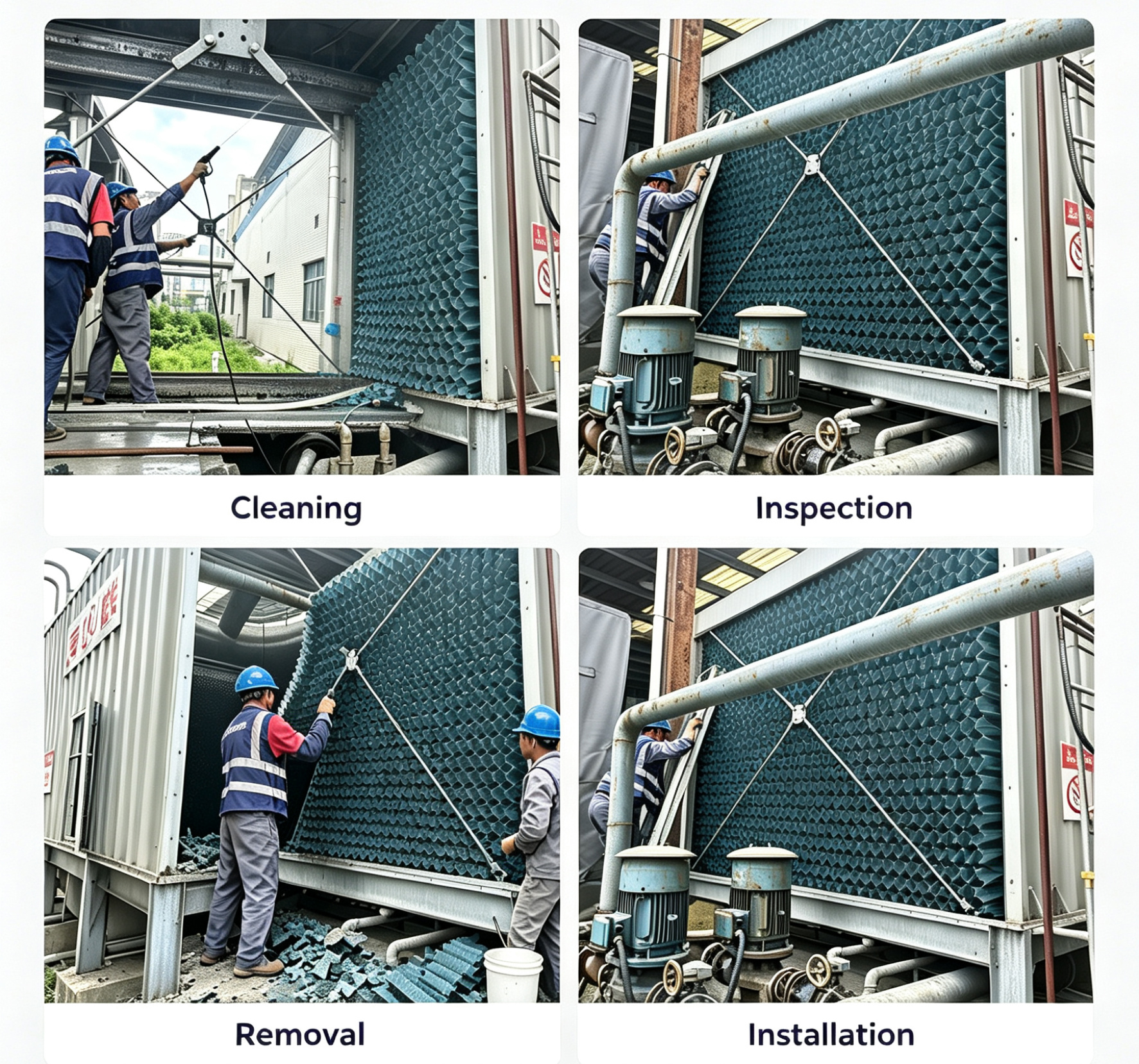
Why Is Choosing the Right Cooling Tower Fill Supplier Important?
A cooling tower fill supplier does more than provide plastic sheets or assembled fill packs. A qualified supplier should understand the relationship between fill geometry, airflow, water distribution, thermal performance, and operating conditions.
How Does Cooling Tower Fill Affect Performance?
Cooling tower fill increases the effective contact area between water and air, allowing heat to transfer more efficiently.
Improved Heat Transfer Efficiency
Film fill spreads water into thin layers over a large surface area. This increases the opportunity for heat exchange and evaporation, helping the cooling tower achieve its intended thermal performance.
Stable Water Distribution
Properly designed fill allows water to distribute across the fill pack rather than concentrating in a few channels. Uniform distribution helps make better use of the available heat transfer surface.
Appropriate Airflow Resistance
Fill geometry affects the resistance encountered by air moving through the tower. A suitable design balances heat transfer performance with acceptable pressure drop.
What Problems Can an Unreliable Supplier Cause?
Inconsistent Material Quality
Poor material control can result in uneven sheet thickness, weak bonding, deformation, or premature deterioration.
Incorrect Product Dimensions
Fill packs that do not match the existing tower may require modification during installation. Improper modifications can affect structural stability and water distribution.
Delayed Project Delivery
Unclear production schedules, inadequate packaging, and shipping problems can delay maintenance shutdowns or new cooling tower projects.
Selecting a supplier based on technical capability and documented quality control can help reduce these risks.
Understand Your Cooling Tower Fill Requirements Before Buying
Before comparing quotations, buyers should establish the technical requirements of the project. Clear specifications help suppliers recommend suitable products and provide more accurate prices.
Identify the Cooling Tower Type
Cooling tower design is one of the first factors to consider when sourcing replacement fill.
Crossflow Cooling Tower Fill
In crossflow cooling towers, air generally moves horizontally across the falling water. The fill must match the tower's internal arrangement and water distribution system.
Crossflow fill is commonly used in industrial and commercial cooling applications where the tower is designed around this airflow configuration.
Counterflow Cooling Tower Fill
In counterflow cooling towers, air moves upward while water flows downward. The fill geometry and installation arrangement must accommodate this opposing flow pattern.
Crossflow and counterflow fill are not automatically interchangeable. Buyers should confirm compatibility with the tower design before ordering.
Determine the Required Fill Material
Material selection influences temperature resistance, chemical compatibility, mechanical properties, and purchase cost.
PVC Cooling Tower Fill
Polyvinyl chloride (PVC) is widely used for cooling tower film fill because it offers a practical balance of cost, formability, and heat transfer performance.
PVC fill can be suitable for many conventional cooling tower applications when the operating temperature and water chemistry remain within the product's specified limits.
PP Cooling Tower Fill
Polypropylene (PP) may be preferred for applications that require different temperature or chemical resistance characteristics.
The appropriate material depends on the actual operating environment and the specific grade used. Buyers should request product data rather than assuming that every PP product has identical performance.
Measure the Required Fill Dimensions
Accurate dimensions are particularly important for replacement projects.
Information to Prepare
Before requesting a quotation, collect the following details:
Cooling tower brand and model.
Crossflow or counterflow configuration.
Fill block length, width, and height.
Sheet thickness and flute geometry, if known.
Required quantity.
Operating water temperature.
Water quality and treatment conditions.
Delivery destination and expected delivery date.
Drawings, photographs, samples, and measurements of the existing fill can help the supplier verify compatibility.
What Makes a Reliable Cooling Tower Fill Supplier?
A reliable supplier should demonstrate product knowledge, manufacturing consistency, and the ability to support the buyer throughout the purchasing process.
Evaluate Manufacturing Capabilities
Manufacturing capability determines whether a supplier can deliver consistent products and meet project-specific requirements.
Material and Thickness Control
Ask how the supplier controls raw material quality and sheet thickness during production. Consistent material properties help ensure that the fill performs as expected under the specified conditions.
Forming and Bonding Quality
Film fill often uses formed sheets assembled into blocks. The sheet geometry and bonding quality should be consistent enough to maintain the intended structure during transportation, installation, and operation.
Dimensional Accuracy
The supplier should be able to produce fill packs that meet agreed dimensions and tolerances. This is especially important when replacement fill must fit an existing tower without major structural modifications.
Review Quality Assurance Procedures
Product Inspection
Ask whether the supplier checks dimensions, appearance, bonding, and other relevant product characteristics before shipment.
Technical Documentation
Depending on the project, useful documents may include product data sheets, material specifications, installation guidance, inspection records, and warranty terms.
Sample Evaluation
For large or technically demanding orders, a sample or pre-shipment inspection may help buyers assess product quality before committing to the full quantity.
Check Industry Experience
Experience with Different Cooling Tower Designs
Suppliers familiar with different tower configurations may be better equipped to identify compatibility issues and recommend appropriate fill products.
Experience with Replacement Projects
Replacement work often involves existing dimensions, aging support structures, and limited installation space. Experience with these conditions can help reduce errors during procurement and installation.
Compare Cooling Tower Fill Suppliers Beyond Price
Price is an important purchasing factor, but the lowest quotation does not necessarily provide the best overall value.
Compare Total Procurement Costs
Product Price
Compare quotations based on equivalent materials, dimensions, thickness, fill geometry, and quantities.
A lower price may reflect different specifications rather than a more competitive offer for the same product.
Packaging and Transportation
Fill packs can occupy substantial shipping volume. Packaging design, pallet dimensions, container utilization, and delivery arrangements may significantly affect the final cost.
Installation and Maintenance
Consider whether the product requires additional fitting work, structural modifications, or special installation procedures. These expenses can increase the total project cost.
Evaluate Delivery Reliability
Production Lead Time
Ask for a realistic production schedule and clarify whether the supplier has the capacity to meet the required quantity.
International Shipping Experience
For overseas purchases, confirm export packaging, shipping arrangements, documentation, and responsibility for customs-related procedures.
Order Communication
A reliable supplier should communicate clearly about specifications, production progress, shipping dates, and any changes that may affect the project.
Which Cooling Tower Fill Products Should You Consider?
Different fill designs serve different cooling tower requirements. The correct selection depends on the water quality, thermal load, airflow arrangement, and maintenance strategy.
Film Fill for High Surface Contact
Film fill distributes water across formed sheet surfaces to create a large contact area between water and air.
Main Advantages
Effective heat transfer in appropriately designed systems.
Compact fill arrangements.
Availability in PVC and selected PP configurations.
Compatibility with many industrial and commercial cooling towers.
Important Limitations
Film fill can be vulnerable to blockage when circulating water contains excessive suspended solids, scale-forming minerals, or biological deposits. Effective filtration, water treatment, and maintenance are therefore important.
Splash Fill for Challenging Water Conditions
Splash fill breaks falling water into droplets as it passes over specially designed elements.
Main Advantages
Its more open structure may be beneficial in applications where suspended solids or fouling are concerns, provided the selected design suits the cooling tower.
Application Considerations
Splash fill may require a different installation volume or tower configuration compared with film fill. Buyers should compare thermal performance and pressure drop using project-specific information.
Customized Cooling Tower Fill
Customized fill can be useful when standard dimensions do not fit the existing tower or when a project has particular operating requirements.
Common Customization Options
A qualified supplier may offer variations in:
When Is Custom Manufacturing Necessary?
Custom production may be appropriate for older cooling towers, special replacement projects, and equipment with nonstandard internal dimensions.
However, customized dimensions should not replace engineering verification of thermal performance and airflow requirements.
How to Choose Between a Manufacturer and a Distributor
Both manufacturers and distributors can be suitable purchasing partners. The better choice depends on the project size, technical complexity, delivery requirements, and support needed.
Buying Directly from a Cooling Tower Fill Manufacturer
Advantages of Direct Sourcing
Direct sourcing can provide more opportunities to discuss technical requirements with the production team. It may also support customized dimensions, bulk purchasing, and direct clarification of product specifications.
Potential Limitations
Some manufacturers may have minimum order quantities or longer production lead times. Buyers should confirm whether the supplier can accommodate their schedule and order volume.
Working with a Cooling Tower Parts Distributor
Advantages of Distributor Sourcing
Distributors may offer access to products from multiple brands and help consolidate orders for fill, drift eliminators, nozzles, and other components.
Potential Limitations
The distributor may not manufacture the fill directly. Buyers should verify the actual manufacturer, product origin, technical documentation, and warranty responsibilities.
How to Evaluate a Cooling Tower Fill Supplier for International Orders
International procurement requires additional attention to communication, shipping, and documentation.
Confirm Export and Logistics Capabilities
Packaging Protection
Cooling tower fill can be susceptible to deformation if handled or stacked incorrectly. Confirm how the products will be packed and protected during transportation.
Shipping Terms
Agree on the applicable Incoterms, named delivery location, freight responsibilities, and insurance arrangements.
Import Documentation
Confirm which commercial invoices, packing lists, certificates, or other documents are required for the destination country. Requirements vary by jurisdiction and product classification.
Verify the Supplier Before Payment
Company and Manufacturing Information
Review the supplier's company details, product range, manufacturing capabilities, and available references.
Quotation and Contract Details
Ensure that the quotation or contract clearly specifies material, dimensions, quantity, tolerances, delivery schedule, payment terms, and warranty conditions.
Defect and Claim Procedures
Clarify how shortages, transportation damage, specification deviations, and quality complaints will be handled.
Common Mistakes to Avoid When Selecting a Cooling Tower Fill Supplier
Avoiding common procurement mistakes can improve project outcomes and prevent unnecessary costs.
Choosing Based on Price Alone
A low-priced product may have different material thickness, dimensions, or performance characteristics. Compare equivalent specifications before making a decision.
Ignoring Water Quality
The most thermally efficient fill design is not always the most suitable choice for heavily contaminated water. Consider filtration, water treatment, and fouling risks when choosing between film and splash fill.
Overlooking Operating Temperature
The material must tolerate the actual operating conditions. Confirm the manufacturer's permitted temperature range and relevant chemical compatibility.
Failing to Verify Dimensions
Do not assume that fill from different manufacturers will fit the same cooling tower without modification. Check measurements and the installation arrangement before placing an order.
Waiting Until the Fill Fails Completely
Severely damaged fill can affect cooling performance and complicate maintenance planning. Regular inspections help identify replacement needs before an urgent shutdown becomes necessary.
Questions to Ask Before Placing an Order
Before finalizing a purchase, ask the supplier several practical questions.
Can You Manufacture Fill for My Existing Cooling Tower?
Provide the tower model, drawings, dimensions, and photographs. Ask the supplier to confirm compatibility and identify any information that remains uncertain.
Can You Supply Both PVC and PP Cooling Tower Fill?
If material selection is still under evaluation, request technical information for both options and compare their suitability for the operating environment.
What Quality Checks Are Performed Before Shipment?
Ask about dimensional inspection, bonding quality, material verification, and the inspection documents available for the order.
What Is the Expected Production and Delivery Time?
Request a written schedule covering production, packing, dispatch, and estimated transportation time.
Can You Supply Drift Eliminators Along with Fill Media?
If both components require replacement, ask whether they can be supplied together. Verify that the drift eliminators suit the tower design and meet the project's applicable drift-loss requirements.
Why Consider Power Tower Cooling Technology (Shaoxing) Co., Ltd.?
For buyers sourcing cooling tower components internationally, Power Tower Cooling Technology (Shaoxing) Co., Ltd. is one supplier to consider when comparing replacement fill options.
Cooling Tower Fill Sourcing Options
Through its website, coolingtowerpart.com, buyers can make inquiries about cooling tower parts and replacement requirements.
Discuss Your Project Specifications
When contacting the supplier, provide the tower model, fill dimensions, required quantity, material preference, and operating conditions. These details help establish whether a proposed product is suitable for the application.
Request a Detailed Quotation
Ask for a written quotation covering product specifications, packaging, production lead time, shipping arrangements, and warranty conditions.
Evaluate Technical Compatibility
Before ordering, confirm that the proposed fill matches the existing tower design and operating requirements. For projects requiring substantial performance changes, obtain appropriate engineering review.
Conclusion: Find the Right Cooling Tower Fill Supplier for Long-Term Value
Finding the right cooling tower fill supplier requires a careful assessment of product quality, material suitability, manufacturing capabilities, pricing, and delivery reliability.
Start by identifying your cooling tower configuration and operating conditions. Then compare suppliers based on their ability to meet the required dimensions, provide consistent products, support customization, and communicate clearly throughout the procurement process.
PVC and PP fill can both be suitable choices, but the final decision should depend on temperature, water chemistry, fill design, and manufacturer specifications. Film fill and splash fill also serve different operating requirements, making application-specific selection essential.
By comparing total project costs instead of unit prices alone, verifying technical compatibility, and requesting clear documentation, buyers can reduce procurement risks and improve the long-term performance of their cooling systems.
If you are sourcing replacement fill for an existing tower or planning a new cooling project, contact qualified suppliers with your technical specifications to obtain a suitable recommendation and quotation.


