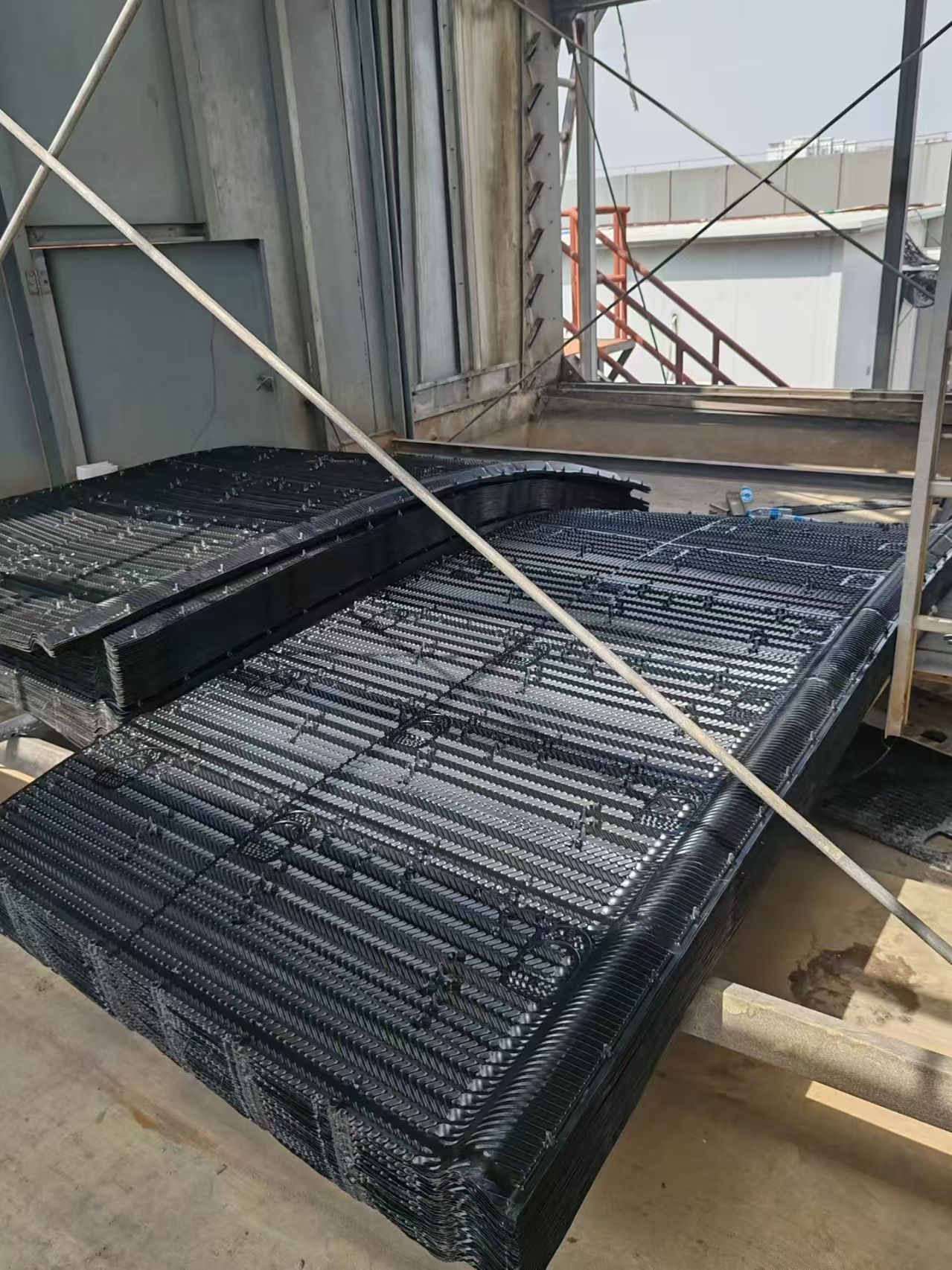
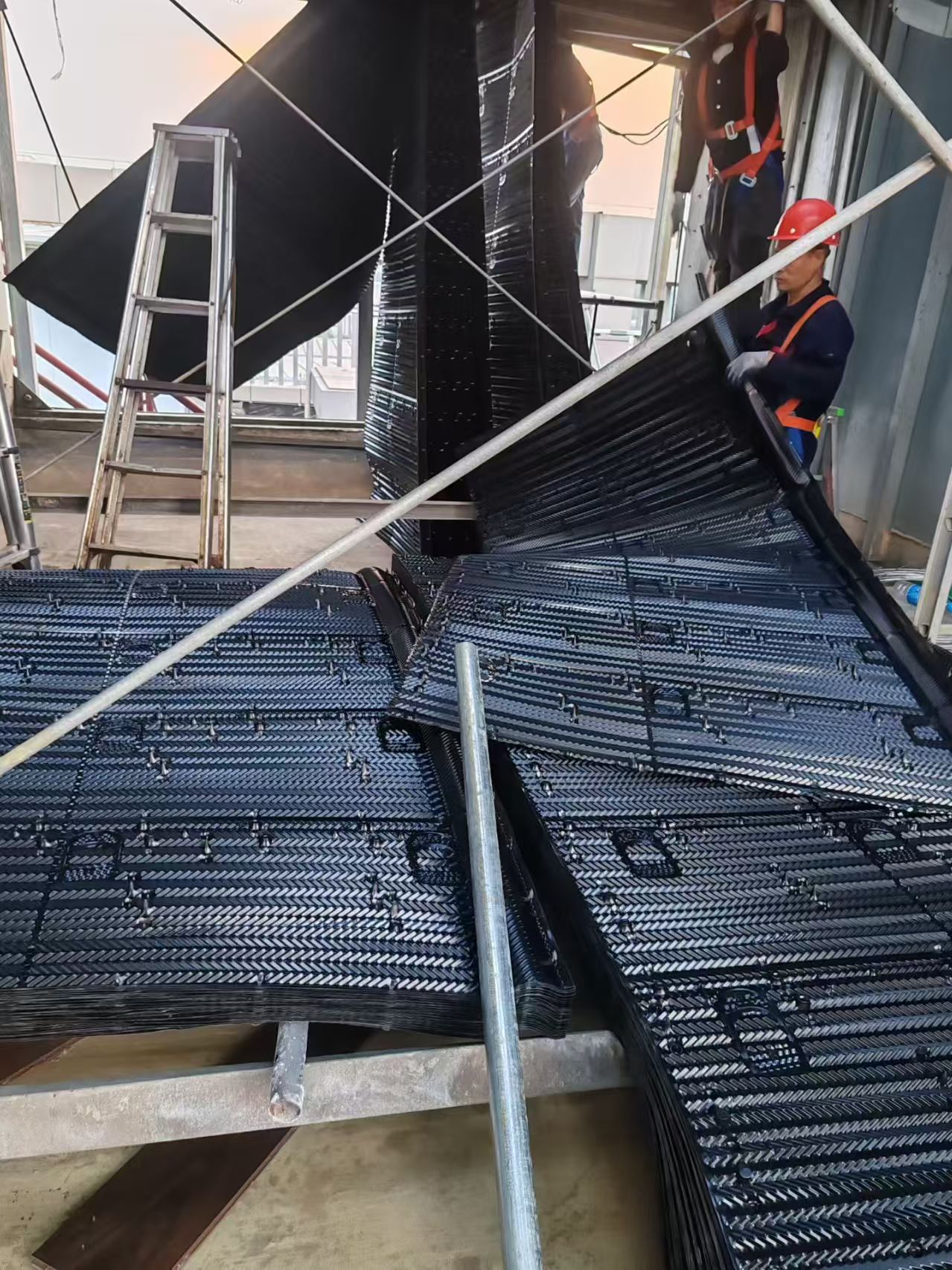
Cooling tower fill is one of the most important components in an industrial cooling tower system. It increases the contact area between water and air, improves heat transfer, and helps cooling towers achieve better thermal performance. Over time, however, cooling tower fill can become clogged, cracked, deformed, or damaged by scale, algae, chemical exposure, and high operating temperatures. Replacing worn fill media is essential for maintaining cooling efficiency, reducing operating costs, and extending equipment service life.
For industrial facilities in Canada, choosing a reliable cooling tower fill replacement supplier is particularly important. Industries such as power generation, manufacturing, petrochemicals, commercial HVAC, food processing, and data centers depend on effective cooling systems throughout the year.
This guide introduces 10 cooling tower fill replacement suppliers and manufacturers that Canadian buyers can consider. It also explains how to evaluate replacement fill materials, compare suppliers, and select the right cooling tower fill for specific operating conditions.
Important note: This is a buyer-oriented shortlist, not a verified ranking by Canadian market share. Supplier capabilities, local availability, and replacement compatibility should be confirmed directly before purchasing.
Why Is Cooling Tower Fill Replacement Important?
Cooling tower fill provides a large surface area for water distribution and air-water contact. When the fill deteriorates, the cooling tower may no longer achieve its intended thermal performance.
Common Signs That Cooling Tower Fill Needs Replacement
Several operational problems can indicate that cooling tower fill requires inspection or replacement.
1. Reduced Cooling Efficiency
If the cooling tower cannot maintain the required cold-water temperature, damaged or fouled fill may be contributing to poor heat transfer. Other factors, including airflow restrictions and water distribution problems, should also be investigated.
2. Excessive Scale and Biological Fouling
Mineral deposits, algae, and other contaminants can accumulate on fill surfaces. Severe fouling may restrict airflow, interfere with water distribution, and increase pressure drop.
3. Cracked or Deformed Fill Sheets
Plastic fill can become brittle or lose its shape because of aging, chemical exposure, elevated temperatures, or mechanical stress. Deformed sheets may create uneven water distribution and reduce effective contact area.
4. Increased Maintenance Costs
Frequent cleaning, recurring blockages, and repeated repairs can make continued operation with old fill less economical than replacement.
Benefits of Replacing Cooling Tower Fill
Replacing deteriorated cooling tower fill can provide several benefits:
Improved heat transfer and cooling performance.
More consistent water distribution.
Reduced fouling-related maintenance requirements.
Better use of available tower capacity.
Potentially lower energy consumption when the replacement corrects excessive airflow resistance or other fill-related problems.
Improved operational reliability and reduced unplanned downtime.
The actual results depend on the replacement design, tower condition, water quality, fan performance, and overall system operation.
Top 10 Cooling Tower Fill Replacement Suppliers in Canada
The following companies represent a mix of cooling tower manufacturers, service providers, and fill manufacturers that buyers can investigate. Some specialize in complete cooling tower systems and replacement services, while others may be more suitable for sourcing compatible fill media or customized replacement components.
1. Power Tower Cooling Technology (Shaoxing) Co., Ltd.

Power Tower Cooling Technology is a potential sourcing option for buyers seeking cooling tower replacement components from a manufacturer in China. For Canadian importers, distributors, contractors, and industrial end users, direct manufacturer sourcing can provide greater flexibility in material selection and order configuration.
Cooling Tower Fill Replacement Solutions
Buyers can inquire about replacement fill for crossflow and counterflow cooling towers, including PVC and polypropylene (PP) options where suitable.
Potential procurement requirements include:
Custom sheet dimensions and thickness.
Film fill and compatible fill configurations.
Replacement components for industrial cooling towers.
Bulk orders for distributors and maintenance contractors.
Export packaging and shipment planning.
Why Consider This Supplier?
Direct sourcing may be attractive when a project requires large quantities, customized dimensions, or competitive manufacturing costs. Before placing an order, Canadian buyers should request product drawings, material specifications, temperature and chemical compatibility information, sample sheets, and confirmation that the proposed fill fits the existing tower.
Website: https://www.coolingtowerpart.com/
2. SPX Cooling Technologies
SPX Cooling Technologies is an established cooling tower technology provider associated with brands such as Marley. Its cooling tower systems are used in industrial and commercial applications.
Cooling Tower Fill and Replacement Support
For owners of compatible Marley cooling towers, the manufacturer is a logical starting point for identifying replacement fill and related components.
Buyers should provide the tower model, serial number, original fill configuration, and operating conditions when requesting a quotation.
Best Suited For
Existing Marley cooling tower installations.
Industrial facilities requiring model-specific replacement parts.
Projects where compatibility with original equipment is a priority.
Website: https://spxcooling.com/
3. EVAPCO
EVAPCO provides heat transfer products and cooling equipment for industrial refrigeration, commercial HVAC, and process cooling applications.
Replacement Fill for EVAPCO Equipment
Facilities operating EVAPCO cooling towers can contact the manufacturer or its authorized representatives to determine the correct replacement fill arrangement.
The selection process should consider the original equipment model, fill material, water quality, thermal requirements, and maintenance history.
Key Purchasing Considerations
Ask whether the replacement is an original equipment component, an approved alternative, or a third-party solution. Confirm the effect of any proposed change on thermal performance and warranty coverage.
Website: https://www.evapco.com/
4. BAC (Baltimore Aircoil Company)
Baltimore Aircoil Company, commonly known as BAC, supplies cooling towers and heat transfer equipment for a wide range of applications.
BAC Cooling Tower Fill Replacement
For BAC equipment, using the original model and serial information helps identify compatible fill assemblies and replacement parts.
A suitable replacement should match the tower's intended airflow and water distribution design. Substituting a different fill geometry without reviewing its performance can create operational problems.
Recommended Applications
Industrial process cooling.
Commercial HVAC systems.
Facilities maintaining existing BAC equipment.
Cooling tower refurbishment projects.
Website: https://www.baltimoreaircoil.com/
5. SPIG
SPIG is an international cooling technology company serving industrial and power-generation applications. Buyers managing large cooling tower installations can investigate its engineering and service capabilities for project-specific requirements.
Industrial Cooling Tower Fill Solutions
Large cooling tower refurbishment projects may require more than simply replacing individual sheets. Fill support structures, water distribution systems, drift eliminators, and airflow characteristics may also need evaluation.
What Buyers Should Confirm
Ask whether the company can support the particular tower model and project location in Canada, and whether inspection, engineering, supply, or installation services are available.
Website: https://www.spig.com/
6. Hamon
Hamon is an international engineering group known for technologies related to cooling systems and industrial environmental applications.
Cooling Tower Rehabilitation and Fill Replacement
For large industrial cooling towers, replacement fill should be selected as part of an overall system assessment. Existing structural limitations, operating temperatures, water quality, and maintenance access can all influence the replacement design.
Potential Project Requirements
Industrial cooling tower refurbishment.
Fill replacement engineering.
Thermal performance evaluation.
Coordination of related tower components.
Buyers should confirm current service coverage and the company's ability to handle their specific Canadian project.
Website: https://www.hamon.com/
7. SPX Cooling Technologies — Marley Service and Distribution Network
In addition to contacting the manufacturer directly, Canadian buyers can investigate the relevant Marley service and distribution channels for local technical support and replacement parts.
Benefits of Working With an Authorized Channel
A qualified local representative may help identify original parts, coordinate delivery, and clarify installation requirements.
Questions to Ask
Is the proposed fill compatible with the existing tower model?
Are original replacement parts available?
Can technical support be provided during installation?
What are the expected delivery lead times to the Canadian project site?
Because service arrangements differ by region, buyers should verify the applicable Canadian contact and service coverage.
Website: https://spxcooling.com/
8. EVAPCO Authorized Representatives and Service Providers
Authorized representatives and qualified cooling tower service companies can be useful when a facility needs replacement parts, maintenance support, or an assessment of existing equipment.
Local Support for Cooling Tower Fill Replacement
Working with a regional service provider can simplify equipment identification and project coordination. It may also help reduce the risk of ordering incompatible components.
When to Consider This Option
This approach is particularly useful when the cooling tower is difficult to access, the original documentation is incomplete, or the project requires both fill supply and installation.
Buyers should confirm the provider's authorization status, relevant project experience, and responsibility for the final installation.
Website: https://www.evapco.com/
9. BAC Authorized Representatives and Service Providers
BAC's representative network is another route for identifying equipment-specific replacement options and technical assistance.
Replacement Parts for Existing Cooling Towers
Facilities with older cooling towers may need help identifying the original configuration or determining whether an alternative fill design is appropriate.
Evaluation Criteria
A suitable provider should be able to review equipment information, discuss operating conditions, and explain the differences between original replacement fill and alternative products.
Ask for a written quotation covering part identification, materials, delivery, installation scope, and any applicable warranty terms.
Website: https://www.baltimoreaircoil.com/
10. Independent Cooling Tower Fill Manufacturers and Replacement Specialists
Independent fill manufacturers and specialist replacement contractors can provide an alternative to purchasing all replacement components through the original cooling tower manufacturer.
Customized Fill for Different Cooling Tower Designs
Depending on the supplier's capabilities, available options may include PVC film fill, PP fill for selected operating conditions, splash fill, and customized replacement sheet configurations.
Advantages of Direct Manufacturer Sourcing
Flexible order quantities and specifications.
Potentially competitive pricing for large projects.
Custom dimensions for nonstandard installations.
Options for distributors and maintenance contractors.
Opportunities to compare materials and manufacturing processes.
However, not every independent manufacturer has the engineering expertise or verified compatibility data required for every cooling tower. Buyers should assess the supplier's technical documentation, quality control, sample products, and references before committing to a project.
How to Choose the Right Cooling Tower Fill Replacement Supplier
Selecting a supplier involves more than comparing unit prices. The replacement fill must be compatible with the tower and suitable for the water chemistry, operating temperature, and required cooling performance.
1. Identify the Existing Cooling Tower Type
The first step is determining whether the tower uses a crossflow or counterflow arrangement.
Crossflow Cooling Towers
In crossflow towers, air generally moves horizontally across falling water. Replacement fill must match the tower's configuration, support arrangement, and water distribution requirements.
Counterflow Cooling Towers
In counterflow towers, air moves upward against descending water. Fill geometry and installation details must be compatible with the tower's vertical airflow and water distribution system.
Information to Provide the Supplier
Cooling tower manufacturer and model.
Tower serial number, if available.
Existing fill dimensions.
Fill sheet thickness and configuration.
Available installation space.
Required quantity and delivery location.
2. Compare PVC and PP Cooling Tower Fill
Material selection is an important part of the procurement process.
PVC Cooling Tower Fill
Polyvinyl chloride (PVC) fill is widely used in conventional cooling tower applications because it offers a useful combination of formability, cost, and heat-transfer performance.
It is often considered for commercial HVAC and industrial systems operating within the material's specified temperature and chemical limits.
PP Cooling Tower Fill
Polypropylene (PP) fill can be appropriate for certain higher-temperature or chemically demanding applications, depending on the grade, design, and operating conditions.
It should not be assumed that every PP product is suitable for every hot-water or chemically aggressive environment. Confirm the manufacturer's actual operating limits.
Which Material Is Better?
PVC may be suitable for many standard cooling applications, while PP may offer advantages where its material properties better match the service conditions. The final choice should be based on operating temperature, water chemistry, fire requirements, mechanical properties, and total lifecycle cost.
3. Evaluate Fill Geometry and Thermal Performance
Different fill designs provide different combinations of heat-transfer surface area, airflow resistance, water distribution, and fouling tolerance.
Film Fill
Film fill spreads water into thin layers over closely spaced surfaces. It can provide effective heat transfer when water quality and maintenance conditions are appropriate.
Splash Fill
Splash fill breaks falling water into droplets through repeated impacts. Depending on the design, it may be appropriate for applications where fouling resistance is a major consideration.
Important Performance Data
Ask suppliers for available information on:
Thermal performance under stated operating conditions.
Airflow pressure drop.
Water loading and distribution requirements.
Fill spacing and sheet geometry.
Fouling characteristics and cleaning recommendations.
Avoid comparing thermal performance claims unless the underlying test conditions are reasonably consistent.
4. Check Manufacturing Quality
Quality control affects the consistency, durability, and fit of replacement fill sheets.
Material and Dimensional Inspection
Buyers should request confirmation of material type, sheet thickness, dimensions, forming quality, and bonding or assembly quality where applicable.
Documentation to Request
Technical datasheets.
Product drawings and installation instructions.
Material specifications.
Inspection records or agreed quality requirements.
Packaging details and shipment documentation.
Where necessary, request samples or arrange an inspection before bulk production is completed.
5. Compare Total Project Cost
The lowest quoted price does not always represent the lowest overall cost.
Factors Affecting Replacement Costs
Total project cost may include:
Fill material and manufacturing.
International shipping and import charges.
Customs clearance and inland transportation.
Removal and disposal of old fill.
Installation labor and equipment access.
Downtime and recommissioning.
Future cleaning and maintenance.
Request a Comparable Quotation
Ask each supplier to quote the same quantity, dimensions, material, technical requirements, shipping terms, and delivery destination. This makes it easier to compare offers fairly.
Cooling Tower Fill Replacement in Canada: Industry Applications
Canada has a wide range of cooling tower applications, from large industrial plants to commercial buildings. The appropriate replacement strategy depends on the operating environment.
Industrial Manufacturing
Manufacturing facilities often need stable cooling for production equipment, compressors, and process systems.
Replacement fill should be selected according to the required cooling capacity, water quality, and plant maintenance schedule.
Commercial HVAC
Office buildings, shopping centers, hospitals, and other commercial facilities use cooling towers to support air-conditioning systems.
For these applications, compatibility, energy efficiency, maintenance access, and predictable performance are key considerations.
Power Generation and Heavy Industry
Power generation and heavy industrial facilities may operate large cooling towers with demanding thermal requirements.
These projects often benefit from engineering review, structural inspection, and a detailed replacement plan rather than a simple like-for-like material substitution.
Food Processing and Other Specialized Facilities
Facilities with specific hygiene, chemical, or process-water requirements should verify material compatibility and relevant operating restrictions before selecting replacement fill.
How to Import Cooling Tower Fill Into Canada
Canadian buyers sourcing cooling tower fill internationally should plan logistics and documentation early, especially for large replacement projects.
1. Confirm Product Specifications Before Ordering
Provide the supplier with drawings, dimensions, material requirements, and the intended operating conditions. Written approval of the proposed configuration can help prevent costly mistakes.
2. Calculate Shipping Volume and Packaging Requirements
Cooling tower fill sheets can occupy substantial container space, even when individual sheets are relatively lightweight.
Ask the supplier to provide packed dimensions, pallet quantity, gross weight, and loading plans. Confirm whether the product can be safely stacked without deformation.
3. Review Import and Delivery Terms
Clarify the delivery destination, shipping terms, customs responsibilities, and any applicable Canadian import requirements with the supplier and customs broker.
The importer should confirm product classification, taxes, duties, and documentation requirements based on the specific shipment.
4. Schedule Installation Around Plant Operations
Where possible, plan replacement during scheduled maintenance or a period of reduced cooling demand. Confirm that the required quantity of fill and associated components will arrive before the installation window.
Questions to Ask Before Purchasing Cooling Tower Fill
Before choosing a supplier, buyers should obtain clear answers to several practical questions.
Technical Questions
Is the Replacement Fill Compatible With the Existing Tower?
Request confirmation of the dimensions, configuration, support arrangement, and operating requirements.
What Is the Recommended Operating Temperature?
Obtain the manufacturer's specified temperature limits for the actual material and product configuration.
Can the Fill Handle the Existing Water Quality?
Provide information about scaling, suspended solids, biological growth, and chemical treatment. Ask whether the proposed design is appropriate for those conditions.
Commercial Questions
What Is the Minimum Order Quantity?
Confirm whether the supplier accepts small maintenance orders, bulk orders, or customized production runs.
What Is the Lead Time?
Ask about sample approval, production scheduling, packaging, international transit, and delivery to the Canadian destination.
What Quality Assurance Is Available?
Clarify inspection procedures, material traceability where applicable, defect handling, and warranty coverage.
Common Mistakes to Avoid When Replacing Cooling Tower Fill
Choosing Fill Based on Price Alone
Low-cost fill may not provide the required dimensions, thermal performance, or durability. Evaluate the complete specification and expected service life.
Ignoring Airflow Resistance
A fill design with unsuitable airflow characteristics can increase pressure drop and affect fan operation. Request relevant performance data before changing fill geometry.
Overlooking Water Distribution
Even high-quality fill cannot compensate for severely blocked nozzles or poorly distributed water. Inspect the water distribution system during replacement planning.
Replacing Fill Without Inspecting Support Components
Fill supports, drift eliminators, structural elements, and other internal components may also require maintenance. Inspecting these items together can help prevent repeated shutdowns.
Failing to Verify Supplier Claims
Do not assume that a supplier has Canadian inventory, local installation teams, authorized status, or a specific certification without confirmation. Verify the relevant capabilities directly.
FAQ
How Often Should Cooling Tower Fill Be Replaced?
There is no universal replacement interval. Fill service life depends on material quality, operating temperature, water chemistry, maintenance practices, and the severity of fouling. Regular inspections and performance monitoring are more reliable than following a fixed calendar interval alone.
What Is the Best Material for Cooling Tower Fill Replacement?
PVC is widely used in standard applications, while PP can be suitable for selected higher-temperature or chemically demanding conditions. The best material depends on the actual operating environment and the manufacturer's documented limits.
Can I Replace Original Cooling Tower Fill With Third-Party Fill?
In many cases, third-party replacement fill may be an option, provided the dimensions, material properties, geometry, airflow resistance, and thermal performance are suitable. Obtain technical confirmation before making substitutions, particularly for critical industrial systems.
How Can I Reduce Cooling Tower Fill Replacement Costs?
Accurate measurements, early planning, bulk purchasing, suitable packaging, and competitive quotations can help control costs. Choosing a fill design that matches water quality and maintenance capabilities can also reduce long-term operating expenses.
Should I Replace Drift Eliminators at the Same Time?
Not necessarily, but it is worth inspecting drift eliminators during fill replacement. If they are damaged, poorly fitted, or heavily fouled, replacing them during the same shutdown may reduce future maintenance disruption.
Can Canadian Buyers Purchase Cooling Tower Fill Directly From Overseas Manufacturers?
Yes. Direct international sourcing can be practical for large projects, distributors, and customized orders. Buyers should carefully verify specifications, quality control, freight costs, import requirements, and supplier reliability before placing an order.
Conclusion
Finding the right cooling tower fill replacement supplier in Canada requires careful consideration of equipment compatibility, material selection, thermal performance, product quality, and delivery arrangements.
Established cooling tower manufacturers such as SPX Cooling Technologies, EVAPCO, and BAC are useful starting points for identifying equipment-specific replacement solutions. Engineering companies and independent fill manufacturers may also be worth considering, depending on the project's size and technical requirements.
For Canadian distributors, contractors, and industrial end users seeking customized fill dimensions or direct manufacturer sourcing, Power Tower Cooling Technology (Shaoxing) Co., Ltd. is another supplier to evaluate. Buyers can visit https://www.coolingtowerpart.com/ to inquire about available cooling tower fill products and replacement specifications.
The best purchasing decision is based on verified technical compatibility and total project value—not simply the supplier's location or the lowest initial price. By comparing specifications, requesting clear documentation, and planning installation carefully, Canadian buyers can improve cooling tower reliability and support long-term operational efficiency.