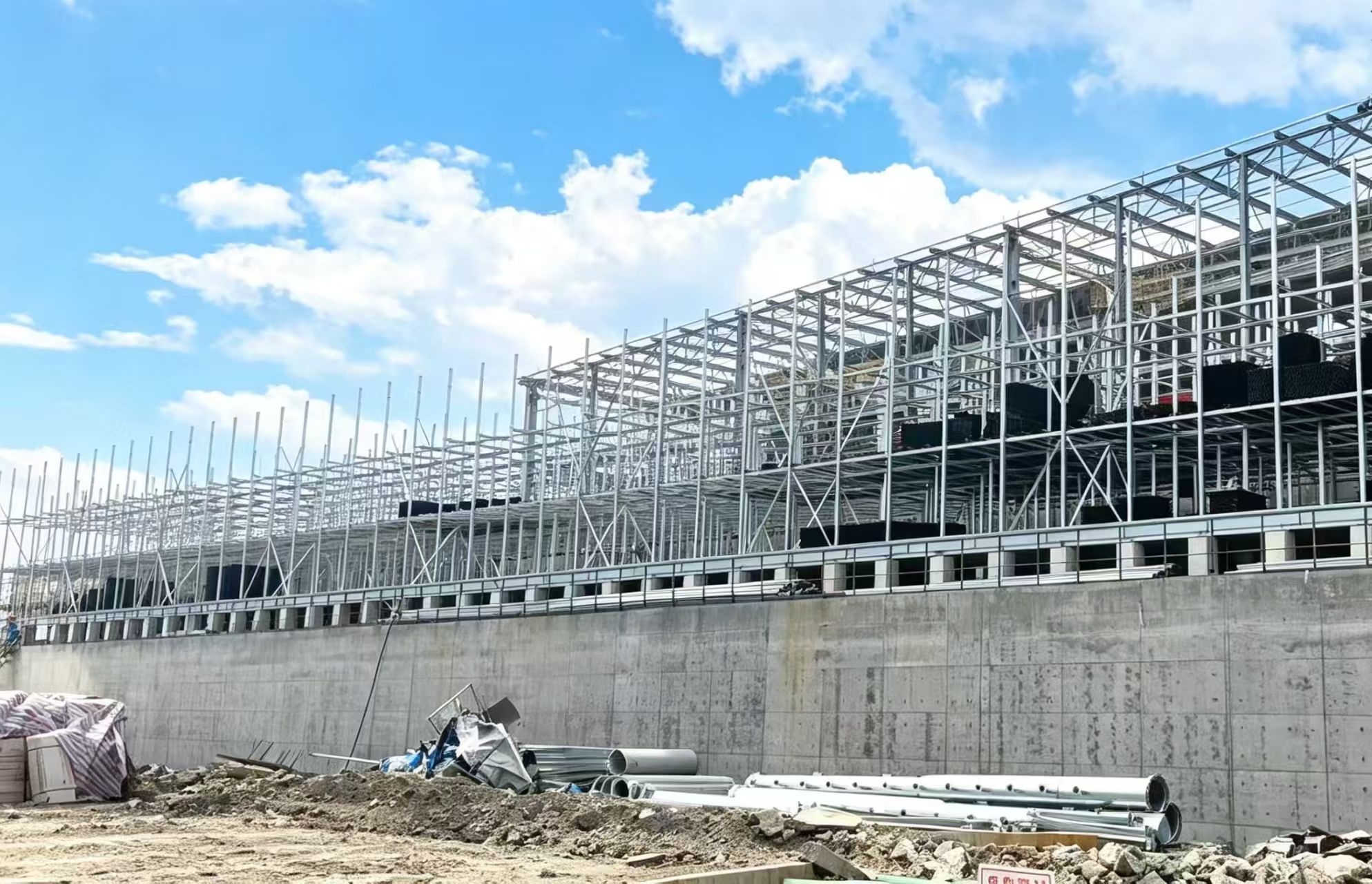
If you are searching for jual filler cooling tower in Indonesia, you probably want more than a supplier offering a low price. You need cooling tower fill that fits your equipment, supports reliable heat rejection, withstands operating conditions, and offers good long-term value.
Cooling towers play an essential role in many industrial and commercial facilities. Manufacturing plants, power generation facilities, chemical processing operations, and commercial buildings all rely on effective cooling to keep equipment operating within the required temperature range. Inside these systems, cooling tower filler, also known as cooling tower fill media or cooling tower infill, helps water transfer heat to the air.
However, not every filler is suitable for every cooling tower. The wrong material, incorrect dimensions, or unsuitable fill design can affect cooling performance, maintenance requirements, and operating costs.
This guide explains the main types of cooling tower filler, how to select the right product, what to consider when buying in Indonesia, and how to evaluate a reliable manufacturer. Whether you are purchasing for a new installation or planning a replacement project, understanding these factors will help you make a more informed decision.
What Is Cooling Tower Filler?
Cooling tower filler is an internal component designed to increase the contact area between circulating water and air. By spreading water across a larger surface or breaking it into droplets, the fill supports heat and mass transfer within the cooling tower.
In a typical evaporative cooling tower, warm water enters the distribution system and flows over or through the fill. Air moves through the tower, contacting the water along the way. A portion of the water evaporates, carrying heat away and cooling the remaining water before it returns to the industrial process.
Think of cooling tower fill as the working surface inside the tower. The more effectively water and air interact under the system's operating conditions, the more efficiently the tower can perform its cooling function.
Actual performance depends on several factors, including fill geometry, water distribution, airflow, water temperature, ambient wet-bulb temperature, and the condition of the entire cooling system.
How Cooling Tower Fill Media Works
Different fill designs create different patterns of water flow and air contact.
Film fill spreads water into thin layers across closely spaced surfaces. This design creates a large contact area in a relatively compact space. Splash fill, on the other hand, breaks falling water into smaller droplets as it strikes a series of surfaces, promoting contact between water and air.
Both approaches can be effective. The best choice depends on water quality, cooling tower configuration, operating temperature, and maintenance requirements.
Why Filler Quality Matters
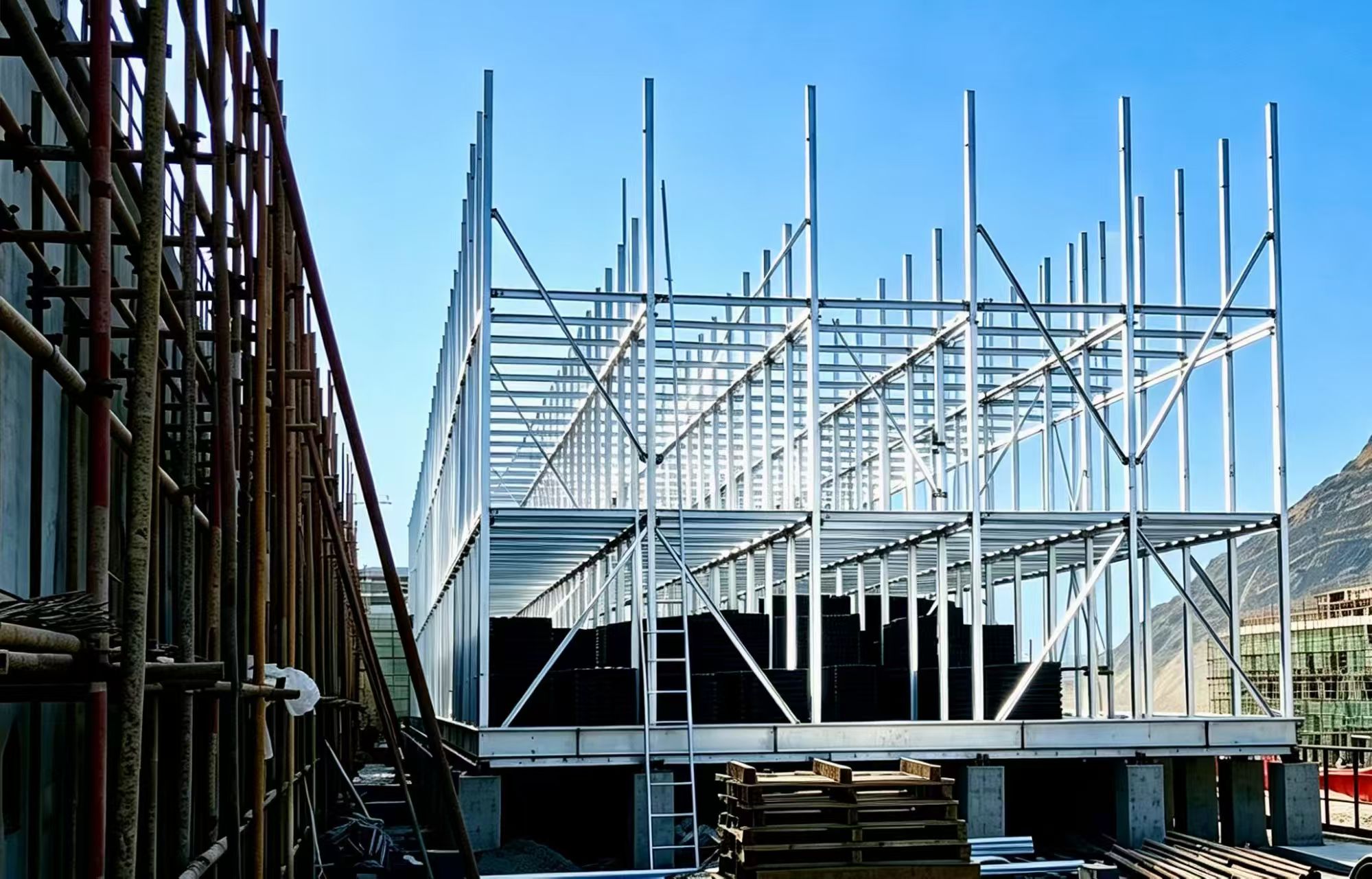
Poor-quality or unsuitable filler can create problems that extend beyond the fill itself. Warped sheets, inconsistent spacing, weak joints, and incompatible materials may interfere with water distribution and airflow.
Fill that is poorly matched to the application can also become clogged, deform under operating conditions, or require premature replacement.
For buyers searching for cooling tower filler for sale in Indonesia, the objective should be to find a product that meets the system's technical requirements—not simply the cheapest product available.
Why Indonesian Industries Need Reliable Cooling Tower Fill
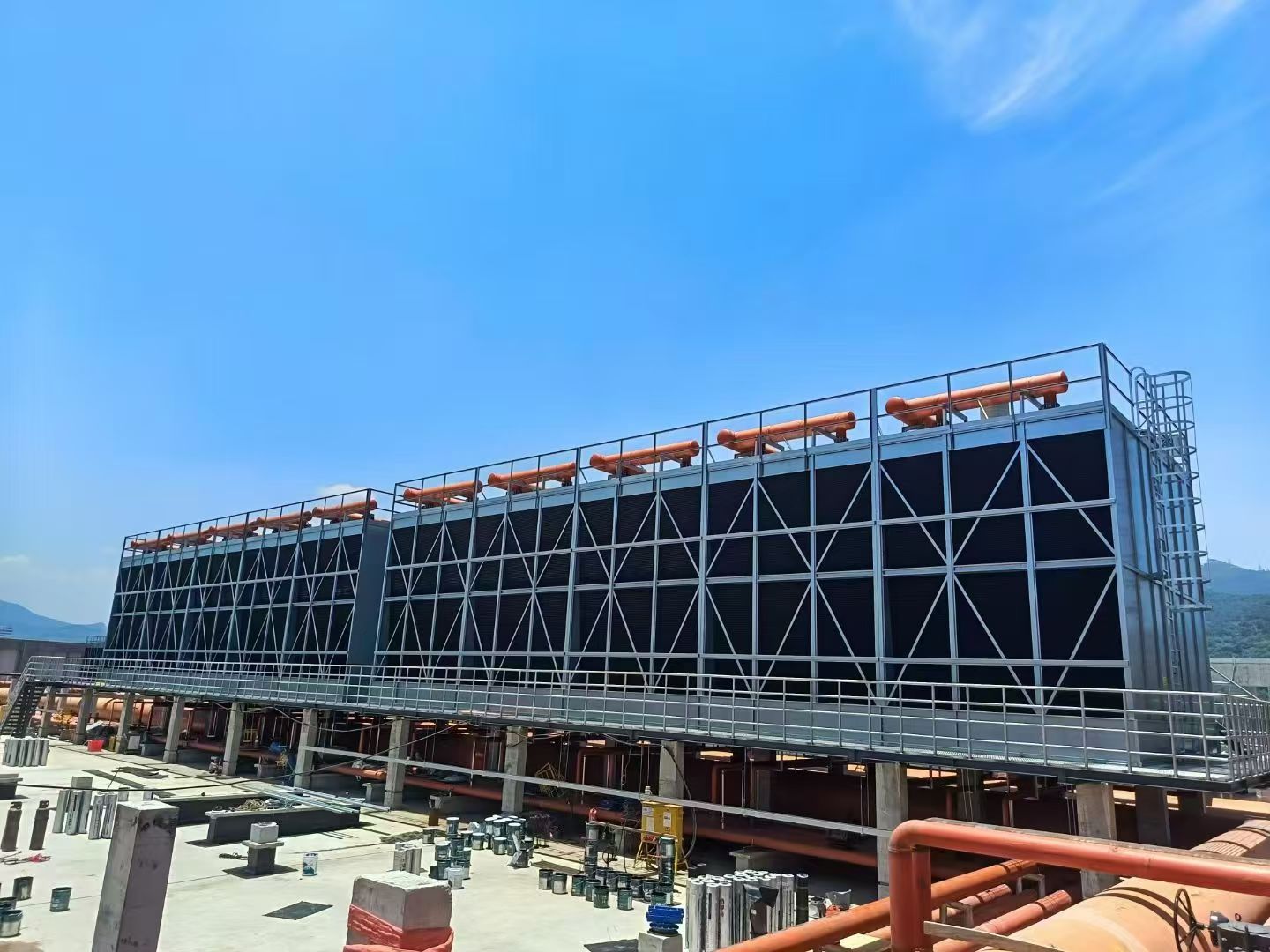
Indonesia has a diverse industrial sector, including manufacturing, food processing, energy, chemicals, and commercial infrastructure. Many of these operations use cooling towers to remove unwanted heat from machinery, production processes, condensers, or circulating water.
Because cooling systems operate under different environmental and process conditions, selecting suitable fill is important.
Manufacturing and Industrial Processing
Factories may use cooling towers to support injection molding, metal processing, compressors, production equipment, and industrial chillers. The required cooling capacity and water quality vary by application.
For example, a facility using relatively clean circulating water may be able to operate with film fill. A facility with suspended solids, biological growth, or a greater risk of fouling may need a fill design that is easier to maintain and more tolerant of its water conditions.
The decision should be based on actual water quality and operating conditions rather than industry type alone.
Power Plants, HVAC, and Commercial Facilities
Cooling towers used in power generation and large HVAC installations often need to operate reliably for extended periods. Fill selection can influence heat transfer, airflow resistance, maintenance planning, and the frequency of internal inspections.
For commercial buildings, cooling tower fill can affect the performance of the overall chilled-water system. For industrial facilities, unsuitable fill may contribute to cooling limitations that affect production processes.
A suitable filler does not eliminate every cooling problem, but it provides an important foundation for efficient tower operation.
Main Types of Cooling Tower Filler
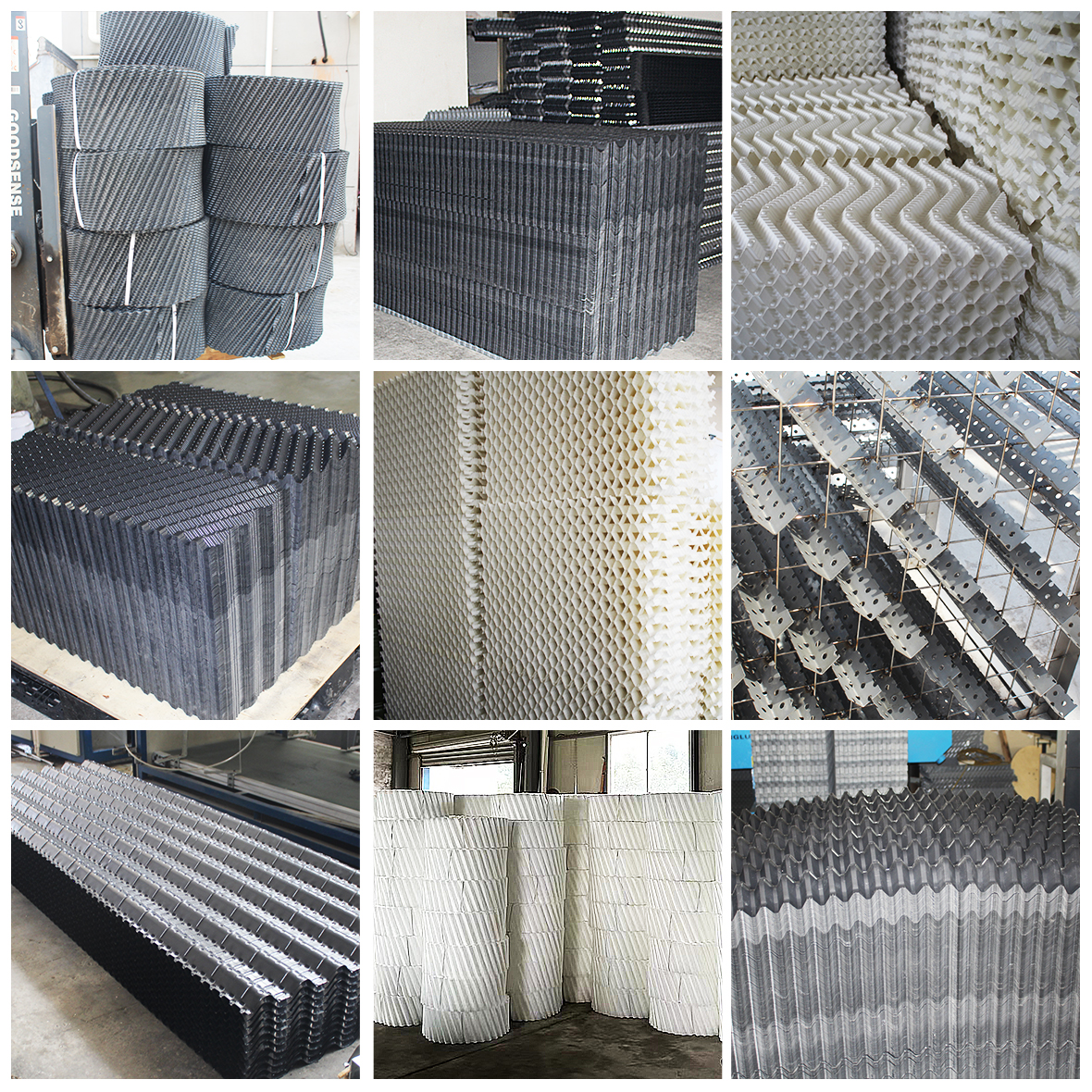
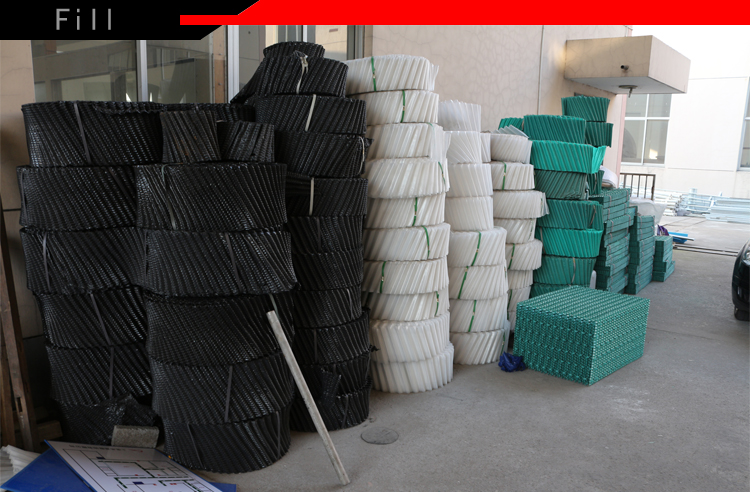
Before purchasing cooling tower fill, identify which product type matches your system. Three common categories are PVC film fill, PP cooling tower fill, and splash fill.
PVC Film Fill
PVC film fill is widely used in evaporative cooling towers because it provides a large water-to-air contact area in a compact arrangement.
Its formed sheets guide water into thin films while allowing air to pass through the fill pack. Depending on the design, PVC film fill may be suitable for crossflow or counterflow applications.
Typical advantages include:
High heat-transfer surface area.
Compact fill arrangements.
Availability in different sheet patterns and pack configurations.
Suitability for many conventional industrial and HVAC applications.
However, PVC film fill is not ideal for every water condition. Heavy suspended solids, scale, algae, and biological deposits can obstruct narrow passages. Material temperature limits and chemical compatibility must also be checked before ordering.
PP Cooling Tower Fill
Polypropylene (PP) cooling tower fill is another option for applications where its material properties offer advantages.
Depending on the grade and product design, PP may provide useful resistance to certain chemicals and higher operating temperatures than some conventional PVC fill products. The actual temperature limit depends on the resin, construction, loading, and operating conditions.
PP fill is available in designs intended for different cooling tower configurations. Buyers should confirm whether the selected product is suitable for their tower and whether its thermal and mechanical properties meet the required specifications.
When comparing PVC and PP, do not rely on material names alone. Ask suppliers for application-specific information, including recommended operating temperatures, chemical compatibility, and expected service conditions.
Splash Fill
Splash fill uses bars, grids, or other surfaces to break falling water into droplets. These droplets provide contact between water and air as they move through the tower.
Splash fill is often considered for systems where suspended solids or fouling risks make narrow film-fill passages difficult to maintain. It may also be appropriate for particular industrial cooling tower designs and replacement projects.
Its performance depends on the splash pattern, fill spacing, water distribution, airflow, and tower configuration. Splash fill should therefore be selected based on the complete system rather than an assumption that it is always better for dirty water.
Film Fill vs. Splash Fill: Which Is Better?
There is no universal winner. Film fill and splash fill serve different operating requirements.
| Comparison Factor | Film Fill | Splash Fill |
| Heat-transfer approach | Spreads water across surfaces | Breaks water into droplets |
| Contact area | Generally high in a compact space | Depends on splash pattern and arrangement |
| Fouling considerations | Narrow passages may clog under unsuitable water conditions | Often offers more open flow paths, depending on design |
| Maintenance | Requires attention to deposits and blocked passages | Requires inspection for damage, deposits, and displacement |
| Typical selection priority | Compact design and effective heat transfer | Fouling tolerance and compatibility with the application |
| Main limitation | May be sensitive to suspended solids and scale | May require a different arrangement or volume to meet performance requirements |
If your circulating water is relatively clean and the tower is designed for film fill, PVC or PP film fill may be appropriate.
If your water contains more suspended solids or the existing system has a history of fill blockage, splash fill may deserve consideration. Nevertheless, water treatment and filtration remain important regardless of fill type.
Before making a purchase, ask the supplier to review the existing fill design, tower drawings, water quality, and required thermal performance.
How to Choose the Right Cooling Tower Infill
Choosing the right product requires more than matching a keyword or material name. The following factors can help you narrow down your options.
Water Quality and Fouling Risk
Water quality is one of the most important considerations in fill selection.
Circulating water may contain suspended solids, minerals, corrosion products, algae, and other contaminants. Over time, these materials can accumulate on fill surfaces or obstruct water passages.
Before selecting a product, consider:
Suspended solids and their concentration.
Water hardness and scaling potential.
Biological growth and treatment practices.
Corrosion products entering the system.
Existing cleaning and maintenance procedures.
Film fill with narrow passages may require better water-quality control. A more open splash-fill design may be worth evaluating when fouling is a recurring problem.
Do not assume that changing the fill alone will solve persistent scaling or biological growth. Water treatment, filtration, blowdown control, and regular inspection are also essential.
Operating Temperature and Material Compatibility
Different polymers have different temperature limits and chemical resistance profiles. Even products made from the same polymer may perform differently because of resin formulation, thickness, additives, and construction.
Confirm the normal operating temperature, maximum expected temperature, cleaning chemicals, and water-treatment chemicals before choosing a material.
If your system operates at elevated temperatures, ask for the manufacturer's documented operating limits. Do not select PP or any other material based on a general claim that it is heat-resistant.
Crossflow vs. Counterflow Cooling Towers
Cooling tower configuration determines how air and water move through the equipment.
In a crossflow cooling tower, air generally moves horizontally across falling water. In a counterflow tower, air moves upward against the downward flow of water.
The fill must match the tower's design, including water distribution, airflow direction, support arrangement, and installation dimensions.
A product designed for one configuration may not be a direct replacement for another. Confirm the tower type and the existing fill arrangement before requesting a quotation.
Fill Dimensions and Installation Requirements
Correct dimensions are critical for a successful replacement.
Before ordering, measure or obtain the following information:
Existing fill pack length, width, and height.
Sheet thickness and spacing, where relevant.
Fill block arrangement and orientation.
Support beam dimensions and load limits.
Water distribution and airflow requirements.
Access restrictions for removing old fill and installing new packs.
Photographs, drawings, and the cooling tower model can help the manufacturer understand your requirements.
Avoid ordering based only on the outside dimensions of a fill block. The internal sheet pattern, orientation, and connection method may also affect compatibility.

Common Signs That Cooling Tower Fill Needs Replacement
Cooling tower fill does not last forever. Water chemistry, operating temperature, mechanical loading, and maintenance practices all affect its condition.
Common warning signs include:
Visible deformation: Sheets may warp, sag, crack, or collapse, interfering with water distribution and airflow.
Persistent blockage: Mineral deposits, biological growth, and debris may obstruct passages. If proper cleaning cannot restore the required flow, replacement may be necessary.
Uneven water distribution: Damaged or blocked fill can contribute to dry areas, concentrated water flow, or reduced contact between water and air.
Reduced cooling performance: If the tower cannot achieve its required cold-water temperature, fill condition should be investigated alongside airflow, water distribution, fan operation, and water quality.
Structural deterioration: Brittle material, broken connections, or damaged supports can make the fill unsafe or unsuitable for continued operation.
These symptoms do not automatically prove that the fill is the cause. A professional inspection can help determine whether cleaning, repairs, water-treatment improvements, or complete replacement is the most appropriate solution.
How to Evaluate a Cooling Tower Filler Supplier
Searching for jual filler cooling tower Indonesia may return manufacturers, distributors, trading companies, and maintenance contractors. Their capabilities can differ considerably.
A reliable supplier should be able to explain what it sells, how the product fits your application, and what information is needed to recommend a suitable solution.
Manufacturing Capability and Product Consistency
Ask whether the company manufactures the fill directly or sources it from another producer. Neither arrangement is automatically unsuitable, but understanding the supply chain helps you evaluate technical responsibility and quality control.
Consider asking for:
Product specifications and material details.
Available fill designs and dimensions.
Quality inspection procedures.
Product photographs or samples, when appropriate.
Packaging and shipping arrangements.
Relevant application references, where available.
A manufacturer's ability to explain the product clearly is often more useful than broad marketing claims.
Customization and Technical Support
Cooling tower replacement projects often involve nonstandard dimensions or existing equipment with specific design requirements.
A supplier with suitable engineering and manufacturing capabilities may be able to discuss customized dimensions, block arrangements, or alternative fill designs. Any proposed modification should be checked for compatibility with the tower's structural and thermal requirements.
Technical support also matters after delivery. Ask who can help if you need clarification about installation orientation, storage, handling, or maintenance.
Price, Quality, and Long-Term Value
The lowest quotation does not always produce the lowest total cost.
A complete purchasing comparison should consider product price, freight, import-related expenses, installation labor, downtime, expected maintenance, and the consequences of an unsuitable replacement.
For example, a fill product that costs less but does not fit the tower may require modification or reordering. Delays can increase labor costs and extend maintenance downtime.
Compare suppliers using the same technical specifications. This makes it easier to understand whether differences in price reflect material, design, customization, shipping, or service.
Buying Cooling Tower Filler in Indonesia
When sourcing cooling tower filler for an Indonesian facility, buyers may consider local distributors, regional suppliers, and overseas manufacturers.
Local suppliers may offer convenient communication and delivery arrangements. Overseas manufacturers may provide additional product options or manufacturing capabilities. The best route depends on the project schedule, required specifications, order quantity, and total landed cost.
If purchasing from an overseas manufacturer, confirm the shipping destination, packaging method, estimated production lead time, freight arrangements, and the responsibilities of each party for customs clearance and import charges.
Do not assume that every supplier has stock in Indonesia or offers the same delivery terms. Obtain written confirmation before placing an order.
Questions to Ask Before Ordering
Before selecting a supplier, ask these practical questions:
Is the product suitable for my crossflow or counterflow cooling tower?
What material is used, and what are its operating limits?
Is the fill appropriate for my circulating water quality?
Can the dimensions and arrangement match my existing tower?
What technical information is available for evaluation?
What is the minimum order quantity, if any?
What are the production and shipping lead times?
How will the product be packed for transport?
What inspection or quality documentation can be provided?
Who should I contact if I need technical assistance?
Clear answers help reduce uncertainty before the purchase.
Information to Prepare for a Quotation
To obtain a useful quotation, prepare as much of the following information as possible:
Cooling tower manufacturer and model.
Tower type: crossflow or counterflow.
Required fill material: PVC, PP, or a recommended alternative.
Existing fill dimensions and arrangement.
Required quantity or total fill volume.
Normal and maximum operating water temperatures.
Known water-quality or fouling concerns.
Delivery location in Indonesia.
Desired delivery schedule.
Drawings and photographs of the existing installation.
If you do not know the exact fill specification, provide photographs and equipment details first. A supplier can review the available information and identify what additional measurements or engineering checks are needed.
Installation and Maintenance Best Practices
Even a suitable cooling tower filler needs correct installation and routine care. Good installation practices help protect the product and support the tower's intended operation.
Preparing for Fill Replacement
Before replacement begins, follow the facility's shutdown, isolation, and safety procedures. Cooling towers can present electrical, mechanical, chemical, and confined-space hazards, so the work should be performed by qualified personnel.
Inspect the existing fill and supporting structure before installing new material. Damaged support beams, blocked distribution nozzles, or unresolved water-treatment problems may affect the new fill's performance.
Check the delivered product against the approved specifications. Confirm dimensions, quantity, material identification, and packaging condition before installation.
Cleaning and Routine Inspection
The correct maintenance procedure depends on the fill design, deposits, and material compatibility.
Routine inspections should look for blockage, biological growth, scaling, deformation, damaged supports, and uneven water distribution. Cleaning methods should follow the equipment and material manufacturer's recommendations.
Avoid aggressive cleaning chemicals, excessive pressure, or mechanical methods that could damage the fill. If recurring deposits are present, investigate water treatment and filtration rather than relying on repeated cleaning alone.
Keep maintenance records, including inspection dates, cleaning activities, water-quality observations, and changes in cooling performance. These records can help determine when replacement becomes more economical than continued maintenance.
Common Purchasing Mistakes to Avoid
A few common mistakes can turn a straightforward fill purchase into an expensive project.
Choosing by price alone. A low-cost product may not meet the required specifications or service conditions.
Ignoring water quality. A fill design that performs well with clean water may be unsuitable for a system with significant suspended solids or scaling.
Ordering incorrect dimensions. Even small measurement errors can cause installation difficulties or leave gaps in the fill arrangement.
Assuming all polymers perform the same. Material grade, temperature, chemical exposure, and mechanical loading can affect performance.
Overlooking the tower configuration. Crossflow and counterflow designs may require different fill arrangements.
Expecting fill to fix every cooling problem. Fan issues, poor water distribution, scale, insufficient airflow, and other system faults may also reduce cooling performance.
Failing to confirm delivery terms. Buyers should verify lead times, packaging, freight, customs responsibilities, and total landed cost before confirming an order.
Avoiding these mistakes helps you select fill based on engineering requirements and the needs of your operation.
Why Consider Power Tower Cooling Technology (Shaoxing) Co.,Ltd?

For buyers researching jual filler cooling tower, selecting a supplier that understands cooling tower fill products is an important step.
Power Tower Cooling Technology (Shaoxing) Co.,Ltd is a manufacturer contact option for buyers seeking cooling tower fill products and related information. Through its website, buyers can explore available product information and contact the company to discuss project requirements.
Official website: https://www.coolingtowerpart.com
When contacting the company, explain whether you are purchasing for a new cooling tower, replacing existing fill, or planning a maintenance project. Include your tower configuration, fill dimensions, material preference, water-quality conditions, and delivery destination in Indonesia.
If you are unsure whether PVC film fill, PP fill, or splash fill is suitable, describe the operating conditions and provide photographs or drawings where possible. These details help establish what needs to be checked before a product recommendation is made.
Before confirming your purchase, request the relevant specifications, a quotation, production and delivery information, and any applicable quality documentation. Confirm product suitability and commercial terms in writing.
For industrial buyers, the goal is not simply to find a seller. It is to identify a manufacturer or supplier that can clearly communicate product requirements and support a well-planned purchasing process.
Frequently Asked Questions
Where Can I Buy Cooling Tower Filler for Industrial Use?
You can source cooling tower filler through local industrial suppliers, cooling tower maintenance companies, distributors, or manufacturers. If you are purchasing for a project in Indonesia, compare available options based on product suitability, delivery arrangements, technical support, and total cost.
You can also visit https://www.coolingtowerpart.com to contact Power Tower Cooling Technology (Shaoxing) Co.,Ltd and discuss your requirements.
Is PVC or PP Fill Better?
Neither material is automatically better for every application. PVC film fill is commonly used in conventional cooling tower applications, while PP may be suitable where its temperature or chemical-resistance characteristics meet the operating requirements.
The correct choice depends on material grade, operating temperature, water chemistry, fill design, and the cooling tower configuration. Ask the supplier to confirm suitability for your specific conditions.
How Long Does Cooling Tower Fill Last?
There is no single service life that applies to every cooling tower fill product. Service life depends on material quality, operating temperature, water treatment, UV exposure where relevant, mechanical loading, and maintenance practices.
Regular inspections help identify deterioration before it seriously affects tower operation. Follow the manufacturer's recommendations and replace fill when its condition or performance no longer meets the system's requirements.
Can Cooling Tower Fill Be Customized?
Customization may be possible depending on the manufacturer's capabilities and the product design. Buyers should provide dimensions, drawings, photographs, tower type, and operating conditions so the manufacturer can assess feasibility.
Any customized fill must remain compatible with the tower's support structure, airflow, water distribution, and thermal performance requirements.
How Can I Request a Quote?
Prepare the cooling tower model, fill dimensions, material preference, quantity, application details, and delivery location. If exact specifications are unavailable, provide photographs and explain the existing operating problem.
Visit https://www.coolingtowerpart.com to contact Power Tower Cooling Technology (Shaoxing) Co.,Ltd. Request a written quotation that identifies the proposed product, technical specifications, price, lead time, packaging, shipping arrangements, and other applicable terms.
Conclusion: Choose the Right Cooling Tower Fill for Your System
Finding the right product when searching for jual filler cooling tower in Indonesia involves more than comparing prices. You need to consider water quality, fill material, cooling tower configuration, operating temperature, dimensions, maintenance requirements, and delivery arrangements.
PVC film fill, PP fill, and splash fill each have potential advantages, but the right choice depends on the actual application. Careful specification checks and clear communication with your supplier can help reduce purchasing risks and prevent installation problems.
For buyers planning a new installation or cooling tower fill replacement, Power Tower Cooling Technology (Shaoxing) Co.,Ltd is a supplier you can contact to discuss your requirements through https://www.coolingtowerpart.com.
Prepare your technical information, compare products against consistent specifications, and confirm the commercial terms before ordering. With a well-matched fill product and a sound maintenance plan, you can support reliable cooling tower operation and better long-term value for your facility.


