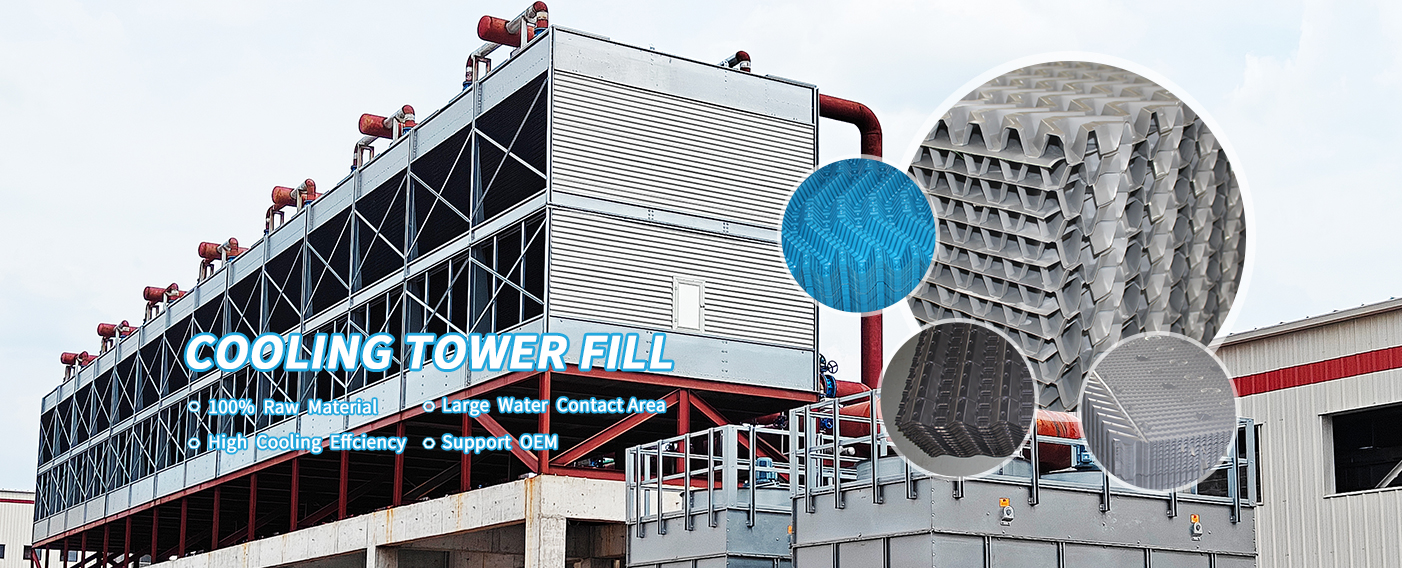
Choosing the right cooling tower infill is essential for maintaining efficient heat transfer, stable cooling performance, and reasonable operating costs. The right infill helps water spread across a larger surface area, allowing air and water to exchange heat more effectively. The wrong choice, however, can lead to clogging, increased maintenance, poor cooling performance, and unnecessary replacement expenses.
So, how do you select the best cooling tower infill for your system?
The answer depends on several factors, including your cooling tower design, water quality, operating temperature, material requirements, airflow conditions, and budget. You also need to consider how easily the fill can be cleaned and how long it is expected to last under actual operating conditions.
Whether you are building a new cooling tower or replacing existing fill, understanding these factors will help you make a more informed decision. In this guide, we will explain how to compare different cooling tower infill options and choose a solution that matches your system's requirements.
1. What Is Cooling Tower Infill?
Cooling tower infill, also known as cooling tower fill or fill media, is the material installed inside a cooling tower to increase the contact area between circulating water and moving air.
As hot water enters the tower, it flows over or through the infill while air passes across or upward through the same area. This interaction promotes heat transfer and evaporation, helping reduce the water temperature before it returns to the cooling system.
Cooling tower infill is commonly manufactured from materials such as polyvinyl chloride (PVC) and polypropylene (PP). Different designs are available for different tower configurations, operating temperatures, and water conditions.
The primary purpose of cooling tower infill is simple: create effective contact between air and water without creating excessive resistance to airflow.
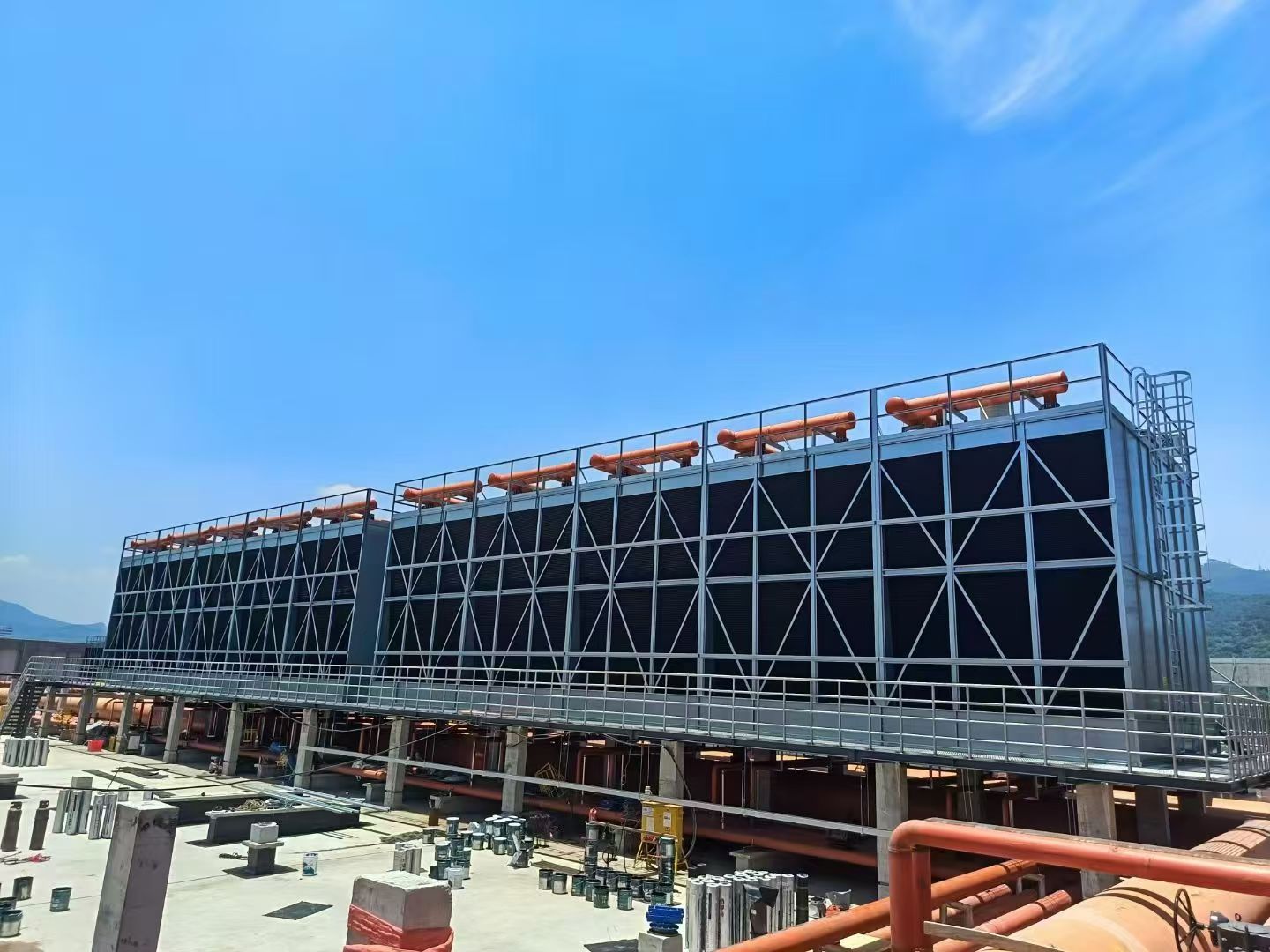
How Does Cooling Tower Infill Work?
Imagine pouring water onto a smooth surface. The water runs off quickly, leaving little time for heat exchange. Now imagine spreading the same water over a series of closely spaced sheets. The water forms thin films, exposing a much larger surface area to the air.
That is the basic principle behind film fill.
Splash fill works differently. Its structure breaks falling water into smaller droplets, helping distribute water and increase the contact area available for heat transfer.
Both types support cooling tower performance, but their effectiveness depends on the design, water loading, airflow, and operating environment.
2. Why Choosing the Right Cooling Tower Infill Matters
Cooling tower infill directly influences the way water and air interact inside the tower. Selecting a suitable product can help improve thermal performance, maintain the required cold-water temperature, and reduce avoidable maintenance.
However, higher heat-transfer efficiency does not automatically mean a product is suitable for every application.
For example, a film fill with narrow channels may perform well when the circulating water is clean and properly treated. In a system with high suspended-solids levels, the same design may be more vulnerable to clogging.
Similarly, a more open splash fill may be easier to maintain in certain industrial environments, but it still needs to meet the tower's thermal requirements.
When choosing cooling tower infill, consider these key objectives:
Achieve the required cooling performance.
Maintain suitable airflow through the tower.
Match the fill material to the operating temperature.
Reduce the risk of scaling, fouling, and clogging.
Simplify inspection, cleaning, and maintenance.
Control initial investment and long-term operating costs.
The best cooling tower infill is not necessarily the most expensive or the most efficient under laboratory conditions. It is the product that performs reliably in your actual operating environment.
3. Understand the Main Types of Cooling Tower Infill
Before selecting a product, you should understand the differences between the two main types of cooling tower fill: film fill and splash fill.
Each has a different structure and is suited to particular operating conditions.
Film Fill
Film fill typically consists of formed plastic sheets arranged to create channels for water and air. As water flows down the surfaces, it spreads into thin films, increasing the area available for heat transfer.
Film fill is commonly selected for applications where high thermal performance and efficient use of tower space are important.
Its advantages can include:
Large water-to-air contact area.
Effective heat transfer in suitable conditions.
Compact installation for many cooling tower designs.
Availability in different sheet configurations and pack dimensions.
However, some film fill designs contain narrow passages that can collect mineral scale, biological growth, and suspended solids.
If your cooling tower operates with hard water, inconsistent water treatment, or significant contamination, evaluate the channel spacing and fouling resistance carefully before selecting film fill.
Splash Fill
Splash fill uses bars, grids, or other open structures to break falling water into droplets and redistribute it throughout the tower.
Because many splash fill designs have relatively open passages, they may be suitable for industrial cooling applications where suspended solids or clogging are major concerns.
Potential advantages include:
Relatively open water and air passages.
Reduced sensitivity to certain types of channel blockage.
Suitability for selected industrial process-water applications.
Availability in different configurations for various tower designs.
Nevertheless, splash fill is not automatically the best choice for dirty water. Its actual performance depends on the product geometry, water distribution, airflow, and operating conditions.
When Should You Choose Film Fill or Splash Fill?
Film fill is often a good option when water quality is well controlled and high heat-transfer performance is a priority.
Splash fill may be worth considering when the circulating water contains more suspended solids or when the application requires a more open fill structure.
Before deciding, compare the manufacturer's technical specifications with your actual water quality, cooling duty, and maintenance capabilities. A product recommendation should be based on operating data rather than the fill type alone.

4. Compare PVC and PP Cooling Tower Infill
Material selection is another important part of the purchasing process. PVC and PP are widely used in cooling tower fill manufacturing, but they have different characteristics.
The appropriate choice depends on operating temperature, chemical exposure, mechanical requirements, and the specific material grade.
PVC Cooling Tower Infill
PVC cooling tower infill is widely used in HVAC and many industrial cooling systems because it can provide a practical combination of formability, cost, and thermal performance under suitable operating conditions.
PVC film fill is available in different configurations to suit various cooling tower designs.
Before purchasing PVC infill, check:
The maximum recommended operating temperature.
Compatibility with circulating water and treatment chemicals.
Sheet thickness and structural stability.
Fill dimensions and installation requirements.
The manufacturer's quality-control specifications.
Do not select PVC solely because it is widely used or has a lower initial price. Confirm that the specific product is suitable for your operating environment.
PP Cooling Tower Infill
Polypropylene cooling tower infill may be suitable for applications requiring greater temperature resistance than standard PVC products can provide.
Depending on the material grade and operating environment, PP may also offer useful chemical-resistance characteristics.
However, the suitability of PP depends on the particular chemical, concentration, temperature, and mechanical conditions. It should not be assumed to resist every chemical or withstand every high-temperature application.
When evaluating PP infill, request information about continuous operating temperature, material specifications, dimensional stability, and chemical compatibility.
Although PP products may have a higher purchase price in some cases, the additional material capability can be worthwhile when the application genuinely requires it.
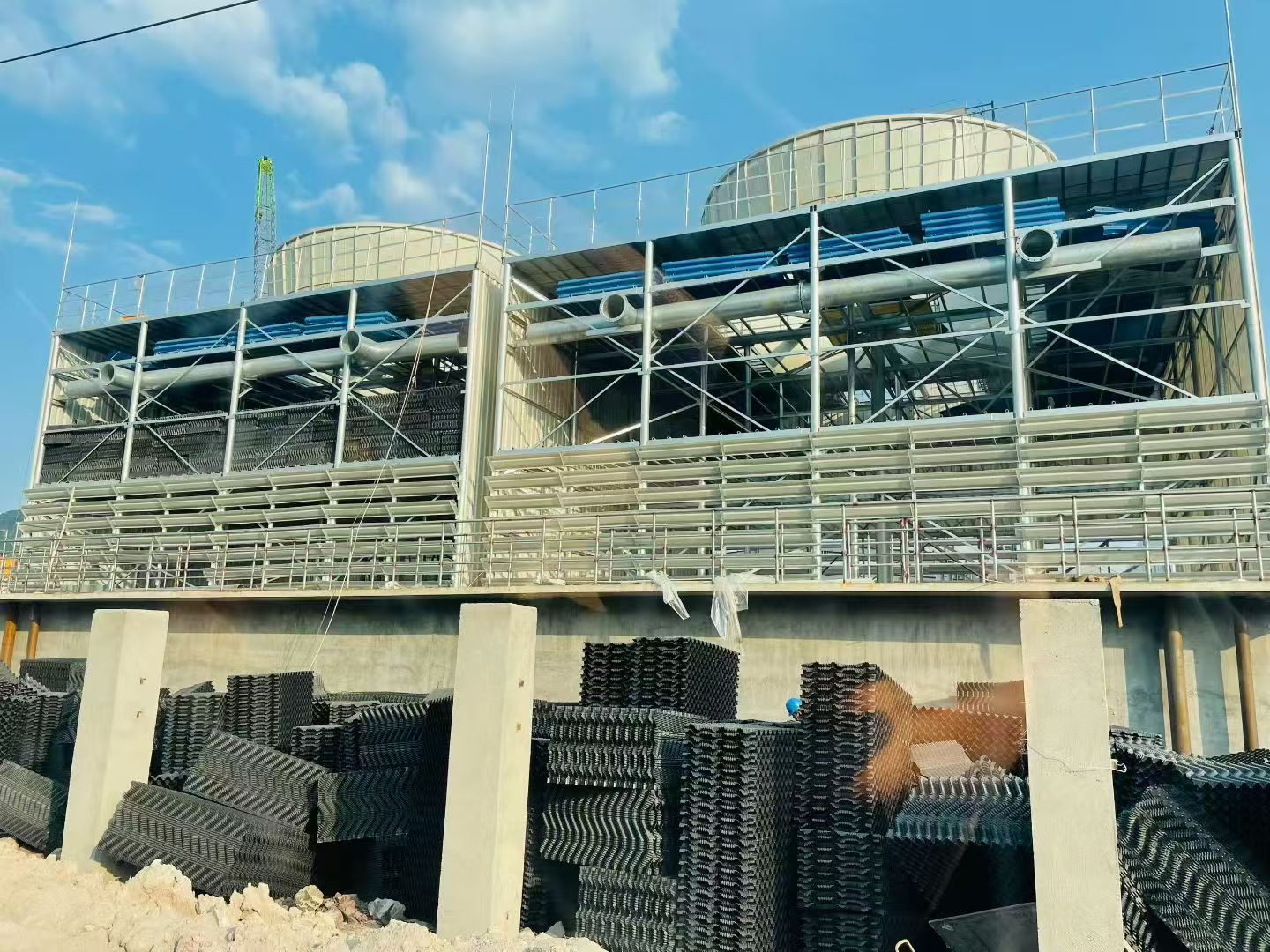
5. Match the Infill to Your Cooling Tower Design
Cooling tower design determines how air and water move through the fill. Choosing an incompatible product can affect water distribution, airflow, installation, and thermal performance.
Crossflow Cooling Towers
In a crossflow cooling tower, air moves horizontally across water flowing downward through the fill.
The infill must work with the tower's water distribution system and airflow path. Before ordering replacement fill, check the existing pack dimensions, sheet configuration, support arrangement, and available installation space.
Even if a replacement product looks similar to the original, differences in geometry can affect airflow and water distribution.
For this reason, provide your supplier with the existing fill dimensions and, where possible, photographs or technical drawings.
Counterflow Cooling Towers
In a counterflow cooling tower, air moves upward while water flows downward. The infill must support effective contact between the two streams while maintaining the intended airflow characteristics.
Important factors include channel geometry, pack height, water loading, and pressure drop.
Counterflow and crossflow infill should not be treated as interchangeable unless an engineering assessment confirms that the proposed design is compatible with the tower.
Before purchasing, verify that the fill matches the tower configuration and required thermal performance.
6. Evaluate Your Water Quality
Water quality is one of the most important factors affecting cooling tower infill selection and service life.
Poor water conditions can cause deposits to accumulate inside the fill, gradually reducing the available surface area and restricting water or airflow.
Common water-quality concerns include:
Mineral scale: Hard water can leave calcium and other mineral deposits on fill surfaces.
Suspended solids: Dirt, sediment, and process contaminants can accumulate in narrow channels.
Biological growth: Algae and biofilm can obstruct passages and reduce effective heat transfer.
Chemical exposure: Some water-treatment chemicals or process contaminants may affect particular materials under certain conditions.
Before selecting cooling tower infill, review water hardness, suspended solids, biological activity, treatment chemicals, and any known contamination.
If your cooling tower handles process water with a high solids load, discuss clogging risks with the manufacturer before choosing a closely spaced film fill.
Also consider your existing filtration and water-treatment practices. Even a well-designed fill can lose performance when deposits are allowed to build up.
7. Consider the Operating Temperature
Operating temperature directly affects material selection and long-term reliability.
You should know the normal hot-water temperature, expected maximum temperature, desired cold-water temperature, and any short-term temperature excursions.
Compare these values with the manufacturer's documented operating limits.
Avoid relying on vague descriptions such as "high-temperature resistant." Different material grades, sheet thicknesses, and product designs can have different temperature limits.
If water temperatures regularly exceed the recommended range, the fill may soften, deform, or lose structural stability.
Choosing a suitable material from the beginning can help prevent premature failure and unnecessary replacement costs.
8. Check Airflow and Thermal Performance
A cooling tower needs a suitable balance between water distribution, airflow, and heat-transfer surface area.
Although increasing the contact area between air and water can improve heat transfer, the fill also creates resistance to airflow. A design with narrow passages may offer substantial surface area while requiring more pressure to move air through the tower.
If the fill is poorly matched to the fan and tower configuration, the system may fail to deliver the required cooling duty.
When comparing products, request technical information such as:
Recommended water loading.
Airflow characteristics.
Thermal performance data.
Pressure-drop information, where available.
Recommended operating conditions.
Compare products under similar test conditions. A headline efficiency figure is not particularly useful if the test conditions differ significantly from your actual system.
If your cooling tower has a specific thermal duty, ask the supplier or a qualified engineer to evaluate the proposed fill against that requirement.
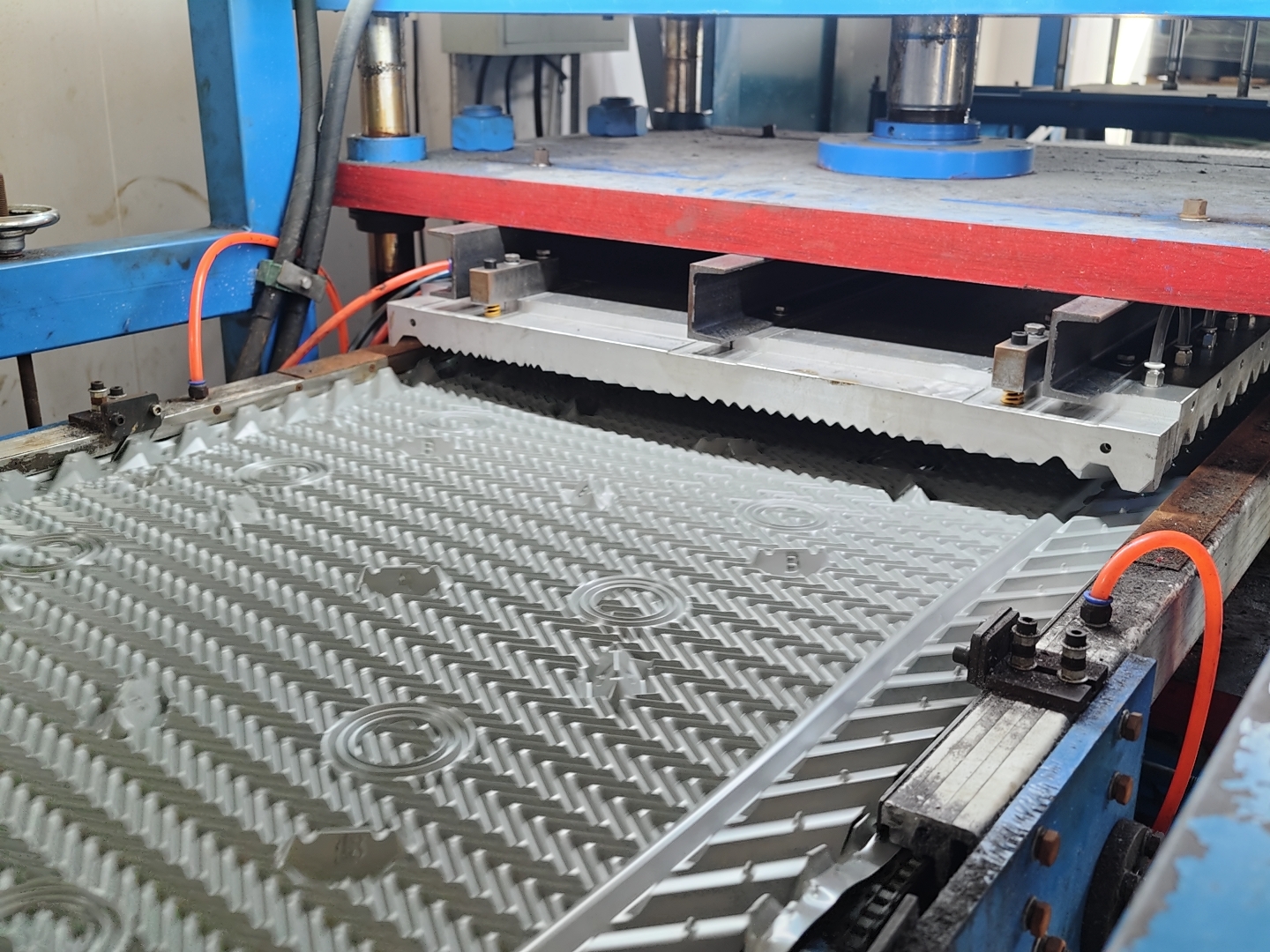
9. Choose the Correct Infill Dimensions
Correct dimensions are essential for installation and performance.
Before ordering cooling tower infill, measure the available fill length, width, and height. Also confirm the pack configuration, sheet spacing, thickness, support spacing, and any requirements for cutting or joining.
For replacement projects, inspect the existing fill and tower structure rather than relying entirely on old purchasing records.
Incorrect dimensions can create several problems:
Fill packs may not fit the available space.
Poorly supported packs may become unstable.
Incorrect geometry may restrict airflow.
Gaps or misalignment may affect water distribution.
Installation may require additional cutting or modification.
Send the supplier your drawings, photographs, or dimensional sketches before production. Confirm the final dimensions and configuration before placing the order.
10. Consider Fouling, Clogging, and Maintenance
Cooling tower infill needs regular inspection and appropriate maintenance to retain its performance.
Narrow channels may be more vulnerable to blockage when the circulating water contains suspended solids, scale, or biological growth. More open designs may be easier to maintain in certain applications, although they still require effective water treatment.
Before choosing a product, ask how easily the fill can be accessed, inspected, and cleaned.
You should also confirm which cleaning methods are compatible with the material. Aggressive chemicals or excessive water pressure may damage some fill products if used incorrectly.
A practical maintenance plan should include regular inspections, appropriate water treatment, and prompt attention to unusual deposits or reduced cooling performance.
Remember that fill selection and water treatment work together. Neither can fully compensate for serious problems with the other.
11. Assess Durability and Expected Service Life
Cooling tower infill operates in a demanding environment involving water, air, temperature changes, and sometimes chemical exposure.
Its durability depends on several factors:
Material quality and formulation.
Sheet thickness and structural design.
Manufacturing consistency.
Operating temperature.
Water chemistry and treatment practices.
Installation quality and mechanical support.
Cleaning and maintenance procedures.
When comparing suppliers, ask about material specifications, dimensional tolerances, quality-control procedures, and recommended inspection intervals.
During routine maintenance, look for deformation, cracking, brittleness, sagging, or persistent blockage.
There is no single service life that applies to every cooling tower. Two systems using similar fill may experience different results because their water quality, operating temperatures, and maintenance practices differ.
Rather than relying on unsupported longevity claims, evaluate the product specifications and your own operating conditions.
12. Calculate the Total Cost of Ownership
Purchase price is only one part of the overall cost of cooling tower infill.
A low-priced product may become expensive if it requires frequent cleaning, causes excessive airflow resistance, or needs early replacement. A more expensive product may offer better value when its characteristics are better suited to the application.
When comparing quotations, consider the following costs:
Initial purchase price.
Transportation and packaging.
Installation labor.
Routine inspection and cleaning.
Potential production downtime.
Expected replacement frequency.
Any effect on fan energy consumption.
Ask suppliers to quote products with comparable dimensions and technical requirements. Otherwise, you may be comparing products that are not designed to perform the same job.
A total-cost approach helps you make a more informed purchasing decision and avoid choosing a product based on price alone.
13. When Should You Replace Existing Cooling Tower Infill?
Cooling tower infill may need replacement when it becomes visibly damaged, severely clogged, deformed, or unable to support the required cooling performance after appropriate cleaning and maintenance.
Potential warning signs include:
Cracked or brittle fill sheets.
Sagging or distorted packs.
Persistent mineral scale or biological deposits.
Uneven water distribution.
Increased airflow resistance.
Reduced cooling performance that cannot be explained by other system issues.
However, poor cooling performance does not always mean the fill needs replacing. Blocked spray nozzles, fan problems, poor water distribution, and inadequate water treatment can cause similar symptoms.
Inspect the entire cooling tower before deciding to replace the fill.
If replacement is necessary, record the existing fill dimensions and operating conditions. Use the opportunity to identify why the original fill deteriorated and whether a different design or material would better suit the application.
14. Common Mistakes to Avoid When Choosing Cooling Tower Infill
Even experienced buyers can overlook important details when selecting replacement fill or specifying a new cooling tower.
Choosing Based Only on Price
The cheapest option may not provide the best long-term value. Compare material quality, performance, durability, and maintenance requirements alongside the initial price.
Ignoring Water Quality
Selecting closely spaced film fill without considering suspended solids or scale formation can lead to recurring clogging problems.
Overlooking Operating Temperature
A material that works well at one temperature may not maintain its structural stability under different conditions. Always check the documented operating limits.
Ordering by Dimensions Alone
A product that physically fits the tower may still be unsuitable if its geometry, airflow resistance, or thermal characteristics do not match the system.
Assuming All PVC and PP Products Are the Same
Material type alone does not determine performance. Product design, formulation, manufacturing quality, and operating conditions also matter.
Failing to Verify Technical Specifications
Before ordering, confirm the fill type, dimensions, material, intended tower configuration, and relevant performance data with the supplier.
A clear specification reduces purchasing risks and helps ensure that the replacement product addresses your actual requirements.
15. Questions to Ask a Cooling Tower Infill Manufacturer
Before purchasing, prepare a list of technical and commercial questions for your supplier.
Start with the most important ones:
Which fill type is suitable for my cooling tower design?
Is the product intended for crossflow or counterflow applications?
What material is used, and what is its recommended operating temperature?
How does the design perform under my water-quality conditions?
What dimensions and sheet configurations are available?
Is customization available for replacement projects?
Can you provide relevant thermal or airflow data?
What cleaning and maintenance practices do you recommend?
What are the packaging, production lead time, and shipping arrangements?
What quality-control procedures and technical support are available?
A reliable manufacturer should be willing to discuss your operating conditions and explain the basis for its recommendation.
If important information is missing, provide the supplier with additional system data before finalizing the specification.
16. Why Work with an Experienced Cooling Tower Infill Supplier?
An experienced cooling tower infill supplier can help turn your operating requirements into a practical product specification.
This is particularly valuable when replacing an older fill design, dealing with difficult water conditions, or comparing products made from different materials.
A capable supplier should ask about your tower configuration, hot-water temperature, target cooling performance, water quality, and installation dimensions. The supplier should also explain product limitations and identify any missing information needed to make a suitable recommendation.
Technical communication is especially important for customized and replacement projects. Small differences in dimensions or design can affect installation, airflow, and water distribution.
Instead of focusing only on the product quotation, look for a supplier that can help you understand whether the proposed infill is appropriate for your application.
17. Power Tower Cooling Technology: Cooling Tower Infill Solutions
Power Tower Cooling Technology (Shaoxing) Co.,Ltd is the featured manufacturer for this article, serving as a point of contact for buyers researching cooling tower fill and replacement requirements.
If you are sourcing cooling tower infill for a new installation, an industrial cooling system, or a replacement project, visit the company website at https://www.coolingtowerpart.com/ to explore available product information and make an inquiry.
To help the company assess your requirements, prepare the following details:
Cooling tower type and application.
Existing fill dimensions or installation drawings.
Normal and maximum operating water temperatures.
Water-quality conditions and known fouling problems.
Required material and fill configuration, if already specified.
Estimated quantity and delivery destination.
Providing these details at the beginning can make technical communication more efficient.
For customized or replacement requirements, ask Power Tower Cooling Technology to confirm material options, dimensional compatibility, technical specifications, quality requirements, and delivery arrangements before placing an order.
The objective is to identify a fill solution that matches the cooling tower's actual operating conditions rather than choosing a product based on price or appearance alone.
18. Frequently Asked Questions About Cooling Tower Infill
What Is the Best Material for Cooling Tower Infill?
There is no single best material for every application. PVC is widely used in suitable temperature ranges, while PP may be appropriate when greater temperature resistance or particular chemical compatibility is required.
The right choice depends on the material grade, water chemistry, operating temperature, and fill design. Always verify the manufacturer's technical specifications before purchasing.
Can I Replace Existing Infill with a Different Type?
Yes, in some cases, but the change requires a compatibility assessment.
Film fill and splash fill have different geometries and operating characteristics. Before switching types, evaluate the tower design, thermal requirements, airflow resistance, support arrangement, and water distribution system.
Consult the manufacturer or a qualified cooling tower engineer before making a significant design change.
How Often Should Cooling Tower Infill Be Replaced?
Replacement intervals vary according to water quality, operating temperature, material quality, maintenance practices, and operating hours.
Inspect the fill regularly and monitor cooling performance. Replace it when structural damage, severe fouling, or reduced performance cannot be resolved effectively through suitable maintenance.
Does Cooling Tower Infill Affect Energy Consumption?
Yes, it can influence energy consumption by affecting airflow resistance and overall thermal performance.
If the fill creates excessive resistance, the fan may need to work harder to move air through the tower. However, actual energy use also depends on fan design, motor efficiency, system controls, and operating conditions.
Choose fill that meets the thermal requirements while remaining compatible with the tower's airflow design.
How Can I Reduce Cooling Tower Infill Clogging?
Effective water treatment, appropriate filtration, regular inspection, and timely cleaning can help reduce clogging.
You should also select a fill design that matches the suspended-solids level and other water-quality conditions. If clogging occurs repeatedly, investigate the underlying cause before installing replacement fill.
19. Final Checklist for Choosing the Right Cooling Tower Infill
Before finalizing your purchase, review the following checklist:
-
Identify whether your tower uses a crossflow or counterflow configuration.
-
Determine the required cooling duty and target cold-water temperature.
-
Record normal and maximum operating water temperatures.
-
Evaluate water hardness, suspended solids, biological growth, and chemical exposure.
-
Compare film fill and splash fill for your application.
-
Select a suitable material, such as PVC or PP, based on verified operating limits.
-
Confirm fill dimensions, pack configuration, and support requirements.
-
Review thermal performance and airflow resistance.
-
Consider cleaning access, maintenance requirements, and expected service life.
-
Compare total ownership costs instead of purchase price alone.
-
Verify technical specifications and delivery details with the manufacturer.
Conclusion
Choosing the right cooling tower infill requires more than selecting a material or comparing prices. You need to match the fill design to your tower configuration, water quality, operating temperature, airflow requirements, and maintenance capabilities.
Film fill can provide effective heat transfer in suitable applications, while splash fill may be worth considering when a more open structure is needed. PVC and PP each offer useful characteristics, but the correct choice depends on the specific material grade and operating conditions.
Before purchasing, collect your system data, compare technical specifications, and consult a supplier that can explain why a particular product suits your application.
For cooling tower infill product information and replacement inquiries, visit Power Tower Cooling Technology (Shaoxing) Co.,Ltd.
A carefully selected infill solution can help support reliable cooling performance, practical maintenance, and better long-term value for your cooling tower system.


