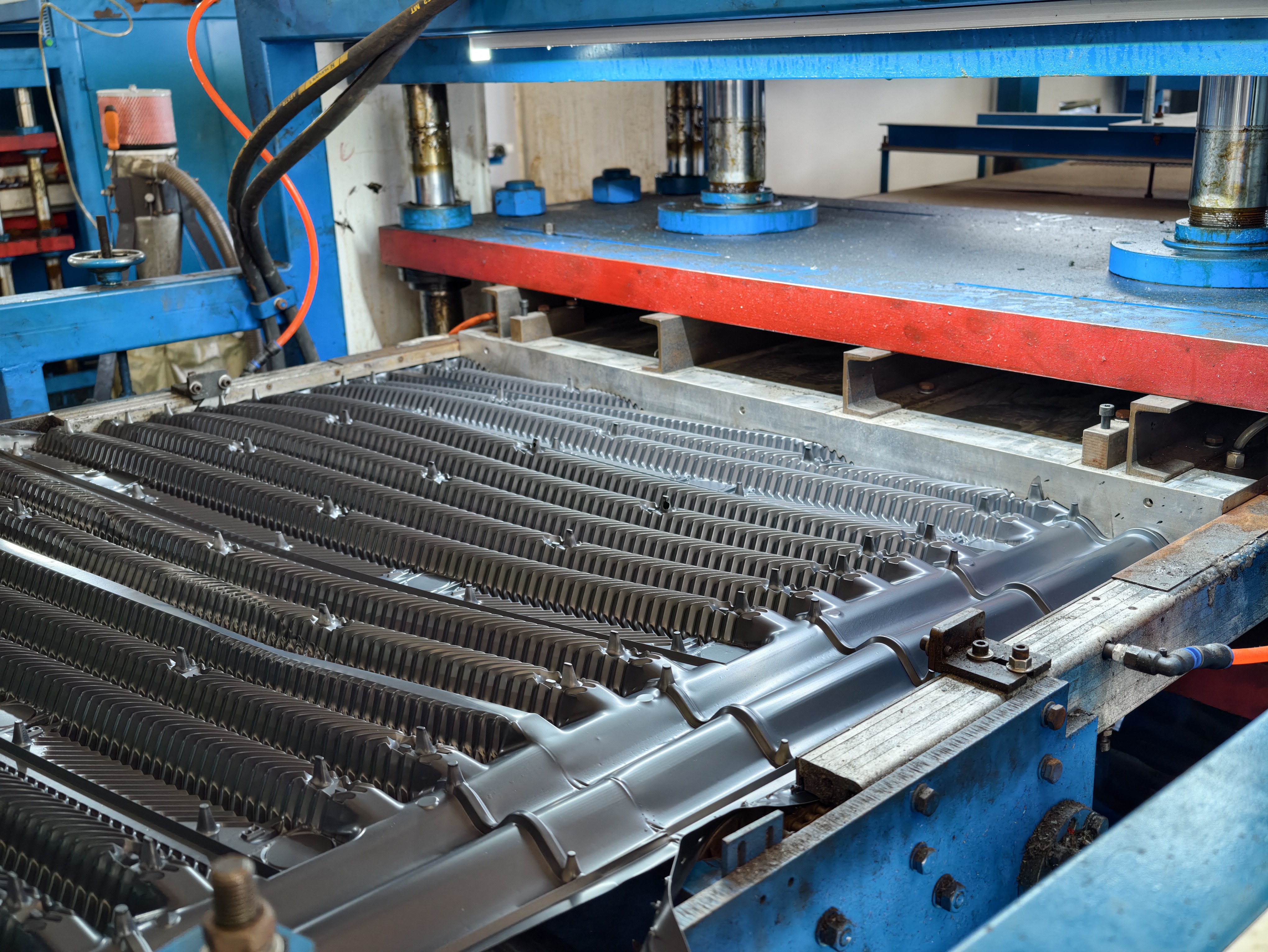
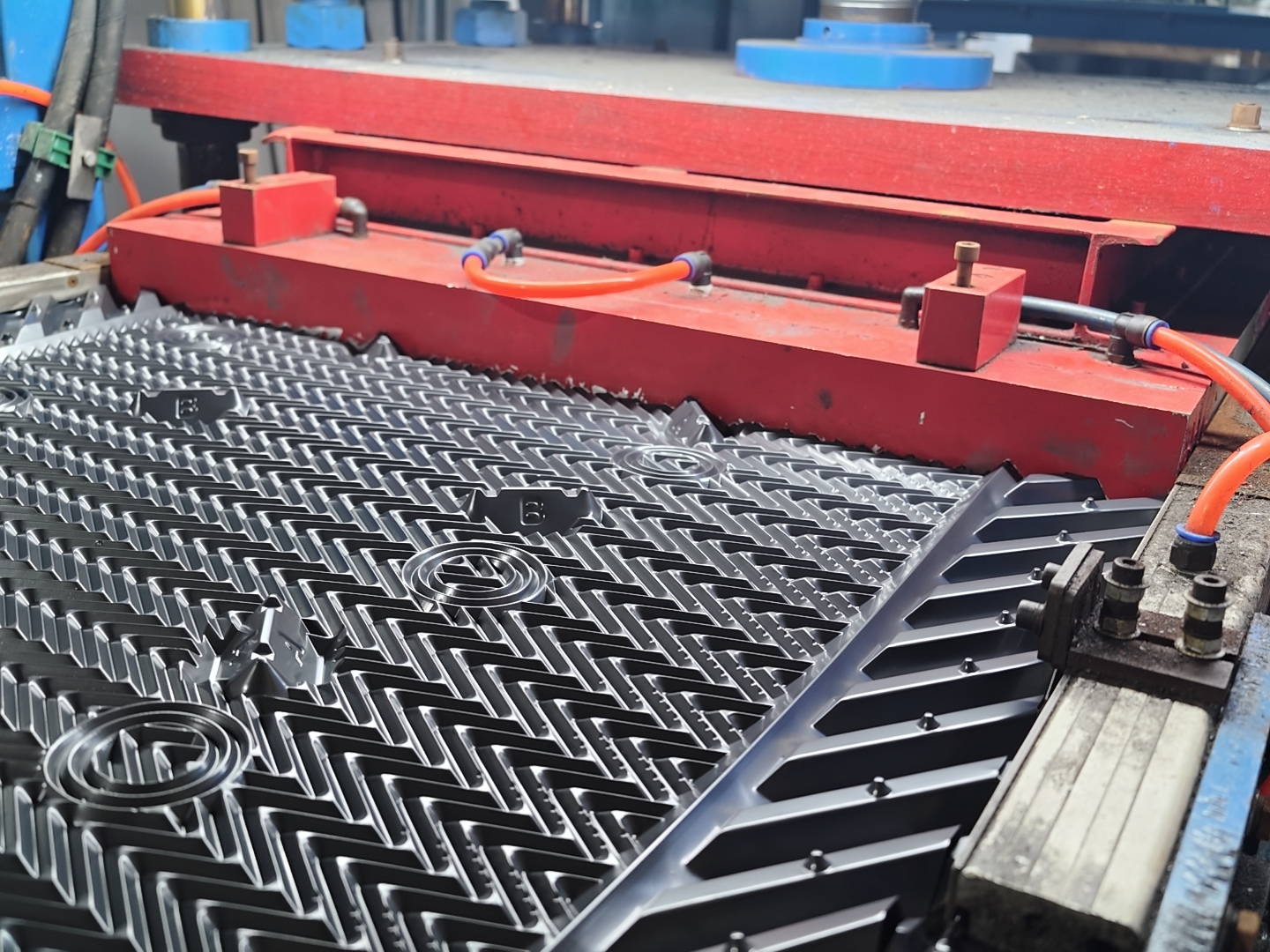
Introduction to PVC Fills for Cooling Tower Heat Transfer
PVC fills for cooling tower systems play an essential role in improving heat transfer efficiency, reducing water consumption, and maintaining stable cooling performance. As a core component of many industrial and commercial cooling towers, PVC fill media increases the contact area between circulating water and air, allowing heat to transfer more effectively during the cooling process.
In power plants, chemical processing facilities, manufacturing plants, HVAC systems, and other industrial applications, cooling tower performance directly affects energy consumption and production efficiency. Selecting the right PVC cooling tower fill can help improve thermal performance, maintain consistent water distribution, and reduce long-term operating costs.
PVC, or polyvinyl chloride, is widely used in cooling tower fill manufacturing because of its formability, corrosion resistance, and cost-effectiveness. With suitable design and operating conditions, PVC fills can provide reliable performance in a wide range of cooling tower applications.
This article explores how PVC fills for cooling towers improve heat transfer efficiency, the different types available, their major advantages, and the factors buyers should consider when selecting suitable fill media.
What Are PVC Fills for Cooling Towers?
PVC fills are specially designed plastic sheets or molded structures installed inside cooling towers. Their primary function is to increase the contact area between hot circulating water and incoming air, supporting heat transfer and evaporative cooling.
How Do PVC Cooling Tower Fills Work?
When hot water enters a cooling tower, it flows over or through the fill media. The fill structure distributes the water into thin films or smaller droplets, increasing the exposed water surface area.
At the same time, air passes through the fill section. Heat transfers from the water to the air, while a portion of the water evaporates. This evaporation removes heat from the remaining circulating water, lowering its temperature before it returns to the cooling system.
The Role of Surface Area in Heat Transfer
A larger effective contact area generally allows more heat and mass transfer to occur under suitable operating conditions. PVC film fills achieve this by using corrugated sheets with closely spaced channels and specially designed surface patterns.
These structures help spread water across the fill surface, encouraging more uniform wetting and increasing the time water remains in contact with the air.
Why Water Distribution Matters
Even high-quality PVC fill media cannot deliver its full potential if water distribution is uneven. Dry areas reduce the effective heat transfer surface, while excessive water accumulation may increase pressure drop and interfere with airflow.
A suitable combination of fill geometry, water distribution, and airflow helps maintain balanced cooling performance.
Where Are PVC Fills Commonly Used?
PVC fills are widely used in cooling towers serving different industries.
Industrial process cooling systems
Commercial HVAC cooling towers
Power generation facilities
Chemical and petrochemical plants
Plastic manufacturing and metal processing
General manufacturing facilities
Water-cooled refrigeration systems
The appropriate fill design depends on water quality, operating temperature, airflow direction, and the cooling requirements of the installation.
How Do PVC Fills Improve Cooling Tower Heat Transfer Efficiency?
Heat transfer efficiency depends on several interacting factors, including effective surface area, water distribution, airflow, operating temperature, and the condition of the fill media. Properly selected PVC fills can improve these factors and support more consistent cooling performance.
1. Increasing the Water-Air Contact Area
One of the main advantages of PVC cooling tower fills is their ability to create a large effective contact area within a relatively compact space.
Corrugated Sheet Design
Film-type PVC fills commonly use corrugated sheets assembled into packs. The corrugations create channels that guide water and air through the fill section.
This structure spreads water into thin films across the sheet surfaces. Compared with a poorly distributed stream of water, a well-formed water film can expose more surface area to the moving air.
Improving Heat and Mass Transfer
As water flows through the fill, heat moves from the water into the air, and evaporation removes additional heat. Properly designed channels help maintain contact between the two fluids, improving the overall heat and mass transfer process.
However, actual performance depends on fill geometry, operating conditions, water loading, and airflow. A larger nominal surface area alone does not guarantee better cooling.
2. Supporting Uniform Water Distribution
Uniform water distribution is essential for using the available fill surface effectively.
Reducing Dry Areas
If water is concentrated in only a few sections, other areas of the fill remain underused. Properly designed PVC fill channels help distribute water across a wider surface when paired with a suitable distribution system.
This can improve the utilization of the fill pack and help maintain more consistent cooling throughout the tower.
Maintaining Stable Water Flow
The fill geometry should support steady water movement without creating excessive pooling or channel blockage. Stable flow helps maintain contact between water and air while limiting unnecessary resistance.
3. Optimizing Airflow Through the Fill Pack
Cooling tower fill must provide effective heat transfer without creating excessive airflow resistance.
Balancing Thermal Performance and Pressure Drop
Closely spaced channels may provide a large contact area, but they can also increase pressure drop or become more vulnerable to fouling. Wider passages may improve tolerance to suspended solids but may offer a different thermal performance profile.
The best PVC fill design balances heat transfer requirements with acceptable pressure drop and the available fan capacity.
Supporting Fan Energy Efficiency
When fill media becomes clogged, airflow resistance may increase. The cooling tower fan may then need to operate under less favorable conditions, potentially increasing energy consumption or reducing airflow.
Appropriately selected fill, combined with regular inspection and cleaning, helps maintain the intended airflow characteristics.
4. Maintaining Consistent Cooling Performance
The condition of the fill media affects long-term cooling tower operation. Damaged, deformed, or heavily fouled fill can reduce effective surface area and disrupt water distribution.
High-quality PVC fills with suitable structural strength can help maintain channel geometry under the intended operating conditions. Routine inspection also helps identify early signs of scaling, biological growth, and physical damage.
What Types of PVC Fills Are Available for Cooling Towers?
Different cooling tower configurations require different fill designs. Choosing the right type helps match thermal performance, airflow requirements, and water quality.
Film-Type PVC Cooling Tower Fills
Film fills are among the most common types used in cooling towers with relatively clean circulating water.
Features of Film Fill Media
Film-type fill consists of thin PVC sheets assembled into packs. Corrugated surfaces create narrow channels that allow water to spread into films while air moves through the spaces between sheets.
Typical features include:
High effective contact area
Compact installation structure
Efficient heat transfer under suitable conditions
Lightweight modular construction
Flexible configuration for different tower designs
Film fill is often selected for HVAC and industrial applications where water quality can be adequately controlled.
Splash-Type Cooling Tower Fills
Splash fill breaks falling water into smaller droplets through repeated impacts on bars, grids, or other structural elements.
When Is Splash Fill Suitable?
Splash fill may be preferable in applications where circulating water contains suspended solids or where fouling resistance is a major consideration.
Unlike conventional film fill, splash fill does not depend primarily on maintaining continuous thin water films across closely spaced sheet surfaces. Nevertheless, splash fill designs have their own maintenance requirements and thermal performance characteristics.
The choice between film and splash fill should be based on actual water conditions and cooling tower design rather than material alone.
Crossflow and Counterflow PVC Fills
Cooling towers can also be classified according to the relative directions of water and air movement.
Crossflow Cooling Tower Fill
In a crossflow tower, water generally moves downward through the fill while air flows horizontally across it. The fill pack must support suitable water distribution and allow air to pass through the fill section.
Counterflow Cooling Tower Fill
In a counterflow tower, air moves upward while water flows downward. The fill design must accommodate the tower's vertical airflow path and operating requirements.
Crossflow and counterflow fill packs are not always interchangeable. Dimensions, channel orientation, support arrangements, and airflow characteristics must be checked before ordering replacement media.
Why Is PVC a Popular Material for Cooling Tower Fills?
PVC is widely used because it combines practical manufacturing characteristics with useful performance properties.
Corrosion Resistance in Typical Cooling Tower Environments
PVC offers resistance to many substances encountered in ordinary cooling water systems. It does not rust like unprotected steel, making it suitable for many humid operating environments.
Chemical Compatibility Must Be Verified
PVC is not universally resistant to every chemical or operating condition. Chemical concentration, water temperature, cleaning agents, and exposure duration can affect material performance.
Before selecting PVC fill, buyers should confirm compatibility with the actual circulating water and treatment program.
Lightweight Construction and Convenient Installation
PVC fill packs are generally lighter than many traditional metal components. This can simplify handling, transportation, and installation, although the complete assembly weight also depends on the support structure and retained water.
Modular Fill Pack Configuration
Many PVC fills are manufactured in modular packs that can be arranged to suit the available tower space. Pack dimensions, sheet spacing, and support requirements should be confirmed during project planning.
Cost-Effective Manufacturing
PVC can be processed into corrugated sheets with repeatable shapes and dimensions. This supports the production of different fill patterns and pack configurations for industrial cooling towers.
Customization for Replacement Projects
Replacement projects may require specific sheet profiles, pack heights, widths, lengths, or installation details. A qualified manufacturer can review existing samples, drawings, or equipment information to determine an appropriate replacement configuration.
Customization should preserve compatibility with the tower's hydraulic, thermal, and structural requirements.
How to Choose the Right PVC Fills for Cooling Tower Efficiency
Selecting suitable fill media involves more than comparing prices or nominal dimensions. Buyers should consider operating conditions, tower configuration, water quality, and long-term maintenance requirements.
1. Evaluate the Operating Water Temperature
Temperature is an important factor in PVC material selection. Some PVC fill products are intended for standard cooling tower temperatures, while other applications may require a different material or a specialized design.
Confirm the Maximum Operating Temperature
Check the expected inlet water temperature, normal operating range, and any temporary temperature excursions. The manufacturer's specified service limits should be verified before purchase.
If the application operates at elevated temperatures, do not assume that standard PVC fill will remain dimensionally stable. Compare suitable PP, specialized PVC formulations, or other engineered materials when necessary.
2. Assess Circulating Water Quality
Water quality influences fill selection, cleaning frequency, and service life.
Consider Suspended Solids and Biological Growth
Water containing suspended solids, algae, scale-forming minerals, or biological material can gradually restrict fill channels.
Where water quality is difficult to control, buyers should assess whether a wider-channel fill or splash-type design would be more appropriate.
Review the Water Treatment Program
Effective filtration, blowdown control, and appropriate water treatment can reduce deposits and biological growth. The treatment program should be compatible with the fill material and the rest of the cooling tower system.
3. Match the Fill to Tower Configuration
The fill pack must fit the cooling tower and work with its existing airflow and water distribution systems.
Confirm Dimensions and Support Requirements
Before ordering replacement PVC fills, check:
Fill pack length, width, and height
Sheet thickness and spacing
Corrugation profile and orientation
Airflow direction
Support grid and load-bearing arrangement
Water distribution pattern
Access and installation clearances
Matching the original dimensions is important, but dimensional compatibility alone does not guarantee equivalent thermal performance.
4. Compare Thermal Performance and Pressure Drop
A fill product should meet the cooling duty while remaining compatible with the tower's airflow capability.
Request Relevant Technical Data
Where available, ask the supplier for thermal performance data, pressure-drop information, recommended water loading, operating temperature limits, and installation guidelines.
Compare products under similar test conditions. Data from different operating conditions may not provide a meaningful basis for direct comparison.
5. Consider Maintenance and Replacement Costs
The lowest initial purchase price does not always result in the lowest total cost.
Evaluate the Total Cost of Ownership
Consider material quality, expected service life under actual operating conditions, cleaning requirements, replacement labor, shipping, and potential downtime.
A suitable fill design can help reduce avoidable maintenance and support stable operation over time, but results depend on the installation and maintenance program.
What Causes PVC Cooling Tower Fills to Lose Efficiency?
Even a well-designed fill system can experience performance deterioration. Identifying the cause helps determine whether cleaning, repair, or replacement is necessary.
Scaling and Mineral Deposits
Hard water can leave mineral deposits on fill surfaces. As deposits accumulate, they may restrict channels and interfere with water distribution.
How to Reduce Scaling
Maintain appropriate water chemistry, control cycles of concentration, and follow a suitable blowdown and treatment program. Inspect fill surfaces periodically to identify early deposits.
Biological Growth and Slime
Algae, biofilm, and other biological material can accumulate on fill surfaces, especially where operating conditions favor growth.
Why Biological Fouling Matters
Biological deposits can obstruct water and air passages, reduce effective contact area, and increase pressure drop. A suitable water treatment and cleaning program helps control these risks.
Physical Deformation or Structural Damage
High temperatures, mechanical impact, improper support, or incompatible chemicals can damage fill sheets.
Signs of Fill Deterioration
Look for sagging, cracked sheets, distorted channels, separated packs, and areas where water no longer spreads evenly. Significant deformation may reduce cooling performance even if the fill remains partly open.
Poor Water Distribution
Blocked nozzles, damaged distribution pipes, or incorrect installation can create dry areas and concentrated water flow.
Check the Entire Water Distribution System
Before replacing fill solely because of reduced cooling performance, inspect spray nozzles, distribution basins, piping, and other related components. The underlying issue may not originate in the fill media itself.
How Can You Maintain PVC Fills for Better Heat Transfer?
A consistent maintenance program helps preserve the performance of PVC cooling tower fills and can extend their useful service life.
Conduct Regular Visual Inspections
Inspect the fill for deposits, biological growth, physical damage, and uneven water distribution. Inspection frequency should reflect water quality, operating hours, seasonal conditions, and the consequences of reduced cooling performance.
Keep Inspection Records
Record observed deposits, damaged areas, cleaning activities, and changes in cooling performance. Comparing inspection results over time can help identify recurring problems.
Clean Fill Media Using Compatible Methods
Cleaning methods should remove deposits without damaging the fill structure.
Avoid Excessive Mechanical Force
Aggressive pressure washing, unsuitable chemicals, or harsh mechanical tools may deform or damage PVC sheets. Follow the fill manufacturer's cleaning recommendations and the facility's safety procedures.
Check Water Chemistry After Cleaning
After cleaning, review the water treatment system and identify the causes of fouling. Cleaning alone may not prevent deposits from returning if the underlying water quality problem remains unresolved.
Inspect Supporting Components
Fill performance also depends on the condition of the surrounding cooling tower components.
Check Drift Eliminators and Water Distribution Parts
Inspect drift eliminators, support grids, spray nozzles, and nearby structural components. Damaged supports can allow fill packs to shift, while blocked nozzles can cause uneven wetting.
Replace Fill When Cleaning Is No Longer Sufficient
Replacement may be necessary when the fill is severely deformed, brittle, extensively blocked, or structurally damaged.
Plan Replacement to Minimize Downtime
Measure the existing fill, document the installation arrangement, and confirm replacement specifications before ordering. Where possible, coordinate replacement with scheduled maintenance or planned shutdowns.
PVC vs. PP Cooling Tower Fills: Which Is Better?
PVC and polypropylene (PP) are both used in cooling tower fill manufacturing, but they are not suitable for every application under identical conditions.
PVC Cooling Tower Fills
PVC is often selected for its cost-effectiveness, established manufacturing options, and suitability for many standard cooling tower applications.
Typical Selection Considerations
PVC can be a practical choice where operating temperatures, water chemistry, and mechanical requirements fall within the product's specified limits.
PP Cooling Tower Fills
PP may be preferred in applications that require a different temperature capability or chemical resistance profile. The suitability of PP depends on its grade, product design, and actual operating conditions.
Compare Material Properties With Actual Requirements
Do not select a fill based only on whether it is PVC or PP. Confirm the manufacturer's temperature limits, chemical compatibility, structural properties, thermal performance, and installation requirements.
How Should Buyers Make the Final Decision?
Choose the material and fill geometry according to the cooling tower's design conditions and operating environment. A technical comparison should include both thermal performance and expected maintenance needs.
Why Work With a Reliable PVC Cooling Tower Fill Manufacturer?
The quality of the fill media and the accuracy of its specifications can influence installation efficiency and long-term operating performance.
Consistent Material and Manufacturing Quality
A reliable manufacturer should maintain consistent sheet thickness, corrugation profiles, pack dimensions, and bonding quality where applicable.
Quality Control and Product Inspection
Ask about incoming material inspection, dimensional checks, production controls, and finished-product inspection. Documentation and traceability can be particularly useful for industrial replacement projects.
Custom PVC Fill Solutions
Cooling towers differ in dimensions, airflow configuration, cooling duty, and maintenance history. Custom fill solutions may help address specific replacement or retrofit requirements.
Information to Provide for a Quotation
To help a supplier recommend a suitable product, prepare the following information where available:
Cooling tower brand and model
Existing fill type and material
Fill pack dimensions and required quantity
Crossflow or counterflow configuration
Normal and maximum water temperatures
Circulating water quality
Photographs, drawings, or an existing fill sample
Destination port and delivery requirements
More complete technical information can reduce specification errors and make quotation comparisons more meaningful.
Reliable Packaging and Delivery
PVC fill sheets and assembled packs can be vulnerable to deformation if improperly handled during transport.
Protecting Fill Media During Shipment
Confirm packaging methods, pallet dimensions, loading arrangements, and container requirements before shipment. For international orders, packaging should balance protection, handling efficiency, and shipping cost.
Frequently Asked Questions About PVC Fills for Cooling Towers
How Long Do PVC Cooling Tower Fills Last?
Service life varies according to water quality, operating temperature, chemical exposure, maintenance practices, and mechanical conditions. There is no single replacement interval suitable for every cooling tower. Regular inspection helps determine when cleaning or replacement is needed.
Can PVC Fills Improve Cooling Tower Capacity?
Properly selected and installed PVC fill can improve heat and mass transfer within the tower's design limits. However, total cooling capacity also depends on airflow, water flow, ambient wet-bulb temperature, heat load, and other system components. Fill replacement alone cannot guarantee a specific capacity increase.
Are PVC Cooling Tower Fills Suitable for Dirty Water?
Conventional film-type PVC fills may be vulnerable to clogging when circulating water contains substantial suspended solids or biological material. Wider-channel or splash-type designs may be more appropriate for some difficult water conditions. A technical assessment is recommended before selection.
Can PVC Fills Be Customized for Existing Cooling Towers?
Yes. Many manufacturers can produce or configure fill packs to match specified dimensions and tower layouts. Buyers should provide drawings, measurements, photographs, or samples and verify that the replacement design is compatible with the tower's operating requirements.
How Can I Tell Whether PVC Fill Needs Replacement?
Common warning signs include persistent channel blockage, severe deformation, brittle or broken sheets, uneven water distribution, and deteriorating cooling performance after appropriate cleaning. These symptoms should be assessed alongside airflow, water distribution, and operating data.
Are PVC Fills Suitable for Both Crossflow and Counterflow Cooling Towers?
PVC fill products are available for both configurations, but the packs are not necessarily interchangeable. Airflow direction, water distribution, dimensions, and support arrangements must match the cooling tower design.
Conclusion: Improve Cooling Performance With the Right PVC Fills
PVC fills for cooling towers are important components for improving heat transfer, supporting uniform water distribution, and maintaining reliable cooling performance. Their corrugated structures increase the effective contact area between water and air, helping the cooling tower remove heat through sensible heat transfer and evaporation.
To achieve the best results, buyers should consider fill geometry, material properties, water quality, operating temperature, airflow resistance, and installation compatibility. Regular inspection and suitable cleaning practices are equally important for maintaining performance and controlling long-term operating costs.
For industrial cooling tower projects, selecting a reliable PVC cooling tower fill manufacturer can help ensure consistent product dimensions, suitable material specifications, and dependable supply. By matching the fill design to the actual operating conditions, facility operators can make better replacement decisions and support efficient cooling tower operation over the long term.