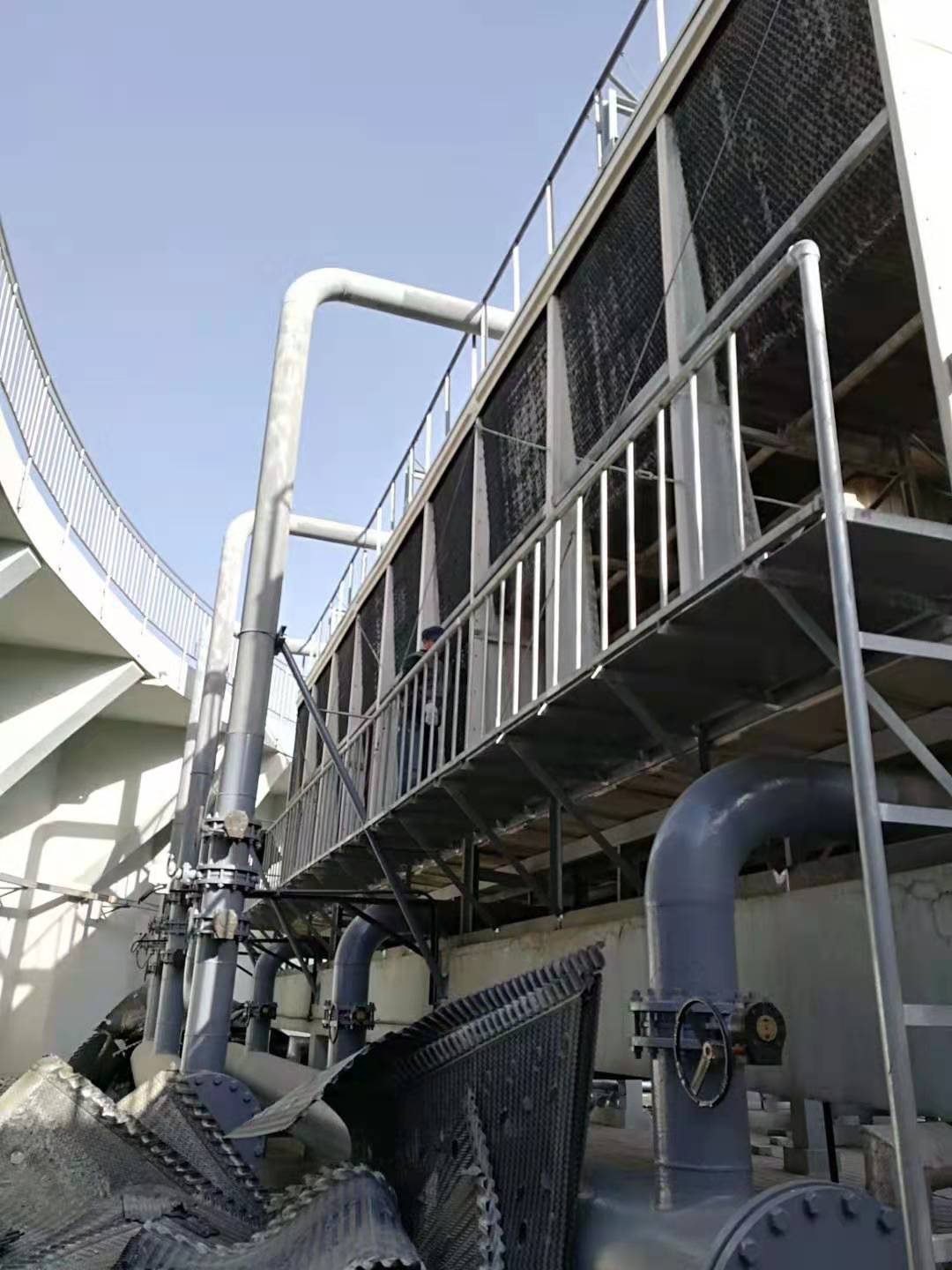
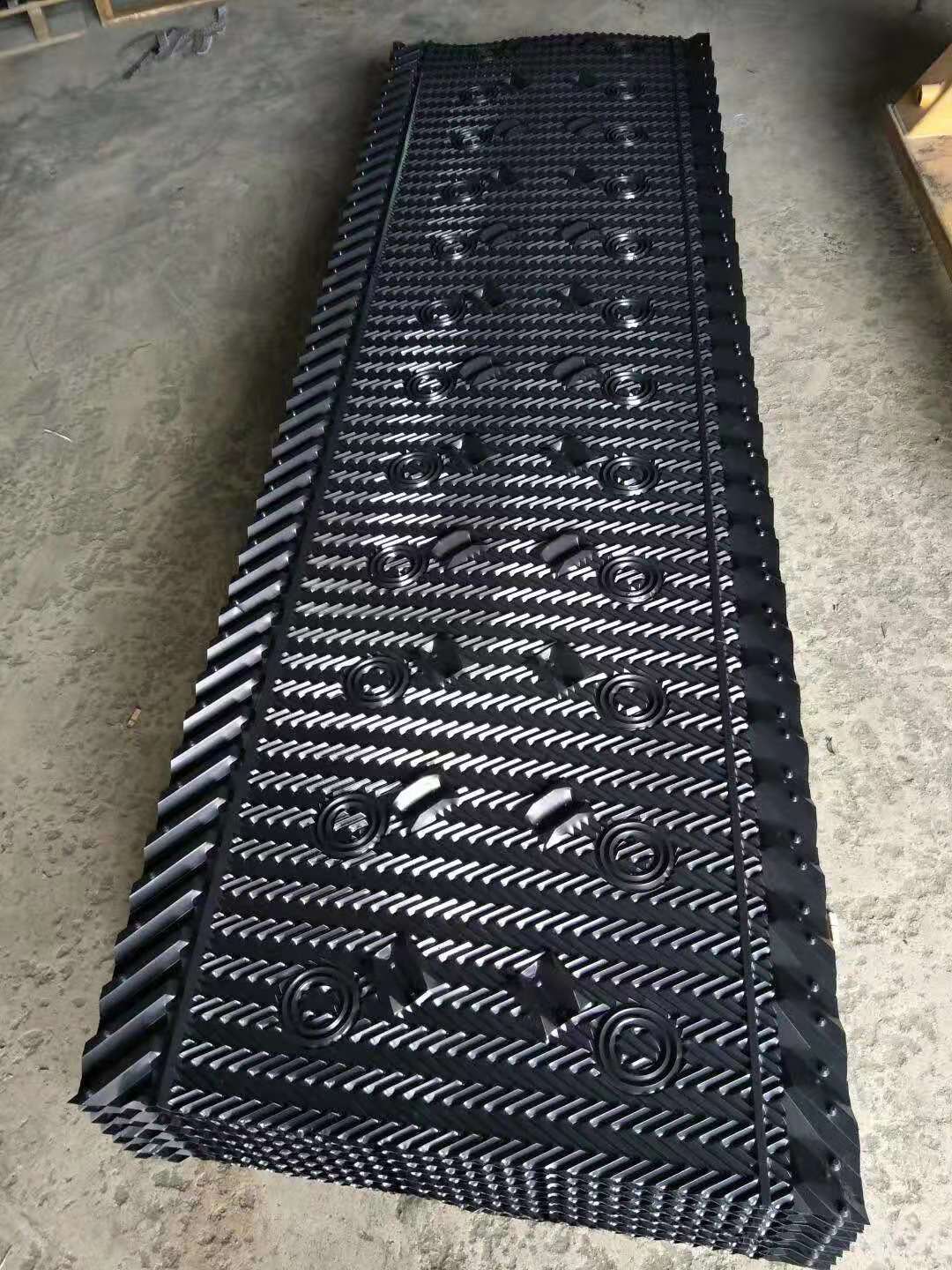
Introduction: Finding a Reliable Supplier for Marley Cooling Tower Fill Replacement
Cooling tower fill plays a critical role in heat transfer by increasing the contact area between circulating water and air. When fill becomes clogged, cracked, deformed, or damaged by chemical exposure, the cooling tower may lose efficiency, experience uneven water distribution, and require more frequent maintenance.
For facilities operating Marley cooling towers, finding the right Marley cooling tower fill replacement supplier is an important step toward restoring cooling performance and maintaining reliable operation. However, selecting a supplier involves more than comparing product prices. Buyers must consider material compatibility, fill design, manufacturing quality, customization capabilities, delivery schedules, and technical support.
Some projects require original equipment replacement parts, while others may be suitable for independently manufactured compatible fill. In either case, the proposed product must meet the technical requirements of the existing cooling tower.
This article explores how to evaluate replacement suppliers, compare fill materials, reduce procurement risks, and choose a suitable solution for industrial cooling towers, commercial HVAC systems, and large-scale refurbishment projects.
Why Is Choosing the Right Marley Cooling Tower Fill Replacement Supplier Important?
A cooling tower fill replacement project can influence equipment performance, maintenance expenses, and operating reliability. Selecting an unsuitable product may create installation difficulties or fail to address the problems that caused the original fill to deteriorate.
Restore Heat Transfer Performance
Cooling tower fill creates an extensive surface over which water can spread and exchange heat with moving air. When the fill becomes blocked or damaged, this process becomes less effective.
Signs That Replacement May Be Necessary
Persistent reduction in cooling capacity.
Severe scale buildup or biological fouling.
Cracked, brittle, or deformed fill sheets.
Uneven water distribution across the fill pack.
Restricted airflow caused by accumulated deposits.
Repeated cleaning without satisfactory performance recovery.
A qualified supplier should help determine whether replacement is necessary or whether cleaning, water treatment adjustments, or repairs can resolve the problem.
Reduce Unplanned Maintenance Costs
Repeatedly repairing deteriorated fill can increase maintenance labor and extend equipment downtime. A properly specified replacement may help reduce recurring problems, particularly when the original failure was caused by unsuitable materials or operating conditions.
Look Beyond the Initial Purchase Price
Consider the cost of the fill, international transportation, installation labor, maintenance requirements, and potential downtime. A low-cost product may become expensive if it requires modification or fails prematurely.
How Can You Verify a Supplier's Marley Cooling Tower Fill Expertise?
The first step is to distinguish a specialist cooling tower fill manufacturer from a general industrial parts trader.
Check Manufacturing and Engineering Capabilities
An experienced supplier should understand how fill geometry, sheet thickness, material selection, and airflow resistance influence cooling tower operation.
Manufacturing Details Worth Investigating
Consistency of sheet thickness and dimensions.
Quality of corrugation and forming processes.
Bonding strength and assembly quality.
Availability of customized fill configurations.
Production inspection procedures.
Experience supplying replacement components for existing towers.
Ask whether the company manufactures the fill itself or purchases it from another factory. Both arrangements can work, provided responsibilities for technical support and product quality are clearly defined.
Evaluate Experience With Replacement Projects
Manufacturing new cooling tower components and replacing fill in an existing tower are not always the same task. Replacement projects may involve older equipment, unavailable drawings, restricted installation spaces, or nonstandard dimensions.
Questions to Ask Potential Suppliers
Can you manufacture fill using existing drawings or samples?
Can you confirm compatibility with the original tower arrangement?
Do you provide technical data and dimensional drawings?
Can you support customized orders?
What inspection and warranty arrangements are available?
A supplier that asks detailed questions about the equipment is generally better positioned to assess compatibility than one that recommends a product without reviewing the specifications.
What Information Should You Prepare Before Requesting a Quotation?
Accurate project information helps suppliers provide more reliable quotations and reduces the risk of receiving unsuitable products.
Identify the Cooling Tower Model and Existing Fill Design
Record the cooling tower manufacturer, model number, fill arrangement, and available original documentation.
Essential Technical Information
Prepare the following details:
Existing cooling tower model and configuration.
Fill block length, width, and height.
Fill material and sheet thickness.
Flute pattern and fill orientation.
Operating water temperature.
Circulating water quality and treatment chemicals.
Required quantity and delivery destination.
Photographs, drawings, or samples of the existing fill.
If original documentation is unavailable, a qualified technician can measure the existing installation. Measurements should include support arrangements and available installation clearance, not just the external dimensions of the fill pack.
Determine Whether You Need Complete Fill Packs or Individual Sheets
Different suppliers may offer complete fill packs, individual sheets, or customized assemblies.
Complete Fill Packs
Complete packs can simplify installation when their dimensions and configuration match the existing tower. They may be particularly convenient for large refurbishment projects requiring consistent products across multiple sections.
Individual Fill Sheets
Individual sheets may be suitable for certain repair or fabrication arrangements. However, buyers must confirm that the sheets can be assembled correctly and provide the required structural stability and flow characteristics.
The preferred supply format depends on the original design, installation method, and supplier's manufacturing capabilities.
Which Material Is Best for Marley Cooling Tower Fill Replacement?
Material selection should be based on actual operating conditions rather than general claims about one material being better than another.
PVC Cooling Tower Fill
PVC is widely used in conventional cooling tower film fill applications.
Potential Advantages of PVC Fill
Availability in various corrugated film fill designs.
Suitability for many conventional cooling tower applications.
A broad range of product configurations.
Potentially economical replacement options.
However, PVC products differ in formulation, mechanical properties, temperature limits, and fire-performance characteristics. Buyers should verify the specific grade rather than assuming that every PVC fill product has identical properties.
PP Cooling Tower Fill
Polypropylene fill may be suitable for applications where its material characteristics match the operating environment.
When Should PP Be Considered?
PP may be worth evaluating when operating temperature, chemical exposure, or other project requirements favor a suitable polypropylene formulation.
Nevertheless, PP is not automatically the best option for every cooling tower. The decision should consider thermal performance, structural requirements, material compatibility, and any applicable fire-safety requirements.
Compare Materials Using Technical Evidence
| Selection factor | PVC fill | PP fill |
| Operating temperature | Verify the specified limit | Verify the specified limit |
| Chemical compatibility | Check against water treatment chemicals | Check against water treatment chemicals |
| Mechanical performance | Review product data | Review product data |
| Cost | Depends on grade and quantity | Depends on grade and quantity |
| Tower compatibility | Must be verified | Must be verified |
Request Product Data Before Ordering
Ask for the material grade, recommended operating temperature, sheet thickness, dimensional tolerances, and applicable fire-performance documentation.
A reliable supplier should explain how the proposed material meets your requirements and identify any limitations.
How Do You Confirm Replacement Fill Compatibility?
Matching the external dimensions of the original fill is only one part of a successful replacement project. Fill geometry can influence heat transfer, airflow resistance, water distribution, and overall cooling tower performance.
Evaluate Fill Geometry and Airflow Resistance
Film fill typically uses closely spaced corrugated sheets to create a large wetted surface area. Different flute patterns and spacings can produce different pressure drops and thermal characteristics.
Why Is Pressure Drop Important?
Excessive airflow resistance may affect fan operating conditions and the cooling tower's overall performance. A replacement design should therefore be evaluated against the original system's requirements rather than selected solely because it has a similar appearance.
Check Water Distribution and Structural Support
Uniform water distribution helps the fill operate effectively. Poor distribution can leave some surfaces underutilized and create localized scaling or fouling.
Compatibility Checks Before Installation
Confirm the correct fill orientation.
Verify support spacing and loading requirements.
Check compatibility with the existing water distribution system.
Inspect drift eliminators and adjacent components.
Confirm that the replacement does not obstruct intended airflow paths.
For major changes in fill geometry or material, seek an engineering assessment before approving the replacement.
How Can You Evaluate Supplier Quality Control?
Product consistency is especially important when replacing large quantities of fill. Variations in dimensions or assembly quality can complicate installation and produce uneven fill arrangements.
Request Technical Documentation
A professional supplier should be able to provide relevant documentation for the product being offered.
Documents to Request
Technical datasheets.
Dimensional drawings.
Material specifications.
Product inspection records, where available.
Applicable test reports and fire-performance documentation.
Packaging details.
Written warranty terms.
Verify that any certificates or test reports apply to the actual product being supplied.
Consider Pre-Shipment Inspection
For large or customized orders, pre-shipment inspection can help identify discrepancies before the goods leave the factory.
What Should an Inspection Cover?
Depending on the purchase agreement, inspection may include quantity, dimensions, visible defects, assembly quality, packaging, and supporting documentation.
This approach can reduce the risk of receiving incorrectly manufactured products, particularly when international returns would be costly.
How Should You Compare Marley Cooling Tower Fill Replacement Prices?
The cheapest quotation is not necessarily the most economical choice. Buyers should compare equivalent specifications and evaluate the total cost of delivery and installation.
Understand the Main Cost Factors
Product Specifications
Material grade, sheet thickness, fill configuration, order quantity, and customization requirements all influence the final price.
Transportation and Import Expenses
International purchases may involve packaging, freight, insurance, customs clearance, applicable import charges, and inland transportation.
Because cooling tower fill can occupy considerable shipping volume, request packing dimensions and pallet information before calculating the total landed cost.
Installation and Downtime
Incorrect dimensions, delayed delivery, or unsuitable fill design can increase installation expenses and extend maintenance shutdowns.
A suitable product delivered on an agreed schedule may offer better value than a cheaper alternative that causes rework or performance problems.
Compare Quotations on Equal Terms
| Comparison item | What to verify |
| Material | Exact material grade |
| Dimensions | Length, width, height, and thickness |
| Fill design | Flute pattern and configuration |
| Quantity | Total packs or sheets |
| Documentation | Technical data and inspection records |
| Delivery | Production time and shipping schedule |
| Warranty | Coverage and claim procedure |
| Total cost | Product, freight, and other applicable charges |
Confirm the Incoterms
Check whether the quotation is EXW, FOB, CIF, or another agreed Incoterm. Confirm the named location, transport responsibilities, and insurance arrangements to avoid unexpected costs.
Should You Buy Original Marley Fill or Choose an Independent Manufacturer?
Both original equipment channels and independent replacement manufacturers may be worth considering, depending on the project.
Original Equipment and Authorized Service Channels
Original equipment channels are a logical starting point when model-specific parts, original documentation, or manufacturer-supported recommendations are important.
What Should You Confirm?
Availability of the required replacement fill.
Compatibility with the specific cooling tower model.
Applicable technical support.
Delivery lead time and warranty conditions.
Whether the offered product is original equipment.
Independent Replacement Fill Manufacturers
Independent manufacturers may offer customized dimensions, alternative materials, or bulk procurement options for existing cooling tower installations.
How to Evaluate an Alternative Product
Confirm that the manufacturer can meet the dimensional, material, thermal, and hydraulic requirements of the tower. Request drawings and technical data before approving production.
Marley is a cooling tower brand, and not every product marketed for Marley cooling tower fill replacement is manufactured or endorsed by Marley. Suppliers should clearly identify the product's origin and explain the basis for compatibility.
What Warning Signs Should Buyers Watch For?
Supplier evaluation should focus on verifiable evidence rather than sales promises.
Unsupported Performance Claims
Be cautious about claims of guaranteed energy savings, dramatically higher cooling capacity, or exceptionally long service life without supporting technical data.
Ask for Relevant Evidence
Request specifications and performance information applicable to your operating conditions. Actual results depend on the tower design, water quality, airflow, operating load, and condition of other components.
Incomplete Quotations
A quotation that omits material specifications, dimensions, delivery terms, or warranty details can create disputes.
Confirm the Agreement in Writing
Ensure that the purchase order clearly identifies the product, quantity, specifications, packaging, delivery arrangements, payment terms, and procedures for resolving quality issues.
Unclear Manufacturing Responsibilities
A trading company may be able to supply suitable products, but buyers should understand who manufactures the fill and who is responsible for quality control and technical support.
Verify the Company's Business Information
Check the supplier's legal identity, business contact details, references where available, and ability to meet the order requirements. For large purchases, consider an independent inspection or factory audit.
How Can You Prepare an Effective RFQ for Replacement Fill?
A well-prepared request for quotation helps suppliers assess the project quickly and provide more accurate offers.
Include the Most Important Project Details
Recommended RFQ Checklist
Existing tower manufacturer and model.
Required fill material and design.
Dimensions, thickness, and quantity.
Operating temperature and water quality.
Drawings, photographs, or samples.
Required delivery date and destination.
Technical documentation requirements.
Packaging and shipping preferences.
Warranty and after-sales support expectations.
Providing this information at the beginning reduces repeated clarification and helps identify unsuitable proposals early.
Request a Complete Commercial and Technical Proposal
Ask each supplier to state the proposed material, dimensions, manufacturing lead time, delivery terms, and any assumptions used to prepare the quotation.
For customized orders, request approval drawings before production begins.
How Can You Build a Long-Term Relationship With a Fill Supplier?
Cooling tower maintenance often involves repeated replacement and refurbishment work. A dependable supplier can help make future procurement more efficient.
Evaluate After-Sales Support
Questions to Ask
Can the supplier retain the approved product specifications?
Can it reproduce the same configuration for future orders?
Are replacement quantities or spare packs available?
How are quality complaints and warranty claims handled?
Can technical questions be answered promptly?
H3: Keep Accurate Replacement Records
Maintain approved drawings, material specifications, inspection results, purchase orders, and installation photographs.
These records can simplify future maintenance, help verify product consistency, and reduce the time required to prepare repeat orders.
FAQ
How Do I Find a Reliable Marley Cooling Tower Fill Replacement Supplier?
Identify the existing tower model, prepare the fill specifications, and compare qualified original equipment channels and independent manufacturers. Evaluate compatibility, quality documentation, delivery reliability, technical support, and total cost before making a decision.
Can Independent Manufacturers Produce Compatible Marley Replacement Fill?
Some manufacturers can produce compatible fill based on approved drawings, samples, or measurements. However, dimensional similarity alone does not guarantee equivalent thermal or hydraulic performance. Confirm the technical suitability of the proposed product before ordering.
Is PVC or PP Better for Marley Cooling Tower Fill Replacement?
Neither material is universally better. The appropriate choice depends on operating temperature, water chemistry, material grade, structural requirements, and the original tower design.
How Can I Reduce Replacement Fill Procurement Costs?
Provide accurate specifications, request comparable quotations, review shipping volume, and consider total landed cost. Avoid choosing a lower-priced product without confirming compatibility and quality.
What Should I Check Before Installing New Fill?
Inspect the shipment, verify the dimensions and product condition, review the installation instructions, and check the support structure and water distribution system. Investigate the cause of the original fill failure to reduce the risk of premature deterioration.
Conclusion
Finding the right Marley cooling tower fill replacement supplier requires a balance of technical knowledge, manufacturing quality, cost control, and dependable communication.
Start by identifying the existing fill configuration and operating requirements. Then compare original equipment channels and qualified independent manufacturers, request detailed specifications, verify compatibility, and evaluate the complete delivered cost.
The best supplier is not necessarily the one with the lowest quotation. It is the one that can provide a suitable replacement, document its capabilities, meet agreed delivery requirements, and support the project when technical questions arise.
By taking a structured approach to supplier selection, cooling tower operators, maintenance contractors, and purchasing teams can reduce procurement risks, improve installation planning, and support reliable long-term cooling performance.