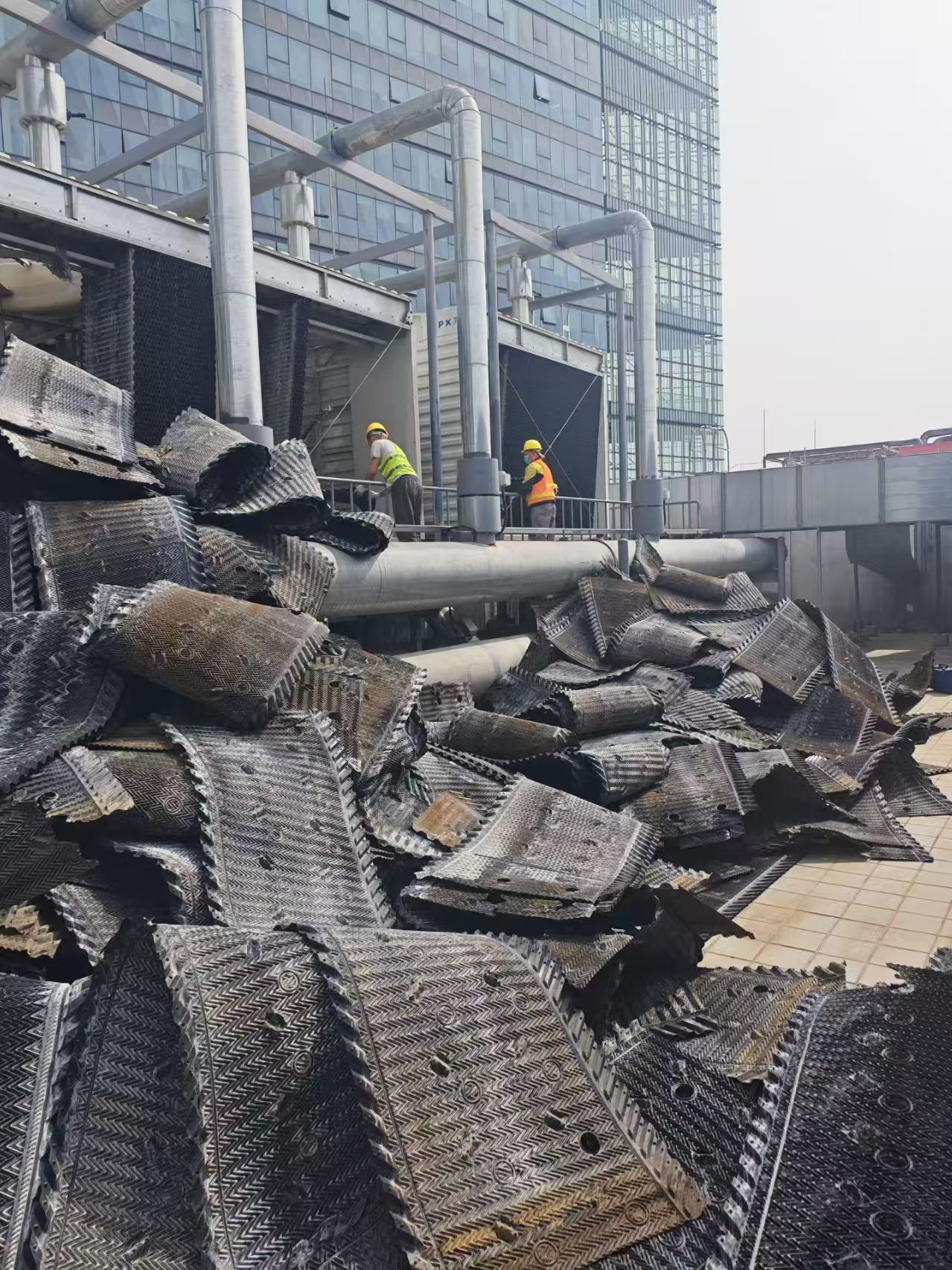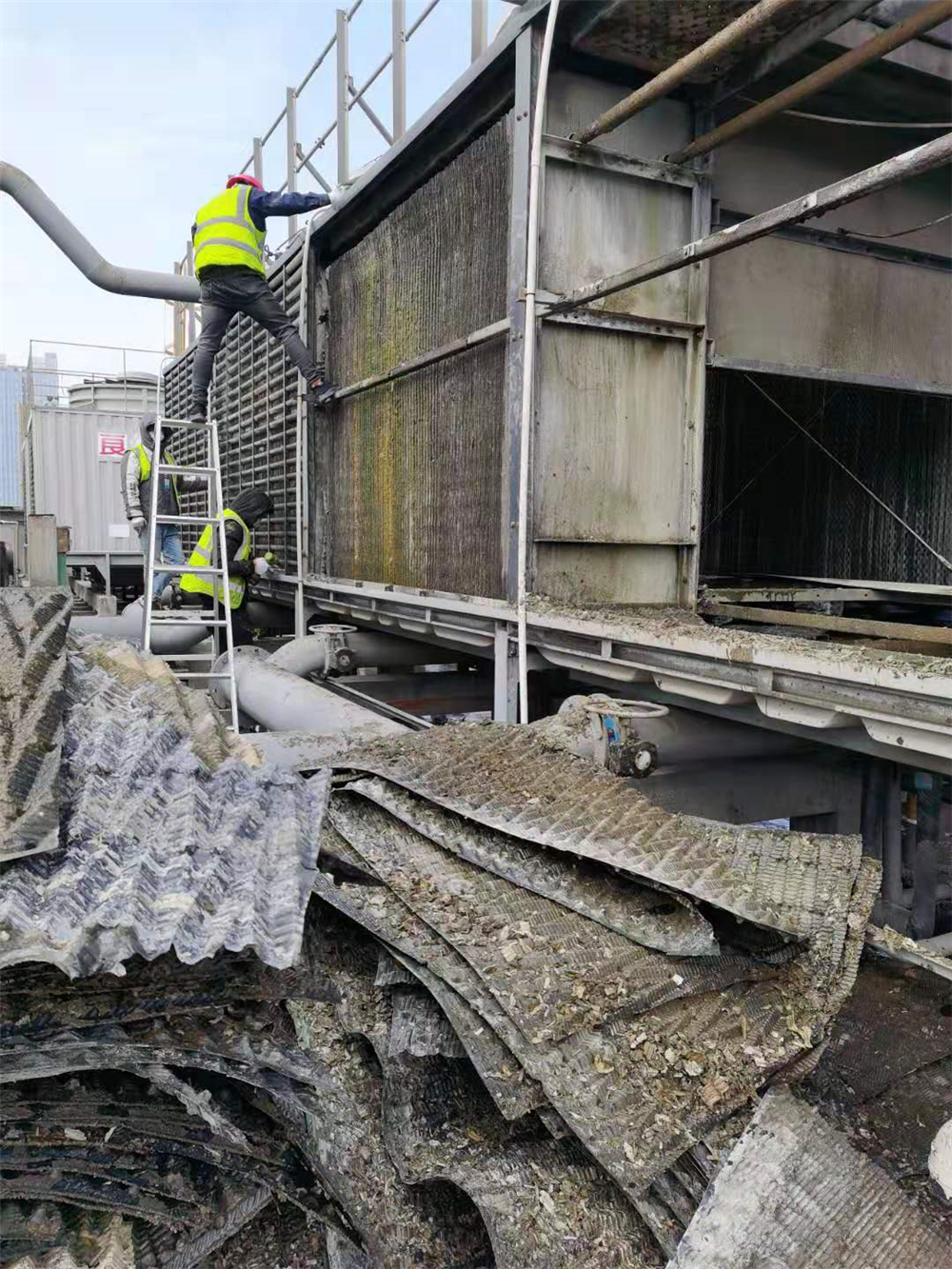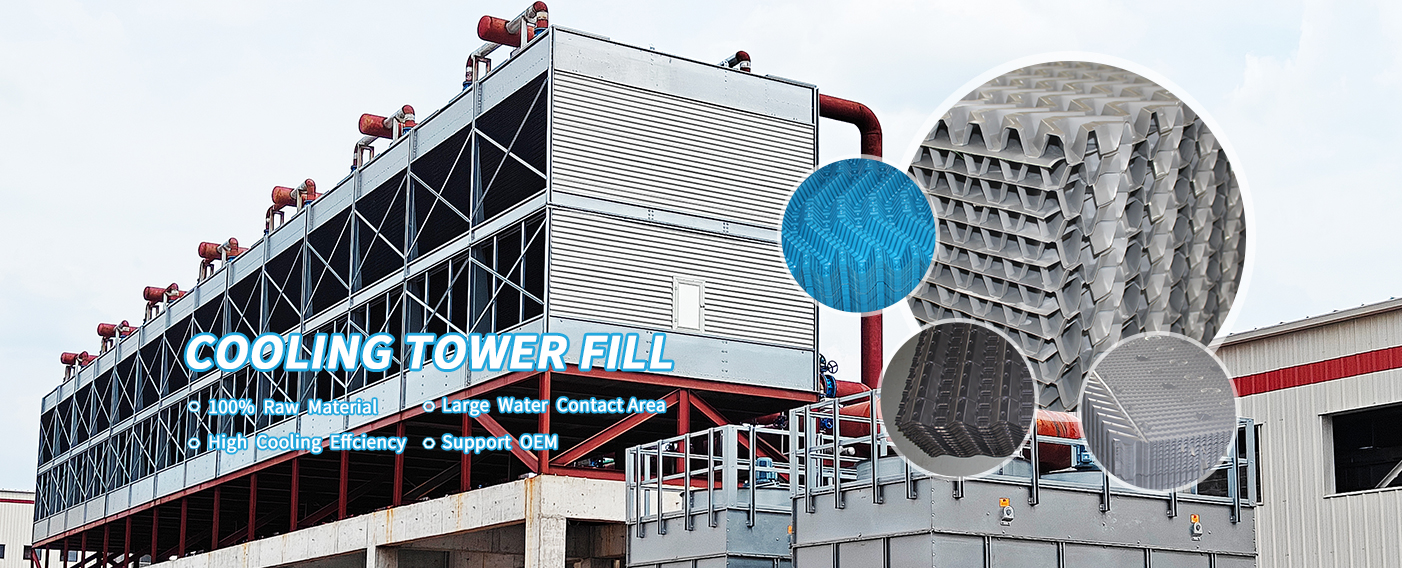
Choosing the right material for cooling tower film fill replacement in Malaysia is essential for maintaining efficient heat transfer, reliable cooling performance, and manageable maintenance costs. Cooling tower film fill increases the contact area between circulating water and air, helping remove heat through evaporation. However, scaling, biological fouling, chemical exposure, and physical deterioration can reduce its effectiveness over time.
Two commonly considered materials for cooling tower film fill are polyvinyl chloride (PVC) and polypropylene (PP). Both are used in industrial and commercial cooling tower applications, but their suitability depends on operating temperature, water chemistry, fill design, and equipment requirements.
This guide compares PVC vs. PP cooling tower fill, explains how to choose replacement media in Malaysia, and helps industrial buyers evaluate suppliers before requesting a quotation.
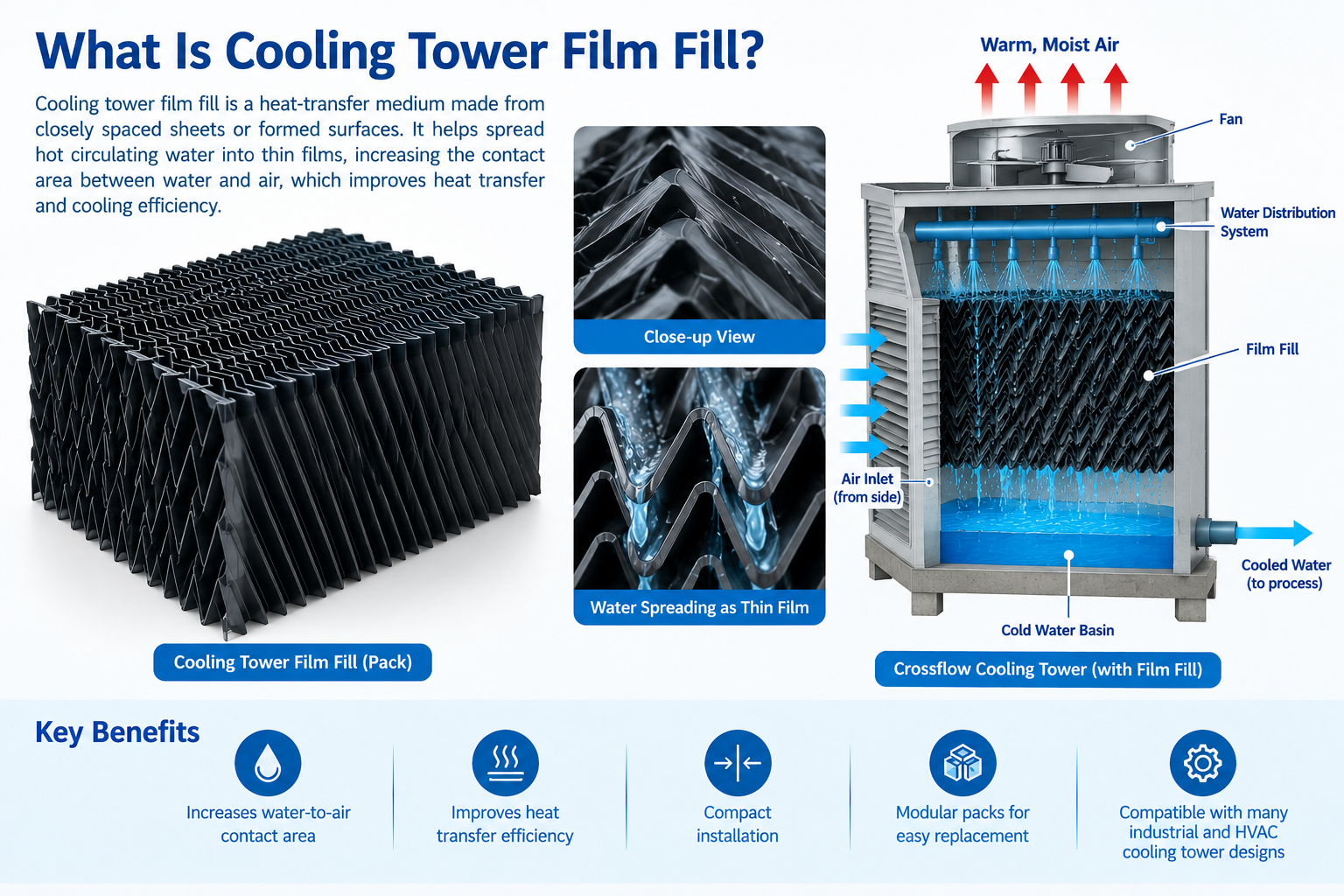
What Is Cooling Tower Film Fill?
Cooling tower film fill consists of closely spaced sheets or formed surfaces that distribute water into thin films. As water flows downward, air passes through the fill, increasing the contact area between the two fluids and promoting heat transfer.
Film fill is commonly used in crossflow and counterflow cooling towers designed for efficient heat exchange.
Key benefits include:
Large water-to-air contact area
Efficient heat transfer in a compact space
Potentially lower fill volume for a specified cooling duty
Modular fill packs that simplify replacement
Suitability for many industrial and HVAC cooling systems
Actual performance depends on fill geometry, airflow resistance, water distribution, operating conditions, and maintenance quality.
Why Replace Cooling Tower Film Fill in Malaysia?
Cooling towers in Malaysia operate in a hot, humid climate and may encounter mineral deposits, suspended solids, airborne contaminants, and biological growth. These conditions can gradually affect fill performance.
Common signs that replacement may be necessary include:
Scale buildup: Mineral deposits restrict water flow and reduce effective heat-transfer area.
Biological fouling: Algae and biofilm obstruct narrow passages.
Physical damage: Fill sheets become cracked, brittle, warped, or collapsed.
Uneven water distribution: Blocked passages contribute to water channeling.
Reduced cooling performance: The tower struggles to achieve its required cold-water temperature.
Increasing maintenance costs: Repeated cleaning fails to restore acceptable performance.
Inspect the fill before deciding to replace it. If the material remains structurally sound and deposits can be removed safely, cleaning may be sufficient. Severely damaged or persistently blocked fill may require replacement.
PVC vs. PP Cooling Tower Film Fill
PVC and PP are both used for cooling tower fill, but the best choice depends on the actual application.
| Comparison factor | PVC film fill | PP film fill |
| Material | Polyvinyl chloride | Polypropylene |
| Typical applications | Many conventional industrial and HVAC towers | Applications requiring suitable polypropylene properties |
| Temperature limits | Depend on formulation and design | Depend on grade and design |
| Chemical compatibility | Verify against water chemistry and treatment chemicals | Verify against water chemistry and treatment chemicals |
| Mechanical performance | Depends on thickness, formulation, and geometry | Depends on grade, thickness, and geometry |
| Selection priority | Confirm operating limits and dimensions | Confirm temperature suitability and dimensional stability |
PVC Cooling Tower Film Fill
PVC film fill is widely used in conventional cooling tower applications. It can offer a practical balance of cost, formability, and heat-transfer performance when selected for the correct operating conditions.
Potential advantages include:
Availability in multiple configurations and pack dimensions
Established use in many industrial cooling tower systems
Options for standard and customized replacement requirements
Before purchasing, confirm the PVC grade, sheet thickness, maximum operating temperature, chemical compatibility, and structural suitability.
PP Cooling Tower Film Fill
PP film fill may be appropriate where its material characteristics meet specific operating requirements. Its suitability depends on the grade, manufacturing quality, fill geometry, and temperature exposure.
Potential advantages include:
Material options for selected chemical environments
Availability in engineered fill configurations
Potential suitability for applications requiring particular material properties
Buyers should verify temperature limits, mechanical rigidity, dimensional stability, and long-term performance. PP is not automatically better than PVC in every application.
Which Material Is Better for Malaysian Cooling Towers?
There is no universal winner between PVC and PP. The correct choice should be based on the cooling tower's design and operating conditions.
Operating temperature: Check the supplier's documented continuous and peak temperature limits.
Water chemistry: Review pH, treatment chemicals, and possible exposure to cleaning agents.
Fouling risk: If the water contains high levels of suspended solids, consider whether film fill is appropriate or whether a less blockage-prone fill design should be evaluated.
Thermal performance: Compare documented heat-transfer performance and pressure-drop characteristics. Fill geometry is as important as material selection.
Existing configuration: Verify crossflow or counterflow design, airflow direction, water distribution, fill supports, and available installation space.
Total cost: Consider purchase price, freight, installation, cleaning requirements, and expected service life under actual conditions.
For critical industrial applications, request a technical recommendation based on operating data rather than selecting material by price alone.
How to Select Film Fill Replacement in Malaysia
Accurate technical information helps prevent fitment problems and delays.
Confirm the Cooling Tower Model
Provide the tower brand, model, serial number, and original fill part number where available. If the replacement is intended for a branded tower, confirm compatibility with the exact model.
Measure the Existing Fill Packs
Record fill length, width, height, sheet spacing, and pack arrangement. If the existing fill has deformed, consult original drawings or equipment documentation.
Check the Fill Design
Confirm whether the tower uses crossflow or counterflow fill and verify the required orientation. Incorrect geometry can affect airflow, water distribution, and thermal performance.
Specify Material and Operating Conditions
Tell the supplier whether PVC or PP is preferred and provide operating temperature, water chemistry, and any known fouling problems.
Request Technical Documentation
Ask for product drawings, material specifications, recommended operating limits, and available performance data. For customized projects, obtain written confirmation of dimensions and configuration before production.
Finding a Cooling Tower Film Fill Supplier in Malaysia
Malaysian buyers can compare local cooling tower service companies, industrial equipment distributors, specialist fill manufacturers, and overseas manufacturers that export to Malaysia.
Evaluate suppliers based on:
Experience with industrial film fill replacement
Ability to verify dimensions and fill configuration
Material specifications and quality-control records
Manufacturing capacity and order flexibility
Packaging and transport protection
Delivery time to the project site
Installation guidance and after-sales support
Clear quotations and warranty conditions
Local suppliers may provide convenient site inspection and installation services. Direct manufacturers may be suitable for bulk orders or customized fill packs. In either case, technical compatibility should be confirmed before purchase.
What Affects Cooling Tower Film Fill Replacement Cost?
The cost of cooling tower film fill replacement in Malaysia depends on several factors:
Material grade: PVC and PP products may differ in price and specification.
Fill volume: Larger projects require more material and packaging.
Sheet thickness and geometry: Design and manufacturing requirements affect cost.
Customization: Non-standard dimensions may increase production costs.
Freight and handling: Overseas orders may incur additional shipping and import-related expenses.
Installation: Removing old fill, cleaning the tower, and installing new packs add to the project budget.
For a fair comparison, request quotations using the same material requirements, dimensions, quantity, delivery location, and shipping terms.
Information Needed for a Quotation
Prepare the following information before contacting a supplier:
Cooling tower brand and model
Existing fill dimensions and configuration
Preferred material: PVC or PP
Required quantity or total fill volume
Operating temperature and water chemistry
Photos of the existing fill and support structure
Delivery location in Malaysia
Required delivery date
Installation or technical support requirements
Providing complete details makes it easier for suppliers to recommend suitable products and prepare accurate quotations.
Frequently Asked Questions
Is PVC or PP film fill better for cooling towers in Malaysia?
Neither is universally better. The correct material depends on temperature, water chemistry, mechanical requirements, fill geometry, and documented product specifications.
Can PP fill replace existing PVC cooling tower fill?
Potentially, but a material substitution requires a technical review of fit, airflow resistance, heat-transfer performance, water distribution, and structural requirements.
How often should cooling tower film fill be replaced?
There is no universal replacement interval. Service life depends on water quality, maintenance, operating conditions, material, and fill design. Inspect regularly and replace fill when damage or persistent fouling compromises performance.
Can I purchase film fill directly from a manufacturer?
Yes. Direct sourcing may suit bulk orders or customized projects. Confirm specifications, quality documentation, compatibility, packaging, and delivery arrangements before ordering.
Is film fill suitable for water with high suspended solids?
Film fill can be vulnerable to blockage in water with significant suspended solids. Review filtration, water treatment, and maintenance practices, and consider whether splash fill is more appropriate for the application.
Conclusion
Selecting the right cooling tower film fill replacement in Malaysia requires careful comparison of PVC and PP materials, operating conditions, fill geometry, and supplier capabilities. PVC is widely used in conventional applications, while PP may suit projects where its documented properties meet specific requirements.
Before ordering, verify the cooling tower model, fill dimensions, temperature limits, water chemistry, and performance requirements. Compare suppliers based on technical support, quality documentation, delivery, and total project cost rather than price alone.
Looking for cooling tower film fill for an industrial replacement project in Malaysia? Prepare your fill dimensions, material preference, required quantity, and operating conditions to request a suitable product recommendation and quotation.
Recommended internal links for CoolingTowerPart.com: