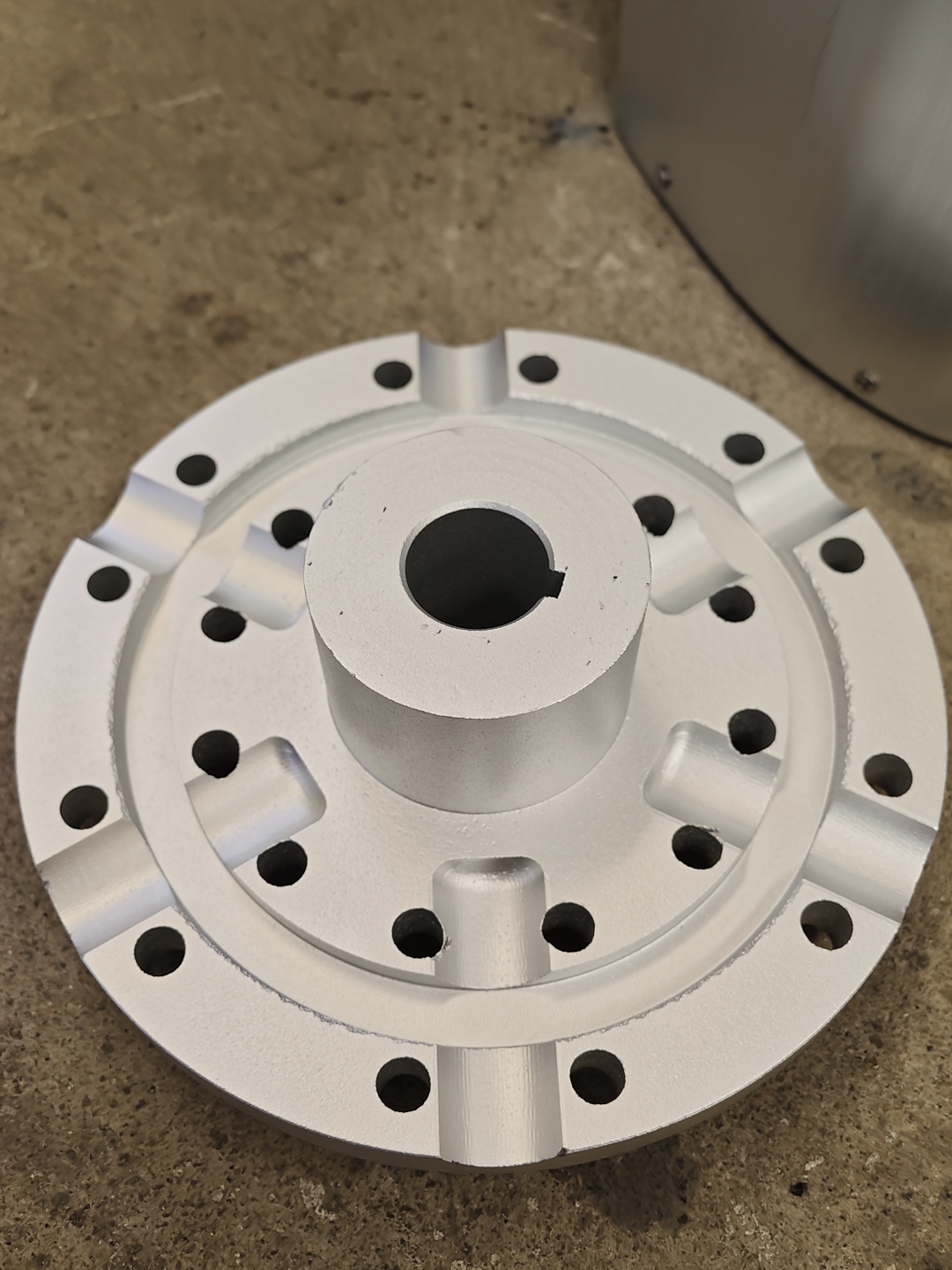
What Is a Cooling Tower Fan Hub Assembly?
A cooling tower fan hub assembly is a critical component that connects the fan blades to the rotating shaft of a cooling tower fan system. It holds the blades in position, transfers rotational torque from the drive system, and helps maintain stable fan operation under demanding industrial conditions.
In industrial cooling towers, the fan hub assembly works together with the fan blades, motor, gearbox, drive shaft, and supporting structure. Its design directly affects blade positioning, rotational balance, vibration levels, and the overall reliability of the cooling system.
For HVAC systems, power plants, chemical processing facilities, manufacturing plants, and other industrial applications, selecting the right cooling tower fan hub assembly is essential for maintaining consistent airflow and minimizing unexpected downtime.
What Does a Cooling Tower Fan Hub Assembly Do?
The fan hub assembly performs several important functions during cooling tower operation.
1. Connecting Fan Blades to the Drive System
The hub provides a mounting structure for the fan blades and connects them to the rotating shaft or drive arrangement. It transfers mechanical power to the blades, allowing them to generate the airflow required for heat rejection.
2. Maintaining Blade Position and Alignment
Correct blade positioning helps maintain the intended fan geometry. Depending on the design, the hub may support fixed-pitch or adjustable-pitch blades, allowing manufacturers or maintenance teams to configure the fan according to operating requirements.
3. Supporting Stable Rotation
A properly designed and assembled hub helps distribute mechanical loads and maintain rotational stability. Correct balancing, secure fasteners, and accurate machining help reduce unnecessary vibration and mechanical stress.
4. Supporting Long-Term Operating Reliability
Cooling tower fans often operate for extended periods in humid, wet, and chemically challenging environments. A durable hub assembly helps withstand these conditions and supports reliable fan operation when properly selected and maintained.
What Are the Main Types of Cooling Tower Fan Hub Assemblies?
Cooling tower fan hub assemblies are available in different configurations. The most suitable type depends on the fan diameter, blade design, drive arrangement, operating conditions, and maintenance requirements.
1. Fixed-Pitch Fan Hub Assembly
A fixed-pitch fan hub assembly holds the fan blades at a predetermined installation angle. Its relatively straightforward construction makes it suitable for cooling tower systems with stable operating conditions.
Key Characteristics of Fixed-Pitch Hubs
Simple mechanical construction
Consistent blade positioning
Relatively straightforward installation and maintenance
Suitable for applications with predictable airflow requirements
Fixed-pitch hubs are often considered when the cooling tower operates within a stable range of thermal loads and does not require frequent blade-angle adjustments.
2. Adjustable-Pitch Fan Hub Assembly
An adjustable-pitch fan hub assembly allows the blade angle to be changed within the limits of its design. This feature can help operators match fan performance to cooling demand.
How Does an Adjustable-Pitch Hub Work?
The assembly uses a blade mounting and adjustment mechanism to set the required blade pitch. Depending on the product design, adjustment may be performed during installation or maintenance, with the fan safely shut down.
Changing the blade angle affects airflow, fan power consumption, and the operating point of the fan. However, the adjustment must remain within the manufacturer's specified limits.
Benefits of Adjustable-Pitch Hubs
Greater flexibility when configuring fan performance
Potential for improved energy use when correctly matched to system demand
Adaptability to different operating conditions
Easier performance optimization without replacing the entire fan assembly
An adjustable-pitch hub is particularly worth considering when a cooling tower experiences seasonal changes, variable heat loads, or different process requirements.
3. Aluminum Alloy Fan Hub Assembly
Aluminum alloy hubs are commonly considered for applications where low weight and corrosion resistance are important.
Advantages of Aluminum Alloy
Aluminum alloys generally offer a favorable strength-to-weight ratio and can help reduce rotating mass. This may be beneficial for large cooling tower fans, where component weight affects shaft loads, starting behavior, and installation requirements.
The actual corrosion resistance and mechanical strength depend on the selected alloy, surface treatment, manufacturing process, and operating environment.
4. Steel Fan Hub Assembly
Steel fan hubs may be suitable for applications requiring high mechanical strength and robust load-bearing characteristics.
When Is a Steel Hub Appropriate?
Steel may be considered for heavy-duty fan systems, specialized mounting arrangements, or operating conditions involving significant mechanical loads.
However, steel is generally heavier than aluminum and may require suitable protective coatings or other corrosion-control measures in wet cooling tower environments.
5. Customized Cooling Tower Fan Hub Assembly
A customized fan hub assembly is designed around specific fan dimensions, blade configurations, shaft interfaces, and operating conditions.
What Can Be Customized?
Depending on the manufacturer's capabilities, customization may include:
Hub diameter and overall dimensions
Number and arrangement of blade mounting points
Shaft connection and bore dimensions
Fixed or adjustable blade mounting
Material selection and surface treatment
Fastener specifications and mounting interfaces
Customized hubs are especially useful for replacement projects involving older cooling towers, non-standard fan systems, or equipment for which original spare parts are difficult to obtain.
Which Materials Are Best for Cooling Tower Fan Hub Assemblies?
Material selection affects hub weight, mechanical strength, corrosion resistance, service life, and maintenance requirements. There is no single material that is ideal for every cooling tower.
Aluminum Alloy: Lightweight and Corrosion Resistant
Aluminum alloy is a popular option for applications where weight reduction and environmental resistance are important.
Main Material Benefits
Aluminum alloy offers relatively low density, good machinability in suitable grades, and useful corrosion resistance. Appropriate surface treatments may further improve performance in demanding environments.
It is important to confirm that the selected alloy has sufficient strength and fatigue resistance for the intended fan speed, blade loads, and operating conditions.
Carbon Steel: Strength for Heavy-Duty Applications
Carbon steel can provide high mechanical strength and is often available in a wide range of grades.
Important Considerations for Steel Hubs
Although steel may offer advantages in strength and fabrication, moisture and cooling water exposure can cause corrosion if protection is inadequate. Protective coatings, drainage design, fastener compatibility, and routine inspection should therefore be considered during material selection.
Stainless Steel: For Specialized Corrosion Requirements
Stainless steel may be appropriate where enhanced corrosion resistance is required, depending on the water chemistry and surrounding environment.
Is Stainless Steel Always the Best Choice?
Not necessarily. Stainless steel grades differ significantly in corrosion resistance, and some environments containing chlorides or aggressive chemicals can still cause localized corrosion. Stainless steel can also increase component weight and cost.
A material assessment should consider the actual exposure conditions rather than relying solely on the material name.
How to Compare Different Fan Hub Materials
| Material | Main advantage | Main consideration |
| Aluminum alloy | Low weight and good potential corrosion resistance | Alloy strength and fatigue performance |
| Carbon steel | High strength and fabrication flexibility | Corrosion protection and component weight |
| Stainless steel | Corrosion resistance in suitable environments | Grade selection, cost, and potential pitting |
| Other engineered materials | Potential weight or corrosion benefits | Load capacity, temperature limits, and design validation |
The final material should be selected according to engineering requirements, not just purchase price.
What Are the Main Benefits of a High-Quality Cooling Tower Fan Hub Assembly?
A properly engineered cooling tower fan hub assembly can support reliable fan operation, improve maintenance efficiency, and help protect other rotating components.
1. Improved Fan Stability
Accurate machining, secure blade mounting, and correct assembly help maintain the intended blade positions. When the complete rotating assembly is correctly balanced, the risk of excessive vibration can be reduced.
Why Is Balance Important?
An imbalance in the fan assembly can create periodic forces during rotation. These forces may contribute to bearing wear, structural vibration, fastener loosening, and additional stress on the drive system.
A high-quality hub is only one part of the solution; the complete fan, including its blades and mounting hardware, must also be properly balanced.
2. Reliable Airflow and Cooling Performance
The fan hub supports the blade geometry that determines how the fan moves air through the cooling tower.
Maintaining the Intended Blade Pitch
Incorrect blade angles or uneven blade positioning can change airflow, fan power consumption, and aerodynamic loading. A suitable hub assembly helps maintain the required configuration and supports the intended fan performance.
However, cooling efficiency also depends on fan design, motor power, tower fill condition, water distribution, ambient conditions, and the overall cooling tower configuration.
3. Reduced Maintenance Requirements
Durable materials, accurate mounting interfaces, and reliable fasteners can help reduce maintenance issues associated with premature wear or loose connections.
How Does Hub Quality Affect Maintenance?
A well-designed assembly can make inspections and component replacement more predictable. Accessible fasteners and clearly defined adjustment procedures may also simplify maintenance work.
Regular inspections are still necessary, particularly in cooling towers exposed to high humidity, airborne contaminants, or corrosive water treatment chemicals.
4. Longer Service Life
Material selection, manufacturing quality, operating speed, and maintenance practices all influence the useful life of a fan hub assembly.
Factors That Support Long-Term Durability
Appropriate material strength and fatigue resistance
Accurate machining of shaft and blade interfaces
Suitable corrosion protection
Correct fastener selection and tightening
Proper alignment and dynamic balancing
Operation within the specified speed and load limits
A hub should be evaluated as part of the complete fan system rather than as an isolated component.
5. Better Compatibility With Replacement Projects
A replacement hub that matches the original fan configuration can reduce installation difficulties and help avoid unnecessary modifications.
Why Dimensional Accuracy Matters
Differences in the shaft bore, mounting bolt pattern, blade attachment geometry, or hub diameter can prevent correct installation. Even small dimensional errors may affect alignment, blade positioning, or the distribution of mechanical loads.
For replacement applications, dimensional verification is therefore essential before production or ordering.
How Do You Choose the Right Cooling Tower Fan Hub Assembly?
Choosing a fan hub assembly requires more than matching the outside diameter. Buyers should consider the complete fan configuration and its operating environment.
1. Confirm the Fan Diameter and Blade Configuration
Start by identifying the fan diameter, number of blades, blade model, and mounting arrangement.
Check Blade Mounting Dimensions
Confirm the mounting hole pattern, bolt size, blade root dimensions, and blade pitch requirements. For adjustable-pitch fans, verify that the hub supports the required adjustment range and locking mechanism.
2. Verify Shaft and Drive Compatibility
The hub must match the fan shaft or specified drive interface.
Important Shaft Measurements
Check the shaft diameter, bore dimensions, keyway if applicable, retaining arrangement, and required tolerances. If the fan uses a specialized drive connection, provide drawings or reference-part details to the manufacturer.
Never assume that two hubs are interchangeable simply because they look similar.
3. Evaluate the Operating Conditions
The cooling tower environment can affect material selection and component life.
Consider Temperature, Humidity, and Water Chemistry
Assess ambient temperature, operating temperature, humidity, exposure to treatment chemicals, and the possibility of airborne contaminants. For specialized industrial processes, verify that the material and design are appropriate for the actual operating conditions.
4. Check Fan Speed and Mechanical Loads
The hub must be suitable for the intended rotational speed, blade loads, and operating duty.
Why Should Maximum Speed Be Verified?
Higher rotational speeds can increase centrifugal loading and mechanical stress. The hub, blades, fasteners, and drive components must be compatible with the manufacturer's rated operating limits.
Do not increase fan speed or modify blade pitch beyond approved specifications without appropriate engineering review.
5. Consider Maintenance and Spare Parts Availability
A suitable supplier should be able to provide dimensional information, installation instructions, and replacement-part support.
Questions to Ask Before Ordering
Can the hub match the existing fan and shaft dimensions?
Is the material suitable for the cooling tower environment?
Are inspection and maintenance instructions available?
Can the supplier provide technical drawings?
Are replacement fasteners and other required components available?
Can the assembly be inspected and balanced according to the applicable requirements?
These questions help buyers evaluate both product suitability and long-term service support.
What Should You Inspect During Cooling Tower Fan Hub Maintenance?
Routine inspection helps identify early signs of wear, corrosion, looseness, and mechanical damage before they lead to more serious problems.
Inspect the Hub Body and Blade Mountings
Look for visible cracks, deformation, corrosion, damaged threads, and signs of movement around blade mounting points.
Warning Signs That Require Attention
Unusual vibration, repeated fastener loosening, abnormal noise, visible blade movement, or unexpected changes in fan performance should be investigated promptly.
If cracks or structural damage are found, the affected equipment should remain out of service until it has been assessed by qualified personnel.
Check Fasteners and Blade Position
Verify fastener condition and tightening requirements using the manufacturer's specified procedures.
Avoid Improper Tightening
Over-tightening can damage threads or mounting components, while insufficient tightening can allow movement during operation. Use the specified torque values and approved locking arrangements rather than relying on guesswork.
Monitor Vibration and Alignment
Changes in vibration may indicate imbalance, misalignment, blade damage, bearing problems, or looseness in the rotating assembly.
Investigate the Complete Fan System
Do not assume that every vibration problem originates in the hub. Inspection may also need to cover the blades, shaft, bearings, gearbox, motor, and supporting structure.
Follow Safe Maintenance Procedures
Before inspecting or servicing the fan, isolate and lock out the relevant power sources, verify that the equipment cannot start unexpectedly, and follow the site's safety procedures.
Never adjust blades, tighten rotating components, or reach into a fan assembly while it is operating.
Why Work With a Professional Cooling Tower Fan Hub Assembly Manufacturer?
Selecting a reliable manufacturer can help ensure that the hub assembly meets the dimensional and mechanical requirements of the cooling tower.
Engineering and Manufacturing Capabilities
A qualified manufacturer should be able to review technical drawings, confirm material specifications, verify mounting dimensions, and recommend a suitable configuration for the intended application.
Quality Control Considerations
Depending on the design and project requirements, quality control may include dimensional inspection, material verification, surface-finish checks, fastener verification, and balancing of the complete rotating assembly where applicable.
Buyers should confirm which inspections and test records are included with the actual product.
OEM and Replacement Solutions
OEM projects may require repeatable dimensions and consistent production, while replacement projects often require reverse measurement of an existing component.
Supporting Non-Standard Cooling Tower Systems
For older equipment or specialized industrial cooling towers, buyers can provide photographs, drawings, fan specifications, and measured dimensions to help the manufacturer assess compatibility.
A qualified supplier should clarify any missing information before confirming the final design.
Global Supply and Technical Support
For international buyers, product quality is only one part of the purchasing decision. Packaging, delivery schedules, documentation, spare-part availability, and technical communication also matter.
A supplier with suitable export experience can help coordinate these requirements and reduce avoidable delays during replacement projects.
What Information Should You Provide When Requesting a Fan Hub Assembly Quote?
Providing complete technical information makes it easier for a manufacturer to evaluate the application and prepare an accurate quotation.
Recommended Information for Buyers
Include the following details whenever possible:
Cooling tower brand and model
Fan diameter and number of blades
Existing hub dimensions or technical drawings
Shaft diameter and connection type
Blade mounting dimensions and bolt pattern
Required material and surface treatment, if specified
Fan operating speed and relevant load information
Operating temperature and environmental conditions
Required quantity and delivery destination
What If You Do Not Have the Original Drawing?
Clear photographs, physical measurements, nameplate information, and the existing hub model may help establish the initial requirements. However, critical dimensions and mechanical specifications should be verified before manufacturing.
Conclusion
A cooling tower fan hub assembly is an important mechanical component that connects the fan blades to the drive system and helps maintain stable rotation. Different hub configurations and materials offer different advantages depending on fan design, operating conditions, and maintenance requirements.
When choosing a cooling tower fan hub assembly, buyers should focus on dimensional compatibility, material suitability, blade mounting accuracy, mechanical strength, and the quality of the complete rotating assembly. Proper installation, balancing, and preventive maintenance are equally important for long-term reliability.
For industrial cooling tower operators, OEM buyers, and replacement-part distributors, working with a manufacturer that can verify technical requirements and provide appropriate quality documentation can help reduce installation risks and support dependable cooling system operation.