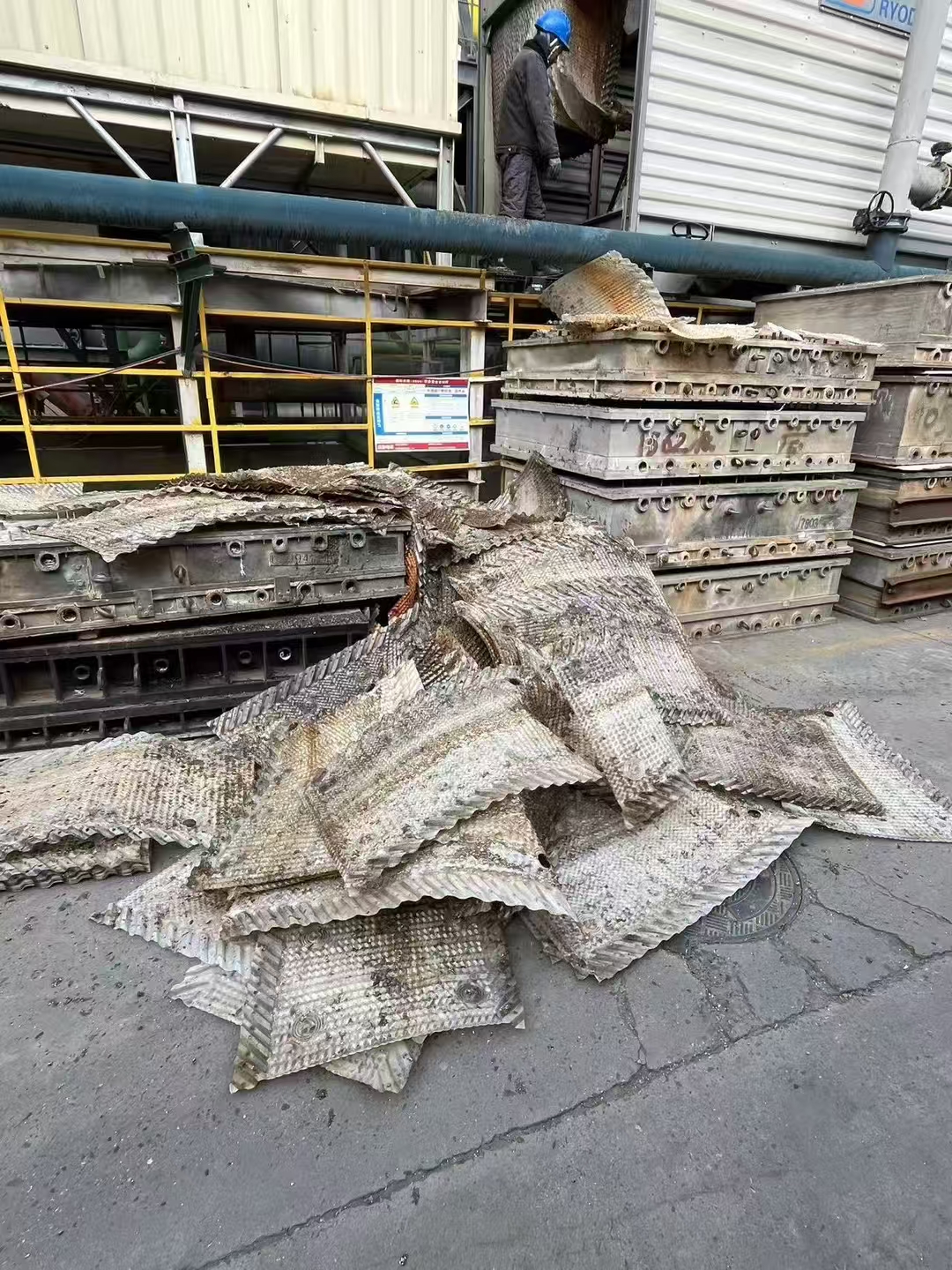
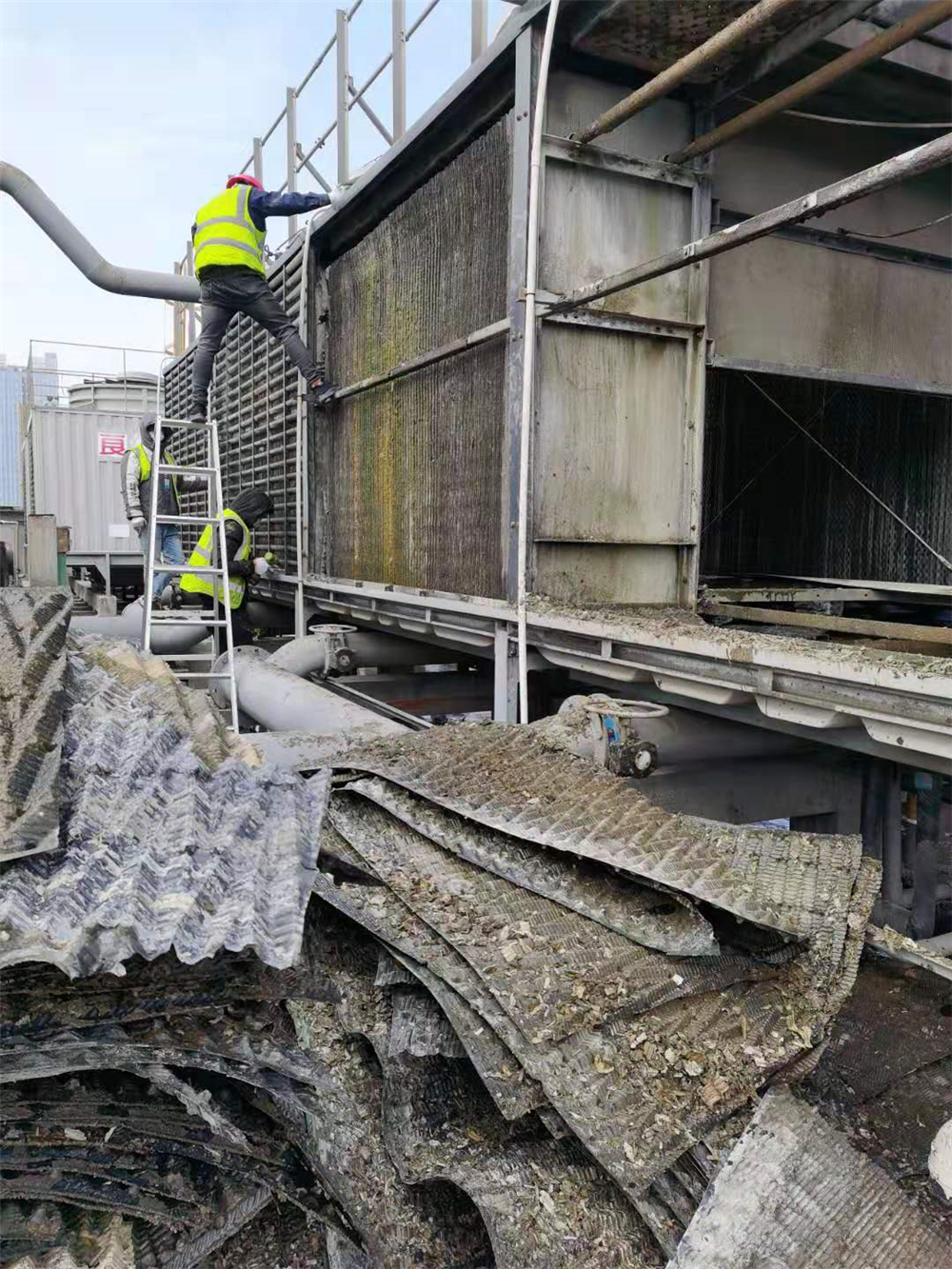
Cooling tower replacement fill is an essential component for maintaining reliable heat transfer and cooling performance in industrial facilities. In Malaysia, manufacturing plants, power stations, petrochemical facilities, palm oil mills, steel factories, and commercial HVAC systems depend on cooling towers to remove excess heat from equipment and production processes.
Over time, cooling tower fill can become clogged by scale, sediment, and biological growth or deteriorate because of temperature, chemical exposure, and mechanical stress. Replacing damaged fill media can help restore cooling capacity, improve airflow, and reduce recurring maintenance problems.
Finding reliable cooling tower replacement fill suppliers in Malaysia requires careful evaluation of product quality, material selection, technical compatibility, pricing, and delivery capability.
This guide explains the main fill types, industrial applications, supplier selection criteria, and sourcing options for Malaysian buyers.
What Is Cooling Tower Replacement Fill?
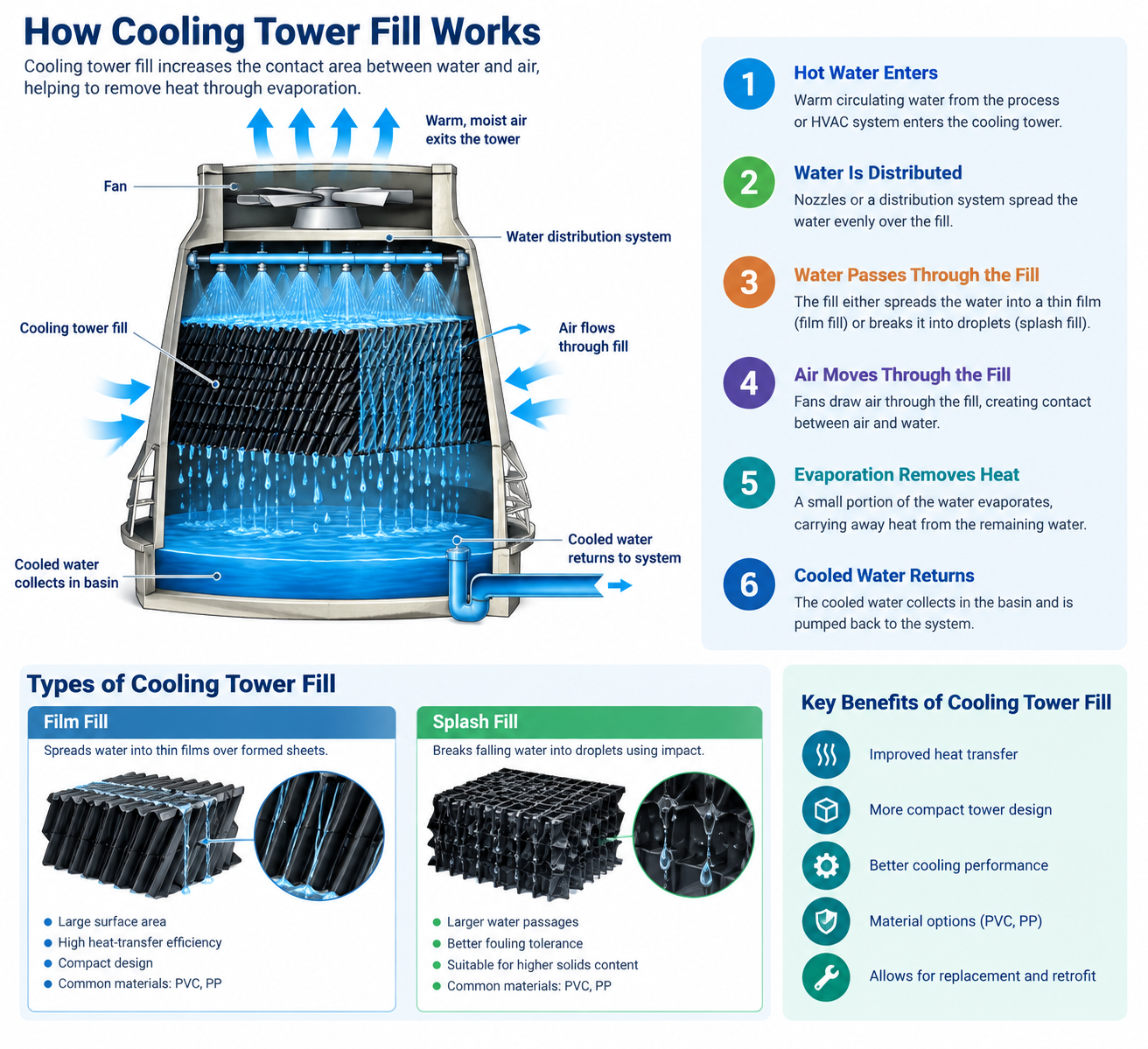
Cooling tower fill, also known as cooling tower packing or fill media, increases the contact area between circulating water and air. This promotes heat transfer and evaporation, allowing warm water to cool before returning to the industrial process.
Replacement fill is designed to replace old, damaged, or inefficient media inside an existing cooling tower.
Industrial buyers can source replacement fill in different materials, profiles, and dimensions to suit crossflow and counterflow cooling towers.
Typical replacement options include:
PVC film fill for efficient heat transfer in suitable water conditions
PP film fill for applications requiring specific material or temperature properties
Splash fill for certain systems with higher suspended-solid loads
Customized fill blocks for existing industrial cooling towers
Compatible aftermarket fill for selected cooling tower brands
Selecting the right replacement product helps maintain cooling performance without unnecessary modifications to the tower.
Industrial Applications in Malaysia
Malaysia has a broad industrial base with cooling requirements across manufacturing, energy, processing, and commercial infrastructure.
Manufacturing Plants
Manufacturing facilities use cooling towers to remove heat from production machinery, compressors, hydraulic systems, and industrial process water. Replacement fill helps maintain consistent cooling when the original media deteriorates.
Palm Oil Mills
Palm oil processing facilities use cooling systems in various process and utility applications. Fill selection should consider water quality, suspended solids, and the effectiveness of the existing water-treatment system.
Power Plants
Power generation facilities require dependable heat rejection. Replacement fill must match the cooling tower's thermal requirements, airflow characteristics, and water distribution arrangement.
Petrochemical and Chemical Facilities
These plants may operate under demanding process temperatures and water chemistry conditions. Buyers should confirm the selected fill material's chemical compatibility and operating limits.
Commercial HVAC Systems
Hotels, hospitals, shopping centers, and office buildings use cooling towers for central air conditioning. Fill replacement can help restore performance when fouling or deterioration reduces heat-transfer efficiency.
Main Types of Cooling Tower Replacement Fill
Film Fill
Film fill spreads water over closely spaced surfaces, creating thin water layers and a large heat-transfer area.
Its advantages include high thermal efficiency and compact construction. It is widely used in industrial and commercial cooling towers with relatively clean circulating water.
However, narrow channels may become blocked when suspended solids, scale, or biological growth accumulate.
Splash Fill
Splash fill breaks falling water into droplets through bars, grids, or structured components.
It can be suitable for certain industrial systems where suspended solids or fouling are significant concerns. The appropriate design depends on the tower's operating conditions and performance requirements.
PVC vs. PP Fill
| Feature | PVC Fill | PP Fill |
| Main advantage | Cost-effective for many standard applications | Good chemical resistance and higher-temperature capability in many grades |
| Common applications | General industrial and HVAC cooling | Industrial applications with specific material requirements |
| Key considerations | Temperature limits and chemical compatibility | Material grade, temperature, and structural support |
| Purchasing factors | Price, profile, and availability | Grade, customization, and application suitability |
Neither material is universally best. Suppliers should confirm that the selected grade meets the tower's operating temperature, water chemistry, mechanical, and fire-performance requirements.
How to Choose Cooling Tower Replacement Fill Suppliers in Malaysia
Choosing the right supplier helps reduce purchasing risks and avoid costly installation problems.
Check Manufacturing Capability
Determine whether the supplier manufactures fill media directly or operates as a distributor.
Manufacturers may offer more customization options for dimensions, profiles, and bulk orders. Local distributors may provide convenient procurement, stock availability, and installation coordination.
Ask about production capacity, quality-control procedures, and experience with industrial cooling tower projects.
Verify Product Compatibility
Provide the existing tower's brand, model, dimensions, and fill arrangement.
For Marley, BAC, EVAPCO, SPX, Hamon, and other cooling tower systems, request confirmation that the proposed replacement is compatible with the specific model.
Brand compatibility should never be assumed based on a general product description alone.
Request Technical Specifications
Before purchasing, request the following information where applicable:
Material grade and sheet thickness
Fill block length, width, and height
Sheet spacing and profile geometry
Recommended operating temperature
Thermal performance and airflow resistance data
Installation requirements and maintenance recommendations
These details allow buyers to compare suppliers on technical suitability rather than price alone.
Evaluate Customization Services
Older industrial cooling towers may use non-standard fill dimensions. Suppliers capable of producing customized fill blocks can help reduce installation problems and avoid unnecessary structural modifications.
Provide measurements, photographs, drawings, and the required quantity when requesting a quotation.
Compare Local Suppliers, Distributors, and Overseas Manufacturers
Malaysian industrial buyers generally have three sourcing options.
| Supplier Type | Potential Advantages | Considerations |
| Local cooling tower service companies | Site support and potential installation services | Confirm product availability and manufacturing source |
| Regional distributors | Multiple product options and convenient purchasing | Check stock, pricing, and warranty arrangements |
| Overseas manufacturers | Bulk supply and customization options | Evaluate shipping, import costs, lead time, and technical support |
Local suppliers may be convenient for urgent repairs or projects requiring on-site assistance. Overseas manufacturers may be attractive for large replacement projects or customized fill requirements.
Chinese manufacturers are one potential source of PVC and PP cooling tower fill. Before placing an order, verify export experience, product documentation, manufacturing quality, and delivery arrangements to Malaysia.
What Affects Cooling Tower Replacement Fill Prices?
Replacement fill prices depend on several factors, so buyers should request quotations based on actual project specifications.
Key cost drivers include:
Material: PVC and PP products have different material and manufacturing costs.
Fill type: Film, splash, and specialized fill designs differ in construction.
Dimensions: Customized sizes may affect production costs.
Order quantity: Bulk purchases may offer different pricing structures.
Transportation: Freight, packaging, and delivery location affect landed cost.
Installation: Labor, lifting equipment, and shutdown requirements contribute to project expenses.
Compare the total cost of supply and installation rather than focusing only on the price per block or cubic meter.
For larger projects, request an itemized quotation covering specifications, quantity, shipping terms, delivery schedule, and warranty conditions.
When Should Industrial Cooling Tower Fill Be Replaced?
Common warning signs include:
Cracked, brittle, warped, or collapsed fill sheets
Persistent blockage from sediment, scale, or biological growth
Uneven water distribution across the fill
Increased airflow resistance
Reduced cooling performance under comparable operating conditions
Repeated cleaning that fails to restore acceptable performance
Before replacing the fill, inspect the nozzles, drift eliminators, fans, and water-treatment system. These components can also affect cooling performance.
Correcting water-treatment problems and selecting an appropriate fill design can help reduce premature deterioration.
Aftermarket Cooling Tower Replacement Fill for Industrial Buyers
Aftermarket replacement fill can provide an alternative to original equipment manufacturer replacement media.
Potential advantages include competitive pricing, flexible dimensions, additional material choices, and access to alternative manufacturers.
For industrial cooling towers, however, buyers should confirm that aftermarket fill matches the required dimensions, material specifications, installation arrangement, and thermal performance.
A product that physically fits inside the tower may still produce unsatisfactory results if its profile or airflow resistance differs significantly from the original design.
How to Request a Quotation from a Supplier
To receive an accurate quotation, prepare the following information:
Cooling tower brand and model.
Crossflow or counterflow configuration.
Existing fill material and profile.
Fill block dimensions and total required volume.
Operating water temperature and water quality.
Delivery location in Malaysia.
Required delivery date and installation requirements.
If the original specifications are unavailable, provide photographs and measurements of the existing fill.
CoolingTowerPart.com can be considered as a sourcing channel for cooling tower replacement fill and related components. Buyers should confirm availability, technical compatibility, delivery terms, and warranty conditions for their specific project.
Frequently Asked Questions
Who supplies industrial cooling tower replacement fill in Malaysia?
Potential sources include local cooling tower service companies, industrial distributors, regional suppliers, and overseas manufacturers that export to Malaysia. Confirm whether each supplier manufactures the product or resells it.
Which fill type is best for industrial cooling towers?
Film fill is often suitable for relatively clean water systems requiring efficient heat transfer. Splash fill may be more appropriate for certain applications with higher suspended-solid loads. The best choice depends on water quality and tower design.
Can Malaysian buyers purchase replacement fill directly from manufacturers?
Yes. Direct purchasing may offer customization and bulk-supply options. Buyers should evaluate quality documentation, minimum order quantities, lead times, and total landed cost.
How can I reduce cooling tower fill replacement costs?
Compare quotations using consistent specifications, measure the existing fill accurately, and consider the full cost of shipping, installation, maintenance, and service life.
Can aftermarket fill replace original Marley or BAC fill?
Potentially, yes, provided the replacement is confirmed to meet the specific tower's dimensional, material, installation, and performance requirements.
Conclusion
Finding reliable cooling tower replacement fill suppliers in Malaysia for industrial applications requires careful assessment of product quality, technical compatibility, manufacturing capability, and total procurement cost.
Film fill, splash fill, PVC, and PP products each have different advantages depending on water quality and operating conditions. By preparing accurate specifications and comparing suppliers carefully, industrial buyers can source suitable replacement media, reduce installation risks, and maintain dependable cooling tower performance.
Recommended internal links for CoolingTowerPart.com: