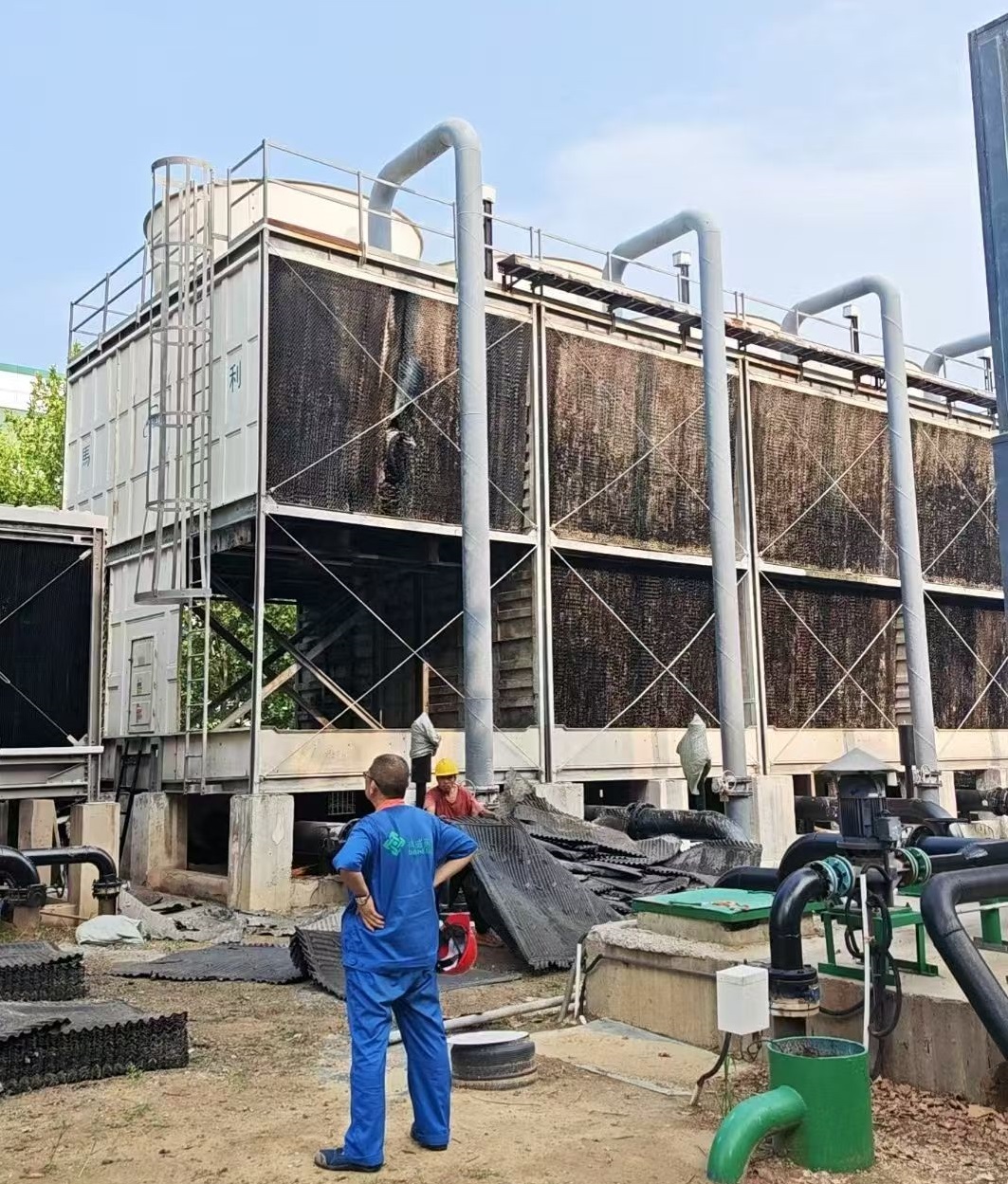
Industrial cooling towers rely on high-performance fill media to achieve efficient heat transfer, maintain stable cooling capacity, and control operating costs. When existing fill becomes damaged, clogged, deformed, or inefficient, replacing it with suitable Marley compatible cooling tower fill can help restore cooling performance without requiring a complete tower replacement.
For industrial facilities planning maintenance or cooling tower upgrades, choosing a reliable Marley compatible cooling tower fill manufacturer is essential. The right supplier should provide compatible dimensions, suitable materials, dependable manufacturing quality, and technical support for replacement projects.
This guide explains how to select a manufacturer, compare fill materials, evaluate compatibility, and purchase replacement cooling tower fill for industrial applications.
What Is Marley Compatible Cooling Tower Fill?
Cooling tower fill is the internal heat-transfer media that increases contact between circulating water and airflow. It helps water release heat through evaporation, allowing the cooling tower to return cooler water to the industrial process.
Marley compatible cooling tower fill is replacement fill designed to match the installation requirements of applicable Marley cooling tower models. Depending on the tower design, the replacement may use film fill, splash fill, or another suitable fill configuration.
Compatible replacement fill can help industrial operators:
Restore cooling tower heat-transfer performance.
Replace aging, cracked, or deformed fill media.
Reduce unnecessary water distribution and airflow restrictions.
Extend the service life of existing cooling tower equipment.
Reduce replacement costs compared with a complete tower overhaul.
Compatibility should be confirmed for the specific tower model and operating conditions. A replacement product should not be considered a direct fit solely because it is marketed as Marley compatible.
Why Replace Marley Cooling Tower Fill?
Cooling tower fill operates continuously under demanding conditions. Water quality, temperature, chemical treatment, suspended solids, and maintenance practices all influence its service life.
Common reasons for replacing cooling tower fill include:
1. Reduced Heat Transfer Efficiency
Scale, biological growth, and debris can cover fill surfaces and restrict water distribution. These problems reduce effective heat-transfer area and may increase the cooling tower's approach temperature.
2. Structural Damage
Aging plastic sheets may crack, deform, separate, or lose mechanical strength. Damaged fill can create uneven water distribution and reduce cooling performance.
3. Excessive Pressure Drop
Blocked or incorrectly installed fill can restrict airflow. Increased resistance may affect fan operation and overall cooling tower efficiency.
4. Changes in Operating Requirements
A facility may need to accommodate higher process loads, different water conditions, or updated maintenance requirements. Selecting an appropriate replacement fill can support these changes when the tower's design permits it.
Types of Marley Compatible Cooling Tower Fill
A qualified manufacturer should help buyers select the correct fill type rather than offering a one-size-fits-all solution.
Film Fill
Film fill distributes water into thin films across closely spaced sheets. This design provides a large contact area between water and air, making it suitable for many industrial cooling tower applications.
PVC and polypropylene (PP) are common materials. Film fill is often selected for applications where high heat-transfer performance and compact installation are important.
Splash Fill
Splash fill breaks falling water into smaller droplets through repeated contact with bars, grids, or molded elements. It is often considered for applications involving higher suspended-solids loads or water conditions that make closely spaced film fill less suitable.
The final selection depends on the tower design, water quality, and operating conditions.
PVC Fill and PP Fill
PVC and PP are widely used thermoplastic materials for cooling tower fill.
| Feature | PVC Fill | PP Fill |
| Typical advantage | Established use in many cooling towers | Good heat resistance in suitable grades |
| Application | General industrial cooling | Applications requiring suitable thermal or chemical resistance |
| Selection factors | Water chemistry, temperature, formulation | Water chemistry, temperature, formulation |
| Key consideration | Confirm maximum operating temperature | Confirm grade-specific performance |
Neither material is universally better. Buyers should evaluate continuous operating temperature, chemical compatibility, fire-performance requirements, and expected service life before choosing.
How to Choose a Marley Compatible Cooling Tower Fill Manufacturer
Selecting a manufacturer involves more than comparing prices. The supplier must understand the existing tower and provide replacement fill that meets the project's technical requirements.
1. Verify Dimensional Compatibility
Ask the manufacturer to confirm:
Fill block length, width, and height.
Sheet thickness and spacing.
Sheet profile and corrugation geometry.
Block arrangement and installation orientation.
Support requirements and available installation clearance.
Where possible, provide original drawings, tower model information, photographs, or physical samples.
2. Evaluate Manufacturing Quality
A dependable cooling tower fill manufacturer should maintain consistent sheet forming, bonding, block dimensions, and material quality.
Ask about dimensional inspection, material specifications, production quality controls, and packaging methods. For large industrial orders, samples or pre-shipment inspections can help reduce installation risks.
3. Check Thermal and Chemical Suitability
The replacement fill must withstand the actual operating environment. Consider water temperature, pH, chemical treatment, biological growth, and suspended solids.
For demanding applications, request documented material properties and recommendations based on the tower's operating conditions.
4. Confirm Project Experience
Look for a supplier experienced in industrial cooling tower maintenance, fill replacement, and retrofit projects.
A capable manufacturer should be able to review technical requirements, recommend a suitable configuration, and explain any differences between the proposed replacement and the existing fill.
5. Compare Total Project Cost
The lowest purchase price does not always deliver the lowest lifecycle cost. Compare material quality, freight, packaging, installation requirements, expected maintenance, and delivery lead time.
For international projects, also confirm export packaging, shipping arrangements, and the availability of replacement quantities for future maintenance.
Applications of Marley Compatible Cooling Tower Fill
Replacement fill is used across a wide range of industrial and commercial cooling systems, including:
Power generation: Supporting cooling water circulation in suitable power plant cooling systems.
Petrochemical plants: Replacing degraded fill in process cooling towers.
Chemical manufacturing: Maintaining cooling capacity for production equipment.
Steel and metal processing: Supporting industrial heat rejection.
HVAC systems: Improving heat transfer in large commercial and institutional cooling towers.
Plastic and manufacturing facilities: Supporting process water cooling and temperature control.
Each application requires an assessment of water quality, temperature, airflow, and tower configuration before the replacement material is selected.
Marley Compatible Cooling Tower Fill Replacement Process
A structured replacement project helps minimize downtime and installation problems.
Step 1: Inspect the existing fill. Identify clogging, deformation, chemical damage, and other deterioration.
Step 2: Collect technical information. Record tower model, dimensions, fill type, operating temperature, and water conditions.
Step 3: Confirm the replacement specification. Obtain the proposed material, dimensions, configuration, and installation recommendations from the manufacturer.
Step 4: Prepare the cooling tower. Follow site safety procedures, isolate equipment, and remove the old fill according to the maintenance plan.
Step 5: Install and inspect. Check block alignment, support, clearances, and water distribution. Verify that the fill is installed in the intended orientation.
Step 6: Restart and monitor. Review water flow, cooling performance, airflow, and operating temperatures after commissioning.
Installation should follow the tower manufacturer's applicable instructions and the replacement supplier's approved technical recommendations.
Why Work with a Direct Cooling Tower Fill Manufacturer?
Purchasing directly from a qualified manufacturer can simplify communication and customization for industrial replacement projects.
Potential advantages include:
Factory-direct pricing: Reduce unnecessary distribution costs where applicable.
Custom dimensions: Request fill blocks based on verified project measurements.
Material options: Compare PVC and PP solutions for specific operating conditions.
Bulk production: Coordinate larger orders for plant maintenance shutdowns.
Technical communication: Discuss drawings, samples, specifications, and packaging directly with the production team.
For international buyers, supplier evaluation should include manufacturing capability, export experience, quality documentation, and realistic delivery schedules.
Frequently Asked Questions
Is Marley compatible cooling tower fill an original Marley product?
Not necessarily. The term generally describes replacement fill designed for a particular installation. Buyers should distinguish independent compatible products from genuine original equipment manufacturer (OEM) parts and verify the supplier's product description.
Can compatible fill fit an existing Marley cooling tower?
It may fit when the replacement dimensions, profile, support arrangement, and operating requirements are correctly matched to the existing tower. Confirm compatibility before ordering.
Should I choose PVC or PP cooling tower fill?
The choice depends on operating temperature, water chemistry, mechanical requirements, and the selected material grade. Request a technical recommendation for the actual application.
How do I obtain a quotation for replacement fill?
Provide the cooling tower model, existing fill dimensions, required quantity, preferred material, delivery destination, and target delivery date. Drawings and photographs can help the manufacturer evaluate the requirements.
Can compatible fill improve cooling tower performance?
Replacing damaged or fouled fill with a correctly specified product can help restore performance. Actual results depend on water distribution, airflow, fan operation, water quality, and the overall condition of the tower.
Conclusion
Choosing the right Marley compatible cooling tower fill manufacturer for industrial replacement projects can help facilities maintain cooling performance, manage maintenance costs, and extend the useful life of existing equipment.
Before purchasing, verify the tower configuration, fill dimensions, material suitability, manufacturing quality, and delivery requirements. A supplier that offers technical support and project-specific replacement solutions can help reduce procurement and installation risks.
Looking for Marley compatible cooling tower fill for an industrial maintenance or retrofit project? Contact a qualified cooling tower fill manufacturer with your tower model, dimensions, operating conditions, and quantity requirements to request a technical evaluation and quotation.
Recommended internal links for CoolingTowerPart.com:


