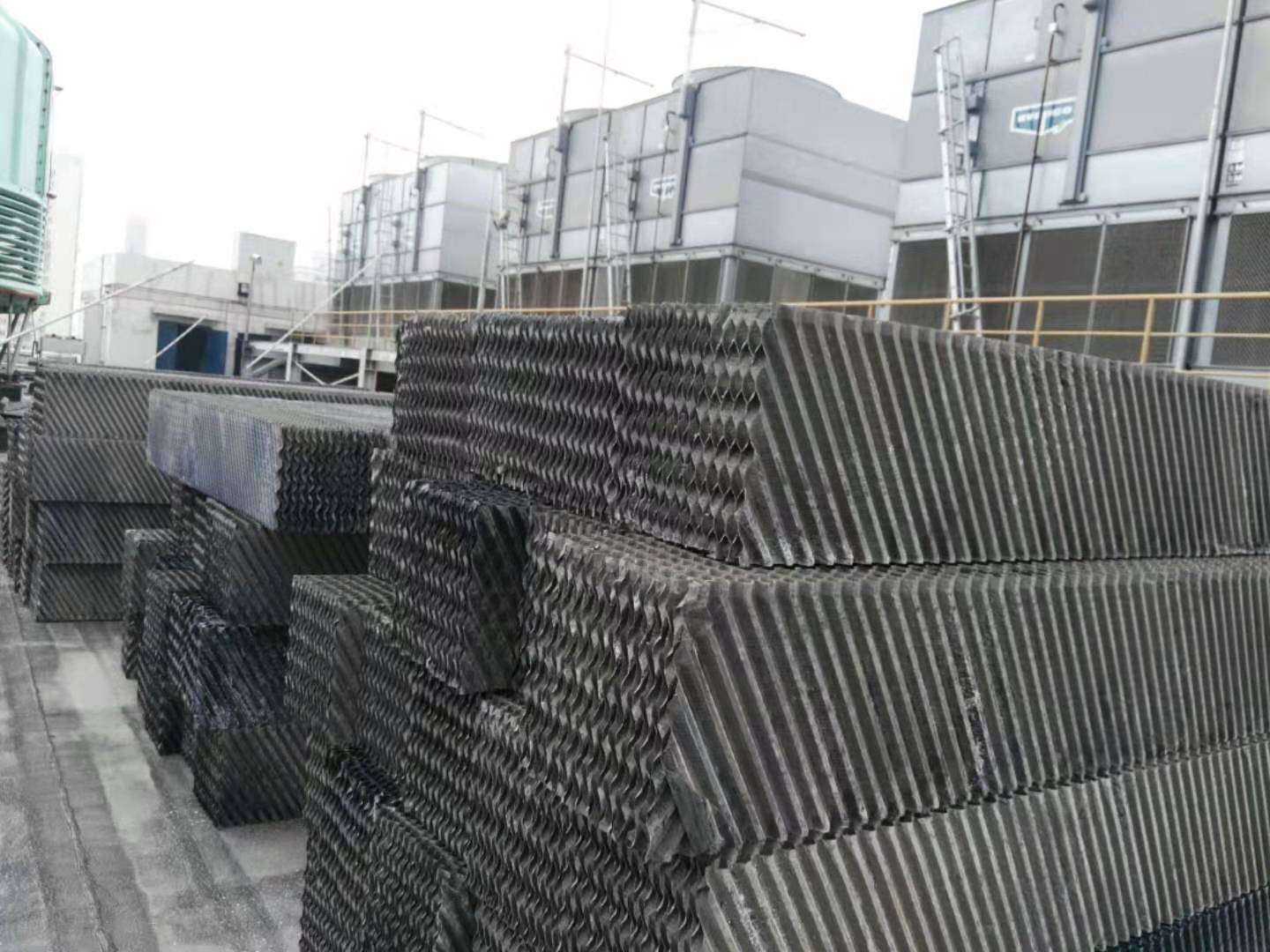
A cooling tower plays an essential role in industrial heat rejection. Whether you operate a power plant, steel mill, chemical factory, wastewater treatment facility, or manufacturing plant, your cooling system needs to remove heat efficiently and reliably. But what happens when circulating water contains suspended solids, debris, or other contaminants that can clog conventional cooling tower fill?
This is where splash fill cooling tower technology becomes particularly valuable.
Splash fill is designed to break falling water into smaller droplets, increase air-water contact, and support heat transfer while offering better tolerance of many fouling-prone operating conditions. Unlike conventional film fill, which spreads water across closely spaced surfaces, splash fill relies on repeated impacts to disperse water as it moves through the tower.
However, is splash fill suitable for every cooling tower? Not necessarily. The right choice depends on water quality, operating temperature, cooling requirements, and the design of the entire cooling system.
In this guide, we explain what splash fill is, how it works, its main advantages, and the industrial working conditions in which it may be the best option. We also discuss material selection, maintenance, and purchasing considerations to help you choose the right cooling tower fill for your application.
1. What Is Splash Fill in a Cooling Tower?
Splash fill is a type of cooling tower fill that cools circulating water by repeatedly breaking it into droplets as it falls through specially designed bars, grids, or other structural components.
These components are installed inside the cooling tower to increase contact between the water and the airflow. When warm water falls onto the splash-fill assembly, it strikes the fill surfaces and separates into smaller droplets. This process exposes more water to the surrounding air, supporting heat transfer and evaporation.
Unlike film fill, which distributes water into thin sheets over closely spaced surfaces, splash fill creates repeated opportunities for water breakup throughout the fill section.
Think of it like water falling over a series of small platforms. Each impact spreads the water and creates new contact surfaces. The more effectively the fill distributes the water and allows air to pass through, the better the system can support its cooling duty.
Splash fill is commonly considered for industrial cooling systems where water quality, suspended solids, or maintenance requirements make narrow film-fill passages less desirable.
Its actual performance depends on several factors, including fill geometry, material, water loading, airflow, and tower design. Therefore, choosing the right splash fill requires more than simply comparing product dimensions or prices.
2. How Does Cooling Tower Splash Fill Work?
Splash fill works by increasing the surface area of water exposed to moving air. Its operation involves several connected stages.
First, warm water enters the cooling tower through the water distribution system. The water then falls onto the splash-fill components, where it breaks into droplets and spreads across the fill layers.
As the water moves downward, air passes through the fill assembly. Heat transfers from the water to the air, while a portion of the water evaporates and removes additional heat from the circulating water.
Finally, the cooled water collects in the cold-water basin and returns to the industrial process.
Although this principle sounds simple, effective cooling depends on the balance between water distribution, airflow, droplet formation, and contact time.
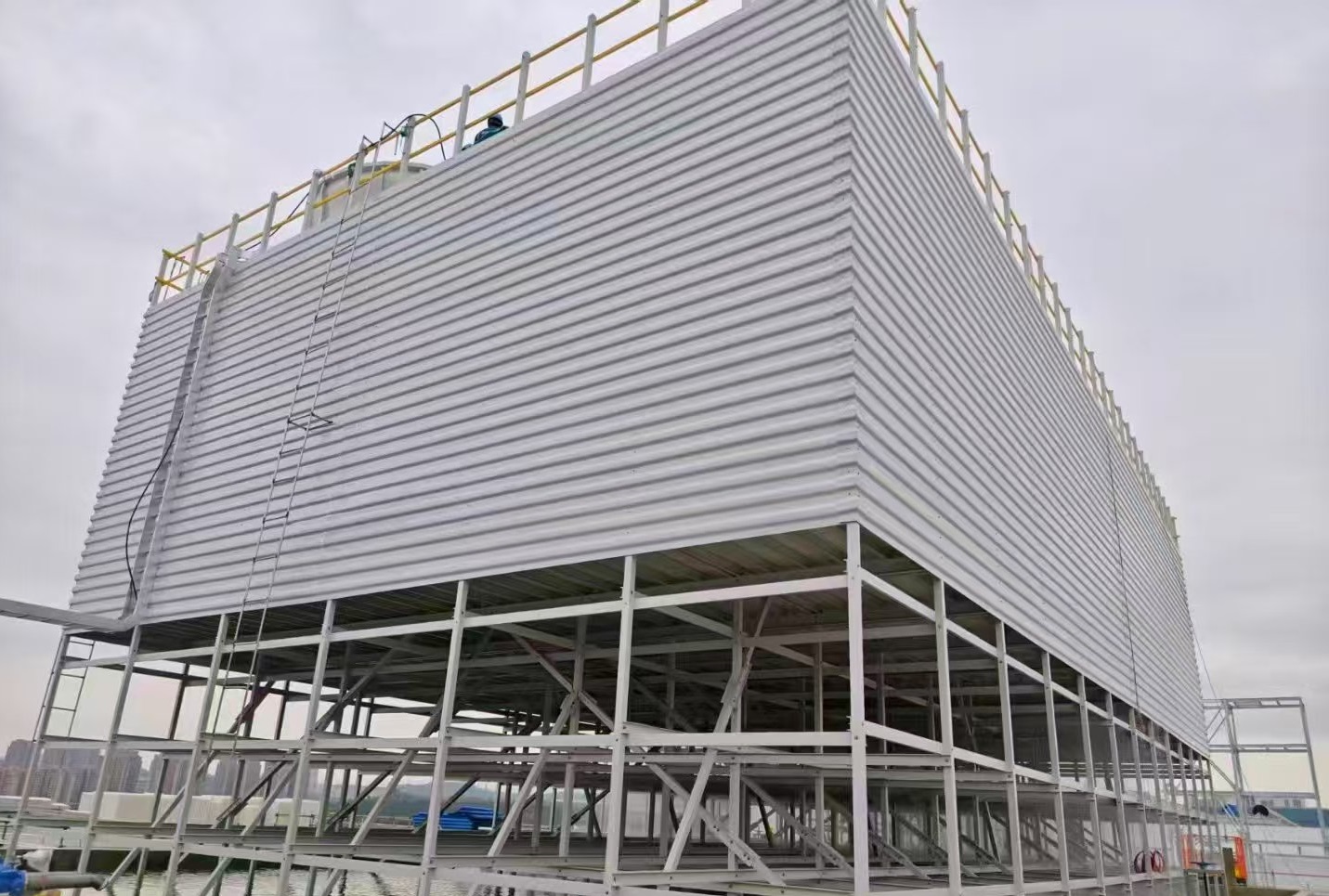
2.1 Water Distribution and Splashing
Water distribution is the starting point for effective splash-fill operation.
Hot water must reach the fill evenly rather than concentrating in a few areas. When water strikes the splash bars or grids, the components redirect the flow and break it into droplets. Multiple layers create repeated opportunities for the water to disperse as it moves downward.
If the water distribution system is blocked or poorly adjusted, some areas may receive excessive water while others remain underutilized. This uneven loading can reduce cooling efficiency, regardless of the quality of the fill material.
For this reason, selecting splash fill should go hand in hand with checking the tower's nozzles, piping, and distribution layout.
2.2 Air-Water Contact and Heat Transfer
The second stage is the interaction between air and water.
As the droplets fall, air moving through the tower absorbs heat and moisture. Evaporation provides much of the cooling in a conventional evaporative cooling tower.
Splash fill therefore needs sufficient airflow and an appropriate water-loading rate to work effectively. If the fill arrangement creates excessive airflow resistance, cooling performance may suffer. If the droplets are too large or the contact time is insufficient, the tower may also struggle to achieve its target leaving-water temperature.
The goal is not simply to produce splashes. It is to create effective air-water contact without compromising airflow, water distribution, or drift control.
3. Main Types of Cooling Tower Splash Fill
Splash fill comes in several configurations. The best choice depends on the tower's internal support structure, operating conditions, water characteristics, and required thermal performance.
3.1 Splash Bars
Splash bars are individual components arranged in multiple layers inside a cooling tower. They intercept falling water and break it into droplets while allowing air to move through the assembly.
Their relatively open arrangement makes them attractive for industrial cooling systems where fouling and blockage are concerns.
Different bar profiles, spacing, and installation patterns can influence water breakup, airflow resistance, and cooling performance. Some designs prioritize open passages, while others focus on support stability and water distribution.
Before choosing replacement splash bars, check the original dimensions, support spacing, loading requirements, and compatibility with the tower structure. A replacement that fits physically may still deliver different thermal performance if its design differs significantly from the original.
3.2 Splash Grids
Splash grids use interconnected or regularly arranged elements to distribute falling water across a larger area.
Depending on their design, they can provide stable support, repeated water impacts, and relatively open airflow passages. They may be suitable for applications that require a structured fill assembly rather than separate bars.
However, not all splash grids offer the same resistance to fouling. Their performance varies with geometry, spacing, material, and installation quality.
When comparing products, buyers should evaluate the actual design rather than relying on the term "splash grid" alone.
3.3 High-Temperature Splash Fill
Some industrial processes send hot water to the cooling tower at temperatures that exceed the limits of standard fill materials.
High-temperature splash fill can be considered when the selected material retains adequate mechanical strength and dimensional stability at the actual operating temperature.
Polypropylene grades and other engineering materials have different thermal limits, so a product should never be described as suitable for every high-temperature application.
Always confirm the continuous operating temperature, peak temperature, chemical exposure, and expected service life with the manufacturer before making a purchase.
4. What Are the Main Advantages of Splash Fill?
The main appeal of splash fill is its combination of heat-transfer capability and an open structure that can tolerate certain challenging water conditions.
It is not automatically more efficient than film fill. However, it can be a more practical option when reliability and resistance to fouling matter more than achieving the highest possible heat-transfer performance within a compact volume.
4.1 Better Resistance to Fouling and Clogging
Film fill typically uses narrow passages and closely spaced surfaces. When water carries suspended solids, fibers, algae, or biological material, these passages can become obstructed.
Splash fill generally has a more open configuration, which can reduce the tendency for contaminants to accumulate in narrow channels. This makes it attractive for applications with a higher risk of clogging.
Still, open fill is not clog-proof. Scale, biofilm, sludge, and debris can accumulate on splash components and support structures.
Appropriate filtration, water treatment, inspection, and cleaning remain important for maintaining reliable operation.
4.2 Suitable for Challenging Water Conditions
Industrial circulating water is not always as clean as the water used in a typical HVAC system.
Cooling towers may receive water containing suspended solids, process residues, or biological contaminants. In these conditions, splash fill can offer a useful alternative to film fill because its open passages may be less vulnerable to blockage.
The key is understanding the type and concentration of contamination.
Large debris, abrasive particles, corrosive chemicals, and heavy sludge can still damage components or reduce cooling performance. A water-quality assessment helps determine whether splash fill is appropriate and whether pretreatment is necessary.
4.3 Convenient Maintenance and Replacement
Splash-fill assemblies can be easier to inspect and clean when their components are accessible and the installation provides adequate working space.
Individual bars or sections may be replaceable without changing the entire tower, depending on the design. This can help maintenance teams manage wear, fouling, and localized damage.
However, replacement convenience depends on the support structure, access arrangements, and component compatibility.
Before ordering replacement fill, confirm dimensions, fastening methods, material specifications, and installation requirements. Correct matching helps prevent unnecessary modifications and reduces the risk of installation problems.
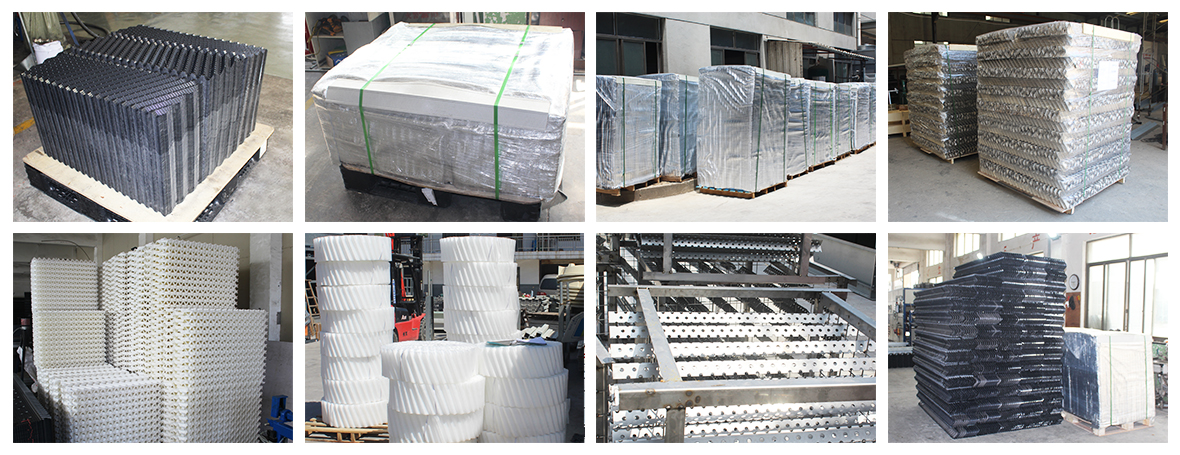
5. Applicable Working Conditions for Splash Fill
Splash fill is especially worth evaluating when a cooling tower operates under conditions that increase the risk of fouling, blockage, or mechanical deterioration.
The following applications are common areas to consider, although the final choice must be based on actual operating data.
5.1 Industrial Cooling Water with High Suspended Solids
When circulating water contains suspended solids, splash fill can be a practical option.
This situation may occur in steel processing, mining, certain manufacturing processes, and industrial plants using water from less extensively treated sources.
An open splash-fill arrangement can be more tolerant of suspended material than closely spaced film-fill passages. This may help reduce the frequency of clogging-related maintenance.
Nevertheless, high solids concentrations may still cause sediment accumulation in the basin and on the fill.
Operators should evaluate particle size, solids concentration, filtration capability, and cleaning frequency before selecting the system.
5.2 Water with a High Scaling or Fouling Risk
Scaling and biological fouling are common cooling tower problems.
Mineral deposits can form when dissolved salts become concentrated through evaporation, while algae and biofilm may develop under favorable conditions. These deposits can reduce heat-transfer performance and interfere with water distribution.
Splash fill can reduce the risk of blockage associated with narrow film-fill channels, but it cannot prevent scale or biological growth by itself.
If water chemistry is poorly controlled, deposits can coat splash surfaces and affect water distribution. Effective blowdown management, chemical treatment, basin cleaning, and routine inspection are still essential.
5.3 High-Temperature Industrial Applications
Splash fill may be appropriate for some high-temperature cooling duties, including certain process-water systems and industrial production lines.
Its suitability depends heavily on the material grade and the temperatures experienced during normal operation and peak loads.
Hot water can soften unsuitable plastics, deform components, or shorten service life. If the process temperature fluctuates significantly, provide the manufacturer with both the normal and maximum temperatures.
This information is especially important when selecting polypropylene or other polymer-based splash fill.
Also consider the chemical composition of the water. A material that performs well at a particular temperature may not be suitable when exposed to certain process chemicals.
5.4 Wastewater and Process Cooling Systems
Wastewater-related industrial cooling systems may contain suspended solids, organic matter, or other contaminants that increase fouling risk.
Splash fill may be worth considering where conventional film fill requires frequent cleaning or suffers from repeated blockage.
However, wastewater composition varies widely. Oils, sticky organic deposits, corrosive chemicals, and fibrous materials can create additional challenges.
The fill material must be compatible with the water chemistry, and pretreatment may be required. Splash fill should therefore be selected as part of an overall cooling-system solution, not as a substitute for proper wastewater management.
5.5 Heavy-Duty and Continuous Industrial Operations
Plants that operate around the clock need cooling equipment that can maintain reliable performance with manageable maintenance interruptions.
In heavy-duty environments, splash fill may help reduce the frequency of certain clogging-related problems. It can be particularly useful where shutdowns are expensive and the water quality is difficult to control completely.
Even so, the complete cooling tower must be evaluated. Fan performance, structural condition, distribution nozzles, drift eliminators, and water treatment all affect reliability.
A durable fill assembly cannot compensate for poor system design or inadequate maintenance.
6. When Is Splash Fill Not the Best Choice?
Splash fill is not the ideal solution for every cooling tower.
In relatively clean water systems where maximum heat-transfer efficiency and a compact fill arrangement are priorities, film fill may deliver better thermal performance.
Splash fill may require a larger effective contact volume to achieve the same cooling duty, depending on the design. This can affect tower size, airflow requirements, and overall project cost.
It may also be unsuitable when the existing tower structure cannot support the required fill configuration or when the proposed material is incompatible with operating temperatures or chemicals.
Before choosing splash fill, compare the following factors:
Required cooling capacity and leaving-water temperature.
Circulating-water quality and contamination levels.
Available space and existing tower configuration.
Airflow resistance and fan operating requirements.
Material compatibility with temperature and chemicals.
Cleaning frequency and expected maintenance costs.
Initial purchase price and long-term operating expenses.
The most suitable cooling tower fill is the one that meets the required cooling duty while delivering acceptable reliability and lifecycle cost.
7. Splash Fill vs. Film Fill: What Is the Difference?
Splash fill and film fill both increase air-water contact, but they achieve this in different ways.
Splash fill repeatedly breaks falling water into droplets. Film fill spreads water into thin layers across specially formed surfaces.
These different mechanisms influence thermal performance, fouling tolerance, airflow resistance, and maintenance requirements.
Splash fill generally offers a more open structure and may be better suited to water with higher suspended-solids or fouling risks. Its heat-transfer performance depends on droplet formation, airflow, and fill geometry.
Film fill commonly provides high heat-transfer efficiency in a relatively compact space, making it popular in many HVAC and industrial cooling towers with suitable water quality. However, narrow passages can be more susceptible to blockage under heavily contaminated conditions.
So, which is better?
If your circulating water is relatively clean and tower space is limited, film fill may be the better option. If clogging and fouling are recurring problems, splash fill deserves closer consideration.
Neither option is universally superior. The right decision balances thermal performance, water quality, maintenance, and operating cost.
8. How to Choose the Right Splash Fill Material
Material selection directly affects the reliability and service life of splash fill.
Buyers should consider operating temperature, water chemistry, mechanical loading, ultraviolet exposure where relevant, and expected maintenance conditions.
The cheapest material is not always the most economical choice if it deforms prematurely or requires frequent replacement.
8.1 Polypropylene Splash Fill
Polypropylene (PP) is used in many industrial cooling tower components because it offers useful chemical resistance and can be manufactured into different shapes.
Depending on the grade and product design, PP splash fill may be suitable for demanding industrial environments.
However, polypropylene is not universally resistant to every chemical or temperature. Continuous operating limits, peak-temperature exposure, rigidity, and support requirements must be checked against the manufacturer's specifications.
When evaluating PP splash fill, ask for the recommended temperature range, relevant chemical compatibility information, and installation requirements.
8.2 PVC and Other Materials
PVC and other polymers may be used in cooling tower fill products, but suitability depends on the particular formulation, temperature range, and exposure conditions.
Some materials perform well under standard cooling-water conditions but may lose strength or deform under higher temperatures.
For applications involving unusual chemical exposure or elevated operating temperatures, request written material compatibility information.
Do not assume that two products with similar appearances have the same thermal or mechanical properties.
9. Key Factors to Consider Before Purchasing
Before purchasing splash fill, collect the information needed to match the product to the cooling tower.
Start with the tower model, existing fill type, dimensions, support spacing, and required cooling duty. Then document the entering- and leaving-water temperatures, circulating-water flow rate, ambient design conditions, and airflow arrangement.
Water quality is equally important. Note suspended solids, scaling tendency, biological growth, and any chemical contaminants.
Ask the supplier for material specifications, recommended operating limits, installation instructions, and relevant performance information.
If the project involves replacing an existing fill system, confirm that the proposed arrangement is compatible with the tower's original design.
A product that fits physically may still perform poorly if its thermal characteristics differ significantly from the original specification.
For a more accurate quotation, prepare the following details:
Cooling tower type and model.
Required fill dimensions and quantity.
Current fill material and configuration.
Normal and maximum operating-water temperatures.
Water flow rate and required cooling performance.
Water-quality characteristics and known fouling issues.
Delivery destination and expected project schedule.
Providing these details at the quotation stage helps the manufacturer recommend a more suitable product and reduces the risk of ordering incompatible components.
10. Installation and Maintenance Recommendations
Correct installation helps splash fill perform as intended.
Before installation, inspect the support structure and repair damaged components. Clean the fill area, remove loose debris, and check whether the existing water-distribution system works properly.
Install the splash bars or grids according to the specified spacing, orientation, and fastening method. Avoid unapproved modifications that could create uneven water distribution or restrict airflow.
After installation, verify that water spreads evenly across the fill and that no sections are loose or obstructed.
During operation, inspect for broken components, sediment buildup, biological growth, and changes in cooling performance.
Cleaning methods should match the material and contamination type. Excessive force or incompatible chemicals may damage the fill.
Regular inspections and appropriate water treatment help extend service life and reduce unexpected shutdowns. Where operating conditions are particularly challenging, establish an inspection schedule based on actual fouling rates rather than relying on a fixed interval for every installation.
11. Common Problems with Cooling Tower Splash Fill
Even a suitable splash-fill system can experience operating problems. Recognizing the warning signs early can help prevent more serious performance issues.
Uneven cooling may indicate blocked nozzles, poor water distribution, damaged fill, or inadequate airflow.
Deposits and fouling may result from poor water chemistry, suspended solids, or insufficient cleaning. Although splash fill may tolerate certain contaminants better than film fill, deposits can still accumulate over time.
Broken or deformed components may point to material incompatibility, excessive temperature, mechanical damage, or inadequate support.
Excessive water drift may be related to airflow, water distribution, or the performance and condition of the drift eliminators rather than the fill alone.
Reduced cooling capacity can have multiple causes, including unsuitable ambient conditions, inadequate airflow, uneven water loading, excessive fouling, or an undersized cooling tower.
When problems arise, inspect the entire cooling system instead of immediately replacing the fill. Correctly identifying the cause can prevent recurring failures and unnecessary spending.
12. Why Choose Power Tower Cooling Technology (Shaoxing) Co., Ltd.?
Selecting a cooling tower fill supplier involves more than comparing product prices. You need a manufacturer that understands your operating conditions and can help you identify a compatible solution.
Power Tower Cooling Technology (Shaoxing) Co., Ltd. is the company identified for this article and the associated website, Coolingtowerpart.com.
When evaluating splash fill for a new project or replacement application, buyers should discuss the required dimensions, fill configuration, water quality, operating temperatures, and expected cooling duty with the supplier.
It is also worth confirming material options, production specifications, packaging, delivery arrangements, and technical support before placing an order.
Providing accurate operating information at the quotation stage can help reduce compatibility issues and avoid unnecessary replacement costs.
For project-specific recommendations, visit www.coolingtowerpart.com and request specifications appropriate to your cooling tower.
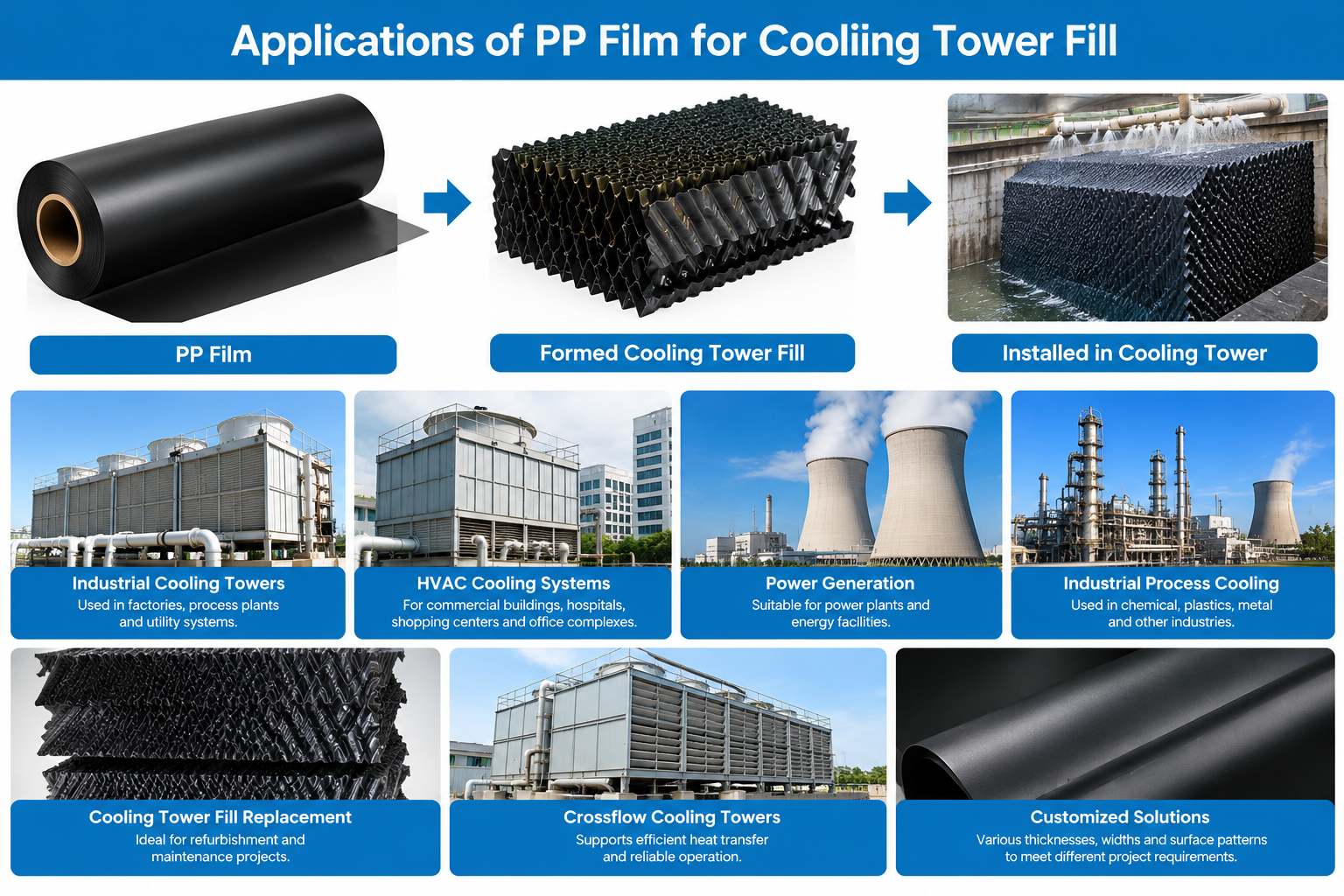
13. Frequently Asked Questions
13.1 Is Splash Fill Better Than Film Fill?
Not in every situation. Splash fill may be preferable when water contains suspended solids or when clogging is a recurring problem. Film fill often offers higher heat-transfer efficiency in compact systems with suitable water quality. The best choice depends on the cooling duty, water conditions, tower design, and maintenance budget.
13.2 Can Splash Fill Handle Dirty Water?
Splash fill is often considered for applications with relatively dirty circulating water because its open structure can reduce blockage risks.
However, it cannot handle every contaminant without problems. Heavy sludge, fibers, sticky deposits, and corrosive substances may still require pretreatment, specialized materials, or more frequent maintenance.
13.3 How Often Should Splash Fill Be Replaced?
There is no single replacement interval for every cooling tower.
Service life depends on material quality, operating temperature, water chemistry, mechanical loading, ultraviolet exposure, and maintenance practices.
Inspect the fill regularly and replace components when they are cracked, deformed, badly deteriorated, or unable to maintain proper operation. Follow the manufacturer's inspection and replacement recommendations.
13.4 Can Splash Fill Be Used in Existing Cooling Towers?
Yes, splash fill can be used in many existing towers if the fill configuration is compatible with the tower structure and cooling requirements.
However, a direct replacement is not always appropriate. Check support dimensions, available space, water distribution, airflow, structural loading, and thermal performance before changing from one fill type to another.
13.5 Is Polypropylene Splash Fill Suitable for High-Temperature Water?
It depends on the specific polypropylene grade and product design. High temperatures can affect mechanical strength and dimensional stability.
Before purchasing, confirm the continuous operating temperature, peak-temperature exposure, chemical compatibility, and recommended installation conditions with the manufacturer.
14. Conclusion: Is Splash Fill Right for Your Cooling Tower?
Splash fill is an important cooling tower fill option for industrial applications where fouling resistance, relatively open passages, and manageable maintenance are key concerns.
It works by breaking falling water into droplets, increasing air-water contact, and supporting evaporative heat transfer. It is particularly worth evaluating for systems with suspended solids, challenging process water, or recurring fill-clogging problems.
However, splash fill is not automatically the most efficient choice for every tower. Film fill may be more suitable when water is clean and compact, high-efficiency heat transfer is the priority.
The best solution comes from matching the fill configuration and material to actual operating conditions. Before making a purchase, confirm the operating temperature, water quality, dimensions, cooling duty, and material specifications.
Power Tower Cooling Technology (Shaoxing) Co., Ltd. can be approached through www.coolingtowerpart.com to discuss your project requirements.
A well-matched fill system can help your cooling tower operate reliably, simplify maintenance, and support long-term industrial performance.


