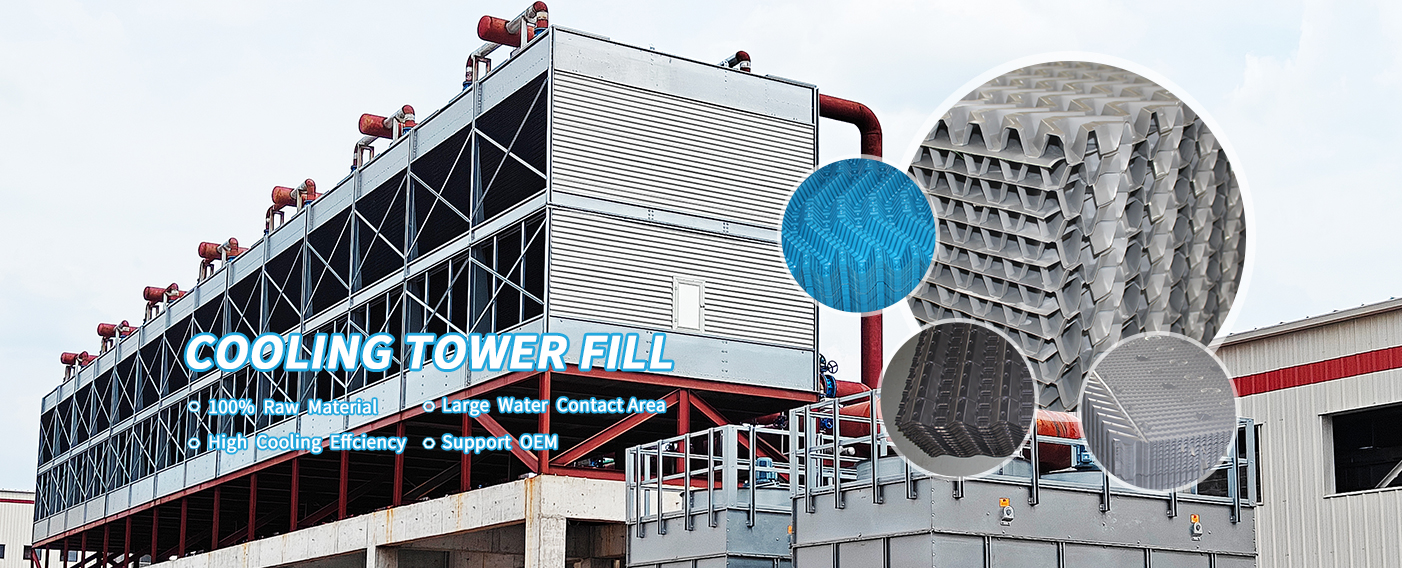
Replacing BAC cooling tower fill is an important maintenance decision that can directly affect cooling efficiency, operating costs, and equipment reliability. When fill becomes clogged, damaged, or worn out, a cooling tower may struggle to maintain the required water temperature. For industrial facilities, commercial HVAC systems, and process cooling applications, this can lead to higher energy consumption, increased maintenance costs, and unexpected downtime.
However, choosing replacement fill is not simply a matter of finding a product with similar dimensions. You need to consider the original tower configuration, fill type, material, water quality, operating temperature, and installation requirements.
In this complete buyer’s guide, we explain how to identify deteriorated cooling tower fill, compare replacement materials, check compatibility, estimate costs, and select a reliable supplier. We also explain how Power Tower Cooling Technology (Shaoxing) Co.,Ltd, through www.coolingtowerpart.com, can be contacted for cooling tower fill and replacement-part inquiries.
What Is BAC Cooling Tower Fill?
Cooling tower fill is an internal component that improves heat transfer between circulating water and moving air. Instead of allowing water to fall freely through the tower, fill spreads it into thin films or breaks it into smaller droplets. This increases the surface area available for heat and mass transfer, helping the tower remove heat through evaporation.
BAC, or Baltimore Aircoil Company, manufactures cooling equipment for industrial, commercial, and HVAC applications. Different cooling tower models use different internal configurations, so the appropriate replacement fill depends on the specific unit and its operating requirements.
When sourcing replacement fill for a BAC cooling tower, buyers should identify the original model, fill arrangement, and relevant dimensions before requesting a quotation. A replacement product may be manufactured by an independent supplier, so it is important to distinguish compatible replacement media from genuine BAC-branded parts.
Remember, a product that physically fits the tower is not automatically guaranteed to deliver the same thermal performance as the original design.
Why Does Cooling Tower Fill Need Replacement?
Cooling tower fill operates in a demanding environment. It is continuously exposed to circulating water, airflow, temperature changes, dissolved minerals, suspended solids, and potentially biological growth. Over time, these conditions can reduce its effectiveness or damage its structure.
Several common problems can indicate that replacement is worth considering.
Reduced Heat Transfer Efficiency
When fill surfaces become covered with deposits or sections collapse, water may no longer spread evenly across the media. Some areas receive excessive water, while other areas remain underused. Restricted airflow can further reduce heat transfer.
You may notice higher leaving-water temperatures, unstable cooling performance, or difficulty meeting process cooling requirements.
Before replacing the fill, compare current operating data with historical performance under similar ambient conditions. A decline in cooling efficiency is an important warning sign, but it can also result from fan problems, poor water distribution, excessive heat loads, or other equipment issues.
Clogging, Scaling, and Biological Growth
Scale can develop when dissolved minerals precipitate onto fill surfaces. Dirt, process debris, algae, and other biological growth can also accumulate in the passages.
As deposits build up, water distribution and airflow may deteriorate. Some contamination can be removed through appropriate cleaning, but heavily blocked or structurally damaged fill may not recover sufficiently.
If clogging repeatedly returns, investigate the underlying cause. Water treatment, filtration, and regular inspections are essential because installing new fill without addressing poor water quality can lead to another premature replacement.
Physical Damage and Material Aging
Cooling tower fill can crack, sag, deform, or separate from its original arrangement after years of service. High temperatures, unsuitable chemicals, mechanical stress, and inadequate support can accelerate deterioration.
Damaged fill may interfere with water distribution or allow water to bypass the intended contact area. If large sections have become brittle, distorted, or structurally unstable, replacement may be more economical than repeated repairs.
Inspect the supporting structure as well. Installing new fill on damaged supports can create additional problems and shorten the service life of the replacement.
Signs Your Cooling Tower Fill Needs Replacement
How can you tell when it is time to replace your cooling tower fill rather than continue cleaning it?
Look for the following warning signs:
Persistent cooling problems: The tower struggles to achieve the required leaving-water temperature under comparable operating conditions.
Visible cracks or deformation: Fill packs appear brittle, sagging, crushed, or broken.
Heavy scaling: Mineral deposits cover large areas and cannot be removed adequately using appropriate cleaning methods.
Recurring blockages: Passages repeatedly clog despite effective water treatment and maintenance.
Uneven water distribution: Water accumulates in certain areas while other sections remain relatively dry.
Declining performance after cleaning: Cleaning no longer produces a meaningful improvement.
Widespread material deterioration: Large sections have lost their structural integrity.
A few damaged fill packs may require only partial replacement, while widespread deterioration may justify a complete changeout.
Before contacting a supplier, take photographs of the damaged areas and record operating temperatures, water-flow conditions, and maintenance history. These details make it easier to evaluate the problem and select an appropriate replacement.
What Happens If You Delay Fill Replacement?
Continuing to operate with severely deteriorated fill can increase maintenance demands and make cooling performance less predictable.
Poor water distribution reduces the effective use of the fill surface, while blocked passages may contribute to airflow restrictions. In industrial facilities, these problems can affect production processes, equipment cooling, and operational reliability.
Delayed replacement may also make future maintenance more complicated if damaged media becomes difficult to remove or if contamination spreads to nearby components.
That does not mean every old fill pack must be replaced immediately. The better approach is to evaluate its physical condition, cleaning history, cooling performance, and expected remaining service life. This helps you determine whether cleaning, partial replacement, or a complete changeout offers the best value.
Types of Cooling Tower Fill
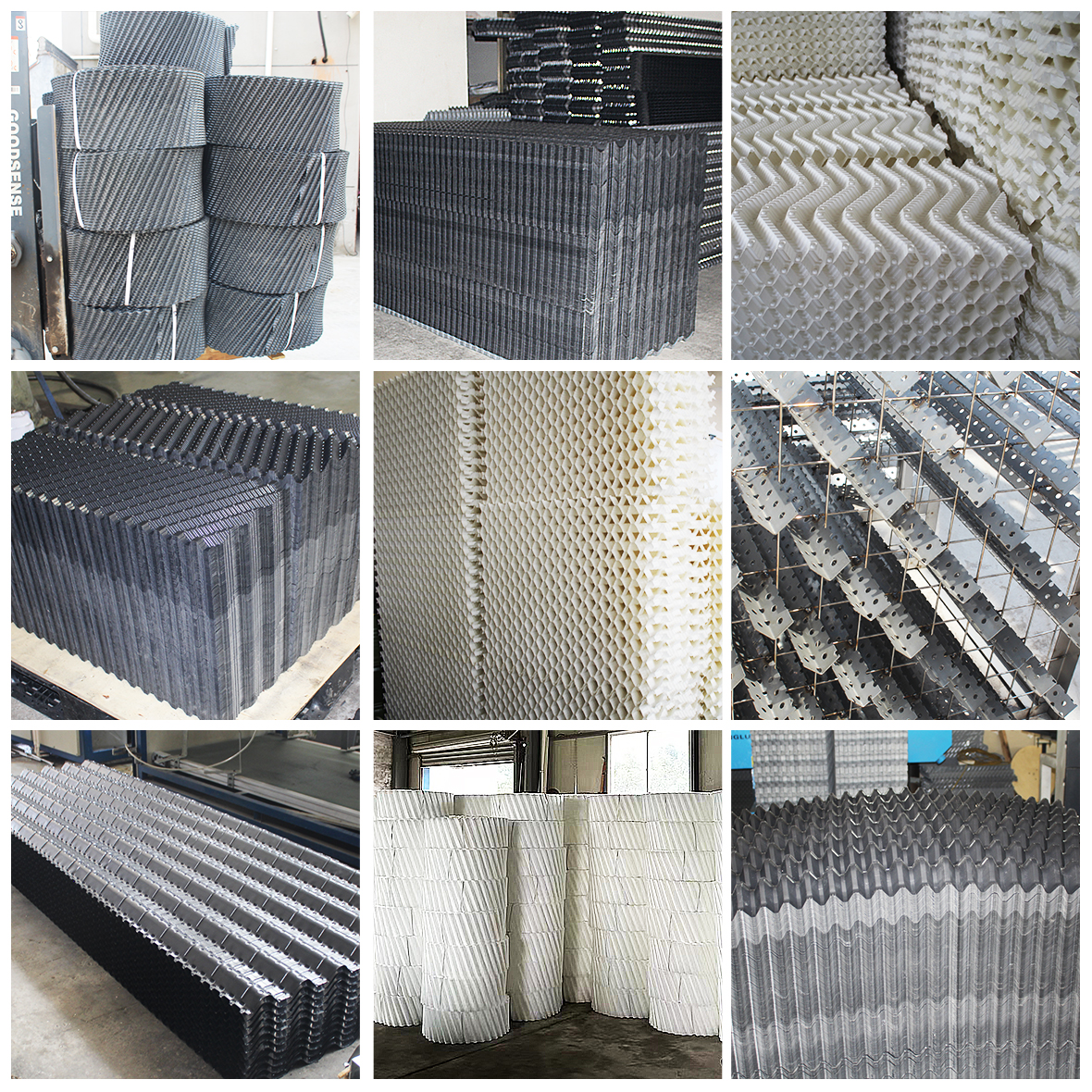
Before choosing replacement fill, confirm which type your cooling tower uses. The two broad categories are film fill and splash fill. Both improve contact between water and air, but they achieve this in different ways.
The correct design depends on the tower configuration, water cleanliness, operating conditions, and maintenance requirements.
Film Fill
Film fill uses closely spaced sheets or formed surfaces to distribute water into thin films. This creates a large contact area within a relatively compact volume.
PVC film fill is commonly used in cooling tower applications where water quality can be controlled. Other materials and configurations are also available.
One important consideration is that narrow passages can be vulnerable to clogging when circulating water contains substantial suspended solids or scale-forming minerals.
When replacing film fill, check the sheet geometry, spacing, block dimensions, material, and original water-distribution arrangement. Even small differences in configuration may affect how the replacement fits and performs.
Splash Fill
Splash fill uses bars, grids, or other structures to break falling water into smaller droplets. The resulting droplets increase water-air contact as water passes through the fill section.
Depending on its design, splash fill may be suitable for applications where suspended solids or fouling are significant concerns.
However, splash fill is not automatically interchangeable with film fill. The tower's thermal design, support structure, and water-distribution system must accommodate the selected media.
Switching from film fill to splash fill without technical evaluation can affect cooling performance. Always confirm suitability with a qualified cooling tower professional or supplier before changing fill types.
Which Materials Are Best for Replacement Fill?
Material selection affects temperature resistance, chemical compatibility, mechanical strength, service life, and total replacement cost.
PVC and polypropylene (PP) are common materials for cooling tower fill, but neither is ideal for every application. The right choice depends on actual operating conditions, including water temperature, treatment chemicals, contamination levels, and cleaning procedures.
PVC Cooling Tower Fill
PVC fill is widely used because it offers a practical balance of cost, formability, and performance in suitable cooling tower environments.
It is available in different configurations for film-fill applications and can be manufactured into blocks or packs designed for particular tower arrangements.
However, PVC has temperature and chemical compatibility limits. The exact grade, construction, and operating environment matter, particularly where water temperatures are elevated or chemical treatment is aggressive.
Before ordering, request the supplier's material specifications and recommended operating range. Confirm that the product is appropriate for your cooling tower and water chemistry.
PP Cooling Tower Fill
Polypropylene fill may be appropriate for applications requiring different temperature or chemical-resistance characteristics from those offered by a particular PVC product.
Its suitability depends on the material formulation, fill geometry, and installation conditions. Buyers should compare operating-temperature limits, mechanical properties, and compatibility with the chemicals used in water treatment.
Do not assume that every PP product has identical performance characteristics or that PP is always better than PVC.
Instead, select the material according to documented operating requirements and the supplier's technical recommendations.

How to Choose Compatible BAC Cooling Tower Fill
Compatibility is one of the most important considerations when purchasing replacement fill.
The replacement must fit the available space and work with the tower's water distribution, airflow, support structure, and thermal requirements. Start by gathering equipment information and operating data before requesting a quotation.
Identify the Original Tower Model
Locate the equipment nameplate and record the manufacturer, model designation, serial number, and other available information.
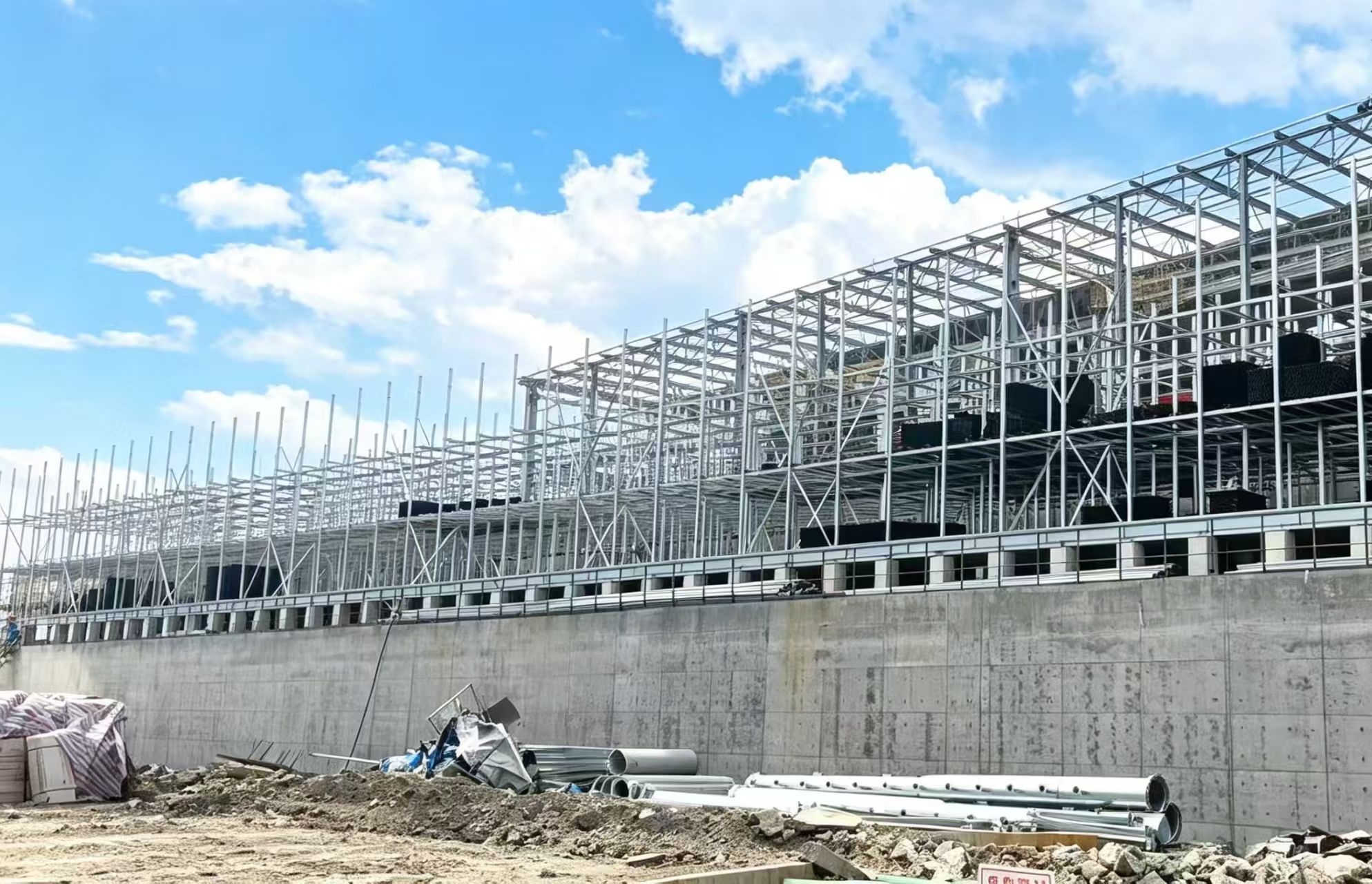
Check maintenance records for previous fill replacements or modifications to the original configuration. If documentation is incomplete, photographs of the tower, fill section, supports, and water-distribution system can help a supplier understand the installation.
Avoid ordering based only on a general description such as “BAC cooling tower fill.” Different models and equipment generations may use different arrangements.
If an original part number is available, include it in your inquiry as a reference. The supplier should still verify the required specifications before production.
Measure Dimensions and Configuration
Accurate measurements help prevent fitment problems.
Record the following information where available:
Fill-section length, width, and height
Dimensions of individual fill packs or blocks
Sheet or passage configuration
Airflow direction
Water-flow direction
Support spacing and arrangement
Installation orientation
Available clearance around the fill section
Photographs with marked measurements or a technical drawing can be especially useful.
Before manufacturing begins, confirm the final dimensions and tolerances with the supplier. Do not assume that a replacement will fit correctly just because its overall dimensions appear similar.
Check Operating Conditions
The original fill design is only one part of the selection process. You should also understand how the cooling tower operates.
Record normal and maximum water temperatures, circulating-water flow, ambient conditions, and cooling duty. Include unusual operating conditions such as temperature excursions, process contamination, or frequent chemical cleaning.
These factors can influence the appropriate material and fill geometry.
If you are considering a different design from the original media, request a technical evaluation rather than assuming the replacement will provide identical cooling capacity.
Verify Water Quality Requirements
Water quality has a major influence on fill performance and service life.
Important factors may include suspended solids, water hardness, alkalinity, conductivity, biological activity, and the chemicals used in treatment.
If your existing fill repeatedly clogs, identify the cause before selecting a replacement. A design that performs well with relatively clean water may be unsuitable for water containing substantial debris or fouling material.
Discuss water treatment, filtration, and maintenance practices with the supplier. Addressing these factors can help reduce the risk of premature failure and recurring replacement costs.
BAC Cooling Tower Fill Replacement Process
A successful fill replacement requires careful planning, safe removal, correct installation, and performance testing.
The exact procedure depends on the cooling tower model and site conditions. Always follow the applicable equipment documentation and workplace safety procedures.
Step 1: Inspect and Prepare
Before shutdown, document the existing fill arrangement and inspect nearby components.
Confirm the replacement dimensions, quantity, delivery condition, lifting requirements, and availability of installation tools. Establish the shutdown window and coordinate with operations, maintenance, and safety teams.
Isolate equipment and follow lockout/tagout procedures where applicable. Control or drain water as required, and assess possible exposure to biological aerosols and water-treatment chemicals.
Good preparation reduces installation errors and prevents delays caused by missing components or unsuitable access.
Step 2: Remove the Old Fill
Remove damaged media carefully to avoid harming the structural supports, distribution piping, casing panels, or other internal components.
Follow the equipment-specific removal sequence and use appropriate handling equipment for large or awkward sections.
Once the old fill is removed, inspect the exposed supports and clear accumulated debris using an approved cleaning method.
If supports are corroded, bent, or damaged, address those problems before installing the new media. Replacing the fill without repairing its supporting structure can create further issues.
Step 3: Install the Replacement Fill
Check the delivered product against the approved specifications before installation. Verify the dimensions, quantity, material, orientation, and assembly requirements.
Install the fill packs in the specified arrangement, ensuring that they are properly supported and do not create unintended gaps or obstructions.
Avoid forcing blocks into spaces that do not match the intended design. Incorrect orientation or uneven placement may affect water distribution and airflow.
If the replacement differs from the original configuration, obtain technical approval before proceeding.
Step 4: Test After Installation
After installation, check that the fill is secure and that the water-distribution system is operating correctly.
Follow the equipment's startup instructions and inspect for leaks, unusual vibration, abnormal water accumulation, and visible bypass paths.
Record inlet and outlet water temperatures, water flow where measurable, fan operation, and relevant ambient conditions. Compare the results with historical data collected under similar conditions.
If cooling performance does not improve as expected, investigate other potential causes rather than assuming the new fill is defective.
Repair, Cleaning, or Full Replacement?
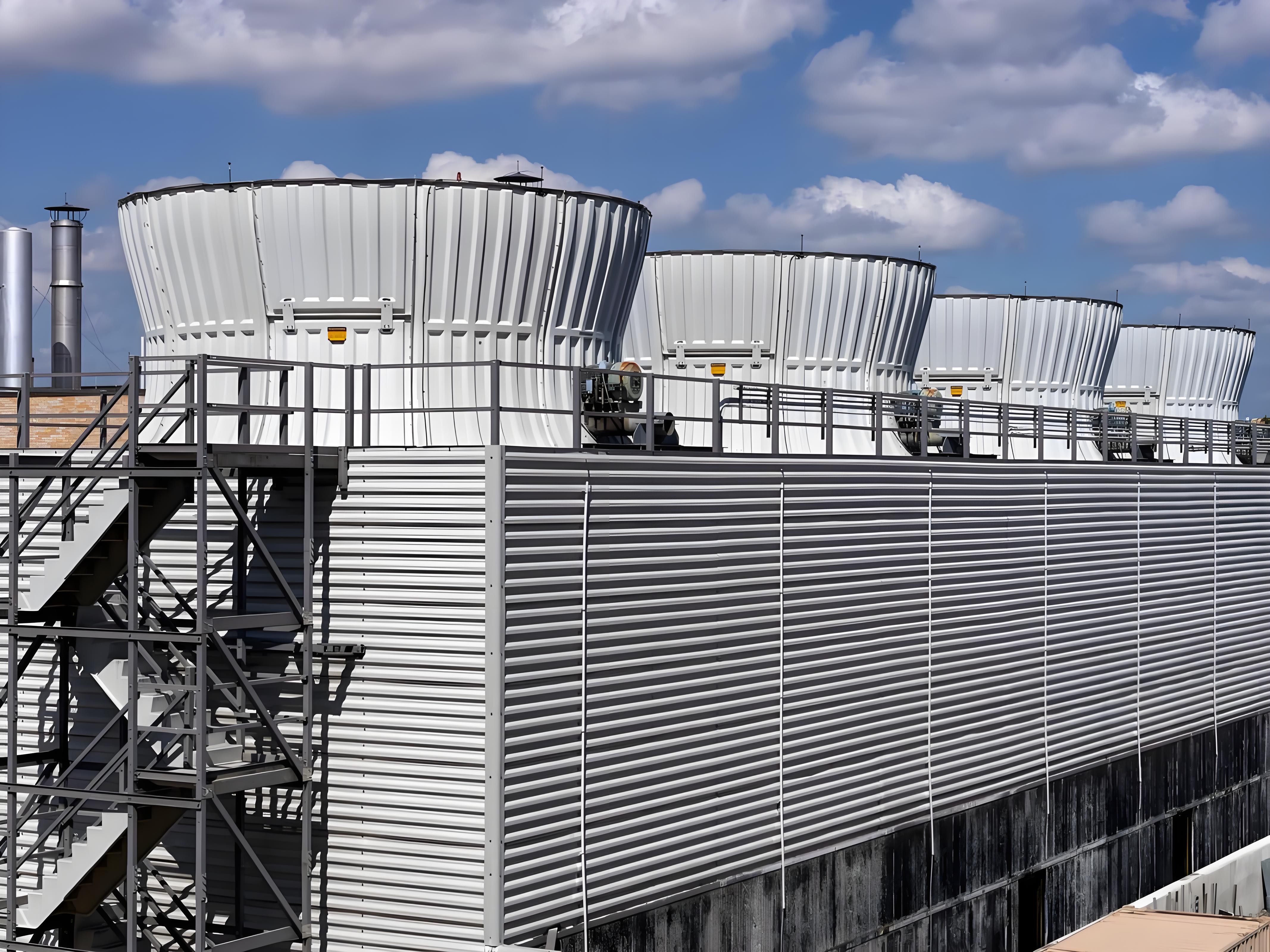
Full replacement is not always necessary. In some cases, appropriate cleaning or localized repairs may be sufficient.
Cleaning may be the best option when the fill remains structurally sound and the primary problem is removable scale or biological growth. Partial replacement may work when damage is limited to a small area and the new media is compatible with the remaining fill.
A complete changeout may be more practical when there is extensive cracking, deformation, deep clogging, or widespread material deterioration.
When comparing the options, consider:
Cost of cleaning and replacement materials
Labor and equipment requirements
Expected remaining service life
Shutdown duration and production impact
Waste handling and disposal
Risk of repeated maintenance
Potential changes in cooling performance
The best decision balances immediate expenditure with long-term reliability. Repeatedly cleaning fill that has already lost its structural integrity may cost more than replacing it properly.
How Much Does Cooling Tower Fill Replacement Cost?
The cost of BAC cooling tower fill replacement depends on several factors, and there is no single price that applies to every installation.
The main cost drivers include tower size, fill type, material, dimensions, quantity, manufacturing requirements, shipping, installation labor, and site accessibility.
Custom dimensions or less common configurations may require additional design work. International orders may also involve freight charges, import duties, and longer delivery schedules.
The lowest product price does not necessarily represent the lowest total project cost. A product that requires extensive modification or arrives with incomplete specifications can increase installation costs and delay the project.
To compare quotations accurately, ask suppliers to specify:
Product type and material
Dimensions and quantity
Technical specifications
Packaging method
Manufacturing lead time
Shipping cost and delivery terms
Any optional technical support
Warranty or quality-related terms, where available
Provide the same requirements to each supplier. This makes it easier to compare offers on a like-for-like basis.
How to Select a Reliable Cooling Tower Fill Supplier
A dependable supplier should understand your application, explain the proposed product, and provide sufficient technical information for an informed decision.
Start by asking for dimensional drawings, material specifications, operating limits, manufacturing tolerances, packaging information, and estimated lead time.
For custom replacement fill, confirm whether drawing review or sample approval is available before production. You should also clarify how the supplier checks compatibility and what information is needed to assess your cooling tower.
Consider the supplier's communication, quality-control practices, export experience, and ability to respond if a dimensional or installation issue occurs.
Most importantly, ask clear questions about product origin and branding. An independently manufactured compatible replacement is not necessarily an original equipment manufacturer's product. Accurate descriptions help you understand exactly what you are purchasing.
Common Buying Mistakes to Avoid
Several mistakes can make a cooling tower fill replacement project more expensive than necessary.
Choosing fill based only on the tower brand: The brand name alone does not identify the required dimensions, fill design, or material.
Ignoring operating conditions: A material suitable for one temperature range or water chemistry may not be appropriate for another.
Overlooking installation details: Incorrect dimensions, support spacing, orientation, or airflow configuration can create fitment and performance problems.
Comparing prices without comparing specifications: Quotations should cover the same technical requirements, quantities, and delivery terms.
Assuming compatibility means identical performance: A replacement that physically fits may still differ in thermal characteristics or pressure drop.
Ignoring the original cause of failure: Poor water quality, inadequate filtration, or unsuitable treatment practices can damage replacement fill prematurely.
Confusing compatible products with genuine branded parts: Always confirm whether the product is original branded equipment or an independently manufactured alternative.
Avoiding these mistakes begins with accurate equipment information and clear communication with your supplier.
How to Extend the Service Life of New Fill
Once new fill has been installed, consistent maintenance helps protect your investment.
Inspect the media at intervals appropriate to the operating environment. Watch for early signs of scaling, biological growth, blocked passages, and mechanical damage.
Maintain the water-treatment and filtration programs recommended for the system. Keep the distribution components and airflow paths in suitable condition because problems elsewhere can affect fill performance.
Use only cleaning methods and chemicals compatible with the fill material. Excessive pressure, unsuitable chemicals, and rough handling may damage the media.
It is also helpful to maintain records of water temperatures, cooling performance, cleaning activities, and replacement history. These records make it easier to identify gradual changes and plan maintenance before a problem becomes urgent.
Remember, new fill is not a substitute for good water management. The service life of replacement media depends on both product suitability and operating conditions.
Why Consider Power Tower Cooling Technology (Shaoxing) Co.,Ltd?

For buyers sourcing cooling tower fill and replacement components, Power Tower Cooling Technology (Shaoxing) Co.,Ltd can be contacted through www.coolingtowerpart.com.
When requesting a quotation for fill compatible with a BAC cooling tower, provide the equipment model, available dimensions, original fill type, required quantity, operating temperatures, water-quality conditions, and photographs of the existing installation.
These details help the supplier understand your requirements and evaluate which products may be suitable for your application.
Before placing an order, ask for confirmation of the proposed product's dimensions, material, installation configuration, and technical suitability. If your project requires a custom configuration, confirm the final drawings and specifications before manufacturing begins.
Compatibility and performance should be assessed for the specific application. Unless verifiable documentation confirms otherwise, do not assume that independently manufactured replacement fill is produced, endorsed, or authorized by BAC.
For more information about cooling tower fill products and replacement options, visit https://www.coolingtowerpart.com.
Frequently Asked Questions
How Often Should Cooling Tower Fill Be Replaced?
There is no single replacement interval suitable for every cooling tower. Fill service life depends on material quality, water chemistry, operating temperature, contamination, operating hours, and maintenance practices.
Inspect the media regularly and base replacement decisions on its condition and the tower's performance. Follow the applicable equipment documentation and supplier recommendations.
Can Compatible Fill Replace Original BAC Fill?
A compatible replacement may be suitable if its dimensions, design, material, and operating characteristics meet the requirements of the specific tower.
However, physical fit alone does not establish equivalent cooling performance. Verify the technical details and installation requirements with the supplier or a qualified cooling tower professional before purchasing.
Is PVC or PP Better for Cooling Tower Fill?
Neither material is universally better. PVC is widely used in suitable film-fill applications, while PP may be appropriate for certain temperature or chemical conditions.
The correct choice depends on the specific material grade, operating limits, fill design, and water chemistry. Compare documented specifications rather than relying on general claims.
Can I Replace Only Part of the Fill?
Partial replacement may be practical when damage is localized and the replacement media is compatible with the remaining fill.
However, mixing different designs or materials can create installation and performance problems. Assess the extent of deterioration and confirm that partial replacement is appropriate before proceeding.
What Information Should I Send to a Supplier?
Provide the cooling tower manufacturer and model, serial number if available, fill type, dimensions, quantity, operating temperatures, water-quality details, and photographs of the existing installation.
Include your delivery location and required delivery date when requesting a quotation. Drawings and original part references can also help the supplier verify the required configuration.
How Can I Reduce the Cost of Cooling Tower Fill Replacement?
Accurate measurements, clear specifications, and early planning can reduce the risk of ordering errors and project delays.
Compare suppliers using the same requirements, consider whether partial replacement is appropriate, and investigate the cause of premature fill failure. Addressing water-quality problems and improving maintenance can also help reduce future replacement costs.
Conclusion
BAC cooling tower fill replacement is an opportunity to restore cooling performance, improve reliability, and reduce recurring maintenance problems. However, a successful project starts with an accurate assessment of the existing equipment rather than simply ordering a product based on its name.
Identify the original tower model, confirm the fill type, measure the available space, assess operating conditions, and investigate any water-quality issues that may have caused premature deterioration. Then compare replacement materials and suppliers using technical specifications, compatibility, delivery requirements, and total project cost.
For buyers exploring compatible cooling tower fill, Power Tower Cooling Technology (Shaoxing) Co.,Ltd can be contacted through coolingtowerpart.com to discuss product requirements.
Provide your equipment details, verify compatibility before ordering, and plan installation carefully. With the right replacement strategy and consistent maintenance, you can help keep your cooling system operating reliably while avoiding unnecessary costs and downtime.


