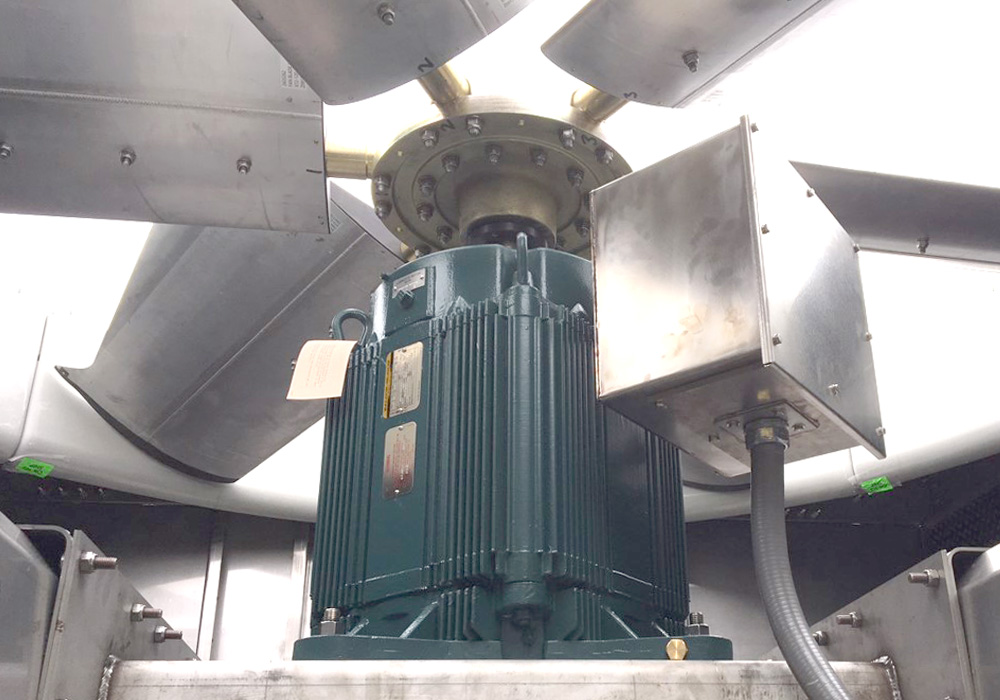
Replacing a Marley cooling tower motor is essential when a cooling tower experiences motor failure, reduced airflow, excessive vibration, or declining operating efficiency. Selecting the correct replacement motor helps restore cooling performance, reduce downtime, and maintain reliable operation in industrial and commercial facilities.
For maintenance teams, cooling tower contractors, and industrial equipment distributors, understanding motor specifications, compatibility, installation requirements, and replacement costs is critical. This guide explains how to select a suitable Marley cooling tower motor replacement and what to consider when sourcing replacement motors.
What Is a Marley Cooling Tower Motor?
A Marley cooling tower motor provides the mechanical power needed to drive the cooling tower fan. The fan moves air through the tower, allowing heat to transfer from circulating water to the surrounding atmosphere.
Depending on the cooling tower design, the motor may operate with a gearbox, belt-and-sheave assembly, or another drive arrangement. Motor specifications and mounting configurations vary by tower model and drive system.
A suitable replacement motor must match the equipment's electrical requirements, mechanical interface, operating environment, and required power output.
When Should You Replace a Marley Cooling Tower Motor?
Recognizing motor problems early can prevent unexpected shutdowns and costly equipment damage.
Common signs that a cooling tower motor needs replacement include:
Overheating: The motor operates above its allowable temperature because of overload, ventilation problems, bearing damage, or electrical faults.
Abnormal noise: Grinding, humming, or rattling may indicate bearing wear, electrical problems, or mechanical misalignment.
Excessive vibration: Unbalanced fan assemblies, damaged bearings, loose mounting bolts, or drive misalignment can increase vibration.
Frequent electrical trips: Repeated overload or protection trips may indicate motor winding damage, incorrect electrical settings, or excessive mechanical load.
Reduced fan speed: Insufficient motor output or drive-system problems can reduce airflow and cooling capacity.
Insulation failure: Damaged winding insulation can lead to short circuits and motor failure.
Before replacing the motor, inspect the electrical supply, starter or variable frequency drive, fan assembly, bearings, and transmission components. Some problems can be corrected without replacing the entire motor.
How to Choose the Right Marley Cooling Tower Motor Replacement
Selecting a compatible replacement requires more than matching horsepower. Buyers should verify the following specifications.
1. Motor Power and Speed
Check the original motor's rated horsepower (HP) or kilowatts (kW), rated speed, and duty requirements. The replacement must provide sufficient power for the cooling tower fan and drive arrangement.
Do not automatically install a higher-power motor. An oversized motor may increase costs and may not be compatible with the existing electrical and mechanical systems.
2. Voltage, Phase, and Frequency
Confirm the motor's rated voltage, single-phase or three-phase configuration, and supply frequency. The replacement must match the site's electrical system and control equipment.
Also verify full-load current, starting characteristics, and compatibility with the existing motor starter or variable frequency drive (VFD).
3. Frame Size and Mounting Dimensions
Physical compatibility is essential for straightforward motor replacement.
Check the motor frame, shaft diameter, shaft extension, mounting-hole pattern, base dimensions, and overall installation space. If the motor operates with a belt drive, verify sheave alignment and shaft compatibility. For gearbox-driven systems, confirm the coupling and mounting arrangement.
4. Enclosure and Environmental Protection
Cooling towers expose motors to moisture, water spray, humidity, temperature changes, and potentially corrosive atmospheres.
Select an enclosure and corrosion-protection system appropriate for the installation. Depending on the environment, buyers may consider suitable TEFC (totally enclosed fan-cooled) or other manufacturer-approved motor designs.
The enclosure type, insulation system, and protection rating should meet the tower's actual operating conditions.
5. Duty Rating and Insulation Class
Cooling tower motors often operate for extended periods. Verify the required duty rating, allowable ambient temperature, insulation class, and thermal protection.
If the motor will operate with a VFD, confirm that the motor is suitable for inverter operation and that speed, cooling, and bearing requirements are addressed.
OEM Marley Motor vs. Aftermarket Replacement Motor
When sourcing a Marley cooling tower motor replacement, buyers can evaluate original equipment manufacturer (OEM) options and compatible aftermarket alternatives.
| Comparison Factor | OEM Replacement | Compatible Aftermarket Motor |
| Compatibility | Specified for the applicable equipment | Depends on verified specifications |
| Availability | Depends on model and supplier stock | May offer additional sourcing options |
| Purchase cost | Varies by model and supply channel | May provide a more economical option |
| Customization | Depends on the manufacturer's offering | Some suppliers offer customized configurations |
| Documentation | Confirm model-specific documentation | Request drawings, test reports, and technical data |
An aftermarket motor can be a practical option when its electrical ratings, dimensions, performance, and environmental suitability are verified. However, a motor should not be considered a direct replacement simply because its horsepower matches the original.
Before ordering, provide the original motor nameplate information and cooling tower model to the supplier.
Marley Cooling Tower Motor Replacement Procedure
Motor replacement should be performed by qualified technicians in accordance with applicable electrical safety procedures and manufacturer instructions.
Step 1: Shut Down and Isolate the Equipment
Stop the cooling tower, isolate all relevant power sources, apply lockout/tagout procedures, and verify that the equipment is de-energized. Follow site safety requirements before beginning work.
Step 2: Record the Existing Motor Specifications
Photograph the nameplate and record the model, power, voltage, frequency, rated speed, current, frame size, and other available specifications.
Document the mounting dimensions and drive arrangement before removing the motor.
Step 3: Inspect the Drive System
Check the fan, gearbox or belt drive, couplings, sheaves, bearings, mounting structure, and electrical connections. Correct any underlying problems that could damage the new motor.
Step 4: Remove the Old Motor
Disconnect the electrical wiring after verifying isolation. Support the motor safely, release the mounting hardware, and remove the motor using appropriate lifting equipment when necessary.
Step 5: Install the Replacement Motor
Verify that the replacement matches the approved specifications. Secure the mounting hardware, align the shaft and drive components, and install couplings or belts according to the applicable instructions.
Step 6: Connect and Verify the Electrical System
Qualified personnel should complete the electrical connections and verify grounding, protection settings, and compatibility with the control system. Check phase sequence and rotation direction using the approved commissioning procedure.
Step 7: Test the Cooling Tower
Run the equipment under controlled conditions. Check motor current, voltage, vibration, noise, temperature, fan rotation, and airflow. Investigate abnormal readings before returning the tower to normal service.
What Affects Marley Cooling Tower Motor Replacement Cost?
The total cost depends on several factors:
Motor power and design: Higher-power motors or specialized designs may cost more.
Electrical specifications: Voltage, frequency, VFD compatibility, and starting requirements affect selection.
Mechanical compatibility: Custom mounting arrangements or shaft modifications can increase expenses.
Environmental requirements: Corrosion-resistant coatings, specialized enclosures, and additional protection may affect pricing.
Shipping and lead time: International freight, packaging, customs duties, and delivery schedules influence the final cost.
Installation labor: Electrical work, lifting equipment, alignment, and commissioning contribute to total replacement costs.
For accurate quotations, provide the motor nameplate, tower model, required quantity, installation location, and any dimensional drawings.
How to Source a Reliable Marley Cooling Tower Motor Replacement
Industrial buyers should work with a supplier that understands cooling tower drive systems and can verify replacement compatibility.
Before purchasing, request:
A detailed motor specification sheet.
Confirmation of mounting and shaft dimensions.
Electrical and environmental compatibility details.
Warranty terms and quality documentation.
Production lead time, packaging details, and shipping options.
Technical support for installation and commissioning.
For contractors, distributors, and maintenance teams, bulk purchasing may help simplify spare-parts management and reduce procurement costs. However, compatibility and product quality should remain the primary selection criteria.
At CoolingTowerPart.com, buyers can inquire about cooling tower replacement motors and related drive components by providing the original motor specifications. A technical review can help identify a suitable replacement option for the intended application.
Maintenance Tips to Extend Cooling Tower Motor Life
Regular maintenance helps reduce unexpected motor failures and extend service life.
Inspect motor mounting bolts and support structures.
Monitor vibration, noise, temperature, and operating current.
Keep air passages and cooling surfaces clean.
Inspect electrical connections and protection devices.
Check belts, sheaves, couplings, and gearbox condition where applicable.
Follow manufacturer instructions for lubrication and bearing maintenance.
Maintain appropriate water management and corrosion-control practices around the motor.
Establish a preventive maintenance schedule based on operating conditions, manufacturer recommendations, and site experience.
Frequently Asked Questions
1. Can I use an aftermarket motor to replace a Marley cooling tower motor?
Yes, provided the motor meets the required electrical, mechanical, performance, and environmental specifications. Confirm compatibility before purchase rather than relying on horsepower alone.
2. How do I identify the correct replacement motor?
Start with the original motor nameplate, cooling tower model, mounting dimensions, and drive configuration. Share these details with a qualified supplier for technical verification.
3. What motor enclosure is best for a cooling tower?
The appropriate enclosure depends on moisture exposure, ventilation, corrosion risk, ambient temperature, and installation design. TEFC motors are one common option, but the correct design must be confirmed for the specific application.
4. How long does motor replacement take?
The duration depends on motor availability, access, lifting requirements, electrical work, alignment, and commissioning. A verified replacement motor and accurate dimensional information can help reduce downtime.
5. Should I replace the gearbox when replacing the motor?
Not necessarily. Inspect the gearbox, bearings, couplings, and other drive components. Replace additional components only when their condition, compatibility, or maintenance requirements justify it.
Conclusion
Marley cooling tower motor replacement requires careful attention to motor power, speed, voltage, mounting dimensions, drive compatibility, and environmental protection. Correct selection helps restore fan performance, minimize downtime, and support reliable cooling tower operation.
Whether you are maintaining an existing tower, completing an industrial retrofit, or sourcing motors for distribution, verify the original specifications and work with a supplier capable of providing technical documentation. A properly selected replacement motor can deliver dependable performance without unnecessary equipment modifications.
Contact Power Tower Cooling Technology (Shaoxing) Co.,Ltd with your motor nameplate, cooling tower model, and quantity requirements to discuss compatible replacement options for your project.
Recommended internal links for CoolingTowerPart.com:


