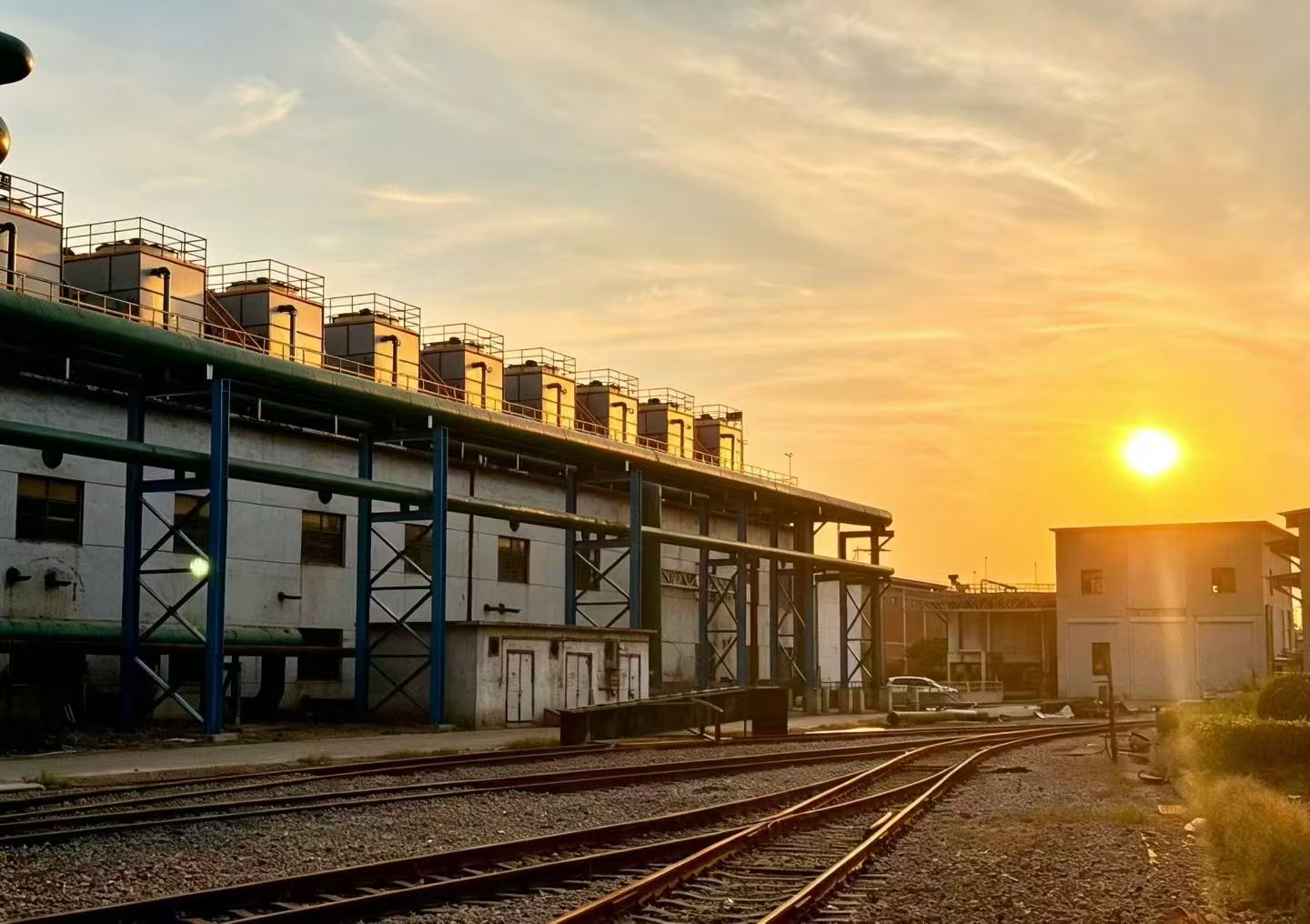
Choosing the right fill for cooling tower applications is one of the most important decisions when building, upgrading, or maintaining an industrial cooling system. Cooling tower fill may look like a simple collection of plastic sheets or molded components, but it has a direct influence on heat transfer, water distribution, airflow resistance, maintenance requirements, and overall operating efficiency.
Buy the wrong product, and you could face frequent clogging, poor cooling performance, higher operating costs, or premature replacement. Choose the right one, and your cooling tower can deliver stable performance for years.
So, what should you look at before placing an order? Is material the most important factor? Should you choose film fill or splash fill? And how can you make sure the product fits your existing tower?
This guide explains the key parameters to consider when purchasing cooling tower fill and helps you make a more informed decision for your project.
1. Understanding the Role of Cooling Tower Fill
Cooling tower fill is the internal component that increases contact between circulating water and moving air. As warm water flows over or through the fill, it spreads across a larger surface area. Air passes through this area, allowing heat to transfer from the water to the air. Evaporation removes additional heat, helping cool the circulating water.
Think of cooling tower fill as the working surface of a heat exchanger. Its design determines how effectively water and air interact inside the tower.
How Cooling Tower Fill Improves Heat Transfer
The primary purpose of fill is to create favorable conditions for heat and mass transfer. Depending on the design, fill either spreads water into thin films or breaks it into droplets.
A well-designed fill system can improve water distribution and increase effective contact area without creating excessive resistance to airflow. However, more surface area does not automatically mean better performance. If the fill restricts airflow, becomes clogged, or distributes water unevenly, its actual cooling performance may suffer.
Why Fill Selection Affects Cooling Tower Performance
The wrong fill can contribute to several operating problems:
Higher cold-water temperatures than expected
Increased fan energy consumption due to airflow resistance
Uneven water distribution and localized hot spots
More frequent cleaning and maintenance
Reduced cooling capacity under peak operating conditions
When purchasing fill, therefore, you should evaluate the complete operating system rather than choosing a product based on price or appearance alone.
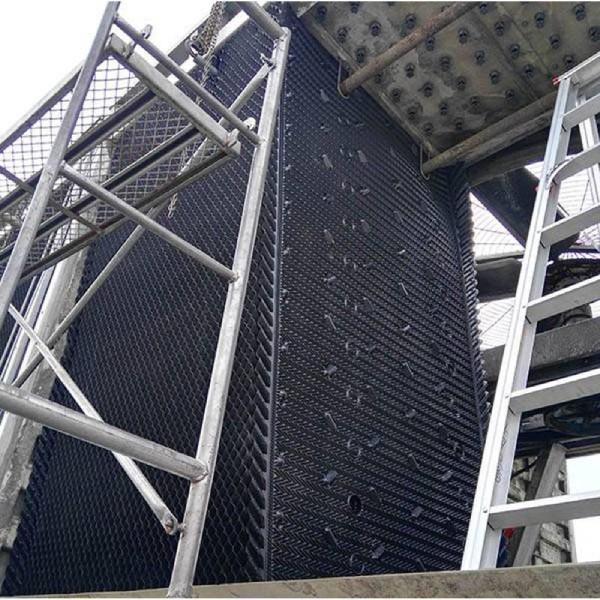
2. Identify Your Cooling Tower Type
Before comparing materials or prices, identify the cooling tower design. Different towers use different fill arrangements, and not every fill pack is interchangeable.
Crossflow Cooling Tower Fill
In a crossflow cooling tower, air generally moves horizontally across the falling water. Water distribution and access to the fill are important considerations.
Crossflow fill is commonly arranged in packs designed to match the tower's geometry and water distribution system. When purchasing replacement fill, check the original pack dimensions, hanging or support arrangements, and the direction of water and airflow.
A product that fits the tower's width but interferes with water distribution or support structures may create problems after installation.
Counterflow Cooling Tower Fill
In a counterflow cooling tower, air typically travels upward while water moves downward. The two streams move in opposite directions, creating a different airflow and water-distribution arrangement from a crossflow system.
Counterflow fill must suit the tower's internal layout, air passage requirements, spray system, and support structure. Even if two products use the same material, their sheet patterns and pack configurations may not be interchangeable.
Purchasing tip: Give your supplier the cooling tower manufacturer and model, tower type, existing fill dimensions, and operating conditions. If the original specifications are unavailable, provide accurate measurements and photographs for technical review.
3. Choose the Right Fill Material
Material selection influences temperature resistance, chemical compatibility, mechanical durability, and purchase cost. PVC and PP are two common choices, but neither is automatically the best for every application.
PVC Cooling Tower Fill
PVC, or polyvinyl chloride, is widely used for cooling tower film fill because it can provide a practical balance of formability, performance, and cost under suitable operating conditions.
PVC fill is often considered for conventional industrial cooling and HVAC systems where the operating temperature and water chemistry are compatible with the material.
Before purchasing, confirm the supplier's recommended operating temperature range, chemical compatibility, and material specifications. Standard PVC products should not be assumed suitable for every high-temperature or chemically aggressive application.
PP Cooling Tower Fill
PP, or polypropylene, is often considered when operating conditions require a different balance of thermal and chemical resistance.
Depending on the grade and product design, PP fill may be suitable for certain higher-temperature applications or environments where specific chemical compatibility requirements make it preferable to PVC.
However, the material name alone does not guarantee performance. The actual temperature limit depends on factors such as resin grade, sheet thickness, manufacturing process, loading, and operating conditions.
Ask the manufacturer for application-specific specifications instead of relying on general claims.

Other Materials and Special Requirements
Some cooling applications require specialized materials or construction. In these cases, assess the complete environment, including process contaminants, cleaning chemicals, temperature fluctuations, and mechanical loading.
The key question is not simply which material is strongest. It is which material will maintain its properties under your actual operating conditions.
4. Compare Film Fill and Splash Fill
Another major purchasing decision is whether to use film fill or splash fill.
Film Fill for High-Efficiency Heat Exchange
Film fill spreads water into thin layers over shaped surfaces. This increases the contact area between water and air, making film fill a common choice when high thermal performance and compact design are priorities.
It can be an effective option for relatively clean circulating water. However, narrow passages and closely spaced sheets may be more vulnerable to fouling when water contains significant suspended solids, scale-forming minerals, or biological material.
When comparing film fill, consider the sheet pattern, passage spacing, water distribution requirements, and expected cleaning frequency.
Splash Fill for Challenging Water Conditions
Splash fill breaks falling water into smaller droplets as it strikes bars, grids, or other molded surfaces. This creates additional contact between water and air.
Depending on its design and spacing, splash fill may be a suitable choice for systems with greater fouling risks or water conditions that are less compatible with narrow film-fill passages.
It is not immune to deposits or biological growth, so water treatment and maintenance remain important.
Which should you choose? Film fill is often attractive when thermal efficiency is the priority and water quality is manageable. Splash fill deserves consideration when fouling risks, solids loading, or operating conditions make open passages advantageous. Final selection should be based on engineering requirements rather than a universal rule.
5. Evaluate Thermal Performance
Cooling tower fill should be selected to meet the required cooling duty, not simply to occupy the available space.
Heat Load and Water Temperature
Before ordering, identify the cooling system's heat load and operating requirements. Important parameters include:
Hot-water inlet temperature
Required cold-water outlet temperature
Water circulation rate
Design wet-bulb temperature
Required cooling range and approach
Seasonal and peak-load operating conditions
The cooling range is the difference between hot-water inlet temperature and cold-water outlet temperature. The approach is the difference between cold-water outlet temperature and ambient wet-bulb temperature.
These values help define the cooling tower's duty. A supplier needs them, along with other relevant tower specifications, to assess whether a fill design is appropriate.
Replacing fill alone cannot guarantee a particular cold-water temperature. Fan performance, water distribution, air conditions, tower condition, and system loading also affect results.
Airflow Resistance and Pressure Drop
Fill creates resistance as air passes through the tower. If airflow resistance is too high, the fan may need to work harder to deliver the required airflow, potentially increasing energy consumption or reducing cooling performance.
A high-efficiency fill should therefore provide a suitable balance between heat-transfer capability and airflow resistance.
When comparing options, ask for available thermal and pressure-drop data under relevant test conditions. Make sure comparisons use compatible operating assumptions; otherwise, the numbers may not provide a fair basis for selection.
6. Check Water Quality and Fouling Risks
Water quality is one of the most frequently overlooked purchasing parameters. A fill that performs well in a clean-water application may be unsuitable for a system with high solids loading or persistent scaling.
Suspended Solids, Scale, and Biological Growth
Cooling tower water can contain dust, sediment, corrosion products, mineral deposits, and biological material. These contaminants can accumulate on fill surfaces or obstruct water and airflow passages.
Common warning signs include uneven water flow, visible deposits, rising pressure drop, and deteriorating cooling performance.
The risk depends on the water source, filtration, treatment program, tower location, and operating practices.
Fill Selection for Poor-Quality Water
If your system experiences frequent clogging, do not assume that a new fill with a similar design will solve the problem.
Instead, review the root causes. You may need to consider a fill design with more suitable passage spacing, improve filtration, adjust water treatment, or establish a more effective cleaning schedule.
Discuss these conditions with your supplier before purchase. Explain the type of contamination, how often cleaning is required, and whether the existing fill has experienced scaling, deformation, or biological fouling.
The goal is to choose a product that fits the water quality you actually have—not the water quality you wish you had.
7. Confirm Dimensions and Compatibility
A technically suitable fill can still fail as a replacement if its dimensions or installation arrangement are incorrect.
Fill Sheet Thickness, Spacing, and Pack Dimensions
Depending on the product, relevant dimensions may include sheet thickness, sheet spacing, flute geometry, pack length, width, height, and connection details.
These features affect mechanical strength, heat-transfer surface area, water flow, and airflow resistance. Changing one dimension can affect more than the product's physical fit.
Before ordering, verify the complete dimensional drawing. If possible, compare it with the original fill specifications or a physical sample.
Compatibility With Existing Cooling Tower Structures
Check whether the replacement fits the existing support beams, water distribution system, drift eliminators, casing, and surrounding components.
Also confirm whether the fill requires special brackets, clips, spacers, or support modifications.
For a retrofit project, compatibility can reduce installation time and avoid unexpected modification costs. Never assume that a product described as “universal” will fit every tower without adjustment.
8. Consider Operating Temperature and Chemical Resistance
Cooling tower fill operates in a changing environment. Water temperature may vary with process load and season, while treatment chemicals and contaminants may affect material performance.
Before purchasing, provide the manufacturer with the normal operating temperature, expected peak temperature, chemical treatment program, and any unusual process contaminants.
Ask whether the selected material is suitable for continuous operation under these conditions. Pay particular attention to temperature excursions, cleaning agents, and chemicals that may attack the material.
Do not select fill based on a maximum temperature claim alone. The stated limit should be relevant to the actual material grade and operating conditions, and the product must also retain adequate mechanical strength.
If your process operates at elevated temperatures or uses aggressive chemicals, request written technical confirmation before finalizing the order.

9. Evaluate Durability and Service Life
Cooling tower fill is exposed to water flow, air movement, temperature changes, deposits, and mechanical loads. Its service life depends on both product quality and operating conditions.
Review the material specifications, manufacturing consistency, sheet thickness, bonding quality where applicable, and resistance to expected operating stresses.
Look for signs of poor-quality construction, such as uneven sheets, weak joints, inconsistent pack dimensions, or damage caused by handling.
Ask the supplier what operating conditions the product is designed for and which factors could shorten its life. A reliable supplier should be able to explain the limitations of its product rather than promise an unrealistic lifespan.
Remember that even well-manufactured fill may fail prematurely if the tower experiences severe fouling, poor water treatment, excessive temperature, or improper installation.
10. Check Installation and Maintenance Requirements
Purchase price is only one part of the project. Installation complexity and future maintenance can significantly affect the overall cost.
Ask whether the fill is supplied in ready-to-install packs, whether assembly is required, and what lifting or handling equipment may be needed. Confirm whether the existing fill must be removed and whether the support structure needs inspection or repair.
You should also consider access for future cleaning and inspection. A fill arrangement that is difficult to reach may increase maintenance time and labor costs.
For replacement projects, establish a clear installation plan before delivery. This is especially important when the cooling tower cannot remain offline for an extended period.
11. Compare Purchase Price and Total Cost of Ownership
The cheapest fill is not necessarily the most economical option.
A useful purchasing comparison includes the initial product price, transportation, installation, downtime, maintenance, and expected replacement requirements.
For example, a lower-priced fill may be attractive at first. But if it creates excessive airflow resistance, requires frequent cleaning, or does not last under your operating conditions, the initial savings may disappear.
On the other hand, a more expensive product is not automatically better. Its additional cost should be supported by measurable performance, durability, or maintenance advantages relevant to your application.
When requesting quotations, ask suppliers to clarify:
Product specifications and included components
Quoted quantity and dimensional tolerances
Packaging and transportation charges
Installation or technical support, if offered
Warranty terms and exclusions
Lead time and expected delivery arrangements
Compare quotations on the same technical basis. Otherwise, a low quotation may simply reflect a different product specification or a narrower scope of supply.
12. Assess Manufacturer Quality and Customization
The manufacturer plays an important role in ensuring that the supplied fill matches the agreed specifications.
Quality Control and Product Consistency
Ask how the manufacturer controls material quality, sheet dimensions, bonding, pack assembly, and final inspection.
Consistency matters because cooling tower fill is generally installed as a series of packs. Significant differences in dimensions or construction may complicate installation and affect the uniformity of water and airflow.
Where appropriate, request product drawings, material information, inspection records, and samples before placing a large order.
Custom Sizes, Fill Packs, and Replacement Solutions
Standard products may suit common cooling tower designs, but older towers and specialized installations often require customized dimensions or configurations.
Before requesting a custom product, provide accurate measurements, photographs, the tower model if known, and the operating requirements. Explain whether the project is a new installation or a replacement.
Ask the manufacturer to confirm the proposed design and dimensions before production begins. This simple step can reduce the risk of ordering fill that cannot be installed as intended.
13. Review Packaging, Delivery, and Technical Support
Even the right fill can become a costly problem if it arrives damaged or late.
Confirm the expected production lead time, shipping method, packaging arrangement, and delivery location. For international orders, clarify the shipping terms, documentation, and responsibility for transportation-related costs.
Packaging should protect the fill from deformation and damage during handling and transit. On receipt, inspect the shipment and compare the delivered quantity and dimensions with the order documents.
Technical communication matters, too. Choose a supplier that can answer specification questions clearly, review installation constraints, and help resolve product-related issues. For large projects, agree on the required drawings and technical approvals before production.
14. Common Mistakes to Avoid When Buying Cooling Tower Fill
Several purchasing mistakes can lead to unnecessary expense or disappointing performance.
Choosing by price alone: A low initial cost does not guarantee low lifetime cost.
Ignoring water quality: Closely spaced film fill may be a poor choice for an application with severe fouling risks.
Assuming all materials are interchangeable: PVC and PP have different properties, and specific grades may perform differently under the same conditions.
Overlooking airflow resistance: A fill design that increases pressure drop can affect fan energy use and tower performance.
Ordering without accurate measurements: Incorrect pack dimensions can delay installation and require expensive modifications.
Accepting vague specifications: A quotation should identify the material, dimensions, design, quantity, and relevant performance requirements.
Neglecting the cause of existing fill failure: If poor water treatment or an underlying mechanical problem caused the original failure, replacement alone may not resolve it.
Avoiding these mistakes begins with clear technical requirements and communication with the manufacturer.
15. A Practical Cooling Tower Fill Purchasing Checklist
Before approving an order, review the following items:
-
Cooling tower type: crossflow or counterflow
-
Required cooling duty and operating temperatures
-
Water circulation rate and design conditions
-
Fill type: film or splash
-
Material selection: PVC, PP, or another suitable material
-
Water quality, suspended solids, scaling, and biological fouling risks
-
Fill dimensions, sheet spacing, thickness, and pack configuration
-
Compatibility with supports and other tower components
-
Thermal performance and airflow resistance requirements
-
Chemical resistance and operating temperature suitability
-
Installation, cleaning, and maintenance requirements
-
Quotation scope, packaging, delivery, and warranty terms
-
Manufacturer quality controls and technical documentation
Use this checklist when comparing suppliers. It helps you evaluate products based on actual application needs instead of relying on marketing claims or headline prices.
16. Why Work With Power Tower Cooling Technology (Shaoxing) Co., Ltd.?

When purchasing fill for cooling tower applications, you need more than a product quotation. You need clear specifications, suitable product selection, dimensional accuracy, and communication throughout the purchasing process.
Power Tower Cooling Technology (Shaoxing) Co., Ltd. serves as the featured supplier for this purchasing guide. Buyers can visit https://www.coolingtowerpart.com to explore cooling tower fill and related product information.
For a more effective quotation request, prepare your tower type, existing fill dimensions, required quantity, operating temperatures, water quality information, and project location. If you are replacing existing fill, photographs and drawings can help clarify the installation requirements.
Ask the supplier to confirm the proposed material, configuration, dimensions, and suitability for your operating conditions before production. This helps both sides establish clear expectations and reduces the risk of specification mismatches.
The right supplier relationship should be built on technical clarity, realistic product recommendations, and transparent purchasing terms—not simply on the lowest quoted price.
Conclusion: How to Choose the Right Fill for Your Cooling Tower
Purchasing the right fill for cooling tower systems requires a balance of thermal performance, material suitability, water quality, dimensions, durability, installation requirements, and total cost.
Start with your cooling tower design and operating conditions. Then compare film and splash fill, evaluate PVC and PP where appropriate, check airflow resistance, and confirm that the proposed product fits your existing structure.
Most importantly, give your supplier accurate technical information and request clear specifications before ordering. A little preparation can prevent costly installation problems and help your cooling tower operate more reliably.
If you are planning a new installation or replacing existing fill, contact Power Tower Cooling Technology (Shaoxing) Co., Ltd. through www.coolingtowerpart.com to discuss your project requirements and identify a suitable solution.
The best cooling tower fill is not simply the cheapest or the one with the largest surface area. It is the one that delivers the right combination of cooling performance, compatibility, durability, and operating cost for your specific application.


