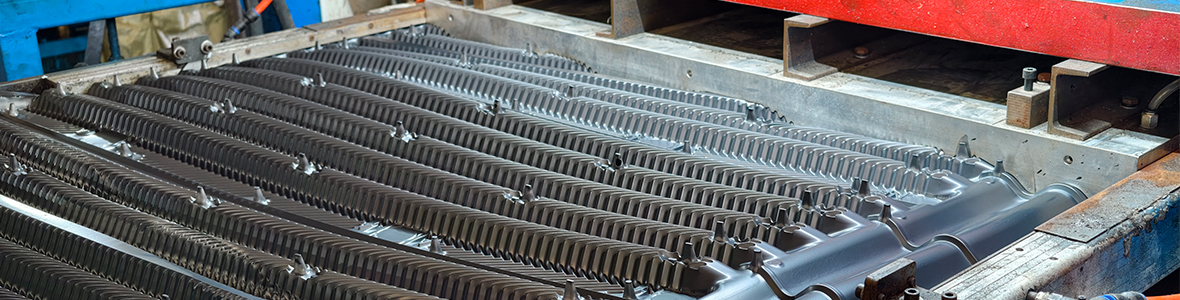
Choosing the right cooling tower fill sheets manufacturer is an important step in maintaining reliable cooling performance and controlling operating costs. Whether you operate a power plant, chemical processing facility, steel mill, data center, or commercial HVAC system, the quality of your cooling tower fill can directly affect heat transfer, water distribution, airflow, and maintenance requirements.
However, finding the right supplier is not always easy. Many manufacturers offer similar-looking products, but differences in raw materials, sheet thickness, surface design, manufacturing consistency, and customization capabilities can affect the final result.
So, what should you look for before placing an order? Should you choose PVC or PP fill sheets? How can you compare manufacturers fairly? And what information should you prepare before requesting a quotation?
In this guide, we explain the essential factors buyers should consider when sourcing cooling tower fill sheets and introduce Power Tower Cooling Technology (Shaoxing) Co.,Ltd as a supplier to contact for cooling tower fill requirements.
1. What Are Cooling Tower Fill Sheets?
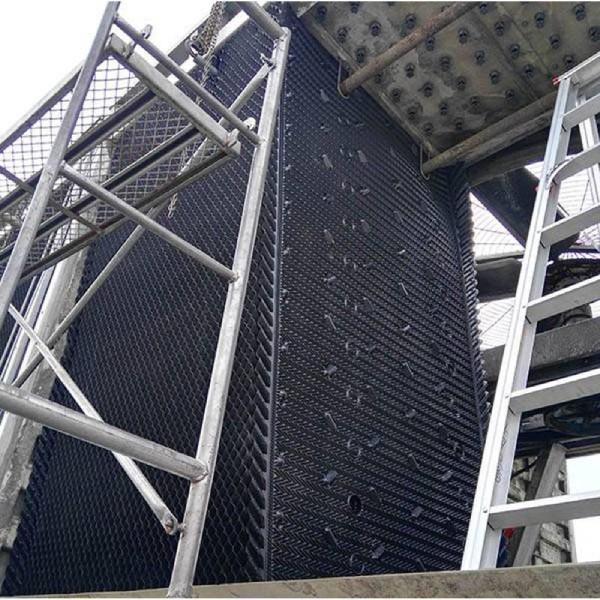
Cooling tower fill sheets are specially formed sheets assembled into packs and installed inside a cooling tower. Their primary function is to increase the contact area between circulating water and moving air, helping the tower transfer heat more effectively.
In a typical evaporative cooling tower, warm water flows over or through the fill while air passes across the wetted surfaces. A portion of the water evaporates, carrying heat away and cooling the remaining water.
The design of the fill sheets influences how water spreads, how air moves through the tower, and how effectively the two interact. This makes fill media one of the key components in many cooling tower systems.
Manufacturers produce cooling tower fill sheets in different materials, thicknesses, surface patterns, and dimensions to meet different operating requirements.
For buyers, the goal is straightforward: choose fill sheets that match the cooling tower's design, operating conditions, and maintenance needs.
2. What Do Cooling Tower Fill Sheets Do?
Think of cooling tower fill as a carefully designed heat-transfer surface. Without sufficient contact between water and air, a cooling tower may struggle to remove heat efficiently.
Fill sheets help distribute water over a larger area instead of allowing it to fall directly through the tower in concentrated streams. This increases the opportunity for heat and mass transfer.
Well-matched fill can help support:
Effective water distribution across the fill pack.
Greater contact between water and air.
Efficient heat transfer under suitable operating conditions.
Stable cooling tower operation.
Better use of the available tower volume.
However, fill sheets cannot solve every cooling problem. Fan performance, ambient wet-bulb temperature, water flow, nozzle condition, airflow resistance, and water quality also influence cooling performance.
That is why buyers should evaluate fill sheets as part of the complete cooling tower system rather than focusing on one product specification alone.
Film Fill vs. Splash Fill
Two common categories of cooling tower fill are film fill and splash fill.
Film fill uses formed surfaces to spread water into thin films. This design can provide substantial water-air contact within a relatively compact space. It is often suitable for applications where water quality can be adequately controlled and the fill passages can remain reasonably clean.
Splash fill breaks water into droplets as it falls across specially designed elements. Depending on the design, it may be suitable for certain applications involving higher suspended-solids loads or more challenging water conditions.
Neither option is universally better. The right choice depends on the cooling tower design, water quality, operating conditions, and required thermal performance.
If you are replacing existing fill, confirm whether the tower uses film fill or splash fill before requesting a quotation. These products are not automatically interchangeable.
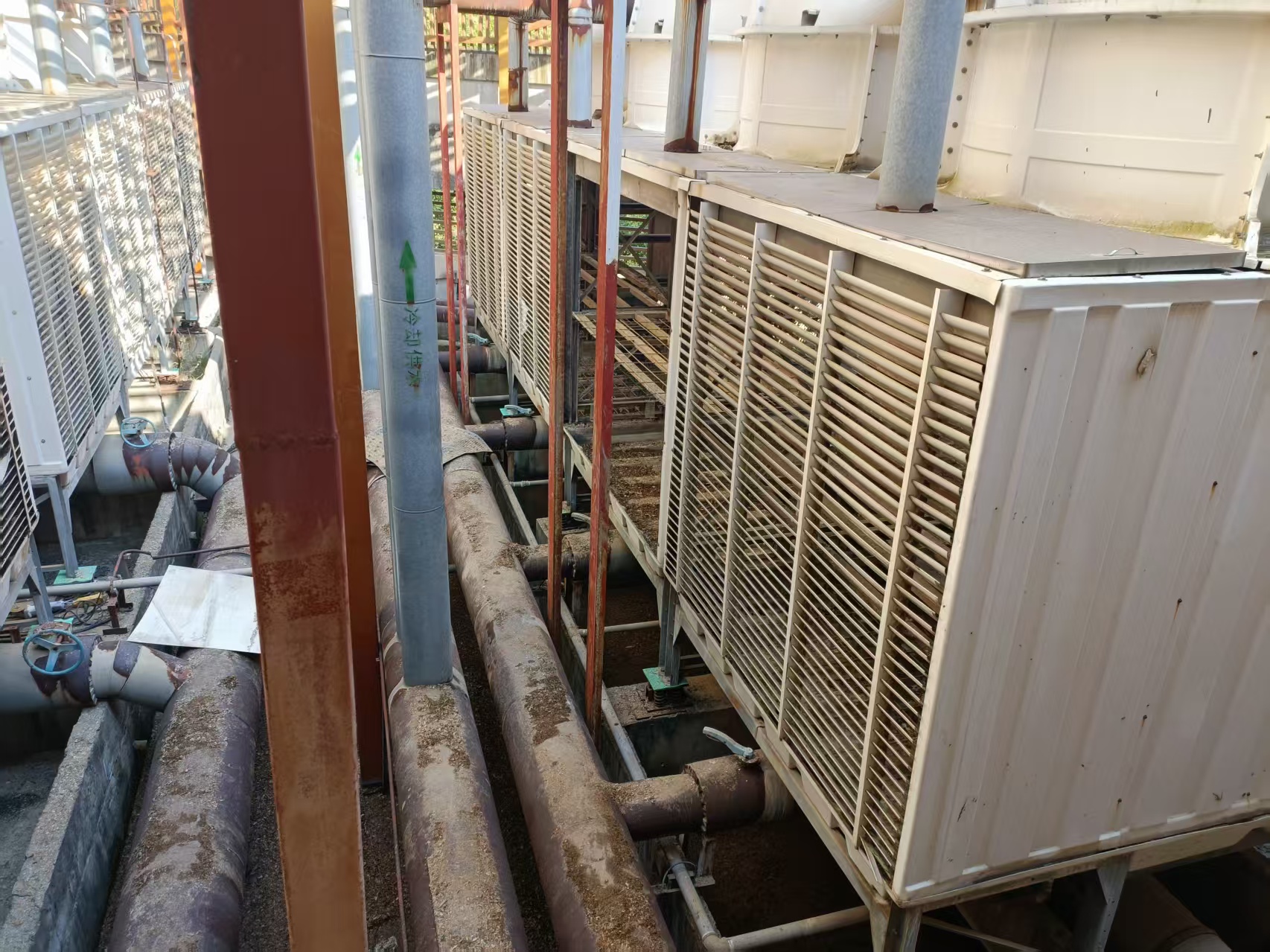
3. Why Choosing the Right Cooling Tower Fill Sheets Manufacturer Matters
A reliable cooling tower fill sheets manufacturer should do more than supply plastic sheets. The manufacturer needs to understand product geometry, material characteristics, forming processes, assembly requirements, and the intended application.
Why does this matter?
Imagine purchasing fill sheets that look almost identical to your original product but have different dimensions or corrugation patterns. They may be difficult to install, fit poorly on the support structure, or alter airflow and water distribution.
Even small differences can create unnecessary problems when an order involves a large number of fill packs.
Choosing a suitable manufacturer helps buyers establish clear technical requirements before production begins. It also makes it easier to compare products, manage delivery schedules, and resolve questions about product compatibility.
Product Quality and Manufacturing Consistency
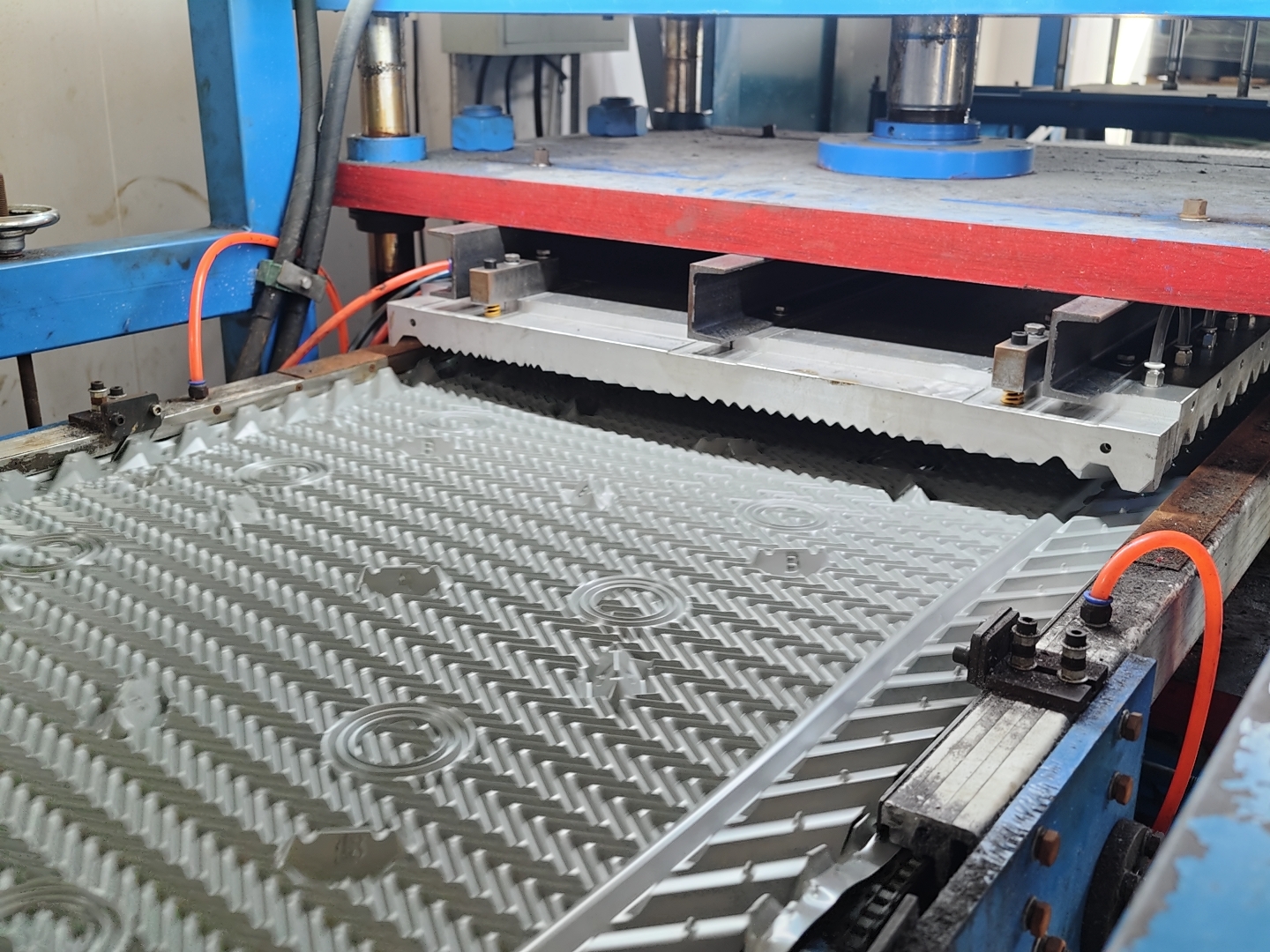
Product quality starts with raw materials and continues through forming, cutting, assembly, and inspection.
Inconsistent thickness, irregular surface profiles, poor bonding, or dimensional variations may affect handling, pack stability, and installation. These issues can become more noticeable when multiple packs must fit together within a limited space.
When evaluating a manufacturer, ask about its quality-control procedures and the specifications it can confirm for your order.
Important points include:
Material type and grade.
Sheet thickness and dimensional tolerances.
Corrugation profile and sheet spacing.
Pack dimensions and assembly quality.
Inspection procedures and packaging protection.
Consistency across production batches.
For repeat purchases, consistent specifications are particularly important. Using comparable products across maintenance cycles can simplify planning and reduce compatibility concerns.
Technical Support and Customization
Cooling towers differ in configuration, dimensions, and operating conditions. Some buyers need standard replacement fill, while others require customized sheet sizes or pack arrangements.
A manufacturer should be able to review the available technical information and help clarify what needs to be confirmed before production.
Useful information includes existing fill dimensions, drawings, photographs, cooling tower type, water temperature, and known water-quality issues.
Providing accurate information early can reduce misunderstandings and help the manufacturer determine whether the requested configuration is suitable.
4. Common Materials Used in Cooling Tower Fill Sheets
Material selection is one of the most important decisions when purchasing cooling tower fill sheets. The material can influence temperature resistance, chemical compatibility, mechanical behavior, and expected service life.
PVC and PP are two commonly used thermoplastics in cooling tower fill applications. However, the right choice depends on the actual product grade and operating environment.
PVC Cooling Tower Fill Sheets
Polyvinyl chloride, or PVC, is widely used for cooling tower film fill. It can be formed into structured sheets with corrugations and surface patterns designed to support water distribution and air-water contact.
PVC fill sheets are commonly considered for conventional industrial cooling and HVAC applications when the operating conditions fall within the product's recommended limits.
Before choosing PVC fill, buyers should confirm:
The recommended operating temperature range.
Compatibility with circulating water and treatment chemicals.
The sheet thickness and surface profile.
The intended cooling tower configuration.
The suitability of the design for the expected fouling conditions.
PVC is a common material, but not every PVC fill product is suitable for every application. The manufacturer's specifications should guide the final selection.
PP Cooling Tower Fill Sheets
Polypropylene, or PP, is another thermoplastic used in cooling tower fill products.
Depending on the grade and design, PP may be appropriate for applications requiring different temperature or chemical-resistance characteristics from those of standard PVC products.
However, the material name alone is not enough to determine suitability. Buyers should evaluate the specific PP product's operating limits, sheet design, mechanical characteristics, and compatibility with the circulating water.
If your cooling tower operates at elevated temperatures or under unusual chemical conditions, provide these details to the manufacturer before selecting a material.
PVC vs. PP: Which Should You Choose?
There is no single material that is best for every cooling tower.
PVC may be a practical choice for many conventional applications, while a suitable PP product may be preferable where the operating conditions require its particular material characteristics.
When comparing the two, consider the following factors:
| Comparison Factor | What Buyers Should Check |
| Operating temperature | Confirm the manufacturer's recommended limits |
| Water chemistry | Check compatibility with treatment chemicals and contaminants |
| Mechanical requirements | Review stiffness, handling, and installation conditions |
| Fill configuration | Confirm compatibility with counterflow or crossflow arrangements |
| Purchase cost | Compare quotations based on equivalent specifications |
| Expected service life | Consider operating conditions, maintenance, and material suitability |
The most cost-effective choice is not necessarily the material with the lowest purchase price. It is the product that meets the application's requirements and provides suitable performance over its service life.

5. Key Specifications to Check Before Buying
Before requesting a quotation from a cooling tower fill sheets manufacturer, prepare a clear technical specification.
A quotation based on incomplete information can lead to incorrect dimensions, unsuitable materials, or unexpected changes during production.
At a minimum, buyers should identify the cooling tower type, existing fill dimensions, preferred material, operating temperature, water quality, and required quantity.
Sheet Thickness and Profile Design
Sheet thickness influences material consumption, handling, and the mechanical characteristics of the finished fill pack.
However, thicker sheets are not automatically better. A product must be designed to meet the requirements of the application, and its thickness should be evaluated alongside the sheet profile and assembled configuration.
The surface profile is equally important. Corrugations and other formed patterns influence water distribution and the pathways available for airflow.
When replacing existing fill, compare the proposed profile with the original design. If the new geometry differs, confirm that the change has been evaluated for compatibility with the cooling tower.
Dimensions, Pitch, and Surface Area
Sheet length, width, spacing, and assembled pack dimensions determine whether the product will fit the available installation space.
Pitch and surface geometry also influence the contact area between water and air, as well as the resistance encountered by moving air.
A design that increases contact area may also change airflow resistance. Therefore, more surface area does not automatically mean better overall performance.
Before placing an order, verify:
Individual sheet dimensions.
Corrugation profile and pitch.
Finished pack length, width, and height.
Support spacing and installation clearance.
Compatibility with water-distribution equipment.
Required quantity and pack arrangement.
Accurate measurements help reduce installation problems and avoid unnecessary on-site modifications.
Temperature and Water Quality Compatibility
Operating temperature and water quality can have a significant effect on fill selection and service life.
High temperatures may affect material properties, while suspended solids, mineral deposits, biological growth, and certain chemicals can contribute to fouling or deterioration.
Before purchasing, provide the manufacturer with information about normal and maximum water temperatures, circulating-water conditions, water-treatment chemicals, and any recurring scaling or blockage problems.
If the water contains substantial suspended solids, a fill design with suitable passage geometry may be important. The manufacturer should assess the actual conditions rather than assume that a standard product will work.
6. How to Evaluate a Cooling Tower Fill Sheets Manufacturer
A manufacturer's website and price quotation are useful starting points, but they do not tell you everything about product suitability.
A careful evaluation should cover manufacturing capabilities, quality control, technical documentation, communication, delivery, and after-sales support.
Manufacturing Capabilities
First, confirm whether the manufacturer can supply the required material, sheet profile, thickness, dimensions, and pack configuration.
If your project requires customized fill, ask whether the manufacturer can work from drawings, approved samples, or verified measurements.
Lead time is another important consideration. For projects involving scheduled shutdowns or urgent replacement, delivery delays can affect the entire maintenance plan.
Ask for a realistic production and shipping schedule, and clarify what information the manufacturer needs before production can begin.
Quality Control and Inspection
Quality inspection should be based on the product specifications agreed upon by the buyer and manufacturer.
Depending on the product, relevant checks may include material verification, dimensions, sheet thickness, forming consistency, pack assembly, bonding quality where applicable, and packaging condition.
For larger orders, ask whether inspection records or other quality documentation can be provided.
It is also helpful to agree on acceptance criteria before manufacturing starts. This gives both parties a clear reference for evaluating the delivered products.
Samples, Drawings, and Technical Documents
Samples and drawings can reduce uncertainty, particularly when replacing existing fill.
A physical sample allows you to compare the proposed product with the original sheet. Drawings help verify dimensions and pack arrangements before manufacturing.
Technical documents should identify the product's material, dimensions, intended application, and relevant operating limitations.
Keep approved drawings and specifications with the purchase order. These records help ensure that the final delivery matches the agreed requirements.
Communication and Delivery Reliability
Clear communication is often overlooked during supplier selection, but it can have a direct effect on purchasing efficiency.
A responsive manufacturer should be able to explain which specifications are available, identify missing information, and confirm what is included in the quotation.
Before ordering, clarify the following:
Production lead time.
Packaging method.
Shipping arrangements and delivery terms.
Product inspection requirements.
Documentation supplied with the order.
Procedures for addressing discrepancies.
A clear agreement reduces the likelihood of unexpected costs and helps keep the project on schedule.

7. Choosing Fill Sheets for Different Cooling Tower Applications
Different cooling tower configurations require different fill arrangements. The manufacturer should consider the tower's airflow direction, water-distribution system, installation space, and operating environment.
Counterflow Cooling Towers
In a counterflow cooling tower, air generally moves upward while water flows downward through the fill.
The fill must provide effective contact between these opposing flows while maintaining suitable airflow pathways.
When purchasing replacement fill, confirm the existing pack dimensions, support arrangement, and water-distribution configuration. A replacement with a significantly different profile may alter the tower's operating characteristics.
Ask the manufacturer to confirm that the proposed product is intended for the specific counterflow application.
Crossflow Cooling Towers
In a crossflow cooling tower, air moves horizontally across the falling water.
The fill arrangement must work with the tower's water-distribution system and installation layout. Maintenance access and the ease of inspecting the fill may also be important.
Before ordering, verify the pack dimensions, water-flow direction, support conditions, and compatibility with the existing tower.
Do not assume that fill designed for counterflow service can be installed in a crossflow tower without technical evaluation.
Industrial and HVAC Cooling Systems
Industrial cooling towers may face variable process loads, elevated water temperatures, suspended solids, or demanding water-treatment conditions.
Commercial HVAC towers often operate under different conditions, but water quality, seasonal maintenance, and correct fill installation remain important.
Even facilities within the same industry can have different requirements. A product suitable for one plant may not be appropriate for another.
Sharing accurate operating information helps the manufacturer recommend a product based on the actual application rather than a broad industry category.
8. What Affects Cooling Tower Fill Sheet Prices?
Price is naturally an important factor when comparing cooling tower fill sheets manufacturers. However, the lowest quotation does not always represent the best value.
Several factors can affect the final price:
Material type: Different materials and grades may have different costs and operating characteristics.
Sheet thickness: Material consumption and product construction can influence pricing.
Profile design: Different forming patterns and configurations may require different manufacturing processes.
Dimensions and customization: Special sizes or customized arrangements can affect production requirements.
Order quantity: The number of sheets or fill packs may influence unit pricing and packaging.
Quality requirements: Additional inspection or documentation may affect the total cost.
Transportation and packaging: Shipping distance, shipment size, protective packaging, and delivery terms contribute to the landed cost.
To compare suppliers fairly, request quotations based on the same technical specification and supply scope.
A lower-priced product may use different dimensions, materials, or construction methods. Review these differences before deciding.
The objective is to obtain fill sheets that meet your requirements at a competitive total cost, not simply to minimize the initial purchase price.
9. Common Purchasing Mistakes to Avoid
Even experienced buyers can overlook important details when ordering cooling tower fill sheets.
One common mistake is choosing a product based only on price. Without checking material, dimensions, and construction, a low-cost product may create additional installation or maintenance expenses.
Another mistake is measuring the existing fill inaccurately. Approximate dimensions can result in packs that do not fit properly or require modifications during installation.
Some buyers also ignore water quality. A fill design that works well with relatively clean water may be unsuitable where fouling and blockage are persistent problems.
Other common mistakes include:
Confusing film fill with splash fill.
Selecting material without checking operating temperature.
Failing to confirm compatibility with the cooling tower design.
Overlooking delivery time and packaging.
Assuming that greater surface area always means better performance.
Ordering customized products without approved drawings.
Failing to establish inspection and acceptance criteria.
The best way to avoid these problems is to prepare a technical checklist, provide accurate operating information, compare equivalent quotations, and obtain written confirmation of critical specifications.
10. Installation, Cleaning, and Maintenance
Even well-manufactured fill sheets require correct installation and routine maintenance.
Before installation, inspect the tower's internal supports and surrounding components. Remove unsuitable deposits and address any structural problems that could affect the new fill.
During installation, follow the manufacturer's instructions and confirm that the fill packs are positioned securely. Check that water-distribution components operate properly and that the installed packs do not obstruct the intended airflow pathways.
After installation, monitor cooling performance and inspect the fill periodically according to the tower's maintenance schedule.
Useful indicators include visible deposits, blocked passages, deformation, unusual water distribution, and changes in operating performance. Where applicable, compare airflow resistance or pressure-drop measurements with established operating data.
Cleaning methods should suit the fill material and the type of deposit. Aggressive chemicals or excessive water pressure may damage the sheets, so confirm the cleaning method before use.
Regular inspection and suitable water treatment can help reduce fouling and support a longer service life.
11. When Should Cooling Tower Fill Sheets Be Replaced?
Cooling tower fill sheets do not have one universal service-life limit. Their condition depends on material, operating temperature, water quality, maintenance practices, and installation conditions.
Replacement may be necessary when the fill shows significant cracking, deformation, embrittlement, persistent blockage, or other damage that cannot be addressed through appropriate maintenance.
A decline in cooling performance may also indicate a problem, but fill is not always the cause. Fan faults, poor water distribution, scale, biological growth, and changes in operating load can produce similar symptoms.
Before ordering replacement fill, inspect the system and identify the underlying issue.
If replacement is required, record the existing dimensions and operating conditions. This information helps the manufacturer assess the appropriate material and configuration.
A well-planned replacement project can also provide an opportunity to review recurring maintenance problems and determine whether a different fill design is suitable.
12. Why Consider Power Tower Cooling Technology (Shaoxing) Co.,Ltd?

When sourcing cooling tower fill sheets, buyers need a supplier with whom they can discuss product requirements, dimensions, materials, and application conditions.
Power Tower Cooling Technology (Shaoxing) Co.,Ltd is the company identified for this article and can be contacted through its website, Coolingtowerpart.com, to discuss cooling tower fill requirements.
Before making a purchasing decision, buyers should communicate their project details clearly and request the relevant product specifications.
To make the discussion more productive, prepare the following information:
Cooling tower type and application.
Existing fill sheet or fill pack dimensions.
Preferred material, if already established.
Normal and maximum operating water temperatures.
Circulating-water quality and known fouling issues.
Required quantity and target delivery schedule.
Drawings, photographs, or a physical sample, where available.
This information provides a practical starting point for confirming product compatibility and preparing a quotation.
Buyers should review the proposed specifications carefully and confirm that the selected fill matches the intended cooling tower application before placing an order.
Visit https://www.coolingtowerpart.com to learn more about the company's cooling tower products and make an inquiry.
13. Frequently Asked Questions
What Should I Look for in a Cooling Tower Fill Sheets Manufacturer?
Look for a manufacturer that can confirm product specifications, explain material options, verify dimensions, and communicate clearly about quality control and delivery. Technical documentation and application-specific guidance are also valuable.
Is PVC or PP Better for Cooling Tower Fill Sheets?
Neither material is best for every application. The choice depends on operating temperature, water chemistry, product design, and the requirements of the cooling tower. Compare the specific products rather than relying on material names alone.
Can I Order Customized Cooling Tower Fill Sheets?
Customized dimensions or configurations may be available depending on the manufacturer and product design. Provide accurate measurements or drawings and obtain written confirmation of the proposed specifications before production.
How Do I Choose Replacement Cooling Tower Fill Sheets?
Identify the tower configuration, measure the existing fill, review operating temperature and water quality, and confirm the required material and pack dimensions. Ensure the replacement is compatible with the tower's water-distribution and airflow arrangements.
How Can I Compare Cooling Tower Fill Sheet Prices?
Request quotations based on equivalent specifications. Compare material, thickness, dimensions, profile, quantity, packaging, delivery terms, and inspection requirements. This gives you a more reliable basis for evaluating total cost.
How Long Do Cooling Tower Fill Sheets Last?
Service life varies with material, temperature, water quality, operating conditions, installation, and maintenance. Regular inspection and effective water treatment can help identify problems early, but no single lifespan applies to every cooling tower.
Can Cooling Tower Fill Sheets Improve Cooling Performance?
A suitable fill design can support effective heat transfer by improving water-air contact. However, actual cooling performance also depends on airflow, water distribution, fan operation, ambient conditions, and overall tower design. Replacing fill alone does not guarantee a specific performance improvement.
14. Conclusion
Choosing the right cooling tower fill sheets manufacturer requires more than comparing prices. Buyers need to consider material selection, sheet thickness, surface profile, dimensions, water quality, manufacturing consistency, and compatibility with the existing cooling tower.
The best starting point is to document your technical requirements and operating conditions before requesting quotations. Compare suppliers against the same specifications, review their product information, and confirm the details of the proposed fill before production begins.
For industrial facilities, commercial HVAC systems, and cooling tower maintenance projects, a carefully selected fill product can help support reliable operation and effective heat transfer.
Power Tower Cooling Technology (Shaoxing) Co.,Ltd can be contacted through Coolingtowerpart.com to discuss cooling tower fill requirements.
With accurate measurements, clear specifications, and a careful supplier evaluation process, you can make a more informed purchasing decision and select cooling tower fill sheets suited to your application.


