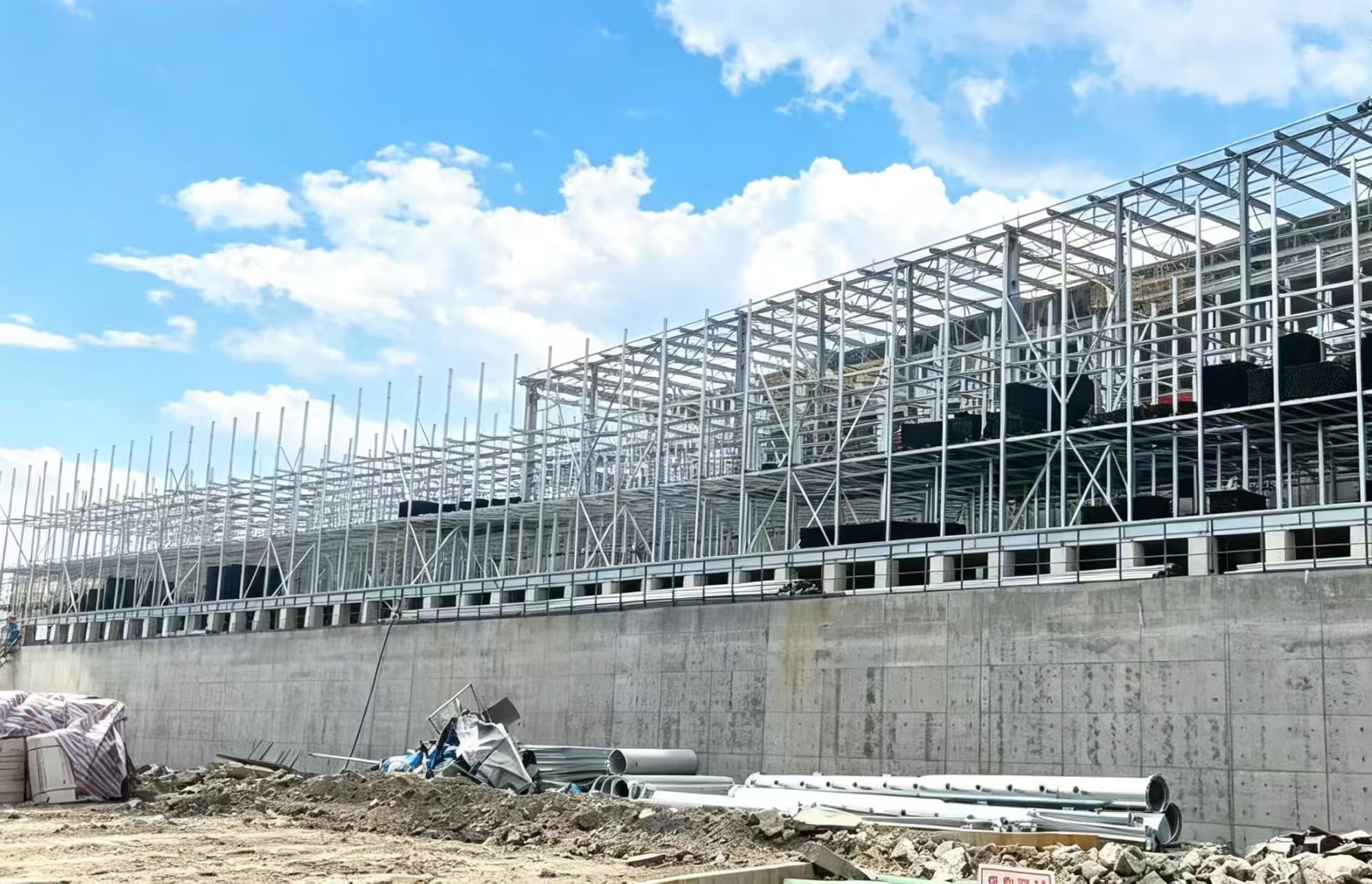
Introduction to Customized Cooling Tower Fill and Drift Eliminators
A cooling tower plays a critical role in industrial heat rejection. Whether it supports a power plant, chemical processing facility, HVAC system, or manufacturing operation, its performance depends on how effectively it transfers heat from circulating water to the surrounding air.
Two components are especially important in this process: cooling tower fill and drift eliminators. Cooling tower fill increases the contact area between water and air, improving heat transfer. Drift eliminators capture water droplets carried by the exhaust airflow, helping reduce water loss and unwanted moisture around the tower.
However, not every cooling tower uses the same component dimensions, materials, or configurations. Different operating temperatures, water quality conditions, airflow arrangements, and installation spaces can require different solutions.
Power Tower Cooling Technology (Shaoxing) Co.,Ltd supplies cooling tower components for industrial applications through CoolingTowerPart.com. For customers seeking customized fill and drift eliminators for crossflow and counterflow cooling towers, choosing components that match the actual equipment is essential for reliable operation.
Whether you need replacement fill packs, custom-sized drift eliminators, or components for a new cooling tower project, understanding your options will help you make a more informed purchasing decision.
What Is Cooling Tower Fill?
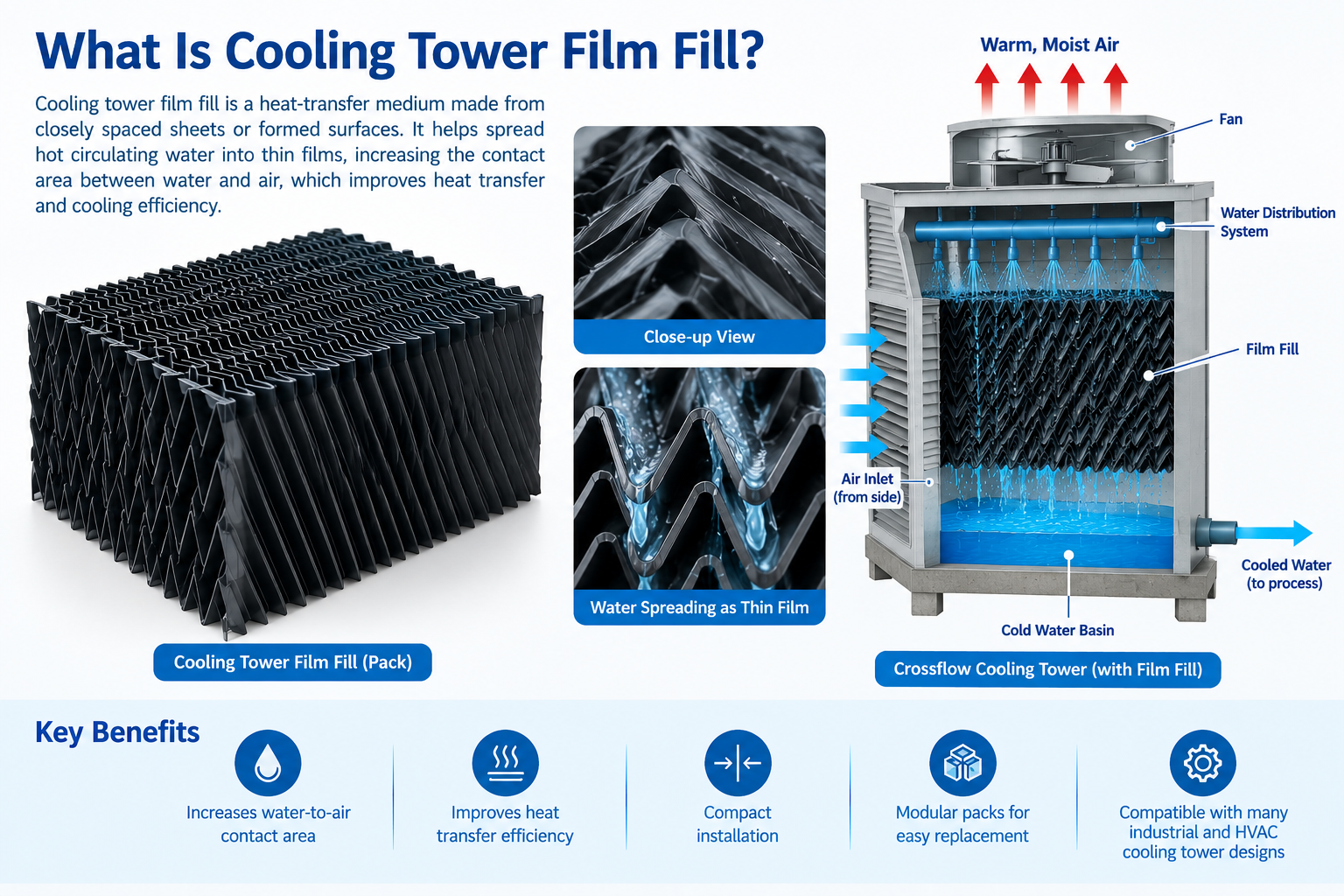
Cooling tower fill, also known as cooling tower media or filler, is designed to increase the contact area between circulating water and air. Instead of allowing water to fall freely through the tower, fill spreads the water over specially designed surfaces or breaks it into smaller droplets.
This increases opportunities for heat and mass transfer, allowing the cooling tower to remove heat more effectively under suitable operating conditions.
Cooling tower fill generally falls into two categories: film fill and splash fill. Each type has different structural characteristics and is suitable for different operating environments.
How Cooling Tower Fill Improves Heat Transfer
In a typical evaporative cooling tower, warm water enters the tower and flows over the fill. Air passes through the fill section, and a portion of the water evaporates. This evaporation removes heat from the remaining water, which then returns to the industrial process or condenser system.
Well-designed fill provides sufficient contact area while allowing air and water to move through the tower as intended.
However, more surface area does not automatically mean better cooling performance. Fill geometry, water distribution, airflow resistance, operating temperature, and water quality all influence the final result.
Choosing the right cooling tower fill means balancing heat-transfer performance with operating reliability and maintenance requirements.
Common Cooling Tower Fill Materials
PVC and polypropylene (PP) are widely used materials for cooling tower fill.
PVC film fill is common in many industrial and HVAC cooling towers because it offers a large heat-transfer surface in a compact structure. PP fill may be suitable for applications that require different temperature capabilities or chemical-resistance characteristics, depending on the material formulation.
Splash fill is another option, particularly where suspended solids or fouling risks make closely spaced film surfaces less suitable.
The correct material depends on actual operating conditions, including water chemistry, temperature, mechanical requirements, and the manufacturer's specifications.
What Are Cooling Tower Drift Eliminators?
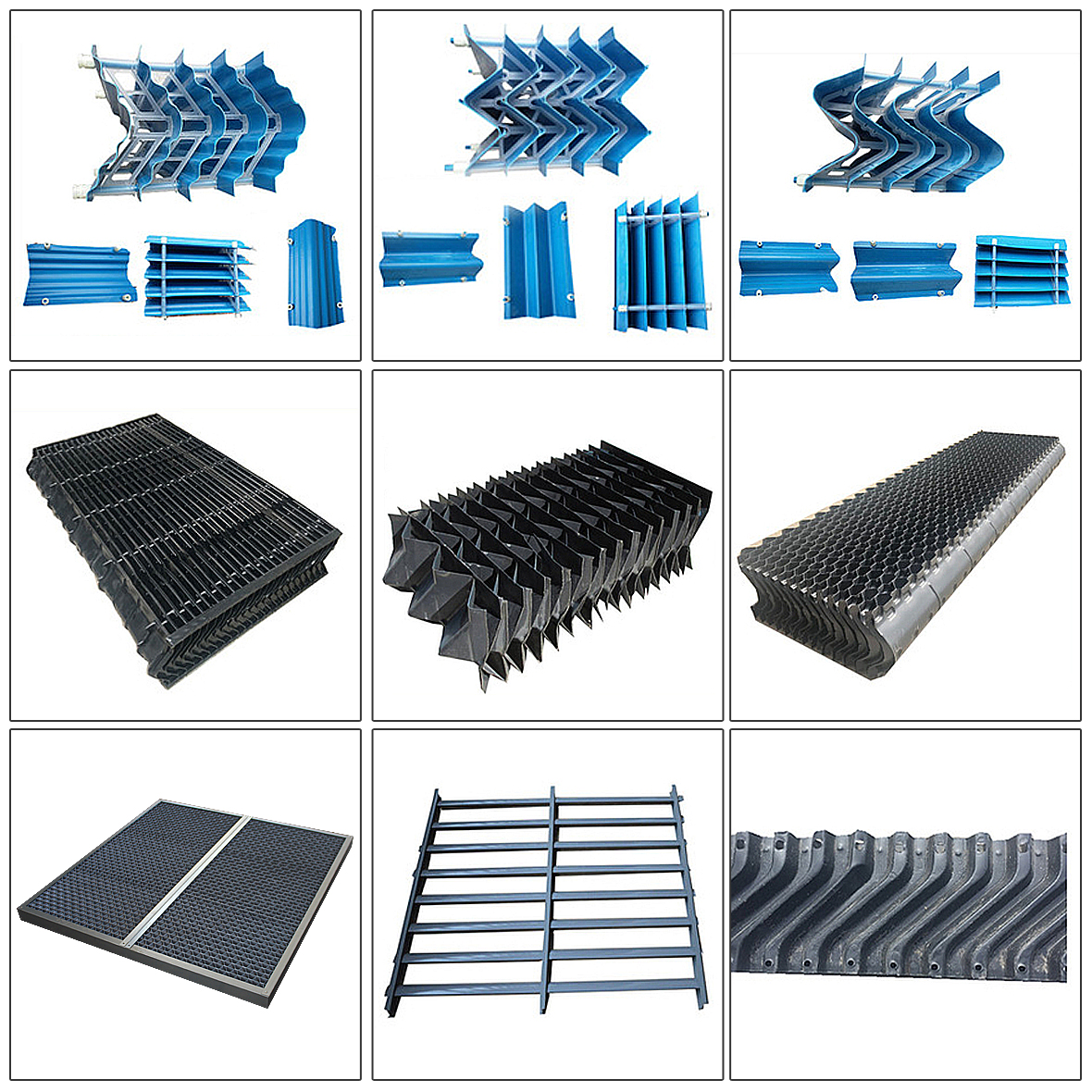
Cooling tower drift eliminators are components designed to capture water droplets carried out of the tower by moving air.
As humid air passes through the eliminator's specially shaped passages, its direction changes. Water droplets collide with the internal surfaces, collect, and drain back into the cooling tower. The air continues through the passages while a portion of the entrained water is recovered.
Although cooling tower fill and drift eliminators are often discussed together, they perform different functions. Fill promotes heat transfer, while drift eliminators reduce the escape of liquid droplets through the tower exhaust.
Both components should be selected according to the cooling tower's design and operating requirements.
How Drift Eliminators Reduce Water Loss
Water droplets can become entrained in the airflow as water falls through the fill and air moves through the tower. Without effective drift control, some of these droplets may leave the cooling tower.
Drift eliminators use changes in airflow direction to separate droplets from the air stream. Captured water drains back into the tower, helping reduce unnecessary water loss.
The effectiveness of a drift eliminator depends on its blade geometry, droplet size, airflow velocity, installation quality, and drainage arrangement.
A suitable design must also maintain acceptable pressure drop. Excessive airflow resistance can increase fan energy consumption, so drift capture and airflow performance should be considered together.
Why Drift Elimination Matters
Uncontrolled drift can increase makeup-water requirements and carry dissolved water-treatment chemicals into the surrounding environment. It may also contribute to wet surfaces, mineral deposits, or corrosion around nearby equipment.
In certain environments, managing airborne droplets is also part of a broader strategy for controlling waterborne aerosols and maintaining appropriate cooling tower hygiene.
Effective drift eliminators help manage these risks. However, they do not replace proper water treatment, regular cleaning, or other necessary measures for controlling biological hazards.
Crossflow vs. Counterflow Cooling Tower Fill
Crossflow and counterflow cooling towers use different airflow arrangements. These differences affect fill configuration, water distribution, installation requirements, and the design of replacement components.
Before ordering customized cooling tower fill, it is important to identify which tower type you have and confirm the dimensions of the existing installation.
Customized Fill for Crossflow Cooling Towers
In a crossflow cooling tower, air generally moves horizontally across water flowing downward through the fill. Water is commonly distributed from a basin or header system above the fill, while air enters through the sides of the tower.
This arrangement can provide convenient access to certain water-distribution and fill areas, depending on the tower design.
Customized crossflow cooling tower fill can help address nonstandard installation dimensions, aging equipment, and replacement projects where original components are difficult to obtain.
When selecting crossflow fill, consider the following specifications:
Fill pack length, width, and height
Material type and operating temperature
Sheet spacing and fill geometry
Water distribution arrangement
Support structure and installation clearances
Water quality and fouling potential
A suitable replacement should fit the available space while maintaining the intended water distribution and airflow characteristics.
Customized Fill for Counterflow Cooling Towers
In a counterflow cooling tower, air typically moves upward while water flows downward through the fill. Because air and water travel in opposite directions, the fill must support effective water distribution while maintaining the airflow characteristics required by the tower.
Counterflow fill packs must match the available installation space, support arrangement, and water-distribution system. Incorrect dimensions or unsuitable fill geometry may interfere with installation or reduce cooling performance.
When selecting customized counterflow cooling tower fill, evaluate the original tower configuration, operating temperatures, water quality, required thermal performance, and maintenance requirements.
Providing drawings, measurements, and photographs of the existing fill can help establish the correct configuration before manufacturing begins.
Customized Drift Eliminators for Different Cooling Towers
Drift eliminators must fit the available installation area and work with the tower's airflow. Crossflow and counterflow cooling towers may use different panel arrangements, so a replacement should not be selected based only on its external dimensions.
Important specifications include panel length and width, blade profile, passage geometry, material, airflow direction, support method, and drainage requirements.
For replacement projects, original part numbers, drawings, photographs, and accurate measurements can help identify an appropriate solution.
It is also important to consider the relationship between drift capture and pressure drop. A suitable eliminator should capture water droplets effectively without unnecessarily restricting the airflow.
Installation quality matters just as much as product design. Incorrect orientation, gaps between panels, damaged sections, or poor drainage can undermine drift-control performance.
For this reason, customized drift eliminators should be selected according to both the physical dimensions and the operating requirements of the cooling tower.
How to Choose the Right Cooling Tower Fill Material
Material selection affects the service life, reliability, and maintenance requirements of cooling tower fill.
A suitable material must withstand the tower's operating temperature, water chemistry, mechanical loads, and cleaning procedures. Choosing an unsuitable material may result in deformation, brittleness, chemical damage, or premature replacement.
PVC Cooling Tower Fill
PVC cooling tower fill is widely used in industrial and commercial cooling systems. Its film structure provides a large contact area between air and water, supporting heat transfer within a relatively compact installation space.
PVC can be a practical choice for many conventional applications when the operating conditions remain within the material's specified limits.
However, not every PVC formulation is suitable for every temperature or chemical environment. Buyers should confirm the product's rated operating range and compatibility with the actual water conditions.
PVC film fill is particularly worth considering when the application requires compact heat-transfer media and the circulating water can be managed to limit excessive fouling.
PP Cooling Tower Fill
Polypropylene cooling tower fill may be suitable for applications requiring different temperature capabilities or chemical-resistance characteristics.
Its performance depends on the PP formulation, sheet design, operating temperature, and exposure conditions. Buyers should not assume that all PP products have identical thermal or chemical properties.
Before selecting PP fill, evaluate the operating temperature, water-treatment chemicals, mechanical loads, and expected service conditions.
A supplier can assess these requirements to help identify an appropriate configuration for the specific cooling tower.
Splash Fill for Challenging Water Conditions
Film fill can become clogged when circulating water contains high concentrations of suspended solids, biological growth, or mineral deposits.
In certain applications, splash fill offers a practical alternative because its more open structure may be less susceptible to blockage than closely spaced film surfaces.
However, splash fill is not automatically the best option for every dirty-water application. Its heat-transfer characteristics, installation volume, support requirements, and water-distribution needs must also be evaluated.
The best choice depends on the balance between cooling performance, water quality, maintenance requirements, and available installation space.
Why Choose Customized Fill and Drift Eliminators?
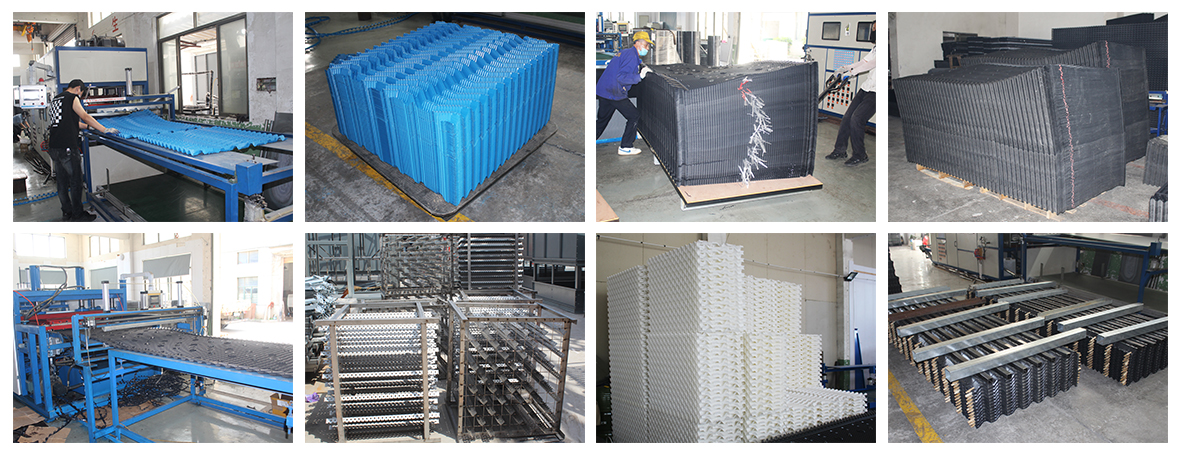
Standard components are suitable when their dimensions and performance characteristics match the cooling tower. Customized solutions become particularly useful when a tower has nonstandard dimensions, discontinued components, unusual operating conditions, or limited installation clearance.
Better Dimensional Compatibility
Customized components can be specified according to verified installation measurements and support arrangements.
This is especially useful when replacing components in older cooling towers or equipment that has undergone previous modifications.
Accurate dimensions help reduce the risk of installation problems, gaps, and unnecessary adjustments.
Material Selection for Specific Operating Conditions
Different industrial applications have different water chemistry, temperature, and maintenance requirements.
Customized sourcing allows buyers to evaluate appropriate materials and configurations rather than selecting a product based solely on its appearance or nominal dimensions.
Flexible Replacement Solutions
When original cooling tower components are unavailable, customized fill packs and drift eliminators may provide a practical replacement option.
Existing tower dimensions, structural conditions, and operating requirements should be checked before production to ensure that the proposed components are suitable.
Coordinated Component Selection
Cooling tower fill and drift eliminators perform different functions, but their designs influence the operation of the same cooling tower.
Evaluating both components together can help identify compatibility issues involving airflow, installation space, water distribution, and maintenance access.
Potential Long-Term Maintenance Benefits
A suitable component design may help reduce avoidable fouling, premature damage, and replacement frequency.
Actual savings depend on operating conditions, water treatment, installation quality, maintenance practices, and the service life of the selected materials.
Customization should therefore be treated as a technical selection process, not simply a way to change product dimensions.
Our Customization and Manufacturing Process
For customized cooling tower fill and drift eliminators, accurate project information is the foundation of a successful order.
Power Tower Cooling Technology (Shaoxing) Co.,Ltd supplies cooling tower components through CoolingTowerPart.com. Buyers can prepare their technical requirements to support product evaluation and communication before placing an order.
Step 1: Confirm Dimensions and Operating Conditions
Start by identifying the cooling tower type and the components required.
Provide the length, width, and height of the existing fill packs, along with drift eliminator panel dimensions where applicable. Photographs and drawings are especially useful when the components have unusual shapes or installation arrangements.
Operating information should include hot-water and cold-water temperatures, water quality, suspended solids, chemical treatment, and known cooling or drift problems.
This information helps establish the requirements for material selection and component configuration.
Step 2: Select Materials and Configurations
Once the project requirements are clear, evaluate suitable materials, fill geometries, sheet spacing, and drift eliminator profiles.
The selection should account for thermal performance, airflow resistance, fouling risk, chemical compatibility, structural support, and maintenance access.
If the cooling tower belongs to a recognized brand, provide the manufacturer and model when known. Brand information can help establish the original design, but dimensions and technical compatibility should still be verified.
Step 3: Confirm Specifications Before Manufacturing
Before production, confirm the approved dimensions, material specifications, product configuration, quantity, and any project-specific requirements.
For replacement projects, check whether the original support structure is still suitable and whether modifications have been made to the cooling tower.
Confirming these details before manufacturing helps reduce the likelihood of dimensional errors and incompatible components.
Step 4: Manufacturing and Quality Inspection
The inspection requirements should be agreed upon for each order.
Depending on the product and project, checks may include dimensional verification, visual inspection, assembly consistency, and confirmation that the supplied materials match the approved specification.
Buyers should also clarify packaging, shipping arrangements, production lead times, and any documentation required for their project.
Cooling Tower Fill and Drift Eliminator Replacement Solutions
Replacing worn cooling tower components can be a cost-effective alternative to replacing an entire tower when the main structure and other critical systems remain serviceable.
However, replacement should begin with an inspection rather than an assumption that new components will solve every performance problem.
Common signs that cooling tower fill may need attention include clogged passages, broken sheets, deformation, uneven water distribution, and visible material deterioration.
Drift eliminator problems may appear as damaged panels, gaps between sections, poor drainage, or excessive water carryover.
A reduction in cooling performance may also result from issues outside the fill section, including damaged spray nozzles, poor water distribution, fan problems, or changes in process heat load.
Before ordering replacement components, inspect the fill, eliminators, support structure, and water-distribution system. Record the existing dimensions and identify the likely cause of the problem.
For older cooling towers, customized fill packs and drift eliminators can help accommodate existing installation constraints. Accurate measurements and specification approval are essential to achieving a suitable fit.

Applications Across Industrial Sectors
Customized cooling tower fill and drift eliminators can support many industrial and commercial applications. The appropriate configuration depends on the cooling tower design, thermal duty, water quality, and operating environment.
Power Generation
Power plants rely on cooling systems to reject heat from their processes. Suitable fill and drift eliminators can help support heat-transfer performance and water management when selected for the tower's operating requirements.
Chemical Processing
Chemical facilities may expose cooling tower components to challenging water chemistry and operating temperatures. Material compatibility and resistance to the actual chemical environment should be evaluated carefully.
HVAC and Commercial Buildings
Cooling towers are commonly used with water-cooled chillers and commercial air-conditioning systems. Appropriate fill supports heat transfer, while drift eliminators help control water droplets leaving the tower.
Steel and Metal Processing
Industrial processes can produce substantial heat loads and challenging circulating-water conditions. Fill selection should account for water quality, fouling potential, operating temperature, and maintenance requirements.
Plastics and General Manufacturing
Cooling towers help remove process heat from production equipment. Properly selected fill and drift eliminators support reliable cooling system operation and water management.
Food and Beverage Processing
Cooling tower component selection in food and beverage facilities should consider water treatment, corrosion, maintenance, and applicable hygiene requirements.
Across all these industries, choosing components based on actual operating conditions is more reliable than relying on a general industry classification.
Common Cooling Tower Problems and How Customized Components Help
Problem 1: Cooling Tower Fill Clogging
Deposits, biological growth, and suspended solids can block narrow passages and reduce effective water distribution.
The appropriate response may include reviewing water treatment, cleaning procedures, and fill geometry. For heavily fouling water, splash fill may be worth evaluating as an alternative to film fill.
Problem 2: Uneven Water Distribution
Uneven distribution can create dry areas and reduce the effective use of the fill surface.
Before replacing the fill, inspect the spray nozzles, distribution basins, headers, and water flow. New fill alone may not solve a problem caused by the distribution system.
Problem 3: Excessive Water Drift
Damaged drift eliminators, unsuitable airflow conditions, or incorrect installation can contribute to water carryover.
Check panel integrity, orientation, alignment, drainage, and compatibility with the tower's airflow before selecting replacement eliminators.
Problem 4: Premature Material Deterioration
High temperatures, chemical exposure, mechanical damage, and other environmental conditions can shorten component life.
Confirm that the selected material is appropriate for the actual operating environment. Investigating the cause of the original failure can help avoid repeating the same problem.
Problem 5: Replacement Components Do Not Fit
Nominal dimensions may not account for supports, overlaps, installation clearances, or previous modifications.
Provide verified measurements and photographs, and confirm the final specifications before production. This is particularly important when replacing components in older cooling towers.
Installation and Maintenance Recommendations
Even well-designed cooling tower fill and drift eliminators can underperform if they are installed incorrectly or maintained poorly.
Before installation, isolate the equipment according to site safety procedures. Inspect the support structure and remove damaged components carefully, following the cooling tower manufacturer's instructions and applicable workplace safety requirements.
Install fill packs in the specified orientation and secure them using the appropriate support arrangement. Confirm that water can distribute across the intended fill area and that the installation does not obstruct designed airflow paths.
Drift eliminators should be installed in the correct direction, with suitable panel alignment and drainage. Avoid leaving unintended gaps that could allow droplets to bypass the eliminator.
After installation, inspect the assembly for loose components, obstructions, and uneven water distribution. Where practical, compare operating temperatures, water flow, fan conditions, and observed drift with the previous operating baseline.
Ongoing maintenance should include checks for scale, biological growth, fouling, deformation, broken panels, and restricted drainage.
Cleaning procedures must be compatible with the component material. Excessive water pressure, unsuitable chemicals, and aggressive mechanical cleaning can damage fill media and drift eliminators.
A planned inspection and maintenance schedule can help identify deterioration before it causes more serious operating problems.
Why Work with Power Tower Cooling Technology (Shaoxing) Co.,Ltd?
Selecting a cooling tower component supplier involves more than comparing purchase prices. Buyers need suitable materials, clear specifications, dimensional compatibility, and a practical process for communicating technical requirements.
Power Tower Cooling Technology (Shaoxing) Co.,Ltd is the manufacturer featured on this page, supplying cooling tower component solutions through CoolingTowerPart.com.
For customized projects, buyers should provide the cooling tower type, component dimensions, material requirements, operating conditions, and order quantity. These details help establish whether a proposed configuration is suitable and what additional technical information may be required.
Whether you need crossflow cooling tower fill, counterflow fill packs, drift eliminator panels, or replacement components for an existing installation, a clear specification is the starting point for an effective supply project.
Before confirming an order, discuss product specifications, inspection requirements, production lead times, packaging, shipping, and any project-specific documentation directly with the manufacturer.
Frequently Asked Questions
Can You Customize Cooling Tower Fill for Different Brands?
Cooling tower fill can often be configured for different cooling tower brands when the necessary dimensions and technical requirements are available.
Provide the tower model, original part information, measurements, and photographs so that the replacement configuration can be evaluated before production.
Which Is Better: PVC or PP Cooling Tower Fill?
Neither material is universally better.
PVC is widely used in conventional cooling tower applications, while PP may be suitable for certain temperature or chemical conditions. The correct choice depends on material formulation, operating temperature, water chemistry, structural requirements, and the manufacturer's specifications.
Can Drift Eliminators Be Replaced Without Replacing the Fill?
Yes. In many cooling towers, drift eliminators and fill can be replaced independently.
However, the existing support structure, installation clearance, and compatibility with the proposed eliminators should be checked. If both components have deteriorated, evaluating them together may help coordinate the replacement project.
What Information Is Needed for a Customized Quote?
To request a quote for customized cooling tower fill or drift eliminators, prepare the following information:
Cooling tower type: crossflow or counterflow
Required component: film fill, splash fill, or drift eliminator
Component dimensions and quantity
Preferred material, if known
Operating temperatures and water quality
Cooling tower brand and model, if available
Drawings, photographs, or original part numbers
Delivery destination and expected delivery date
For drift eliminators, include the panel arrangement and any known airflow or pressure-drop requirements.
Providing complete information at the beginning can make product evaluation and quotation more efficient.
How Can I Choose the Right Replacement for an Older Cooling Tower?
Start by inspecting the existing components and recording their dimensions, material, condition, and installation method.
Check the support structure and identify any modifications made since the original installation. If the original product specifications are unavailable, photographs and detailed measurements can help establish the replacement requirements.
The final selection should be based on verified dimensions and operating conditions rather than visual similarity alone.
Get a Customized Cooling Tower Solution
Choosing the right cooling tower fill and drift eliminators can help support heat-transfer performance, reduce water carryover, and maintain reliable cooling tower operation.
The best solution depends on matching the component design and material to the tower's dimensions, airflow, water distribution, water quality, and operating temperature.
Power Tower Cooling Technology (Shaoxing) Co.,Ltd supplies cooling tower component solutions for crossflow and counterflow applications. Whether you are planning a new installation, replacing worn fill, or upgrading drift eliminators, accurate measurements and clearly defined operating requirements will help you identify a suitable configuration.
Visit https://www.coolingtowerpart.com to explore cooling tower fill and drift eliminator solutions.
Contact the manufacturer with your project specifications to discuss customized cooling tower components for your application.


