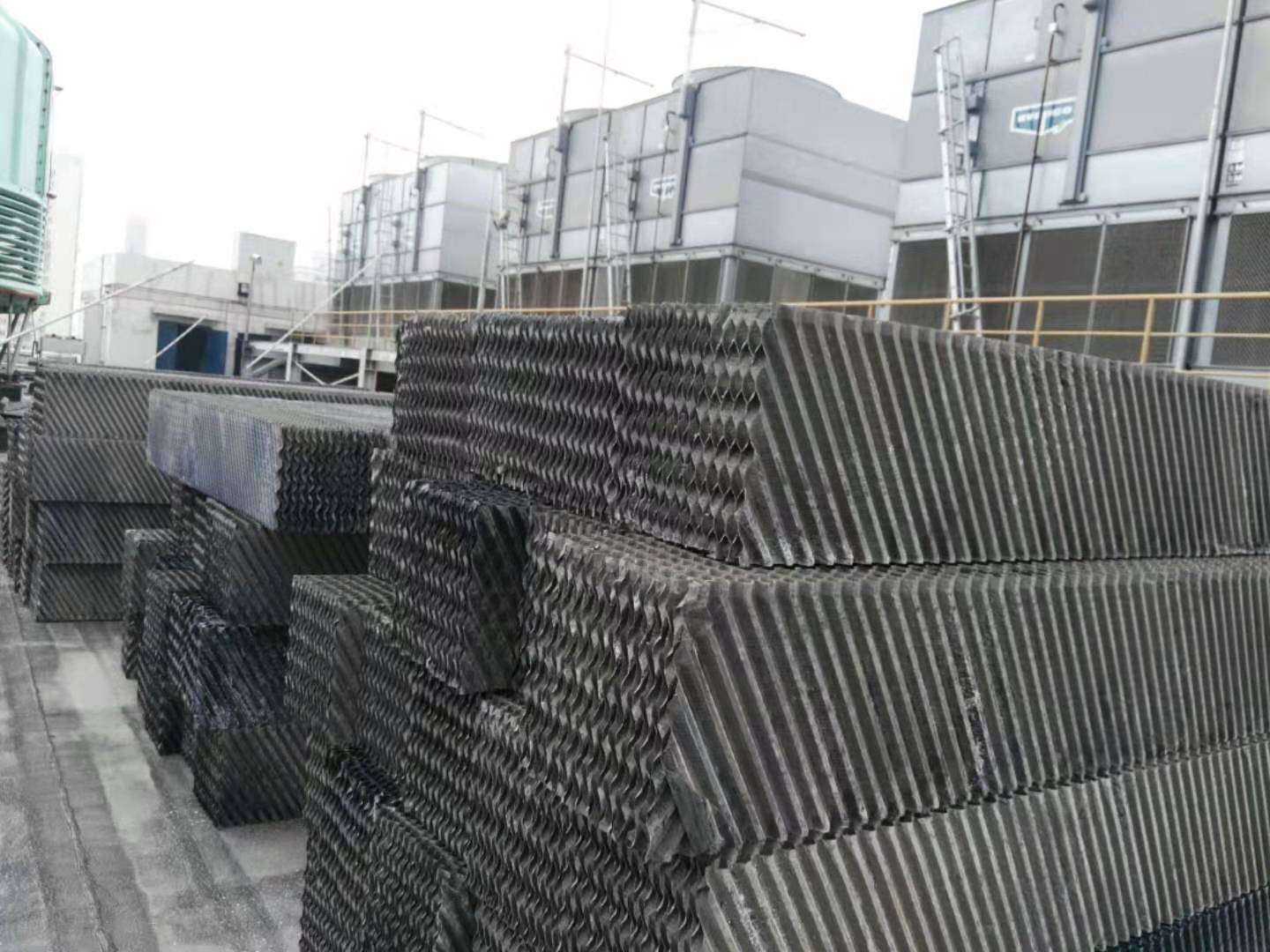
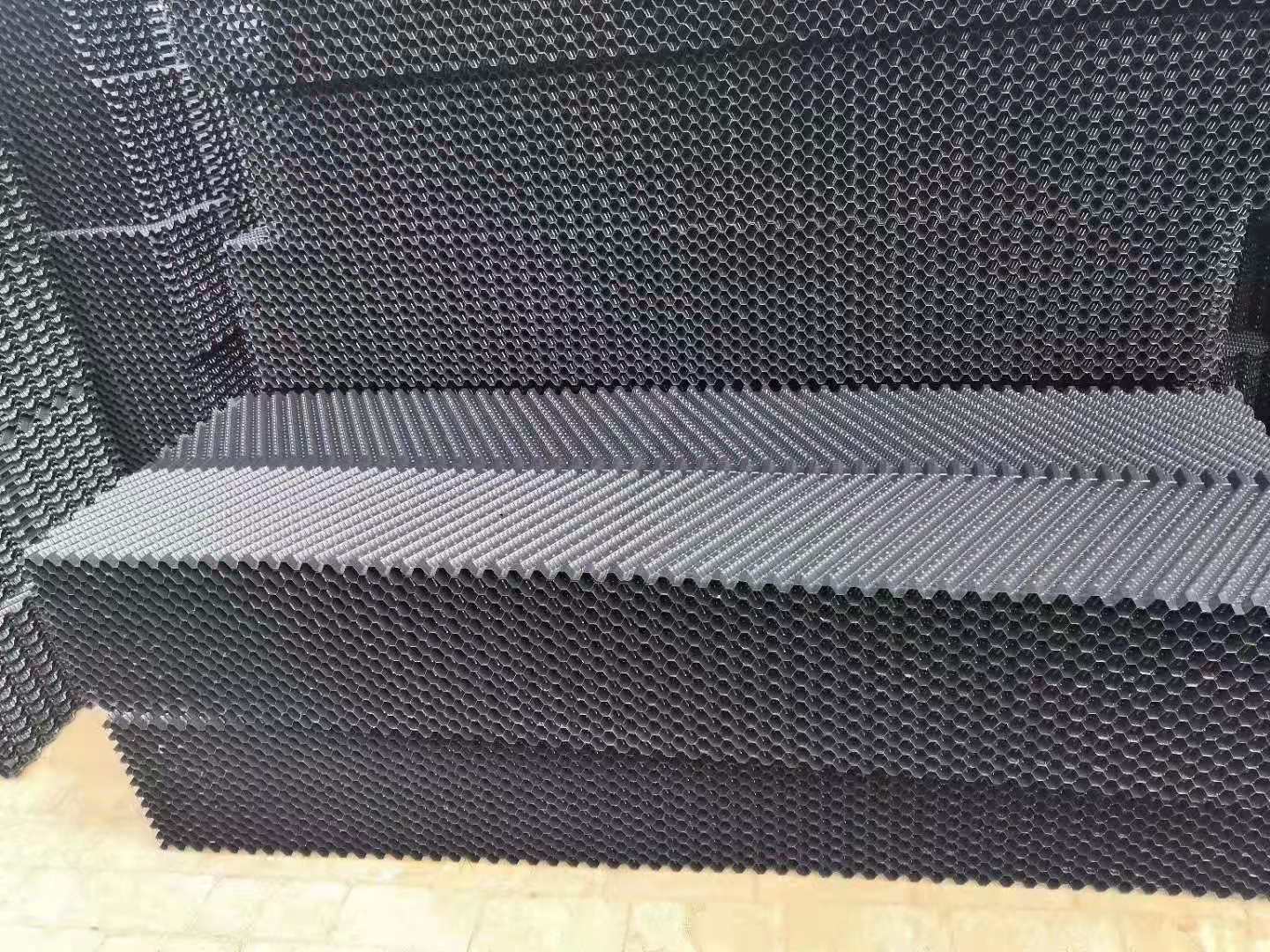
EVAPCO Cooling Tower Fill Replacement for Industrial Applications
EVAPCO cooling tower fill replacement is an important maintenance solution for industrial facilities that depend on stable cooling performance, efficient heat transfer, and reliable equipment operation. Cooling towers are widely used in manufacturing plants, power generation facilities, chemical processing industries, food production, data centers, and large commercial HVAC systems. In these applications, cooling tower fill plays a critical role in transferring heat from circulating water to the surrounding air.
Over time, cooling tower fill can become clogged with mineral scale, suspended solids, algae, and other deposits. High operating temperatures, chemical exposure, and mechanical stress may also cause fill sheets to crack, deform, or lose their original performance. When these problems become severe, replacing the existing fill can help restore effective water distribution and airflow, supporting the cooling tower's intended thermal performance.
For industrial operators maintaining EVAPCO cooling towers, selecting replacement fill requires careful consideration of the original tower model, fill dimensions, material compatibility, water quality, and operating conditions. A suitable replacement must fit the existing structure and provide appropriate heat transfer characteristics without creating excessive airflow resistance.
Working with an experienced cooling tower fill manufacturer can help simplify product selection, customized production, quality inspection, and delivery planning. This article explains the benefits of EVAPCO cooling tower fill replacement, industrial application requirements, material selection, installation procedures, and the factors buyers should consider when choosing a replacement supplier.
Why Is EVAPCO Cooling Tower Fill Replacement Important for Industrial Facilities?
Industrial cooling towers often operate for extended periods under demanding conditions. Their performance directly affects process temperatures, equipment reliability, and the efficiency of associated cooling systems.
Cooling tower fill increases the contact area between water and air. As hot water flows over the fill surfaces, heat transfers to the air, and evaporation removes additional heat from the circulating water.
When the fill becomes damaged or fouled, the cooling tower may struggle to achieve the required outlet water temperature.
How Does Cooling Tower Fill Deterioration Affect Industrial Operations?
Reduced Heat Transfer Performance
Mineral deposits and biological growth can cover fill surfaces, preventing water from spreading evenly across the available contact area. Damaged sheets may also create uneven flow channels that reduce the effectiveness of heat exchange.
Replacing severely deteriorated fill with a compatible design can help restore the intended cooling performance.
Increased Airflow Resistance
Blocked fill passages can restrict airflow through the cooling tower. Depending on the system design, this may affect fan operating conditions, reduce effective airflow, and contribute to higher operating costs.
A suitable replacement fill should provide the required thermal performance while maintaining acceptable airflow resistance.
Unstable Process Cooling
Many industrial processes require water temperatures to remain within defined operating limits. Inadequate cooling can affect heat exchangers, production machinery, compressors, and other temperature-sensitive equipment.
Timely fill replacement helps address one potential source of reduced cooling performance, although other components and operating conditions must also be evaluated.
What Are the Benefits of Replacing Deteriorated Fill?
Restoring Cooling Tower Performance
New fill with appropriate geometry can improve water distribution and air-water contact when the existing media has deteriorated.
The actual improvement depends on the condition of the entire cooling system, including water flow, fan performance, spray distribution, and ambient wet-bulb temperature.
Supporting Continuous Industrial Production
Unexpected cooling problems can interrupt production and create additional maintenance expenses.
Planned fill replacement allows industrial operators to coordinate material procurement, installation, and commissioning with scheduled maintenance shutdowns.
Improving Maintenance Efficiency
Replacing severely fouled or damaged fill can simplify future inspections and cleaning activities. Selecting a fill design suitable for the actual water quality may also help reduce recurring maintenance problems.
Industrial Applications of EVAPCO Cooling Tower Fill Replacement
Different industries have different cooling requirements. Replacement fill should therefore be selected according to the operating conditions, water quality, thermal duty, and maintenance priorities of each facility.
Cooling Tower Fill Replacement for Manufacturing Plants
Manufacturing facilities use cooling towers to remove heat from production equipment, hydraulic systems, compressors, heat exchangers, and industrial processes.
Common Replacement Challenges
Manufacturing plants may experience fluctuating cooling loads, dust contamination, mineral deposits, and extended operating schedules.
These conditions can contribute to fill fouling or deterioration, particularly when water treatment and routine inspections are inadequate.
Recommended Selection Considerations
When selecting replacement fill for manufacturing plants, consider:
Required cooling capacity and operating temperatures
Existing fill dimensions and support arrangements
Water quality and suspended-solids content
Airflow resistance and fan operating limits
Installation access and shutdown duration
Material suitability for the operating environment
EVAPCO Cooling Tower Fill Replacement for Power Plants
Power plants and energy facilities rely on cooling systems to remove heat from equipment and associated processes. Cooling tower performance can influence overall plant operation and the reliability of auxiliary cooling systems.
Challenges in Power Generation Applications
Large cooling towers may contain substantial quantities of fill, making replacement projects complex. Work may need to be coordinated with planned outages, maintenance contractors, and equipment suppliers.
Selection and Project Planning
Power plant replacement projects should begin with a detailed assessment of the existing fill configuration, cooling duty, support structure, and water quality.
For large projects, confirm production capacity, shipment quantities, packaging dimensions, and delivery schedules well in advance.
Cooling Tower Fill Replacement for Chemical Processing Plants
Chemical processing facilities may operate cooling towers under demanding water chemistry and temperature conditions.
Material Compatibility Requirements
The suitability of PVC, polypropylene (PP), or another fill material depends on the circulating water composition, chemical concentrations, operating temperature, and exposure conditions.
A material that performs well in conventional HVAC applications may not be appropriate for every chemical process.
How to Choose Suitable Replacement Fill
Before ordering, provide the manufacturer with relevant water chemistry and operating information. Evaluate material compatibility alongside dimensional fit, heat transfer requirements, and airflow resistance.
Cooling Tower Fill Replacement for HVAC and Commercial Facilities
Large commercial buildings, hospitals, hotels, and data centers may use cooling towers to support chillers and other cooling equipment.
Maintaining Stable Cooling Performance
During periods of high cooling demand, deteriorated fill may contribute to reduced heat rejection if it significantly affects water distribution or airflow.
Replacement fill should match the existing cooling tower configuration and meet the system's intended operating requirements.
Maintenance and Energy Considerations
A suitable replacement can help restore performance when the existing fill is a limiting factor. However, energy savings should not be assumed without considering fan operation, pump performance, water flow, and the overall cooling system.
How to Select the Right EVAPCO Cooling Tower Fill Replacement
Correct fill selection is essential for achieving reliable performance after replacement. Industrial buyers should verify the original tower design, fill type, material, dimensions, and operating conditions before purchasing replacement media.
Identify the Original Cooling Tower Model
Start by identifying the EVAPCO cooling tower model and reviewing available technical documentation.
Confirm Crossflow or Counterflow Configuration
Crossflow cooling towers generally allow air to move horizontally through the fill while water flows downward.
Counterflow cooling towers generally direct air upward against the downward flow of water.
These configurations can require different fill arrangements, so replacement media must match the intended airflow and water distribution pattern.
Review Existing Fill Specifications
Where available, obtain the original fill drawings, product specifications, maintenance records, and installation details.
If documentation is unavailable, carefully measure the existing fill and provide photographs or samples to the replacement manufacturer.
Choose Between PVC and PP Cooling Tower Fill
PVC and PP are common materials for cooling tower fill replacement. The appropriate option depends on operating conditions and project specifications.
PVC Cooling Tower Fill
PVC fill is widely used in industrial and commercial cooling systems because it can be manufactured into different film-fill configurations.
Potential advantages include:
Availability in a range of sheet profiles and dimensions
Practical customization options
Suitability for many conventional cooling tower applications
Compatibility with many existing PVC fill arrangements
What Should Buyers Check?
Confirm the PVC grade, sheet thickness, allowable operating temperature, chemical compatibility, and any applicable fire-performance requirements.
PVC should only be used where its material properties are suitable for the actual operating environment.
PP Cooling Tower Fill
Polypropylene fill may be considered when its material properties are appropriate for the application's temperature or chemical exposure requirements.
Potential advantages include:
Availability in customized fill configurations
Resistance to many chemicals, depending on the substance and operating conditions
Useful temperature capabilities for suitable grades
Potential suitability for selected industrial applications
When Is PP Fill Worth Considering?
PP may be an option when the operating environment makes it preferable to PVC. However, any material change requires technical verification of thermal performance, dimensions, support arrangements, and airflow resistance.
Match Fill Dimensions and Geometry
Correct dimensions help ensure that replacement fill fits the existing cooling tower and maintains the intended flow paths.
Important Dimensions to Verify
Before requesting a quotation, record:
Fill block length, width, and height
Individual sheet dimensions and thickness
Corrugation pattern and channel geometry
Fill block orientation
Support beam spacing
Installation clearance
Total replacement quantity
Why Is Fill Geometry Important?
Fill geometry influences water spreading, air-water contact, drainage, and airflow resistance. Using a different geometry without engineering assessment can change the thermal performance of the cooling tower.
For direct replacement projects, maintaining a compatible configuration is generally the most straightforward approach.
Evaluate Thermal Performance Requirements
Replacement fill should be assessed against the cooling tower's intended duty rather than selected by dimensions alone.
Review Key Operating Parameters
Useful information includes:
Circulating-water flow rate
Hot-water inlet temperature
Required cold-water outlet temperature
Design ambient wet-bulb temperature
Required heat rejection
Available fill volume
Fan and motor operating limits
Balance Heat Transfer and Airflow Resistance
Fill with a large nominal surface area does not automatically deliver better cooling. Performance depends on surface geometry, water distribution, airflow, and the characteristics of the entire cooling system.
When changing the original fill design, request an engineering evaluation of the proposed replacement.
Common Signs That EVAPCO Cooling Tower Fill Needs Replacement
Industrial operators should monitor fill condition regularly to identify problems before they create more serious operating difficulties.
Severe Fouling and Blockage
Mineral scale, sediment, algae, and biological deposits can restrict the fill passages and reduce effective heat transfer.
When Is Cleaning No Longer Enough?
If the fill remains structurally sound and deposits can be removed effectively using approved cleaning procedures, cleaning may be appropriate.
If the media remains blocked after cleaning or has suffered extensive deterioration, replacement may be the better option.
Physical Damage and Structural Deterioration
Cracked sheets, brittle material, deformed blocks, and sagging fill can indicate that the media has lost its intended shape or strength.
What Should Be Inspected?
Check representative areas of the fill for:
Broken or missing sheets
Deformed or collapsed fill blocks
Damaged support components
Uneven water channels
Excessive deposits
Signs of chemical or thermal deterioration
Declining Cooling Performance
Higher-than-expected cold-water temperatures may indicate fill deterioration, but other causes should also be investigated.
Check the Complete Cooling System
Review fan operation, water flow, spray nozzles, water distribution, air inlets, and ambient wet-bulb conditions before deciding that fill replacement is necessary.
A systematic diagnosis helps avoid replacing fill when the main problem lies elsewhere.
EVAPCO Cooling Tower Fill Replacement Installation Process
Proper installation is essential for achieving the expected performance of replacement fill. Even correctly manufactured media can underperform if it is installed with incorrect spacing, poor alignment, or inadequate support.
Step 1: Prepare the Cooling Tower
Before dismantling the existing fill, review the maintenance plan, technical drawings, and approved replacement specifications.
Shut Down and Isolate Equipment
Follow the site's approved shutdown and lockout/tagout procedures for relevant electrical and mechanical equipment.
Allow hot water and surfaces to cool, control chemical exposure, and establish safe access before starting work.
Establish Safe Working Conditions
Cooling tower maintenance may involve wet surfaces, elevated work areas, chemical residues, and biological deposits.
Use suitable personal protective equipment and fall protection. Follow site procedures for restricted spaces and biological exposure, and ensure that equipment cannot restart unexpectedly while workers are inside the tower.
Step 2: Remove the Existing Fill
Remove the old fill in manageable sections according to the approved dismantling sequence.
Protect Reusable Components
Avoid damaging support beams, water distribution pipes, drift eliminators, and other components that will remain in service.
Record any damage or unusual fouling discovered during removal.
Dispose of Removed Materials Properly
Old fill may contain sediment, biological deposits, and treatment chemicals. Handle and dispose of these materials according to site requirements and applicable environmental regulations.
Step 3: Inspect the Support Structure
Once the old fill has been removed, clean the installation area and inspect the supporting components.
Check Beams and Connections
Look for corrosion, cracks, deformation, loose connections, and weakened support points.
Repair defective components before installing the replacement fill, and confirm that the structure can support the intended loads.
Inspect Water Distribution Components
Check spray nozzles, distribution headers, and associated piping for blockage or damage.
Poor water distribution can reduce the effectiveness of new fill, so these components should be checked before installation is completed.
Step 4: Install the Replacement Fill
Follow the approved installation drawings and the fill manufacturer's instructions.
Maintain Correct Orientation and Alignment
Install the fill blocks in the specified orientation and maintain the required spacing.
Avoid large unintended gaps that could allow air or water to bypass the intended fill passages. Do not force oversized blocks into the available space or compress the media beyond the manufacturer's specifications.
Confirm Support and Clearance
Ensure that the fill is adequately supported and does not obstruct airflow or water distribution.
Check compatibility with the drift eliminators, spray systems, air inlets, and other internal components.
Step 5: Inspect Before Startup
Complete a pre-startup inspection before restarting the cooling tower.
Installation Checklist
Confirm fill dimensions and orientation.
Check alignment and spacing between blocks.
Verify that support beams and connections are secure.
Ensure water distribution components are unobstructed.
Confirm drift eliminators are correctly installed.
Remove tools, packaging, and debris.
Restore guards and access covers.
Ensure all personnel are clear before startup.
Step 6: Test the Cooling Tower After Replacement
Restart the cooling tower according to the approved operating procedures.
Check Water Distribution and Airflow
Observe the water distribution pattern and check for abnormal pooling, uneven wetting, unexpected bypassing, or leakage.
Verify fan rotation, vibration, motor operating conditions, and airflow.
Evaluate Operating Performance
Record inlet and outlet water temperatures, circulating-water flow, ambient wet-bulb temperature, and other relevant operating data.
Compare results with design requirements and historical performance under comparable conditions. Investigate significant deviations before returning the system to normal operation.
How to Reduce the Cost of EVAPCO Cooling Tower Fill Replacement
Industrial replacement projects involve more than the cost of the fill itself. Planning the work carefully can help control procurement expenses, labor requirements, and downtime.
Plan Replacement During Scheduled Maintenance
Reduce Unplanned Downtime
Where possible, coordinate fill replacement with a planned shutdown or major maintenance period.
Advance planning allows time for measurements, supplier evaluation, manufacturing, inspection, and transportation.
Confirm Material Availability Early
For large projects, verify production lead times and delivery arrangements before the maintenance window. This reduces the risk of delaying installation because replacement media arrives late.
Provide Accurate Technical Information
Avoid Ordering Errors
Incorrect dimensions or incomplete specifications can lead to unsuitable products, additional modifications, and replacement delays.
Provide accurate measurements, photographs, drawings, and the cooling tower model whenever available.
Compare Quotations on an Equivalent Basis
When comparing suppliers, review material grade, sheet thickness, fill geometry, dimensional tolerances, packaging, delivery terms, and technical support.
A lower quotation may not represent better value if the products differ significantly in specifications.
Consider the Total Cost of Ownership
The overall cost includes purchase price, freight, installation, maintenance, and the consequences of downtime.
A suitable fill design combined with effective water treatment may help reduce recurring problems and improve long-term maintenance planning.
How to Choose a Reliable EVAPCO Cooling Tower Fill Replacement Supplier
Choosing the right supplier is an important part of industrial replacement planning. Buyers should assess manufacturing capabilities, technical support, product quality, and delivery reliability.
Evaluate Manufacturing Quality
Material and Dimensional Control
Ask how the manufacturer controls raw materials, sheet thickness, forming quality, fill block dimensions, and finished-product inspection.
Consistent quality helps ensure that the replacement fill matches the approved specifications.
Customized Replacement Capabilities
Older towers or nonstandard configurations may require customized dimensions.
A capable manufacturer should be able to review technical drawings, physical measurements, and samples to assess compatibility before production.
Review Technical Support and Documentation
Product Specifications
Request relevant material data, dimensional drawings, installation instructions, and inspection documentation.
If the project requires specific fire-performance or other compliance standards, verify the appropriate supporting evidence.
Compatibility Assessment
Confirm that the proposed fill suits the specific cooling tower model and operating conditions.
A third-party replacement should not be represented as an original EVAPCO-manufactured component unless that status is verified.
Confirm International Supply Capabilities
Packaging and Transportation
Cooling tower fill can occupy significant shipping volume. Confirm pallet dimensions, loading plans, order quantities, and protection against damage during transportation.
Delivery Schedule and Communication
Agree on production lead times, inspection arrangements, shipment documentation, and delivery terms before placing the order.
Clear communication helps reduce uncertainty for overseas buyers and industrial contractors.
Frequently Asked Questions About EVAPCO Cooling Tower Fill Replacement
How Often Should EVAPCO Cooling Tower Fill Be Replaced?
There is no universal replacement interval for all cooling towers. Service life depends on material quality, water chemistry, operating temperature, maintenance practices, and mechanical conditions.
Regular inspection and performance monitoring provide a more reliable basis for replacement decisions than relying on a fixed schedule alone.
Can Replacement Fill Be Customized for Different EVAPCO Models?
Replacement fill can potentially be customized for different tower configurations when accurate dimensions and technical information are available.
Confirm the model, original fill design, dimensions, and operating conditions before ordering. Compatibility should be verified rather than assumed.
Can PVC Fill Be Replaced With PP Fill?
A material change may be possible, but it requires an engineering assessment. Check temperature suitability, chemical compatibility, thermal performance, dimensions, airflow resistance, and fire-performance requirements before changing materials.
Can Fill Replacement Improve Cooling Tower Efficiency?
Replacement fill can help restore cooling performance when the original media is damaged, fouled, or deteriorated.
However, results depend on the condition of the complete system, including fans, water flow, spray distribution, ambient conditions, and water treatment.
Is It Necessary to Replace All Fill at Once?
Not always. Partial replacement may be appropriate when damage is localized and the remaining fill is in good condition.
Complete replacement may be more practical when deterioration is widespread or a consistent fill arrangement is required throughout the tower. The decision should consider performance, compatibility, and long-term maintenance costs.
What Information Is Needed to Request a Replacement Quotation?
Provide the cooling tower model, fill type, material, dimensions, quantity, operating temperatures, water quality, and delivery destination.
Technical drawings, photographs, and samples can help the manufacturer assess compatibility and prepare a more accurate quotation.
Conclusion: Reliable EVAPCO Cooling Tower Fill Replacement for Industrial Applications
EVAPCO cooling tower fill replacement is an important maintenance investment for industrial facilities seeking stable cooling performance and dependable equipment operation. Deteriorated fill can contribute to reduced heat transfer, restricted airflow, uneven water distribution, and increased maintenance requirements.
Successful replacement starts with a thorough inspection of the existing fill and a clear understanding of the cooling tower's configuration, operating conditions, and required cooling duty. Selecting suitable PVC or PP media, confirming accurate dimensions, and following proper installation procedures are essential to achieving the intended results.
For manufacturing plants, power stations, chemical processing facilities, and HVAC systems, working with an experienced cooling tower fill manufacturer can simplify product selection, customized production, quality control, and international delivery.