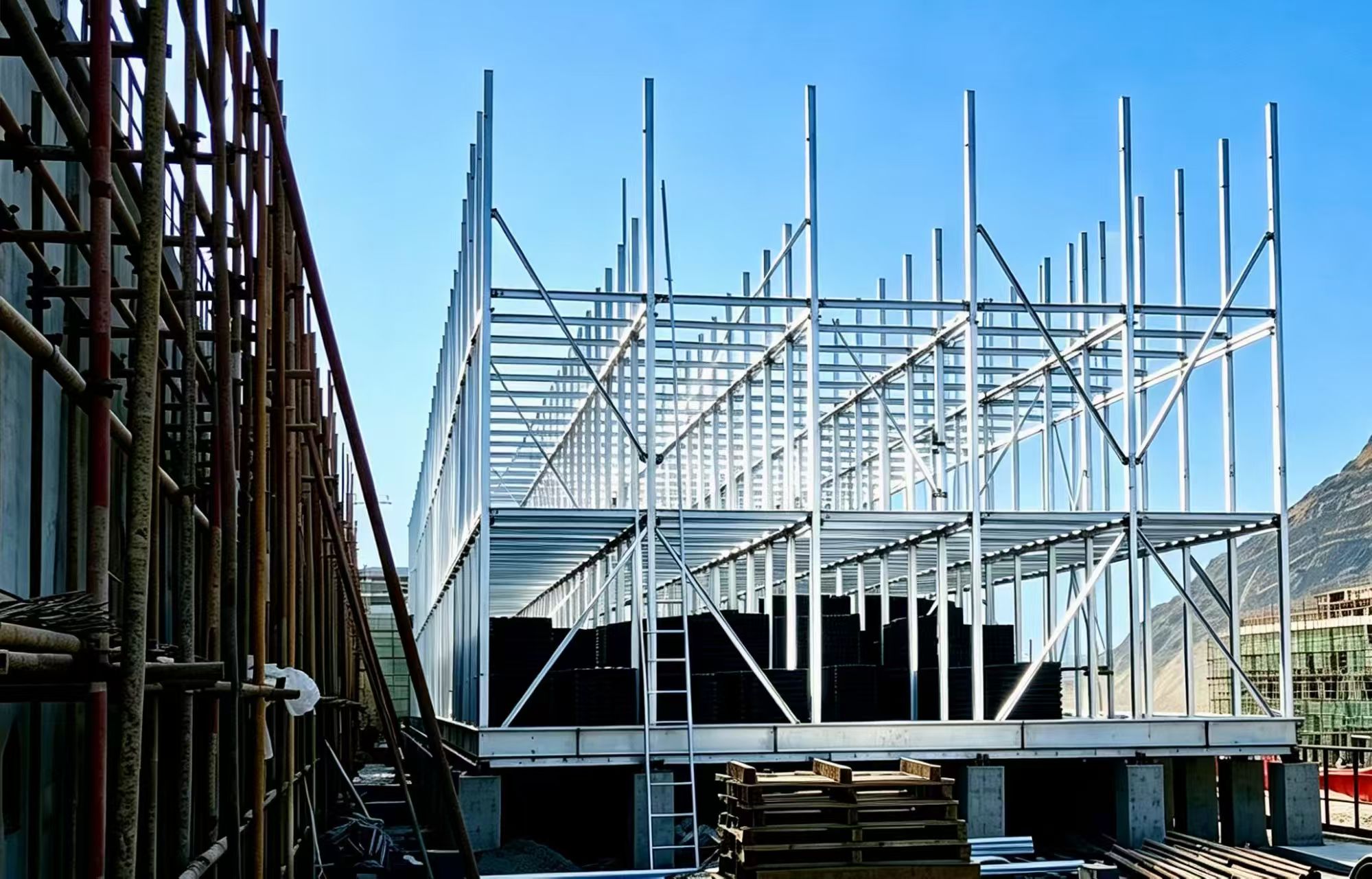
Cooling tower fill media plays a critical role in determining how effectively a cooling tower removes heat from circulating water. Although it may look like a simple arrangement of plastic sheets or bars, fill media directly affects heat transfer, airflow, cooling efficiency, maintenance requirements, and overall operating costs.
If you are choosing replacement parts for an existing cooling tower or planning a new cooling system, you will generally encounter two main cooling tower fill media types: film fill and splash fill.
Both types help water release heat into the surrounding air, but they work in different ways. Film fill spreads water across a large surface, while splash fill repeatedly breaks falling water into smaller droplets. Each design has advantages and limitations, so choosing the right one requires more than simply comparing prices.
In this guide, we explain how film fill and splash fill work, compare their performance, discuss their applications, and outline the key factors to consider before purchasing cooling tower fill media.
1. What Is Cooling Tower Fill Media?
Cooling tower fill media is an internal component designed to increase contact between circulating water and moving air. It is installed inside the cooling tower to improve heat and mass transfer.
When hot water enters a cooling tower, it flows downward through the fill while air moves through the tower. A small portion of the water evaporates, carrying heat away from the remaining water. The cooled water collects in the basin and returns to the cooling system.
Without suitable fill media, water would pass through the tower too quickly, limiting its contact with air. The cooling tower might then require more airflow, a larger structure, or additional energy to achieve the desired cooling performance.
Fill media addresses this problem by increasing the effective contact area between water and air or repeatedly breaking water into droplets.
1.1 How Fill Media Supports Heat Transfer
Cooling tower performance depends on several interacting factors. The contact area between water and air is important, but it is not the only consideration.
Water must be distributed evenly across the fill, air must pass through the fill with acceptable resistance, and the system must provide sufficient contact time for heat and moisture transfer. Ambient wet-bulb temperature, water flow rate, and the required cooling range also influence the final result.
A well-designed fill system helps balance these factors. However, even high-performance fill media cannot compensate for inadequate airflow, poor water distribution, or an incorrectly sized cooling tower.
1.2 Why Fill Design Matters
Choosing the right fill media can help maintain stable outlet water temperatures, support cooling capacity, and reduce unnecessary operating costs.
However, more surface area does not automatically mean better performance. Closely spaced fill channels may provide excellent heat transfer when clean, but suspended solids, mineral deposits, and biological growth can restrict the passages.
The best design balances heat-transfer performance with airflow resistance, water quality tolerance, ease of cleaning, and expected service life.
2. What Are the Main Cooling Tower Fill Media Types?
The two main structural categories are film fill and splash fill. Both improve water-air contact, but their different geometries create different operating characteristics.
2.1 Film Fill
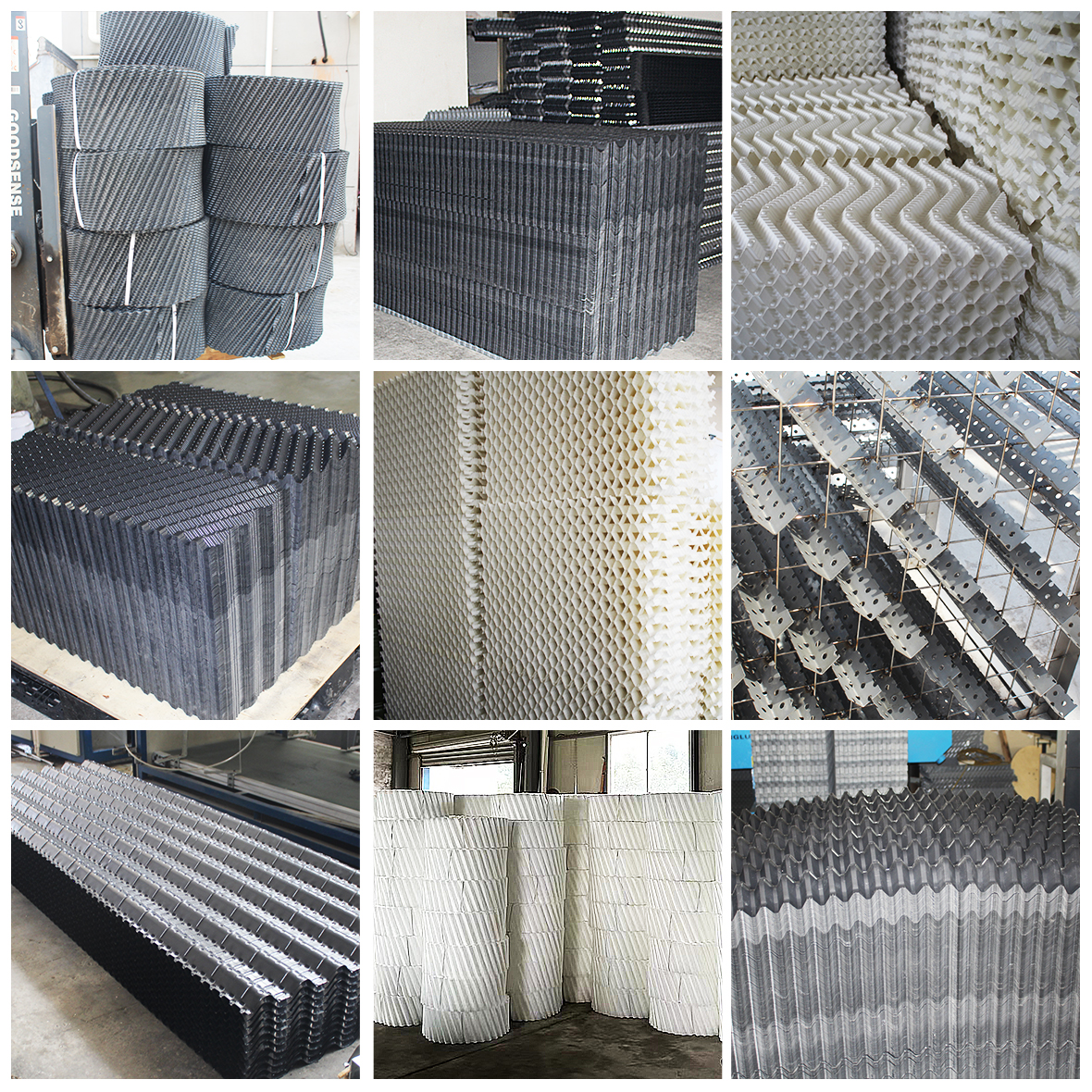
Film fill consists of closely spaced sheets, usually formed with corrugations or embossed patterns. As water flows down the sheets, it spreads into a thin film across their surfaces. Air passes through the channels between the sheets, allowing heat and moisture to transfer from the water to the air.
Film fill is widely used in applications where water quality can be controlled and high heat-transfer performance is a priority.
Common materials include polyvinyl chloride (PVC) and polypropylene (PP). The appropriate material depends on operating temperature, chemical exposure, mechanical requirements, and the manufacturer's specifications.
2.2 Splash Fill
Splash fill uses bars, grids, slats, or specially shaped elements to repeatedly break falling water into droplets. Each impact helps redistribute the water and creates additional opportunities for contact with moving air.
Many splash fill designs have relatively open structures, making them worth considering for industrial systems with suspended solids or a greater risk of fouling.
Polypropylene is commonly used in splash fill products, although the available materials depend on the manufacturer's product range and the application's operating conditions.
2.3 Film Fill vs. Splash Fill: A Quick Comparison
| Comparison Factor | Film Fill | Splash Fill |
| Heat-transfer mechanism | Spreads water into thin films | Breaks water into droplets |
| Typical structure | Corrugated sheets and formed channels | Bars, grids, slats, or splash elements |
| Effective contact area | Generally high | Depends on splash pattern and configuration |
| Fouling tolerance | Narrow channels can be vulnerable to blockage | Open designs may tolerate certain suspended solids better |
| Water quality | Usually benefits from well-treated water | May suit some more challenging water conditions |
| Airflow resistance | Depends on channel geometry and fouling | Depends on element spacing and arrangement |
| Common applications | HVAC and controlled industrial water systems | Industrial systems with higher fouling potential |
| Main selection concern | Keeping flow channels clear | Maintaining effective splashing and water distribution |
These are general characteristics rather than universal rules. Actual performance depends on the specific product design, water quality, tower configuration, and operating conditions.
3. How Does Film Fill Work?
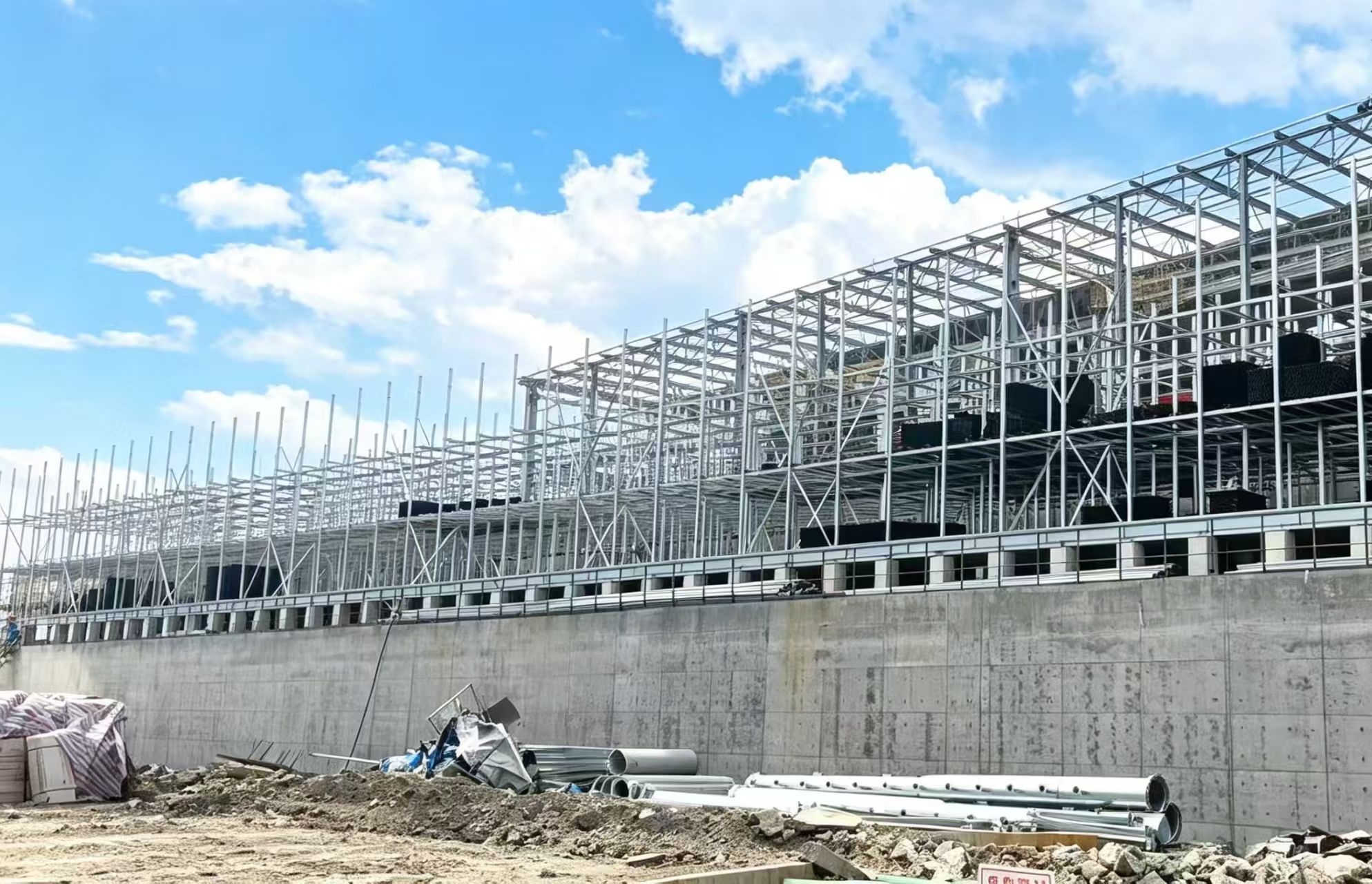
Film fill improves heat transfer by spreading water across the surfaces of formed plastic sheets. As water moves downward, air flows through the spaces between the sheets.
This arrangement creates a relatively large effective contact area within a compact volume. Under suitable conditions, film fill can deliver strong thermal performance without requiring water to break into numerous droplets.
For cooling tower operators, this can be beneficial when cooling capacity and space efficiency are important. However, the water distribution system must deliver water evenly across the fill, and the channels must remain sufficiently clear to allow air and water to move as intended.
3.1 Common Film Fill Materials
PVC and PP are two common materials used for cooling tower film fill.
PVC film fill: PVC is widely used in conventional cooling tower applications. It can be formed into sheet structures with different surface patterns and channel geometries. Its suitability depends on the operating temperature, chemical environment, and specific product formulation.
PP film fill: Polypropylene may be suitable for applications requiring a different temperature or chemical-resistance profile. Its performance depends on the grade, sheet design, and manufacturer's stated operating limits.
Neither material should be selected based on its name alone. Buyers should check continuous operating temperature, chemical compatibility, mechanical strength, fire-performance requirements where applicable, and relevant product standards.
3.2 Advantages of Film Fill
Film fill offers several benefits when operating conditions are suitable.
First, it provides a large effective water-air contact area, helping support efficient heat transfer in a relatively compact space. This makes it attractive for cooling towers that must meet demanding thermal requirements without significantly increasing their size.
Second, film fill can perform consistently when water distribution is uniform and the fill passages remain clean.
Third, film fill packs are commonly available in modular configurations. Depending on the product, this can simplify transportation, installation, and replacement.
Finally, manufacturers can offer different sheet patterns, spacing, and materials to suit various cooling tower designs.
3.3 Limitations of Film Fill
The main limitation of film fill is its sensitivity to fouling under unsuitable water conditions.
Suspended solids, mineral scale, algae, and other deposits can accumulate inside the narrow passages. As the passages become obstructed, water distribution and airflow may deteriorate. This can reduce effective heat transfer, increase pressure drop, and create uneven cooling.
Severe fouling may require cleaning or replacement, increasing maintenance costs and potentially interrupting operations.
Film fill is therefore best suited to systems with an appropriate water treatment program, effective filtration where needed, and regular inspections. If your cooling water contains significant solids or process contamination, assess the water quality before choosing a tightly spaced film-fill design.
4. How Does Splash Fill Work?
Splash fill cools water by repeatedly disrupting its downward flow. When water strikes bars, grids, or specially shaped elements, it breaks into droplets and spreads across additional exposed surfaces.
These repeated impacts improve contact between water and air. Many splash fill configurations also provide relatively open passages, allowing certain suspended particles to pass through more readily than they might through narrow film-fill channels.
This makes splash fill a useful option to evaluate for industrial cooling systems where fouling is a significant concern. However, its suitability still depends on the nature of the contaminants, the required cooling duty, and the tower's internal design.

4.1 Common Splash Fill Materials
Polypropylene is a common material for splash fill because it can be formed into lightweight components for many cooling tower environments.
Other material options may be available depending on the supplier and the intended operating conditions. Buyers should confirm temperature limits, chemical compatibility, structural strength, and support requirements before selecting a product.
The material and the structural design must work together. Even a suitable polymer may perform poorly if the fill is exposed to temperatures or chemicals outside its specified limits.
4.2 Advantages of Splash Fill
One of splash fill's main advantages is its potential to handle certain suspended-solids conditions better than tightly spaced film fill.
The open structure of many splash fill designs can reduce the risk of narrow passages becoming blocked. This may simplify maintenance in some industrial systems, although it does not eliminate fouling.
Splash fill can also be a practical replacement option when an existing cooling tower was originally designed for splash-type media. Maintaining compatibility with the original tower configuration may reduce the engineering work required for replacement.
For facilities operating with variable water quality, splash fill deserves consideration when reliability and maintainability are major priorities.
4.3 Limitations of Splash Fill
Splash fill is not automatically more efficient or easier to maintain in every application.
Its thermal performance depends on droplet formation, water distribution, airflow, and the geometry of the splash elements. A poorly matched design may not achieve the required cooling capacity within the available tower space.
Some splash fill configurations may require more internal volume than a suitable film-fill design to meet a particular thermal duty. However, this depends on the specific products being compared, so actual performance data should guide the decision.
Splash fill also requires proper installation and support. Damaged elements, incorrect spacing, or uneven water distribution can reduce performance.

5. Film Fill vs. Splash Fill: What Are the Key Differences?
Understanding the differences between these two cooling tower fill media types helps buyers make a decision based on real operating needs rather than assumptions.
5.1 Heat-Transfer Efficiency
Film fill is often selected when high heat-transfer performance and compact design are important. Its sheet surfaces spread water into thin films, creating a large contact area.
Splash fill relies on water breaking into droplets and repeatedly contacting splash elements. Its performance depends on the splash pattern, water loading, and airflow arrangement.
There is no single efficiency rating that applies to every product in either category. A well-designed splash fill may be more suitable for a challenging industrial water system, while film fill may offer better performance in a clean-water application.
When comparing products, request technical data based on comparable conditions, including water flow rate, air flow rate, inlet and outlet water temperatures, and ambient wet-bulb temperature.
5.2 Water Quality and Fouling Resistance
Water quality is one of the most important factors in fill selection.
Film fill's narrow channels can be vulnerable to suspended solids, mineral scale, and biological growth. If filtration is inadequate or water treatment is poorly controlled, deposits may build up and restrict the channels.
Splash fill's more open structure can provide greater tolerance for some solids-bearing water systems. However, the actual advantage depends on particle size, solids concentration, water chemistry, and element spacing.
Neither type eliminates the need for proper water treatment. Filtration, blowdown, chemical control, and regular cleaning should be considered alongside the fill design.
5.3 Airflow and Pressure Drop
Airflow resistance affects cooling tower performance and fan energy consumption.
Film fill creates defined channels through which air passes. Depending on the design, these channels can provide effective contact while maintaining acceptable pressure drop. Fouling can increase resistance over time.
Splash fill can offer open flow paths, but its pressure drop still depends on the element arrangement, spacing, water loading, and overall tower configuration.
Do not rely solely on claims such as “low pressure drop” or “high efficiency.” Ask for product data and determine whether the stated performance applies to your operating conditions.
5.4 Maintenance and Service Life
The service life of cooling tower fill depends on material quality, operating temperature, water chemistry, ultraviolet exposure, mechanical loading, and maintenance practices.
Film fill may need more frequent cleaning in systems where deposits obstruct narrow channels. Splash fill may be easier to inspect or clean in certain installations, but deposits, biological growth, deformation, and mechanical damage can affect it too.
Regular inspection helps identify broken components, uneven water distribution, excessive deposits, and declining cooling performance.
When comparing film fill and splash fill, consider the expected maintenance workload and replacement frequency rather than focusing only on the initial purchase price.
6. Which Cooling Tower Fill Is Best for Your Application?
The best cooling tower fill is the one that meets the required cooling duty while remaining compatible with your water quality, tower design, and maintenance resources.
6.1 Industrial Process Cooling
Industrial facilities often have demanding cooling requirements because process temperatures can directly affect production quality and equipment reliability.
For systems with well-treated water, film fill may be suitable when high heat-transfer performance and compact design are priorities.
For applications with elevated suspended solids or greater fouling potential, splash fill may be worth evaluating.
Industries such as steel processing, manufacturing, power generation, and chemical production have different water characteristics and operating temperatures. The selection should therefore be based on the actual cooling-water conditions and the manufacturer's technical data.
6.2 HVAC and Commercial Cooling
Commercial HVAC systems use cooling towers to reject heat from chillers and building cooling loops.
Where water treatment is well controlled, film fill is often a practical choice because it can provide strong thermal performance in a compact structure.
The final decision should account for the cooling tower model, required capacity, water temperatures, water distribution system, and maintenance access.
If you are replacing existing fill, confirm the dimensions and configuration before ordering. A high-performance product that does not fit the tower correctly may create installation and operating problems.
6.3 High-Fouling Water Systems
Some industrial cooling systems operate with water containing elevated levels of suspended solids or other contaminants. In these situations, selecting fill solely for its heat-transfer performance may result in excessive maintenance.
Splash fill is often worth considering because many designs have relatively open passages. This can reduce certain blockage risks compared with tightly spaced film fill.
However, the best option depends on the contaminants involved. Large particles, sticky deposits, mineral scale, and biological growth behave differently. Water analysis and operating history can help determine the appropriate fill design.
7. How to Choose the Right Cooling Tower Fill Media
Before purchasing cooling tower fill media, evaluate four key factors: water quality, operating temperature, tower configuration, and total cost of ownership.
7.1 Evaluate Water Quality
Start by reviewing the quality of the water entering and circulating through the cooling tower.
Important factors include suspended solids, particle size, water hardness, scaling tendency, biological growth, pH, chemical treatment, and possible oil or process contamination.
If the water contains significant solids, investigate whether filtration or pretreatment can improve operating conditions. A design with wider passages may also be worth considering.
For film fill, determine whether the water treatment program can help keep the channels clear. For splash fill, confirm that the element spacing and geometry are suitable for the contaminants present.
7.2 Check Operating Temperature
Different fill materials have different temperature limits. PVC and PP should not be treated as interchangeable under all conditions.
Review the maximum continuous water temperature, temperature fluctuations, chemical exposure, and any special requirements associated with the application.
If your cooling tower handles hot industrial water, request written confirmation of the product's operating limits. Do not select a material based only on its general reputation for temperature resistance.
7.3 Match Fill to the Cooling Tower Design
Cooling tower fill must work with the existing structure and water-air distribution arrangement.
Before ordering, confirm the following:
Whether the tower uses a crossflow or counterflow configuration
Available fill dimensions and installation space
Sheet spacing or splash element arrangement
Support structure and loading requirements
Water distribution and airflow direction
Compatibility with drift eliminators and other internal components
Replacing film fill with splash fill, or vice versa, may involve more than changing the material. The support structure, water distribution system, airflow path, and expected thermal performance may need to be reassessed.
7.4 Consider Total Cost of Ownership
The lowest-priced fill media is not necessarily the most economical option.
A lower initial purchase price may be offset by more frequent cleaning, higher fan energy consumption, shorter service life, downtime, or reduced cooling performance. On the other hand, paying for a premium design may not be worthwhile if the system cannot maintain the water quality that design requires.
Compare purchase costs, installation expenses, maintenance frequency, energy use, and expected replacement intervals.
A supplier that understands your operating conditions and can provide clear technical specifications can help you make a more informed decision.
8. Can You Replace Film Fill with Splash Fill?
Yes, some cooling towers can be converted from film fill to splash fill, but the change should not be treated as a direct, universal replacement.
The two fill types have different geometries and water-air contact mechanisms. Changing from one to the other can affect thermal performance, airflow resistance, water distribution, and internal loading.
Before making a conversion, confirm that the tower structure can accommodate the alternative fill type. Check the support system, water distribution arrangement, and airflow requirements.
You should also evaluate the required cooling duty under the expected operating conditions. A conversion that improves fouling tolerance may still reduce cooling capacity if the replacement design is not properly matched.
For a major retrofit, consult the cooling tower manufacturer or a qualified engineering provider. A technical assessment can help determine whether the change is practical and whether additional modifications are required.
9. Common Cooling Tower Fill Selection Mistakes
Even experienced buyers can overlook important details when comparing cooling tower fill media types. Avoid these common mistakes.
Choosing based on price alone. Low-cost fill may not provide the required thermal performance or service life. Compare technical specifications, compatibility, and expected operating costs.
Ignoring water quality. Tightly spaced film fill may be unsuitable for water with a high suspended-solids load. Assess the water before selecting the fill.
Assuming all plastics are equivalent. PVC and PP have different material properties and operating limits. Confirm the exact material grade and temperature rating.
Overlooking dimensions. Fill packs must fit the tower and its support structure. Verify dimensions, orientation, and assembly details before placing an order.
Focusing only on heat-transfer efficiency. Fouling tolerance, pressure drop, maintainability, and service life also influence real-world performance.
Replacing fill without identifying the root cause. If the existing fill has repeatedly clogged, investigate why. Poor filtration, inadequate water treatment, and uneven distribution can damage replacement fill as well.
10. Cooling Tower Fill Media from Power Tower Cooling Technology (Shaoxing) Co.,Ltd
For buyers seeking cooling tower fill media and replacement components, Power Tower Cooling Technology (Shaoxing) Co.,Ltd is a supplier to contact about product requirements and suitable configurations.
Visit https://www.coolingtowerpart.com/ to explore cooling tower parts and related product information.
When requesting a quotation, provide as much technical information as possible. Useful details include your cooling tower brand and model, existing fill dimensions, required quantity, operating water temperature, water quality, and current performance issues.
If you are unsure whether film fill or splash fill is more appropriate, explain the conditions under which the tower operates. For example, mention frequent clogging, high suspended-solids levels, elevated inlet water temperatures, or a recent decline in cooling performance.
Ask the supplier to confirm the proposed fill material, dimensions, temperature limits, and compatibility with your cooling tower. Where thermal performance is critical, request supporting technical data rather than relying on general efficiency claims.
The goal is not simply to purchase replacement plastic components. It is to select fill media that matches the tower's operating conditions and supports dependable long-term performance.
11. Frequently Asked Questions About Cooling Tower Fill Media Types
11.1 Is Film Fill More Efficient Than Splash Fill?
Film fill often provides high heat-transfer performance because it spreads water across a large surface area. However, actual efficiency depends on the fill geometry, water distribution, airflow, water quality, and operating conditions. Splash fill may be more suitable for certain applications with challenging water quality.
11.2 Is Splash Fill Better for Dirty Water?
Splash fill is often more tolerant of suspended solids because many designs have more open passages than film fill. However, it is not immune to fouling. The right choice depends on contaminant type, particle size, solids concentration, water treatment, and fill configuration.
11.3 How Long Does Cooling Tower Fill Last?
There is no single service life for all cooling tower fill media. Fill may last for years under suitable operating conditions, but excessive heat, chemical attack, fouling, ultraviolet exposure, and mechanical damage can shorten its service life. Inspect the fill regularly and follow the manufacturer's maintenance recommendations.
11.4 Can PVC Film Fill Be Used in Every Cooling Tower?
No. PVC film fill is suitable for many conventional cooling-water applications, but it is not appropriate for every temperature, chemical environment, or tower design. Confirm the product's continuous operating temperature, chemical compatibility, dimensions, and other specifications before installation.
11.5 Which Fill Media Is Better for a New Cooling Tower?
The answer depends on the required cooling capacity, water quality, tower configuration, and maintenance plan. Film fill may be a strong option for systems with controlled water quality and compact-design requirements. Splash fill may be preferable for some industrial systems where fouling tolerance is a priority. Compare product-specific performance data before making the final decision.
12. Conclusion
Understanding cooling tower fill media types is essential when selecting a new cooling tower or replacing existing internal components.
Film fill is often preferred when high heat-transfer performance, compact design, and controlled water quality are priorities. Splash fill can be a strong option when wider flow passages and tolerance for certain suspended solids are important.
Neither type is universally superior. The right choice depends on cooling duty, water quality, operating temperature, tower configuration, maintenance requirements, and total cost of ownership.
Before purchasing, compare technical specifications, verify compatibility, and consider the long-term operating costs rather than focusing only on the initial price.
For cooling tower fill media and replacement-part inquiries, visit Power Tower Cooling Technology (Shaoxing) Co.,Ltd at https://www.coolingtowerpart.com/. Providing accurate operating information will help you identify a suitable solution for your cooling tower and support reliable long-term performance.


