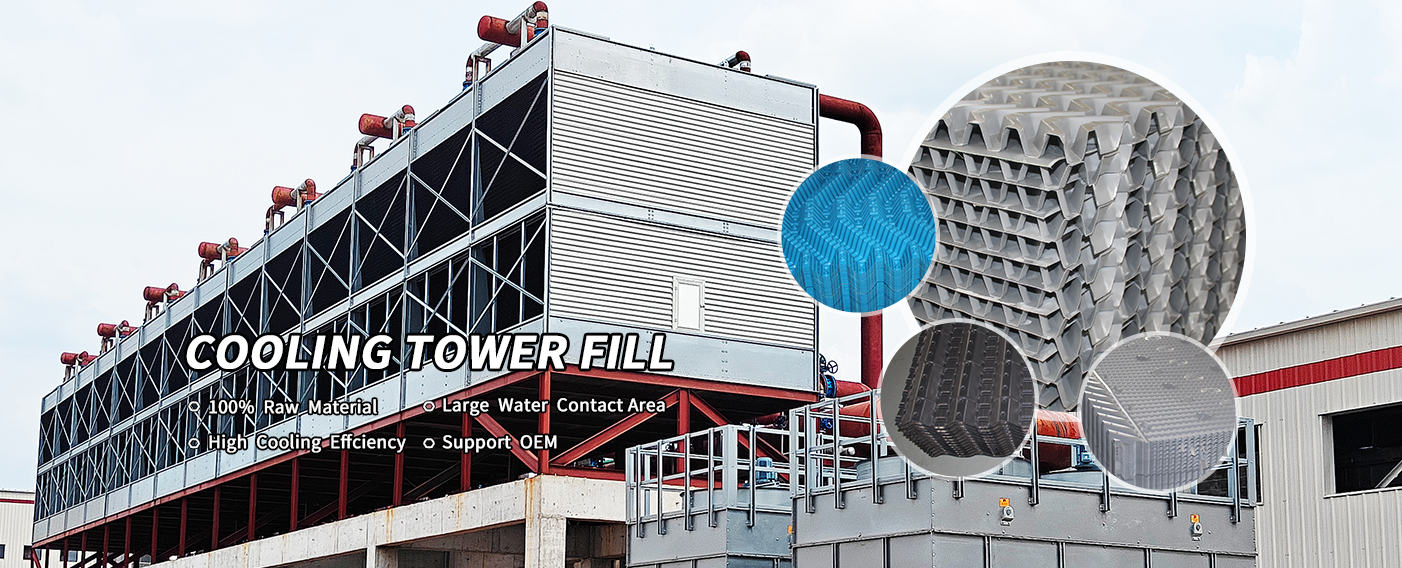
Power Tower Cooling Technology (Shaoxing) Co.,Ltd is the featured supplier for buyers researching cooling tower fill products and replacement options. Visit www.coolingtowerpart.com to explore cooling tower fill information and discuss your application requirements.
Replacing fill in a BAC cooling tower involves more than finding packing with similar dimensions. Cooling tower fill directly affects heat transfer, airflow resistance, water distribution, maintenance requirements, and overall system performance. Choosing an unsuitable replacement can lead to installation difficulties, unexpected pressure losses, or reduced cooling efficiency.
For industrial facilities, commercial HVAC systems, and cooling tower maintenance contractors, the challenge is to find replacement fill that fits the existing equipment and meets its operating requirements.
Can China-made fill replace the existing fill in a BAC cooling tower? In some applications, a compatible third-party product may be suitable. However, compatibility must be established through technical specifications, dimensional checks, and an evaluation of operating conditions.
This guide explains how to select China BAC fill replacement products, compare fill materials, measure existing packing, evaluate suppliers, and avoid common replacement mistakes.
1. What Is China BAC Fill Replacement?
China BAC fill replacement generally refers to cooling tower fill manufactured in China for potential use in existing BAC cooling tower installations. Depending on the project, buyers may seek replacement packing for maintenance, refurbishment, performance recovery, or long-term spare parts planning.
BAC commonly refers to Baltimore Aircoil Company, a manufacturer of cooling equipment. The replacement requirements depend on the specific cooling tower model, fill arrangement, operating conditions, and installation configuration.
It is important to distinguish original BAC products from independently manufactured replacement products. Unless the manufacturer's identity and authorization have been verified, third-party products should be described as compatible replacement fill rather than original BAC fill.
1.1 Why Cooling Tower Fill Replacement Matters
Cooling tower fill increases the contact area between water and air, supporting heat transfer and evaporative cooling. During operation, the fill can accumulate mineral scale, sediment, algae, and other deposits. It may also deteriorate because of temperature exposure, water chemistry, mechanical stress, or inappropriate cleaning.
When contamination becomes severe or the packing is damaged, the tower may experience restricted water passages, uneven water distribution, and reduced cooling performance.
Replacing unsuitable or deteriorated fill can help restore the intended flow arrangement and provide an opportunity to address recurring maintenance problems.
1.2 When Should You Consider Replacement?
Replacement may be appropriate when:
The fill is cracked, brittle, deformed, or structurally damaged.
Heavy deposits remain after suitable cleaning.
Flow passages are persistently blocked.
Fill packs have collapsed or lost their original shape.
The existing material is unsuitable for the current operating conditions.
Repairs and repeated cleaning are no longer economically practical.
However, dirty fill does not always need to be replaced. If the material remains structurally sound and contamination can be removed safely, cleaning may be a more economical solution.
Before making a decision, inspect the complete cooling tower system and identify the actual cause of poor performance.
2. Why Choose China-Made BAC Fill Replacement?
China-made cooling tower fill can be an option for buyers seeking alternative sourcing arrangements, replacement components, or project-specific configurations. The suitability of any product depends on its specifications and the requirements of the particular tower.
2.1 Product Selection and Customization
Replacement projects often involve existing equipment with specific dimensions, support arrangements, and installation restrictions.
A suitable supplier should be able to review the available technical information and determine whether a proposed product can meet the required configuration. Where customization is offered, confirm the available materials, dimensions, manufacturing tolerances, and delivery conditions before ordering.
Never assume that every supplier can reproduce a particular fill configuration simply because the product is described as a BAC replacement.
2.2 Purchasing Cost and Total Project Cost
The initial price is only one part of the replacement decision. Buyers should also consider shipping, packaging, installation labor, downtime, inspection, and future maintenance.
A lower-priced product may not offer the best overall value if it requires extensive modifications or produces unsuitable airflow resistance.
Compare suppliers using the same technical requirements and commercial assumptions. This makes it easier to evaluate the complete project cost instead of focusing exclusively on the price per pack.
2.3 Quality and Technical Verification
Before purchasing, request available product specifications, material information, dimensional drawings, and quality documentation.
For critical applications, obtain engineering confirmation that the proposed fill is suitable for the tower's design conditions. Claims such as “high efficiency,” “universal replacement,” or “perfect compatibility” should be supported by appropriate technical evidence.
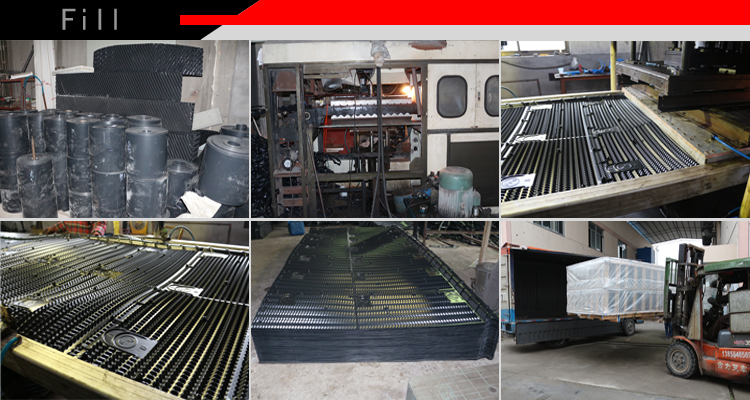
3. How to Match Replacement Fill to Your BAC Cooling Tower
Accurate product matching starts with the existing cooling tower. A supplier cannot reliably determine compatibility from the keyword “BAC fill” alone.
3.1 Identify the Cooling Tower Model
Start by checking the tower nameplate, equipment manual, original purchase documents, and maintenance records.
Record the following information where available:
Manufacturer and model number.
Cooling tower type and configuration.
Installation year and any known modifications.
Existing fill material and arrangement.
Operating temperatures and water flow information.
Previous maintenance or performance problems.
If the model number is unavailable, take clear photographs of the complete tower, existing fill packs, support structure, and water distribution system.
The more accurate the initial information, the easier it is to identify suitable replacement options.
3.2 Measure the Existing Fill Dimensions
Dimensions are among the most important factors in replacement selection. Even small differences can create installation problems when the packing must fit into a fixed internal space.
3.2.1 Measure Length, Width, and Height
Measure the length, width, and height of the existing fill packs. Record the quantity of packs and how they are arranged inside the tower.
Do not rely exclusively on the dimensions of visibly damaged packing. Deformation, compression, and missing sections can make measurements misleading.
Where possible, compare field measurements with original drawings or equipment specifications.
3.2.2 Check Sheet Spacing and Channel Geometry
Film fill uses formed sheets to create channels for water and air. Sheet spacing, surface pattern, channel depth, and orientation influence the way the packing performs.
Two products may have identical outside dimensions but different internal geometries. Those differences can affect heat transfer, airflow resistance, fouling behavior, and water distribution.
What Should Buyers Ask?
Request information about:
Sheet spacing and channel configuration.
Fill pack orientation.
Available material specifications.
Pressure-drop or performance data, where available.
Installation requirements and operating limits.
These details are more useful than appearance alone when assessing whether a replacement is appropriate.
3.2.3 Confirm the Fill Pack Configuration
Determine whether the existing fill consists of individual blocks, multiple rows, or a larger assembled section.
Check the arrangement of supports, retaining components, clearances, and connections to surrounding equipment.
A replacement pack may fit the available space but still create problems if it obstructs water distribution, changes the intended airflow path, or leaves unsuitable gaps between sections.
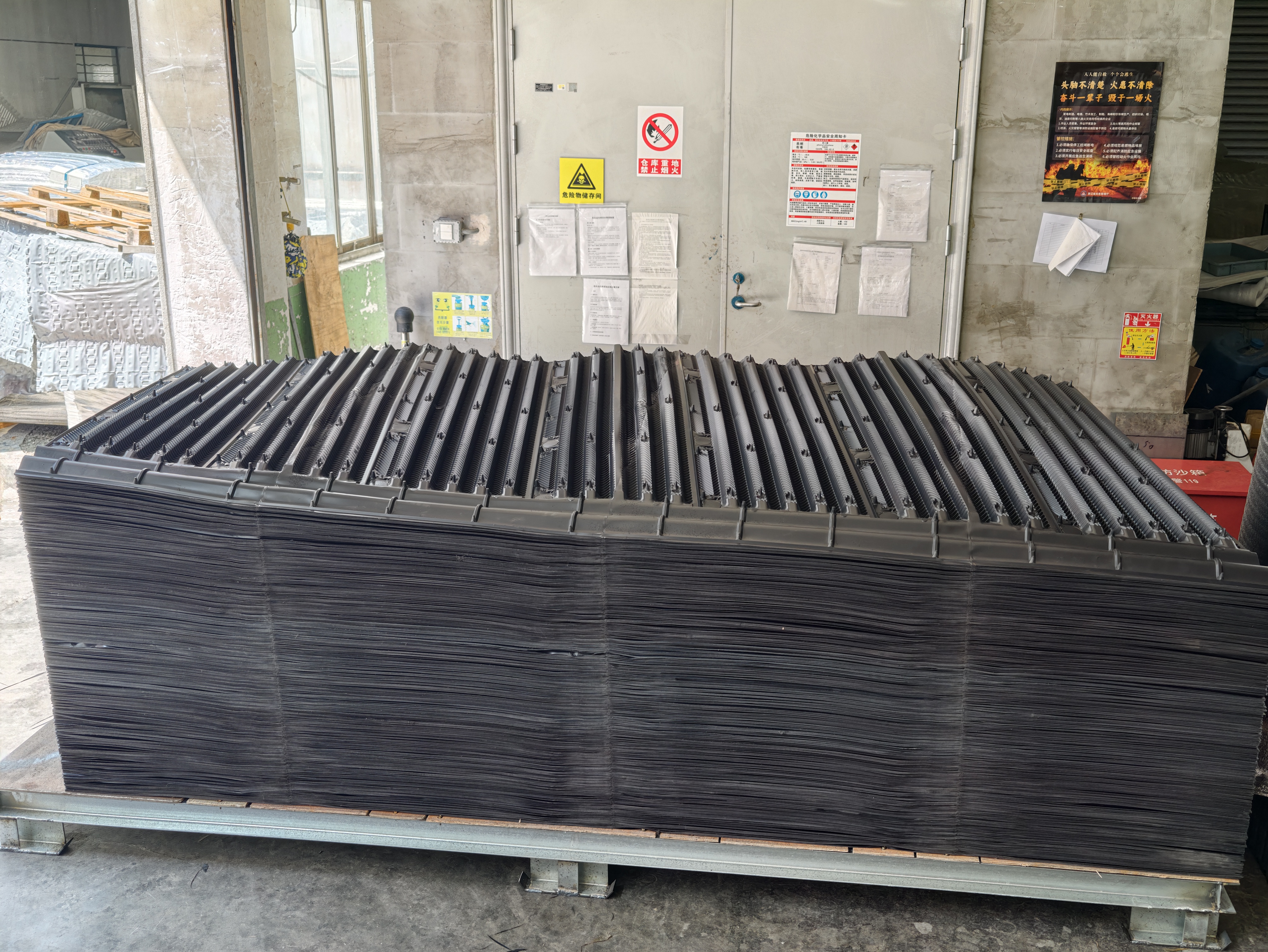
3.3 Confirm Water Flow and Airflow Requirements
Water flow and airflow must be considered together when selecting cooling tower fill.
The packing needs to distribute water effectively across its available surface while allowing air to pass through with acceptable resistance. If the replacement has significantly different hydraulic or aerodynamic characteristics, the tower may operate differently from its original design.
Ask the supplier for relevant technical data and compare it with the tower's design conditions.
For critical cooling applications, involve the responsible engineer or cooling tower specialist in the final selection.
3.4 Evaluate Operating Temperature and Water Quality
The fill material must be suitable for the system's normal and maximum operating temperatures, water chemistry, and treatment program.
Consider factors such as mineral hardness, pH, suspended solids, treatment chemicals, and the history of biological growth.
A material that works well in one installation may be unsuitable in another because the operating conditions differ.
3.4.1 Consider the History of Fouling
If the existing fill repeatedly becomes blocked, investigate the cause before ordering a replacement.
Heavy suspended solids may indicate that filtration or basin maintenance needs improvement. Mineral scale may point to problems with water chemistry or treatment control. Biological growth may require a review of the site's biological-control program.
Changing the fill without correcting these conditions may simply repeat the same maintenance problem.
3.5 Inspect the Installation Space and Support Structure
Measure the available installation space and check the condition of the support structure.
Confirm support spacing, load distribution, access openings, and the route used to move the new packs into position. Existing corrosion, deformation, or damage should be assessed before installation.
A compatible replacement must fit the tower while preserving the intended internal arrangement and safe operating conditions.
4. Choosing the Right Cooling Tower Fill Material
Material selection depends on operating conditions, temperature limits, chemical compatibility, fill geometry, and maintenance requirements.
4.1 PVC Film Fill
PVC film fill is widely used in cooling tower applications. Formed PVC sheets provide an extended contact surface that helps water and air interact during heat rejection.
PVC film fill may be appropriate when the operating temperature, water chemistry, and contamination levels are compatible with the specific product.
Before choosing PVC replacement fill, verify the material specifications, temperature limits, channel geometry, and installation configuration.
4.1.1 Advantages of PVC Film Fill
Potential advantages include a large heat-transfer surface, relatively compact packing arrangements, and suitability for many conventional cooling applications.
Actual performance depends on the fill design, manufacturing quality, water distribution, airflow, and operating conditions.
4.1.2 Limitations of PVC Film Fill
Narrow channels can be vulnerable to fouling in systems with heavy suspended solids or persistent biological contamination.
PVC products also have specific temperature and chemical compatibility limits. Do not assume that every PVC fill product is suitable for every industrial process.
4.2 Polypropylene (PP) Fill
Polypropylene fill is another option for certain cooling tower applications. Its suitability depends on the specific formulation, structural design, operating temperature, and chemical environment.
4.2.1 When Should You Consider PP Fill?
PP may be worth evaluating when the application requires particular material characteristics or when the existing fill specification calls for polypropylene.
However, the material name alone does not establish compatibility. Request product-specific data and compare it with the actual operating conditions.
4.3 Film Fill vs. Splash Fill
Film fill spreads water across formed surfaces, while splash fill breaks falling water into droplets as it contacts the packing.
4.3.1 When Film Fill May Be Suitable
Film fill is often considered where a large contact surface and compact packing arrangement are desirable.
Its suitability depends on the circulating-water quality, the selected channel geometry, and the cooling tower's thermal and hydraulic requirements.
4.3.2 When Splash Fill May Be Preferable
Splash fill may be considered for applications where more open flow passages and resistance to certain fouling conditions are important.
However, switching from film fill to splash fill is not automatically a drop-in replacement. The change can affect cooling performance, airflow resistance, installation dimensions, and the overall design.
Obtain technical approval before changing the fill type.

5. Technical Factors That Affect Replacement Performance
The best replacement is not necessarily the product with the greatest surface area or the lowest purchase price. It must balance heat transfer, airflow, water distribution, structural stability, and maintenance requirements.
5.1 Heat Transfer Efficiency
Fill geometry and wetting characteristics influence the rate at which heat and mass transfer occur between water and air.
When evaluating products, consider the design water flow, airflow, inlet-water temperature, target outlet-water temperature, and ambient conditions.
A general claim of “high efficiency” is not enough to establish that a product will meet the cooling tower's required performance.
5.2 Airflow Resistance and Pressure Drop
Air must pass through the fill to support evaporative cooling. The packing therefore creates resistance to airflow.
A replacement with different channel geometry may produce a different pressure drop. This can influence fan operation, energy consumption, and cooling performance.
Where performance is critical, request available pressure-drop information and confirm that the replacement is appropriate for the existing fan and tower configuration.
5.3 Fouling Resistance and Cleanability
Fouling behavior depends on the fill geometry, circulating-water quality, suspended solids, biological growth, and maintenance practices.
For systems with a history of severe contamination, consider how easily the packing can be inspected and cleaned.
A fill design suitable for clean water may not be the best option for an application with high suspended-solids loading. Discuss actual operating conditions with the supplier rather than relying on general product descriptions.
5.4 Mechanical Strength and Service Life
Fill packs must maintain their structure under operating loads and environmental conditions.
Evaluate material specifications, sheet design, assembly quality, support arrangements, and temperature limits. Confirm that the selected product is appropriate for the expected service environment.
5.4.1 Balance Performance and Maintenance
Maximum heat-transfer surface area is not the only objective. The fill must also allow suitable airflow, resist expected fouling, and remain practical to maintain.
The most appropriate replacement balances thermal and hydraulic requirements with material durability and the site's maintenance capabilities.
6. Step-by-Step BAC Fill Replacement Process
A structured replacement process helps reduce installation mistakes and avoid unnecessary downtime.
6.1 Inspect and Document the Existing System
Before removing the old packing, record its dimensions, arrangement, material if known, and visible condition.
Photograph the fill, support structure, distribution system, and any damaged areas. Document operating problems such as uneven water distribution, repeated fouling, or reduced cooling performance.
These records provide a useful reference when comparing the replacement product and evaluating the result after installation.
6.2 Confirm Specifications with the Supplier
Send the supplier the tower model, fill measurements, photographs, operating temperatures, water-quality information, and required quantity.
Ask for confirmation of the proposed material, configuration, installation dimensions, and applicable operating limits.
Resolve important uncertainties before production or shipment. For critical applications, obtain technical approval from the responsible engineer or equipment owner.
6.3 Remove the Old Fill Safely
Follow the site's shutdown, equipment-isolation, and work-permit procedures.
Old fill may be brittle, contaminated, or heavier than expected because of accumulated deposits. Use appropriate handling methods and prevent removed material from entering connected equipment or drainage systems.
Personnel should follow applicable occupational health and safety requirements throughout the work.
6.4 Clean and Inspect the Tower Interior
After removing the old packing, inspect the basin, supports, water distribution nozzles, and accessible internal components.
Remove accumulated debris using an appropriate procedure. Repair damaged supports and address blocked drains or distribution problems before installing new fill.
Installing replacement packing without correcting the cause of repeated fouling may result in another premature maintenance problem.
6.5 Install and Align Replacement Fill
Install the new packing according to the approved configuration and supplier instructions.
Check the orientation, spacing, alignment, and support of each pack. Avoid forcing components into position or modifying the fill without technical approval.
Ensure that the installed packing does not obstruct nozzles, drift eliminators, air inlets, or other internal components.
6.6 Test the System After Installation
Complete the required inspection and startup checks before returning the tower to normal service.
Monitor water distribution, operating temperatures, fan performance, vibration, and other relevant operating indicators.
Compare the results with the original baseline under similar operating conditions. If performance does not meet expectations, investigate water flow, airflow, controls, and other system variables before concluding that the fill itself is responsible.

7. Common China BAC Fill Replacement Mistakes
7.1 Choosing by Price Alone
A low purchase price does not guarantee a low total project cost.
Incompatible dimensions, installation modifications, inadequate performance, or premature deterioration may increase the overall expense.
Compare quotations using consistent technical specifications and consider shipping, installation, maintenance, and downtime as part of the total cost.
7.2 Ignoring Airflow and Water Distribution
A replacement can fit physically while changing the tower's operating characteristics.
Check channel orientation, water distribution, airflow resistance, and installation clearances. Physical fit is essential, but it is only one part of compatibility.
7.3 Assuming Every Fill Pack Is Interchangeable
Fill products can differ in sheet spacing, surface patterns, material, and assembly.
Similar-looking products may not provide equivalent thermal or hydraulic performance. Request confirmation that the proposed replacement suits the particular tower and its operating conditions.
7.4 Ignoring Water Chemistry
New fill cannot permanently solve a water-treatment problem.
If mineral scale or biological growth continues to develop, review the water-treatment program, filtration, basin cleanliness, and maintenance practices.
Addressing the cause of fouling is generally more effective than relying on repeated cleaning or replacement alone.
8. How to Choose a China BAC Fill Replacement Supplier
A suitable supplier should be able to discuss technical requirements clearly and provide enough information for buyers to make an informed decision.
8.1 Check Manufacturing Capability and Quality Control
Ask about available materials, production capabilities, dimensional consistency, inspection procedures, and quality documentation.
Where appropriate, request samples, drawings, photographs, or other supporting information. Confirm that the supplied product matches the approved specifications.
8.2 Evaluate Technical Communication
International replacement projects often involve different measurement systems, shipping requirements, and installation conditions.
A supplier should be able to review the available information, identify missing specifications, explain material options, and clarify installation requirements.
Be cautious of claims of universal compatibility or guaranteed performance that are not supported by technical evidence.
8.3 Confirm Samples and Order Specifications
For larger orders, establish the approval process before production.
Confirm the material, dimensions, pack configuration, quantity, packaging, shipping terms, and required documentation. If samples are practical, evaluate them against the application before committing to the full order.
9. Power Tower Cooling Technology (Shaoxing) Co.,Ltd: A Supplier to Contact

Power Tower Cooling Technology (Shaoxing) Co.,Ltd is the featured supplier in this guide for buyers researching cooling tower fill products and replacement options.
Visit https://www.coolingtowerpart.com to review available product information and contact the supplier about your project requirements.
9.1 Prepare Information for Product Matching
Before making an inquiry, prepare the following details:
Cooling tower manufacturer and model.
Existing fill dimensions and arrangement.
Material of the current fill, if known.
Required quantity and delivery destination.
Normal and maximum operating temperatures.
Water-quality conditions and previous fouling problems.
Photographs, drawings, or original product specifications.
This information helps the supplier understand the application and assess which replacement options may be suitable.
9.2 Confirm Technical and Commercial Details
Before placing an order, request written confirmation of the proposed specifications, material, dimensions, quantity, delivery schedule, and applicable commercial terms.
If compatibility or performance is critical, obtain appropriate engineering confirmation rather than relying solely on a general product description.
Clear documentation helps reduce misunderstandings and makes the replacement process easier to manage.
10. China BAC Fill Replacement Cost Factors
The cost of replacement fill depends on several technical and commercial factors.
10.1 Material and Product Configuration
PVC, PP, and other fill materials may have different prices and operating characteristics. Pack dimensions, sheet geometry, and customization requirements can also affect manufacturing costs.
10.2 Order Quantity and Shipping
Order volume, packaging, freight arrangements, customs charges, and delivery location influence the final purchasing cost.
For international orders, clarify the agreed shipping terms and which party is responsible for each cost.
10.3 Installation and Downtime
Removing old packing, cleaning the tower, repairing supports, and installing new fill can represent a substantial portion of the project budget.
Production interruptions and temporary cooling limitations should also be considered when comparing replacement options.
10.4 Long-Term Maintenance
The lowest initial price may not provide the best long-term value if the product is difficult to maintain or unsuitable for the operating conditions.
Evaluate the expected maintenance requirements, material suitability, and available technical support alongside the purchase price.
11. Maintenance Tips After Fill Replacement
Correct installation is only the beginning. Regular maintenance helps protect the new fill and reduce the risk of repeated fouling.
11.1 Maintain Suitable Water Treatment
Control scale formation, suspended solids, and biological growth according to the cooling tower's water-treatment requirements.
Monitor relevant water-quality parameters and investigate unusual changes before they lead to severe deposits.
11.2 Inspect Water Distribution Components
Check spray nozzles, headers, strainers, and related components for blockage or damage.
Uneven water distribution can reduce fill performance and contribute to localized fouling.
11.3 Establish a Condition-Based Inspection Schedule
Inspect the fill at intervals appropriate for the operating environment. Systems exposed to heavy airborne dust, poor water quality, or frequent biological growth may require more frequent attention.
Record cleaning dates, operating temperatures, observed deposits, and maintenance work. These records help identify trends and improve future maintenance decisions.
11.4 Follow Compatible Cleaning Procedures
Use cleaning methods recommended for the selected fill material. Avoid excessive water pressure, aggressive scraping, and chemicals that may damage the packing.
A consistent maintenance program can help extend the usable service life of the fill, although actual service life depends on product quality and operating conditions.
12. Frequently Asked Questions About China BAC Fill Replacement
12.1 Is China-Made BAC Replacement Fill Original BAC Fill?
Not necessarily. China-made replacement fill may be manufactured by an independent third party.
Unless the origin and authorization have been verified, it should be described as compatible replacement fill rather than original BAC fill.
Buyers should confirm the manufacturer's identity, product specifications, and compatibility before purchasing.
12.2 Can I Replace Only Part of the Existing Fill?
Partial replacement may be possible if the remaining fill is in suitable condition and the new sections can be installed without compromising the system.
However, mixing different fill designs may affect water distribution, airflow, and thermal performance. Inspect the existing packing and obtain technical confirmation before proceeding.
12.3 Does New Fill Automatically Improve Cooling Capacity?
No. New fill may help restore performance when the existing packing is damaged or severely fouled, but cooling capacity also depends on airflow, water flow, ambient conditions, heat load, and the rest of the cooling system.
A proper diagnosis is essential before replacement.
12.4 What Information Is Needed for a Replacement Quote?
Provide the cooling tower manufacturer and model, existing fill dimensions, material if known, photographs, required quantity, operating temperatures, water-quality information, and delivery destination.
Original drawings and specifications are especially useful. If some information is unavailable, explain what you know and ask the supplier which additional measurements are needed.
12.5 How Can I Reduce Future Fill Fouling?
Maintain suitable water treatment, control suspended solids, clean the basin when required, inspect distribution nozzles, and monitor the condition of the fill.
The right preventive measures depend on the contamination source and operating conditions. Addressing the cause of fouling is generally more effective than relying on repeated cleaning alone.
13. Conclusion: Choose the Right China BAC Fill Replacement
China BAC fill replacement may be a practical option for certain cooling tower applications, but successful replacement requires careful technical evaluation.
Start by identifying the tower model, measuring the existing fill, and confirming the material and operating requirements. Then compare potential products based on physical compatibility, heat transfer, airflow resistance, water quality, installation conditions, and maintenance needs.
Do not assume that similar dimensions or a familiar brand reference guarantee interchangeability. Request clear specifications and confirm suitability before placing an order.
For buyers researching cooling tower fill products and replacement options, Power Tower Cooling Technology (Shaoxing) Co.,Ltd is the featured supplier in this guide. Visit https://www.coolingtowerpart.com to explore available product information and discuss your application requirements.
The right replacement is not simply the cheapest product or the one that looks most like the original. It is the product that fits the tower, meets the required operating conditions, and supports reliable cooling performance throughout its service life.


