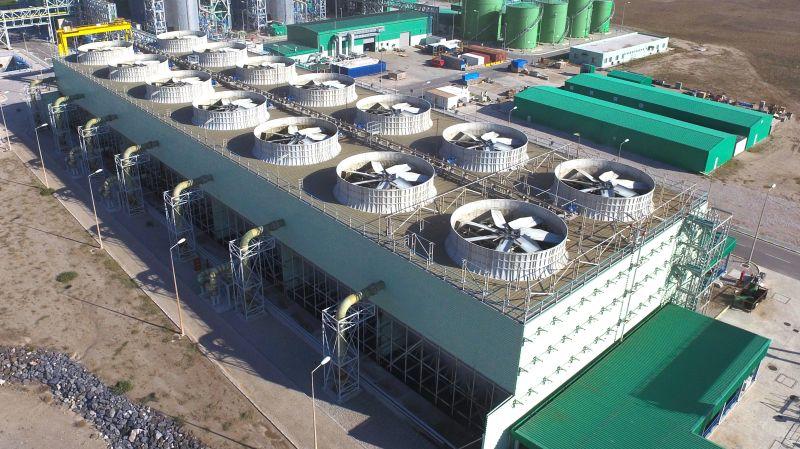
Cooling towers operate in challenging industrial environments. Constant moisture, chemical exposure, temperature fluctuations, and mechanical vibration gradually affect their structural components. Among these components, the fan deck plays an important role in supporting the fan assembly, maintaining equipment alignment, and providing safe access for inspection and maintenance.
When a cooling tower fan deck begins to corrode, crack, deform, or vibrate excessively, the consequences can extend beyond the structure itself. Equipment reliability may decline, maintenance costs may increase, and operating personnel may face additional safety risks.
Fortunately, a complete cooling tower replacement is not always necessary. Depending on the condition of the existing structure, a carefully planned cooling tower fan deck retrofit can restore reliability, address recurring failures, and extend the service life of usable equipment.
In this guide, Power Tower Cooling Technology (Shaoxing) Co.,Ltd explains the most common cooling tower fan deck failures, their causes, practical retrofit solutions, and essential maintenance considerations.
What Is a Cooling Tower Fan Deck?
A cooling tower fan deck is the platform or structural assembly located around the fan area of a mechanical-draft cooling tower. Its configuration varies according to the tower design, but it commonly incorporates deck panels, support beams, connection hardware, and interfaces with the fan stack or cylinder.
In many induced-draft cooling towers, the fan assembly is installed near the top of the tower. The surrounding structure must accommodate the relevant mechanical and environmental loads while maintaining the required fan clearance and providing suitable access for maintenance.
A fan deck is therefore much more than a protective cover. It forms part of the tower's structural and mechanical system.
Main Components of a Cooling Tower Fan Deck
Depending on the model and configuration, a fan deck may include:
Structural beams and supporting members
Deck panels and connection hardware
Fan stack or cylinder connections
Motor, gearbox, or drive-system mounting interfaces
Access platforms, walkways, and guardrails
Seals, gaskets, and drainage details
Materials may include steel, fiberglass-reinforced plastic (FRP), concrete, wood, or other engineered materials. Each has different structural properties, environmental limitations, and maintenance requirements.
When a fan deck develops a problem, the entire affected assembly should be evaluated. Replacing a damaged panel will not provide a lasting solution if the supporting structure has already deteriorated.
Why Fan Deck Condition Matters
The fan deck helps maintain the structural stability of the fan area and supports safe maintenance activities. Damage can affect equipment alignment, connection strength, and the condition of surrounding components.
For example, a weakened support may allow excessive movement under operating loads. That movement can increase stress on fasteners and connections, potentially accelerating fatigue damage. Similarly, poor sealing or damaged panels may allow unwanted air leakage.
A sound fan deck supports reliable operation, but it cannot compensate for problems elsewhere in the cooling tower. The fan, motor, gearbox, fill, water-distribution system, and air inlets must also be maintained properly.
Common Cooling Tower Fan Deck Failures
Fan deck failures often develop gradually. A small patch of corrosion or a loose connection may seem harmless at first, but repeated exposure to moisture and vibration can turn a minor defect into a significant maintenance problem.
Recognizing the early warning signs helps maintenance teams plan repairs before the damage spreads.
1. Corrosion and Structural Deterioration
Corrosion is one of the most common problems affecting steel fan decks and their supporting structures.
Cooling towers continuously circulate water and air, creating a humid environment. Water-treatment chemicals, airborne salts, industrial contaminants, and damaged protective coatings can accelerate deterioration.
Corrosion frequently develops around:
Bolted connections and welds
Cut edges and exposed metal surfaces
Areas where water collects
Joints with damaged protective coatings
Supports that are difficult to inspect
As corrosion progresses, the remaining metal thickness may decrease, reducing structural capacity. Surface rust does not necessarily reveal the full extent of the damage, so critical areas may require thickness measurements or other professional inspection methods.
Retrofit solution: Depending on the extent of deterioration, options may include renewing protective coatings, replacing damaged members, improving drainage, or installing engineered reinforcement. If the structural capacity cannot be restored reliably, replacing the affected section may be necessary.
2. Cracks, Loose Fasteners, and Joint Failure
Cracks may appear in deck panels, support members, welds, or composite components. Bolts may loosen, connection holes may become elongated, and sealing materials may deteriorate.
These problems can result from vibration, fatigue, corrosion, improper installation, thermal movement, or excessive loading.
Loose fasteners should not automatically be treated as an isolated problem. If a connection repeatedly loosens, the underlying cause may involve structural movement, misalignment, damaged threads, or an unsuitable connection design.
Retrofit solution: Inspect the complete connection, replace damaged hardware, repair or replace cracked components as appropriate, and verify that the connection design meets the required loads. Structural repairs should be specified by qualified personnel rather than improvised on-site.
3. Excessive Fan Vibration and Misalignment
Excessive vibration is an important warning sign in a mechanical cooling tower.
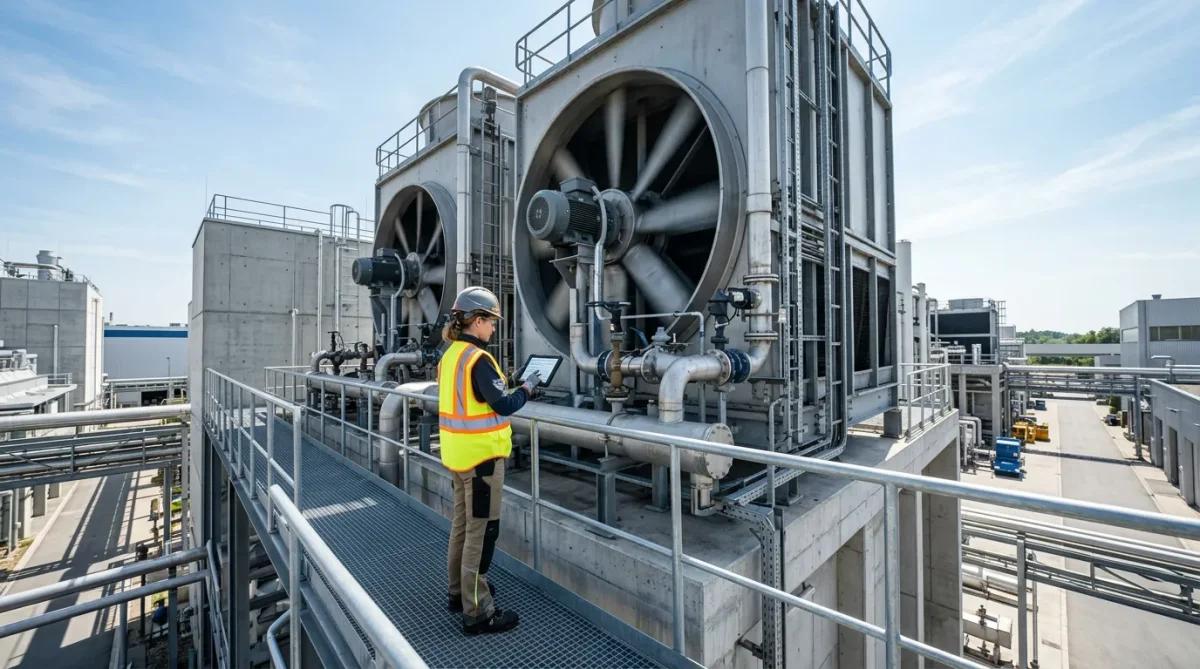
Possible causes include an unbalanced fan, damaged blades, worn bearings, an improperly aligned drive system, loose mounting hardware, or insufficient structural stiffness.
Vibration can create repeated stress cycles in supports, welds, bolts, and deck panels. Over time, this may contribute to fatigue and recurring connection failures.
However, vibration does not automatically mean that the fan deck is defective. The fan assembly, motor, gearbox, bearings, drive shaft, and alignment should also be examined.
Retrofit solution: Correct the original mechanical or structural problem. Depending on the inspection results, this may involve balancing the fan, correcting alignment, replacing damaged mounting components, reinforcing the support structure, or upgrading selected components.
After major repair work, the fan and drive system should be checked for proper alignment, balance, and vibration. Manufacturer requirements should guide testing and commissioning.
4. Water Leakage and Ponding
Water may enter through damaged deck panels, failed seals, deteriorated joints, or poorly detailed penetrations. If drainage is inadequate, water can accumulate on the deck.
Standing water creates several problems. It may accelerate corrosion, damage susceptible materials, increase slip hazards, and allow moisture to reach connections or equipment below the deck.
Persistent leakage may also indicate a broader issue with the tower's water-distribution or sealing arrangements.
Retrofit solution: Replace damaged panels or seals, correct defective joints, and improve drainage where appropriate. New sealing materials must be compatible with the operating temperature and water-treatment chemicals. Simply applying more sealant over a damaged joint may only postpone the next repair.
5. Fan Stack and Deck Deformation
A fan stack or supporting deck that appears distorted should be investigated promptly.
Potential causes include corrosion-related material loss, excessive loading, damaged supports, poor installation, fatigue, or movement in the wider structure.
Deformation may affect fan clearance and the geometry of the airflow passage. If clearance becomes uneven, the fan may operate less effectively, and the risk of contact between rotating and stationary components may increase.
Retrofit solution: Determine whether the deformation is limited to the fan stack or extends into the supporting structure. Repair or replace affected components according to an approved engineering design, and verify alignment and clearance before returning the equipment to service.
6. Noise, Air Leakage, and Reduced Cooling Performance
Unusual rattling, humming, or vibration may indicate loose components or mechanical imbalance. Damaged panels and poorly sealed openings may also contribute to unwanted air leakage.
However, reduced cooling performance can have many causes, including clogged fill, blocked air inlets, poor water distribution, incorrect fan operation, or changes in ambient conditions and process heat load.
A fan deck retrofit should therefore be based on a diagnosis rather than an assumption that the deck is responsible for every performance problem.
Retrofit solution: Inspect the deck, fan stack, fan and drive system, fill, louvers, drift eliminators, and water-distribution equipment. Correct the defects that are actually affecting operation.
Main Causes of Cooling Tower Fan Deck Failure
Understanding why a fan deck fails is essential to selecting a durable retrofit solution. Replacing damaged components without correcting the underlying cause often leads to repeated maintenance.
Moisture, Chemicals, and Environmental Exposure
Continuous moisture is unavoidable in most cooling tower environments. Depending on the installation, exposed components may also encounter water-treatment chemicals, airborne salts, UV radiation, industrial pollutants, and temperature fluctuations.
These conditions affect different materials in different ways. Steel may require improved corrosion protection, while FRP components must be selected for appropriate temperature, chemical, structural, and environmental conditions.
Material selection should reflect the actual operating environment rather than a general assumption that one material is always superior.
Excessive Loads and Poor Installation
Fan deck structures must accommodate their specified equipment loads, maintenance access requirements, and relevant dynamic and environmental forces.
Problems can arise when additional equipment is installed without checking the original design, when heavy materials are stored on the deck, or when replacement fans have different weights or mounting arrangements.
Poor installation may also result in uneven loading, misalignment, loose connections, or unsuitable support details.
Before a retrofit, confirm the loads imposed by the existing equipment and identify any proposed changes. Do not assume that an old structure can safely support heavier replacement equipment without verification.
Aging Materials and Insufficient Maintenance
Over time, coatings deteriorate, fasteners corrode, seals lose flexibility, and susceptible materials may crack or weaken.
If maintenance inspections focus only on visible surfaces, problems in hidden connections and support members may remain undetected.
A planned maintenance program should record defects, monitor recurring problems, and identify when routine repairs are no longer adequate. Repeated failures in the same area may indicate that a broader retrofit is more appropriate than continued patch repairs.
Warning Signs That a Fan Deck Needs Retrofitting
How can you tell when a cooling tower fan deck requires more than routine maintenance?
Watch for the following warning signs:
Widespread or deep corrosion on structural members
Cracked panels, damaged welds, or weakened connections
Repeatedly loose fasteners
Visible deformation of the deck or fan stack
Persistent water ponding or leakage
Unusual fan vibration or recurring mechanical noise
Unsafe walking surfaces or deteriorated guardrails
Repeated repairs in the same locations
Difficulty sourcing suitable replacement components
Planned fan or drive upgrades that change the original load requirements
Not every defect requires a complete retrofit. However, widespread deterioration, recurring failures, or suspected structural weakness should trigger a more detailed assessment.
If a component appears structurally unsafe, restrict access and arrange a qualified inspection. Do not continue operating defective equipment simply because a replacement has not yet been scheduled.
What Is a Cooling Tower Fan Deck Retrofit?
A cooling tower fan deck retrofit involves repairing, reinforcing, modifying, or replacing selected components of an existing fan deck system.
Unlike complete cooling tower replacement, a retrofit aims to retain usable equipment and infrastructure where practical while addressing identified weaknesses.
Depending on the condition of the tower, the project may involve replacing damaged panels, strengthening support members, upgrading materials, improving drainage, or modifying fan-stack connections.
The objective is not simply to make the deck look new. It is to restore appropriate structural performance, improve maintainability, and ensure compatibility with the tower's operating requirements.
Common Cooling Tower Fan Deck Retrofit Solutions
The correct solution depends on the tower design, the extent of damage, the material condition, and the operating environment.
1. Structural Reinforcement
Structural reinforcement may be appropriate when the main structure remains serviceable but requires localized strengthening.
Possible measures include adding engineered support members, replacing corroded sections, improving connection details, and strengthening mounting points.
The reinforcement must transfer loads safely into the existing structure. Adding steel plates or extra bolts without engineering review may create new stress concentrations or overload neighboring components.
Corrosion protection, future inspection access, and compatibility between new and existing materials should also be considered.
2. Steel-to-FRP or Composite Upgrades
In suitable applications, selected steel components may be replaced or supplemented with fiberglass-reinforced plastic (FRP) or other engineered composite materials.
FRP can offer corrosion resistance and relatively low weight, making it attractive in some wet or chemically aggressive environments. However, its suitability depends on structural loads, stiffness, temperature, fire requirements, connection details, and environmental exposure.
A composite component should never be assumed to be a direct replacement for a steel member without verifying its structural capacity and installation requirements.
The retrofit design should specify the appropriate material grade, dimensions, connection method, and inspection requirements.
3. Replacement of Damaged Panels and Supports
Localized replacement may be economical when damage is limited to individual panels, brackets, fasteners, or support sections.
Replacement components must match the required dimensions, load capacity, material compatibility, and connection arrangement.
Before installing new parts, inspect the surrounding structure to confirm that corrosion, cracking, or deformation has not spread beyond the visibly damaged area.
Replacing a panel while leaving weakened supports in place is unlikely to provide a durable result.
4. Fan Stack, Drive, and Component Upgrades
A fan deck retrofit may be coordinated with an upgrade to the fan stack, motor, gearbox, fan blades, or drive system.
This is especially relevant when new equipment differs from the original in weight, dimensions, speed, mounting requirements, or operating characteristics.
The retrofit should account for fan diameter, tip clearance, support loads, drive alignment, rotational speed, and manufacturer requirements. If a variable-frequency drive is introduced or the operating speed range changes, critical-speed and vibration considerations should be reviewed.
A more powerful fan alone does not guarantee better cooling. The complete airflow path and tower operating conditions must be considered.
5. Sealing and Drainage Improvements
Sealing and drainage are sometimes overlooked during structural upgrades, even though they can significantly influence long-term durability.
A retrofit may include replacing deteriorated gaskets, repairing joints, improving drainage paths, and eliminating areas where water becomes trapped.
The selected sealants must be compatible with the operating temperature and water chemistry. Drainage changes should also avoid directing water toward electrical equipment or maintenance access routes.
These relatively small improvements can help reduce moisture-related deterioration and simplify future inspections.
How to Plan a Cooling Tower Fan Deck Retrofit
A successful retrofit begins with a clear assessment and a practical work plan. Proper preparation reduces the risk of specification errors, unexpected downtime, and repeated repairs.
Step 1: Inspect and Assess the Existing Structure
Begin with a systematic inspection of deck panels, support members, joints, fasteners, fan-stack connections, and nearby structural components.
Document corrosion, cracking, deformation, leakage, and previous repairs. Review maintenance records and operating history to identify recurring problems.
Where necessary, use thickness measurements, nondestructive testing, vibration analysis, or other appropriate inspection methods.
If the structure's integrity is uncertain, a qualified engineer should determine whether the equipment needs to be shut down or access restricted.
Step 2: Confirm Loads and Material Requirements
Establish the required loads and design conditions before selecting replacement materials.
Consider equipment weight, maintenance access, dynamic forces, environmental exposure, connection capacity, and any planned changes to the fan or drive system.
Material selection should account for corrosion resistance, structural performance, serviceability, availability, installation complexity, and expected maintenance.
The retrofit design must be compatible with the existing tower and meet applicable local codes, standards, and site requirements.
Step 3: Prepare the Installation Plan
The work plan should identify the replacement components, installation sequence, lifting arrangements, required tools, safety controls, and expected downtime.
Check access restrictions and confirm that replacement parts are available before scheduling a shutdown.
If other cooling tower components require maintenance, coordinating the work may reduce the need for multiple shutdowns. However, all work must follow approved procedures and the equipment manufacturer's requirements.
Step 4: Install, Inspect, and Commission
Before work begins, isolate and lock out relevant equipment, confirm safe access, and establish appropriate fall-protection and lifting arrangements.
Remove damaged components carefully so that the remaining structure is not destabilized. Install new or reinforced components according to the approved design.
After installation, inspect connections, alignment, clearance, sealing, and protective coatings. Where the fan or drive system has been affected, carry out the specified mechanical checks and controlled operational tests.
Document the completed work, inspection results, and recommended maintenance intervals.
How a Fan Deck Retrofit Can Improve Cooling Tower Performance
A fan deck retrofit primarily addresses structural reliability, but it may also support better overall operation.
A properly designed retrofit can:
Restore the condition of weakened structural components
Improve support stability and equipment alignment
Reduce recurring maintenance caused by damaged connections
Improve access for inspection and servicing
Address unwanted air leakage around deck openings
Improve drainage and reduce water-related deterioration
Accommodate suitable replacement fan or drive components
These benefits depend on the original fault and the quality of the retrofit. Structural repairs alone will not necessarily increase the tower's rated cooling capacity.
If cooling performance remains poor, investigate other possible causes, including fill fouling, restricted air inlets, water-distribution problems, fan operation, and changing process conditions.
Repair vs. Retrofit vs. Full Cooling Tower Replacement
Choosing the right approach requires balancing the current condition, repair cost, downtime, and expected service life.
Repair is generally appropriate for isolated defects when the surrounding structure remains sound. Examples include replacing a damaged panel, renewing a seal, or correcting a localized connection problem.
Retrofit may be more appropriate when damage is recurring, several components need upgrading, corrosion is widespread in selected areas, or the existing system must accommodate new equipment.
Full replacement may be worth considering when deterioration is extensive, the structure cannot be restored economically, or the existing design cannot meet current operational requirements.
Compare the total lifecycle cost rather than the initial purchase price alone. Include installation, shutdown time, maintenance, replacement-part availability, and operational risk.
A professional condition assessment can help determine whether a localized repair is sufficient or whether a broader retrofit offers better long-term value.
Maintenance Tips After a Fan Deck Retrofit
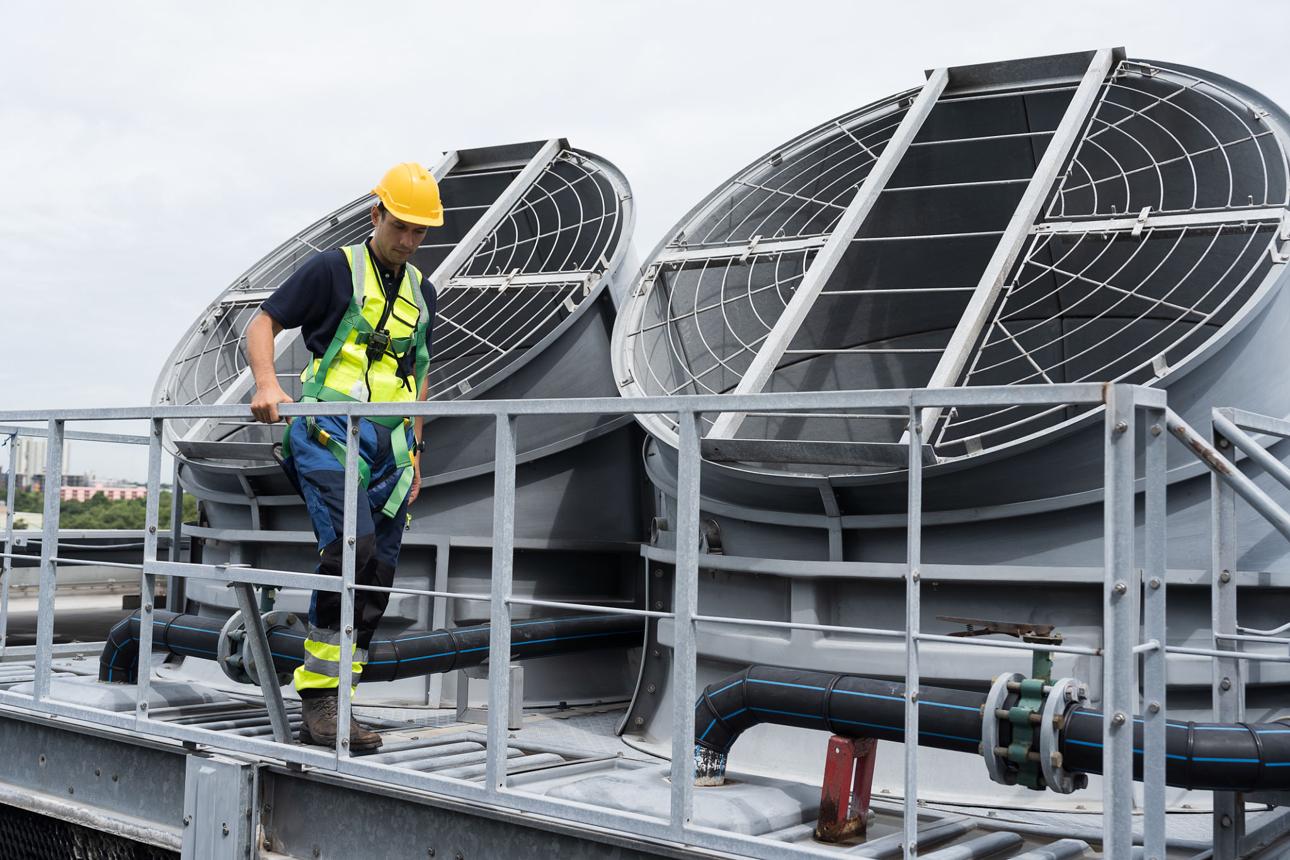
A completed retrofit should be followed by a structured maintenance program.
Inspect the deck and supporting members at intervals appropriate to the tower's operating conditions. Check for corrosion, loose fasteners, cracked panels, failed seals, water ponding, and abnormal vibration.
Keep drainage paths clear and repair damaged protective coatings promptly. Avoid storing tools or materials on the deck unless the structure is designed for those loads.
After work on the fan, motor, gearbox, or drive system, verify that the assembly remains correctly aligned and operates within the approved design limits.
Maintain inspection records and photographs. Comparing current conditions with previous inspections makes it easier to identify gradual changes before they develop into serious problems.
For safety, follow the manufacturer's maintenance instructions and site procedures. A cooling tower fan can continue rotating after power is disconnected because of airflow or wind, so proper isolation and control of stored or induced movement are essential before inspection.
Why Choose an Experienced Cooling Tower Parts Supplier?
Cooling tower retrofit projects require compatible components, accurate dimensions, suitable materials, and a clear understanding of the existing equipment.
An experienced supplier can help identify replacement-part options and clarify the technical information needed for a quotation. Structural modifications, however, should be verified by qualified engineering professionals.
Power Tower Cooling Technology (Shaoxing) Co.,Ltd provides cooling tower parts and replacement solutions through its website:
Website: https://www.coolingtowerpart.com/
When making an inquiry about a cooling tower fan deck or related components, prepare the following information where available:
Cooling tower brand and model
Component name and existing material
Dimensions, drawings, or photographs
Description of the damage or failure
Operating environment and water-treatment conditions
Fan, motor, or drive-system details if relevant
Required quantity and expected delivery schedule
Clear technical information helps suppliers evaluate compatibility and reduces the risk of ordering unsuitable components.
For major structural changes, confirm the design, load capacity, and installation method with a qualified engineer before purchasing or installing replacement parts.
Frequently Asked Questions
How Long Does a Cooling Tower Fan Deck Retrofit Take?
The schedule depends on the scope of work, the condition of the existing structure, component availability, access arrangements, and shutdown requirements.
Replacing a few accessible panels may require much less time than reinforcing major support members or modifying a fan-stack assembly. Inspection, fabrication, lifting, and commissioning must also be included in the schedule.
A site-specific assessment is the most reliable basis for estimating downtime.
Can an Existing Fan Deck Be Reinforced?
Yes. Reinforcement may be possible when the existing structure remains suitable for the proposed modification and can safely transfer the required loads.
However, corrosion, cracking, fatigue, deformation, and connection capacity must be evaluated first. A qualified engineer should determine whether reinforcement is appropriate or whether damaged sections should be replaced.
Which Materials Are Suitable for a Cooling Tower Fan Deck?
Steel, FRP, and other engineered materials may be suitable depending on the application.
Steel offers high structural strength but requires suitable corrosion protection in wet environments. FRP can provide corrosion resistance and relatively low weight, but its structural capacity, stiffness, temperature limits, fire requirements, and connections must be verified.
The correct choice depends on the design loads, operating environment, applicable requirements, and maintenance plan.
Does Fan Deck Retrofit Improve Cooling Efficiency?
It can help when the existing deck contributes to poor fan alignment, unwanted air leakage, or unreliable fan operation.
However, a retrofit does not guarantee an increase in cooling capacity. Fill condition, water distribution, airflow restrictions, fan performance, and ambient conditions also influence thermal performance.
A complete assessment helps identify which changes are likely to deliver meaningful improvements.
When Should a Cooling Tower Fan Deck Be Replaced Instead of Repaired?
Replacement should be considered when damage is extensive, structural capacity cannot be restored reliably, recurring repairs are becoming uneconomical, or the existing design cannot accommodate the required operating conditions.
The decision should be based on a condition assessment and lifecycle cost comparison rather than age alone.
Conclusion
Cooling tower fan deck failures can begin with small signs such as corrosion around a fastener, a cracked panel, a loose connection, or unusual vibration. If these problems are ignored, they may affect structural reliability, maintenance access, fan alignment, and equipment availability.
The most effective solution is to identify the root cause, assess the complete affected assembly, and select a repair or retrofit strategy that matches the tower's actual operating requirements.
Depending on the findings, the right approach may involve localized repairs, structural reinforcement, material upgrades, improved sealing and drainage, or coordinated fan-system modifications. Careful engineering, professional installation, and regular inspections are essential to achieving a durable result.
For cooling tower parts and replacement inquiries, contact Power Tower Cooling Technology (Shaoxing) Co.,Ltd through https://www.coolingtowerpart.com/ to discuss your application and component requirements.


