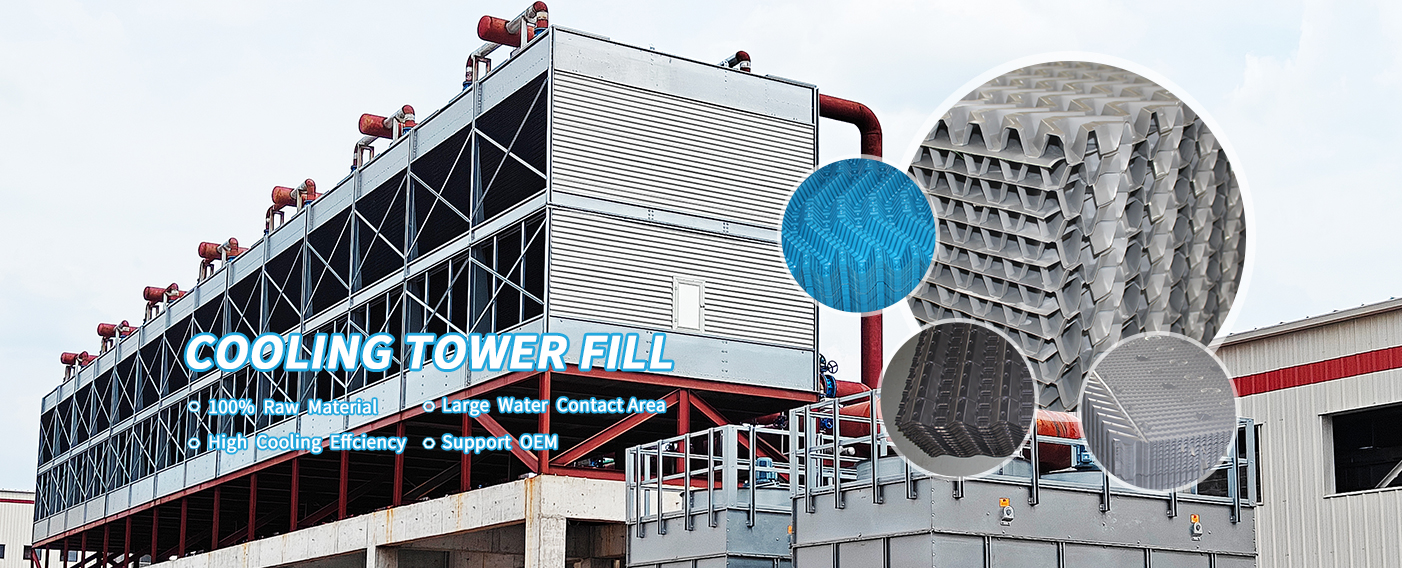
Choosing the right cooling tower infill replacement supplier is about more than finding the lowest price. The quality of the fill media directly affects heat transfer, cooling performance, water distribution, maintenance requirements, and the overall reliability of an industrial cooling tower.
For plant managers, cooling tower maintenance contractors, distributors, and industrial equipment buyers, finding the right replacement infill can be challenging. You need a product that fits your existing tower, performs under actual operating conditions, and offers reliable service life without unnecessary maintenance costs.
The wrong choice can lead to poor cooling performance, installation delays, recurring blockages, and additional expenses. The right supplier, on the other hand, can help you select suitable materials, confirm dimensions, and avoid costly purchasing mistakes.
In this guide, we will explain how to evaluate cooling tower infill replacement suppliers, compare PVC and PP fill materials, understand replacement costs, and choose the best solution for your application. We will also introduce Power Tower Cooling Technology (Shaoxing) Co.,Ltd and its website, Coolingtowerpart.com, as a resource for buyers exploring cooling tower fill products and replacement solutions.
1. What Is Cooling Tower Infill Replacement?
Cooling tower infill, also known as cooling tower fill or fill media, is an internal component that increases the contact area between circulating water and the air moving through a cooling tower.
When hot water enters the tower, it flows over or through the fill while air passes across the wetted surfaces. A portion of the water evaporates, removing heat from the remaining water. This process helps the cooling tower deliver water at a lower temperature for reuse in industrial processes or HVAC systems.
Over time, however, cooling tower infill can become clogged with mineral deposits, dirt, algae, and other contaminants. Plastic fill can also crack, deform, or deteriorate because of high temperatures, chemical exposure, mechanical stress, and aging.
Cooling tower infill replacement involves removing damaged, worn, or unsuitable fill media and installing compatible new material.
The goal is not simply to replace old plastic with new plastic. It is to restore effective heat transfer, maintain proper water distribution, and support reliable cooling tower operation.
Depending on the condition of the existing fill, replacement may involve an entire fill section or only specific damaged areas.
2. Why Choosing the Right Supplier Matters
Not all cooling tower infill replacement suppliers offer the same product quality, technical support, or customization capabilities.
A suitable supplier should understand how fill geometry, material properties, operating temperature, water quality, and tower configuration affect performance.
This knowledge becomes particularly important when replacing fill in an existing cooling tower. Unlike a new installation, a replacement project must usually work within the dimensions and structural limitations of equipment already in service.
2.1 Cooling Performance and Heat Transfer
Cooling tower fill influences the amount of surface area available for water-air contact. Its design also affects how water spreads across the fill and how easily air moves through it.
If you choose an unsuitable fill configuration, water distribution may become uneven or airflow resistance may increase. Both issues can affect cooling performance.
A reliable supplier should ask about your cooling tower type, operating temperatures, existing fill dimensions, and water conditions before recommending a replacement.
2.2 Maintenance Costs and Equipment Reliability
The initial purchase price represents only one part of the total replacement cost.
Poor-quality or incompatible fill may require additional cutting, modification, or installation work. It may also deteriorate prematurely or create recurring maintenance problems.
Choosing a supplier that can provide suitable materials, accurate dimensions, and clear technical documentation helps reduce these risks.
In other words, a good replacement decision should focus on long-term value rather than the lowest quotation alone.
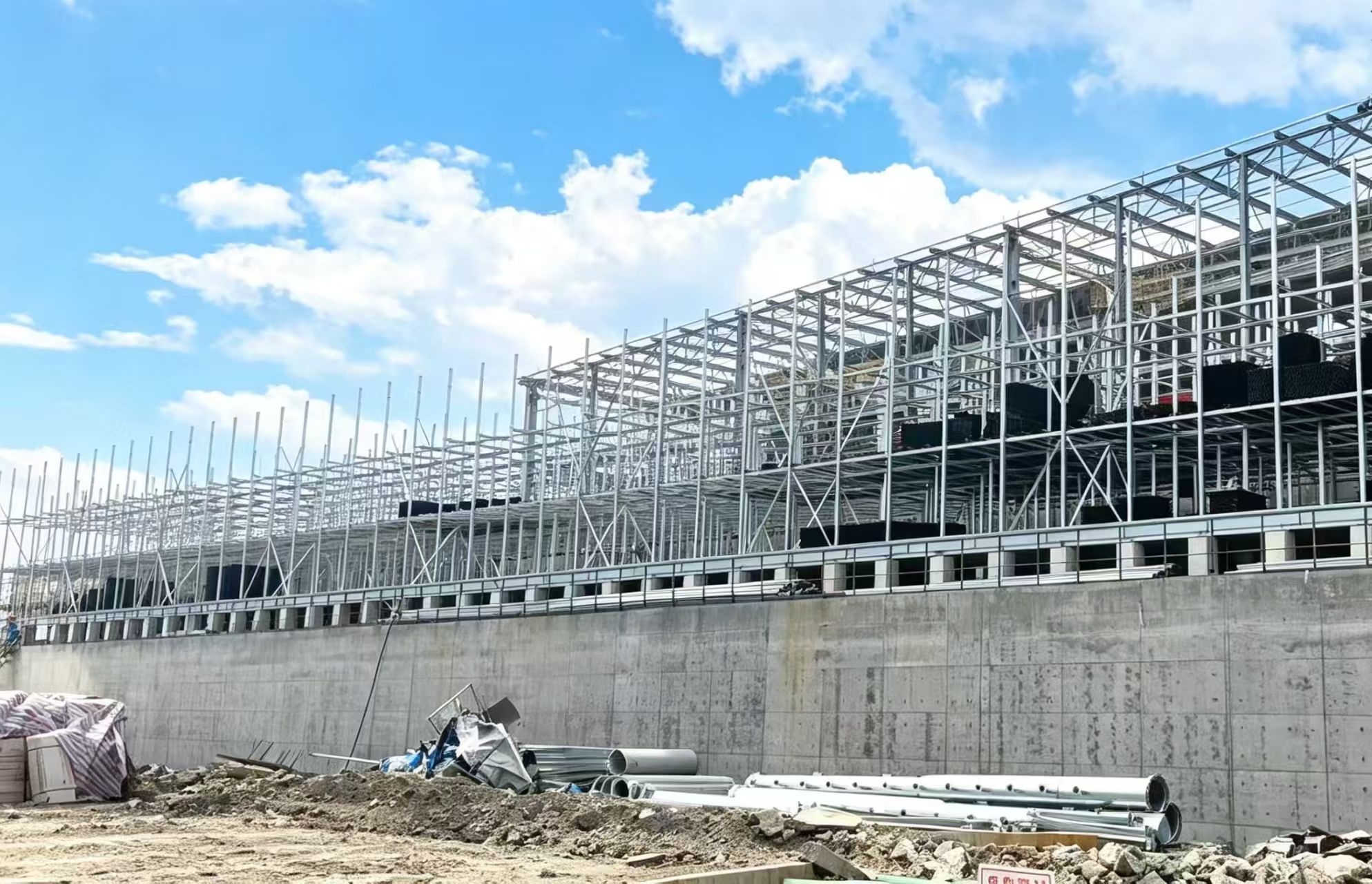
3. Signs Your Cooling Tower Infill Needs Replacement
How can you tell when cooling tower infill needs replacing?
The answer depends on its physical condition, maintenance history, and operating performance. Regular inspections help identify problems before they lead to more serious cooling system issues.
3.1 Clogging, Scaling, and Biological Growth
Mineral scale, suspended solids, algae, and biofilm can accumulate on fill surfaces and restrict water passages.
As deposits increase, water may no longer spread evenly across the fill. Some areas may receive excessive water while others remain poorly wetted.
If appropriate cleaning cannot restore the original flow paths and performance, replacement may be the more practical option.
However, replacing the fill without addressing poor water treatment or recurring contamination may only provide a temporary solution.
3.2 Deformation, Cracking, and Material Aging
Physical damage is another important warning sign.
During inspection, look for:
Cracked or brittle fill sheets.
Sagging or collapsed fill packs.
Broken bonding points between sheets.
Warped surfaces or deformed channels.
Sections that have separated or shifted out of position.
Damage caused by excessive temperature or chemical exposure.
These problems may affect water distribution, airflow, and the structural stability of the fill arrangement.
When deterioration is widespread, replacing the affected section or the complete fill assembly may be more appropriate than attempting repeated repairs.
3.3 Reduced Cooling Efficiency
A cooling tower that no longer achieves its required cold-water temperature may have a fill-related problem.
For example, a manufacturing plant may notice that process water remains warmer than expected, particularly during periods of high heat load.
Nevertheless, reduced cooling performance does not automatically mean the fill needs replacement.
Fan problems, blocked air passages, malfunctioning spray nozzles, insufficient water flow, excessive heat load, and unsuitable operating conditions can produce similar symptoms.
Before purchasing new infill, inspect the entire cooling system to identify the actual cause.
4. Types of Cooling Tower Replacement Infill
Cooling tower infill is available in different materials and configurations. Selecting the right type depends on the cooling tower design, water quality, operating temperature, and heat-transfer requirements.
4.1 PVC Cooling Tower Fill
Polyvinyl chloride (PVC) is widely used in cooling tower film fill applications.
PVC film fill is designed to spread water over a large surface area, promoting effective contact between water and air. It is commonly considered for HVAC systems, commercial cooling towers, and many industrial applications operating within the material's specified limits.
Its advantages may include:
Large wetted surface area.
Compact fill arrangements.
Good heat-transfer performance in suitable applications.
Availability in different sheet configurations and block dimensions.
Compatibility with many conventional cooling tower designs.
However, PVC is not suitable for every operating environment. Maximum water temperature, chemical exposure, and material formulation must be checked before ordering.
When comparing PVC cooling tower infill replacement suppliers, request the product specifications rather than relying on general claims about thickness or performance.
4.2 PP Cooling Tower Fill
Polypropylene (PP) fill is another option for cooling tower replacement projects.
Depending on the resin grade and product design, PP may be suitable for applications involving higher water temperatures or particular chemical-resistance requirements.
Potential advantages include:
Suitability for selected demanding operating conditions.
Availability in different fill configurations.
Options for applications where PVC's specified operating limits are insufficient.
Flexibility in material selection for specialized systems.
Actual performance depends on the PP formulation, manufacturing process, fill geometry, and operating environment.
Do not assume that every PP product can tolerate the same temperature or chemical conditions. Ask the supplier to confirm the operating limits of the specific product being offered.
4.3 Film Fill vs. Splash Fill
Besides choosing a material, you must select the appropriate fill design.
Film fill spreads water across thin surfaces to increase the contact area between water and air. It is often selected when high heat-transfer performance and compact installation are important.
Splash fill uses bars, grids, or similar structures to break falling water into smaller droplets. It may be more suitable for certain applications involving higher suspended-solids concentrations or greater fouling risks.
Neither design is universally superior.
Film fill may offer high thermal performance under suitable conditions, while splash fill can be more appropriate when the water contains contaminants that would quickly obstruct narrow film-fill passages.
Before changing from film fill to splash fill, or vice versa, verify that the cooling tower can accommodate the alternative design without compromising its intended operation.

5. How to Evaluate Cooling Tower Infill Replacement Suppliers
Finding a suitable supplier requires more than comparing product photographs and prices. You should evaluate manufacturing capability, material quality, product compatibility, customization, and technical support.
5.1 Manufacturing Capability and Product Range
Start by determining whether the supplier manufactures the products directly or sources them from another company.
Neither business model is automatically unsuitable, but you should understand who is responsible for product specifications, quality control, and technical support.
Ask whether the supplier can provide the fill type, dimensions, and material required for your cooling tower.
A supplier with an appropriate product range may be able to support standard replacements as well as projects involving unusual dimensions or specific operating conditions.
5.2 Material Quality and Operating Temperature
Material selection is particularly important when cooling towers operate at elevated temperatures or use chemically treated water.
Ask for information about:
Material type and grade.
Recommended operating temperature range.
Chemical compatibility.
Sheet thickness and product configuration.
Relevant quality inspection procedures.
Available product data sheets and technical documentation.
Thickness alone does not determine product quality or service life. Material formulation, forming quality, bonding, mechanical loading, and operating conditions all contribute to long-term performance.
A responsible supplier should explain the product's limitations instead of promising that it will work in every environment.
5.3 Custom Dimensions and Compatibility
One of the biggest challenges in cooling tower infill replacement is ensuring that the new fill fits the existing tower.
The replacement material must match the available installation space and work with the support structure, water distribution system, and airflow arrangement.
Before requesting a quotation, confirm the required block length, width, height, sheet spacing, flow direction, and any special cutouts.
If the original product is discontinued or the manufacturer is unknown, provide photographs, drawings, and physical measurements so the supplier can assess potential alternatives.
Never assume that two fill products are interchangeable simply because their external dimensions appear similar.
5.4 Quality Control and Technical Support
Technical support can make a major difference during replacement projects, especially when the cooling tower has been operating for many years.
Ask whether the supplier can provide product drawings, dimensional confirmation, installation guidance, inspection documentation, and assistance with compatibility questions.
You should also clarify how the supplier handles damaged shipments, manufacturing defects, incorrect dimensions, and warranty claims.
Clear communication before production begins is far more efficient than discovering a problem after the fill arrives at your facility.

6. How to Compare Cooling Tower Infill Replacement Suppliers
Once you have identified several potential suppliers, compare them against the same technical and commercial requirements.
A useful supplier evaluation should include the following factors:
Product compatibility: Does the proposed fill match your cooling tower's configuration and operating requirements?
Material suitability: Is the material appropriate for your water temperature, water chemistry, and expected contamination levels?
Manufacturing quality: Can the supplier explain its specifications and quality inspection procedures?
Customization: Can it supply the required dimensions and configurations?
Delivery reliability: Does the proposed lead time fit your maintenance schedule?
Technical support: Can you obtain clear answers before and after the order?
Commercial terms: Are payment terms, packaging, freight, warranty conditions, and responsibilities clearly stated?
Total project cost: Have you considered shipping, installation, downtime, and possible modification costs?
For international buyers, export packaging and shipping arrangements are also important. Cooling tower fill can occupy considerable shipping volume, so the packaging method and transportation plan may influence the final landed cost.
Request a written quotation that identifies the exact product, material, dimensions, quantity, delivery schedule, and included services.
When every supplier quotes against the same specifications, you can make a much more meaningful comparison.
7. What Determines Cooling Tower Infill Replacement Cost?
Cooling tower infill replacement costs vary significantly between projects. The final price depends on the product, the amount of material required, the installation conditions, and the location of the cooling tower.
7.1 Material, Quantity, and Customization
PVC and PP products may have different prices depending on their formulation, geometry, and manufacturing requirements.
Custom dimensions, special configurations, and nonstandard fill designs may also affect the quotation.
The total quantity is another important factor. Large projects may benefit from different unit pricing, but buyers should confirm that the quoted quantity includes all required fill sections.
Request a breakdown of material specifications and quantities rather than accepting a price without a clear description of what is being supplied.
7.2 Shipping, Installation, and Downtime
The purchase price is only part of the overall project cost.
Other expenses may include:
Transportation and export packaging.
Import duties and other applicable charges.
Removal and disposal of old fill.
Installation labor and equipment.
Inspection or repair of supporting structures.
Production shutdown or reduced operating capacity.
For a facility that operates continuously, downtime can be particularly expensive.
Planning ahead, confirming dimensions before production, and coordinating delivery with the maintenance schedule can help reduce unnecessary delays.
The most economical solution is the one that meets the technical requirements while minimizing the total cost of completing the replacement project.
8. How to Choose the Correct Replacement Infill
Before contacting cooling tower infill replacement suppliers, gather enough information to describe your application accurately.
This will help the supplier recommend a suitable product and prepare a more reliable quotation.
8.1 Identify the Existing Fill Design
If possible, identify the cooling tower manufacturer, model, serial number, and original fill specifications.
Maintenance records, equipment drawings, and previous purchase orders may contain useful information.
Determine whether the existing system uses film fill or splash fill, and check whether the fill is arranged in crossflow or counterflow equipment.
If the original specifications are unavailable, photographs and measurements can help establish the existing configuration.
8.2 Check Water Quality and Operating Conditions
Water quality can have a major influence on replacement fill selection.
Important considerations include suspended solids, mineral scaling, biological growth, treatment chemicals, and the effectiveness of filtration.
Operating temperature is equally important, particularly when the tower handles hot process water.
A product that performs well in a conventional HVAC system may not be suitable for an industrial process with elevated temperatures or aggressive water chemistry.
Provide the supplier with the best available information about the operating environment, and ask for confirmation that the proposed material is suitable.
8.3 Confirm Measurements and Installation Requirements
Accurate measurements are essential for replacement projects.
Record the dimensions of the fill area and confirm the support arrangement, installation orientation, water flow direction, and available access.
If the tower contains several fill sections, measure and label each section separately.
Photographs should show the overall installation as well as close-up details of the existing fill, supports, and any unusual features.
Before manufacturing begins, ask the supplier to confirm the final product dimensions and configuration in writing.
This simple step can prevent costly problems when the replacement material reaches the site.
9. Common Mistakes When Buying Replacement Infill
Even experienced maintenance teams can make avoidable purchasing mistakes.
One common error is selecting fill based only on appearance. Similar-looking products may have different sheet spacing, flow characteristics, or material specifications.
Another mistake is assuming that thicker material always provides better performance. Material thickness matters, but it must be evaluated alongside the complete product design and operating environment.
Ignoring water quality is also risky. If the original fill repeatedly becomes blocked because of suspended solids or mineral deposits, installing the same design without addressing the underlying problem may not solve the issue.
Buyers should also avoid leaving measurements and technical confirmation until the last minute. Incorrect dimensions can delay installation and increase labor costs.
Finally, do not overlook the supplier's communication and documentation. If a supplier cannot clearly explain the product being offered, its operating limits, or the scope of the quotation, you may have difficulty resolving problems later.
A careful technical review before purchasing is usually less expensive than correcting an unsuitable installation.
10. Why Consider Power Tower Cooling Technology (Shaoxing) Co.,Ltd?
For buyers researching cooling tower fill products and replacement options, Power Tower Cooling Technology (Shaoxing) Co.,Ltd is a company to consider.
You can visit its website at https://www.coolingtowerpart.com to explore available cooling tower products and identify potential solutions for your replacement project.
When contacting the company, provide the details of your existing cooling tower and explain what you need to replace. This gives the supplier a clearer basis for evaluating product compatibility.
For example, you can prepare the following information:
Cooling tower manufacturer and model, if known.
Existing fill type and material.
Required fill dimensions and quantity.
Normal and maximum operating water temperatures.
Water-quality conditions and known fouling problems.
Photographs or drawings of the existing installation.
Delivery location and required delivery date.
You can then request confirmation of the proposed product's material specifications, dimensions, suitability, price, and estimated lead time.
If your project requires customized dimensions or a replacement for discontinued fill, ask the company whether it can support your specific requirements.
For purchasing managers and maintenance contractors, the important step is to verify that the proposed product meets the project's technical and commercial requirements before placing an order.
Rather than relying on general marketing claims, evaluate the supplier using documented specifications, clear communication, and a quotation that defines the exact scope of supply.
11. The Cooling Tower Infill Replacement Process
A well-organized replacement project begins with inspection and ends with operational verification.
Step 1: Inspect the existing fill. Determine whether the problem is caused by contamination, physical damage, poor water distribution, or another system issue. Decide whether cleaning, partial replacement, or complete replacement is appropriate.
Step 2: Collect technical information. Record the fill dimensions, tower configuration, operating conditions, and existing material specifications.
Step 3: Select a suitable replacement. Compare available materials and configurations with the supplier, paying particular attention to temperature limits, water quality, and compatibility.
Step 4: Confirm the order. Verify the dimensions, quantity, drawings, delivery date, packaging, and commercial terms before production or shipment.
Step 5: Prepare the cooling tower. Follow the equipment manufacturer's procedures and site safety requirements. Isolate the equipment as necessary and manage electrical, mechanical, and chemical hazards.
Step 6: Remove the old fill. Take out damaged or worn material carefully. Inspect the support structure, water distribution components, and surrounding equipment for additional problems.
Step 7: Install the replacement fill. Position the new material according to the approved configuration and installation instructions. Ensure that the fill is supported properly and that airflow paths are not obstructed.
Step 8: Inspect and restart. Check the installation, restore the system according to site procedures, and verify water distribution and operating performance.
Step 9: Record the work. Document the replacement date, product specifications, supplier, and any maintenance recommendations for future reference.
Following a consistent process helps reduce installation errors and makes future maintenance easier to plan.
12. How to Maintain New Cooling Tower Infill
Installing new fill is only the beginning. Proper maintenance helps protect the investment and reduce the risk of premature deterioration.
Start with an effective water-treatment program. Control scaling, biological growth, corrosion, and suspended solids according to the cooling system's requirements.
Inspect the fill regularly for debris, blocked passages, broken sheets, deformation, and uneven water distribution. The appropriate inspection frequency depends on the water quality, operating environment, and manufacturer's recommendations.
When cleaning is necessary, use methods compatible with the fill material. Excessive pressure, aggressive chemicals, or unsuitable tools may damage the surfaces or bonding points.
Check related components at the same time. Blocked nozzles, damaged drift eliminators, restricted air passages, and malfunctioning fans can affect overall cooling performance even when the fill itself is in good condition.
It is also useful to track operating data, including hot-water temperature, cold-water temperature, water flow, and fan operation.
If performance declines unexpectedly, investigate the system before assuming that the new fill has failed.
Regular inspection, effective water treatment, and prompt corrective action can help extend the useful life of cooling tower infill.
13. Frequently Asked Questions
13.1 How Often Should Cooling Tower Infill Be Replaced?
There is no universal replacement interval for all cooling towers.
Service life depends on material quality, operating temperature, water chemistry, fouling, maintenance, and mechanical conditions.
Inspect the fill regularly and replace it when deterioration, persistent blockage, or performance problems cannot be corrected effectively through maintenance.
13.2 Can I Replace Only Part of the Cooling Tower Infill?
Yes. Partial replacement may be appropriate when damage is limited to a particular area and the remaining fill is still in acceptable condition.
However, the new material must be compatible with the existing arrangement. Differences in geometry, height, or condition may affect water distribution and airflow.
Assess the complete fill assembly before deciding whether partial replacement is the best option.
13.3 Is PVC or PP Better for Cooling Tower Infill Replacement?
Neither material is universally better.
PVC is commonly used in conventional cooling tower applications where its operating limits are suitable. PP may be preferred for certain higher-temperature or chemically demanding applications.
The correct choice depends on the actual material grade, water temperature, chemical exposure, fill design, and manufacturer's specifications.
13.4 What Information Should I Send to a Supplier?
Provide the cooling tower model, existing fill type, required dimensions, quantity, operating temperature, water-quality information, photographs, and available drawings.
Also include your delivery location and target delivery date.
The more accurate your information, the easier it is for the supplier to assess compatibility and prepare a detailed quotation.
13.5 Can Cooling Tower Infill Replacement Improve Cooling Efficiency?
It can, particularly when the existing fill is heavily clogged, damaged, deformed, or otherwise unable to perform as intended.
However, replacement does not guarantee a specific efficiency improvement. Actual results depend on the original problem, replacement design, water distribution, airflow, operating conditions, and the overall condition of the cooling tower.
A performance assessment before and after replacement can help determine whether the project achieved its objectives.
13.6 Should I Choose a Local or International Supplier?
Both options can be suitable.
A local supplier may offer shorter delivery times and easier on-site coordination. An international manufacturer may provide different material options, customization capabilities, or pricing advantages.
Compare technical suitability, total landed cost, lead time, communication, documentation, and after-sales support before making a decision.
14. Conclusion: Choose a Supplier Based on Total Value
Choosing the best cooling tower infill replacement supplier requires a careful balance of product quality, technical compatibility, customization, delivery reliability, and total project cost.
Start by inspecting your existing fill and identifying the cause of any cooling problems. Then determine the required material, dimensions, fill configuration, and operating limits.
When comparing suppliers, request clear specifications and written quotations. Check that the replacement product suits your cooling tower and that the supplier can explain the relevant technical requirements.
Power Tower Cooling Technology (Shaoxing) Co.,Ltd, through Coolingtowerpart.com, is one option to evaluate when sourcing cooling tower fill products and replacement solutions.
Contact the company with your project specifications and request confirmation of product compatibility, available configurations, pricing, and delivery arrangements.
Ultimately, the best cooling tower infill replacement is not simply the cheapest product. It is the solution that fits your equipment, performs under your actual operating conditions, and supports reliable cooling over the long term.


