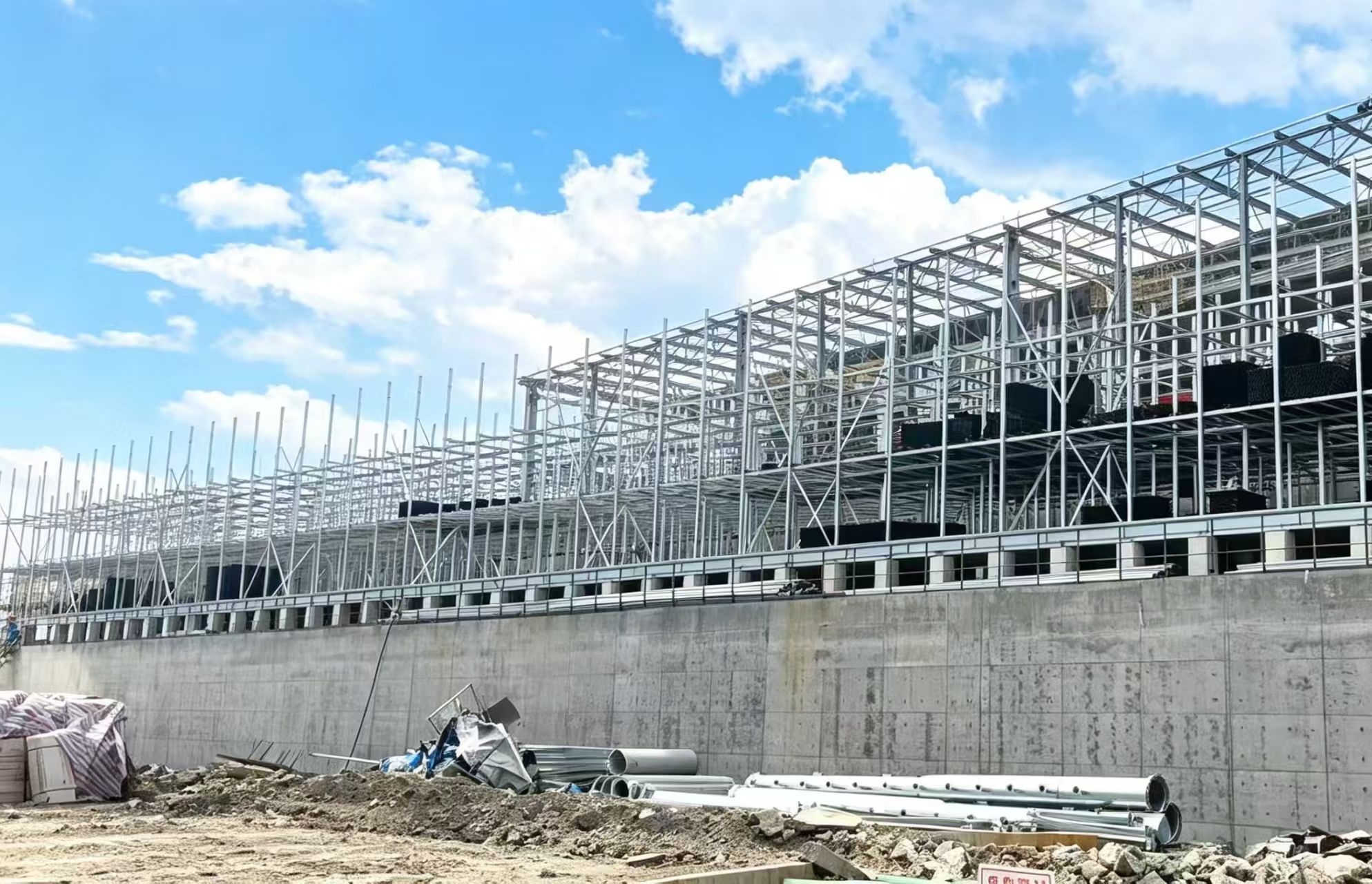
Cooling tower fill media is one of the most important components in a cooling tower. It increases the contact area between water and air, helping the system transfer heat more efficiently. Whether you operate a commercial HVAC system, a manufacturing plant, a power station, or a large industrial facility, choosing the right fill media can make a real difference to cooling performance, maintenance requirements, water consumption, and operating costs.
But which type of fill should you choose? PVC film fill, PP fill, or splash fill? The answer depends on your cooling tower design, water quality, operating temperature, and application.
In this guide, we explain how cooling tower fill media works, explore the main types and materials, and share practical tips for selecting, maintaining, and replacing fill media in HVAC and industrial cooling systems.
1. What Is Cooling Tower Fill Media?
Cooling tower fill media, also known as cooling tower fill, packing, or infill, is the material installed inside a cooling tower to increase the effective contact area between circulating water and air.
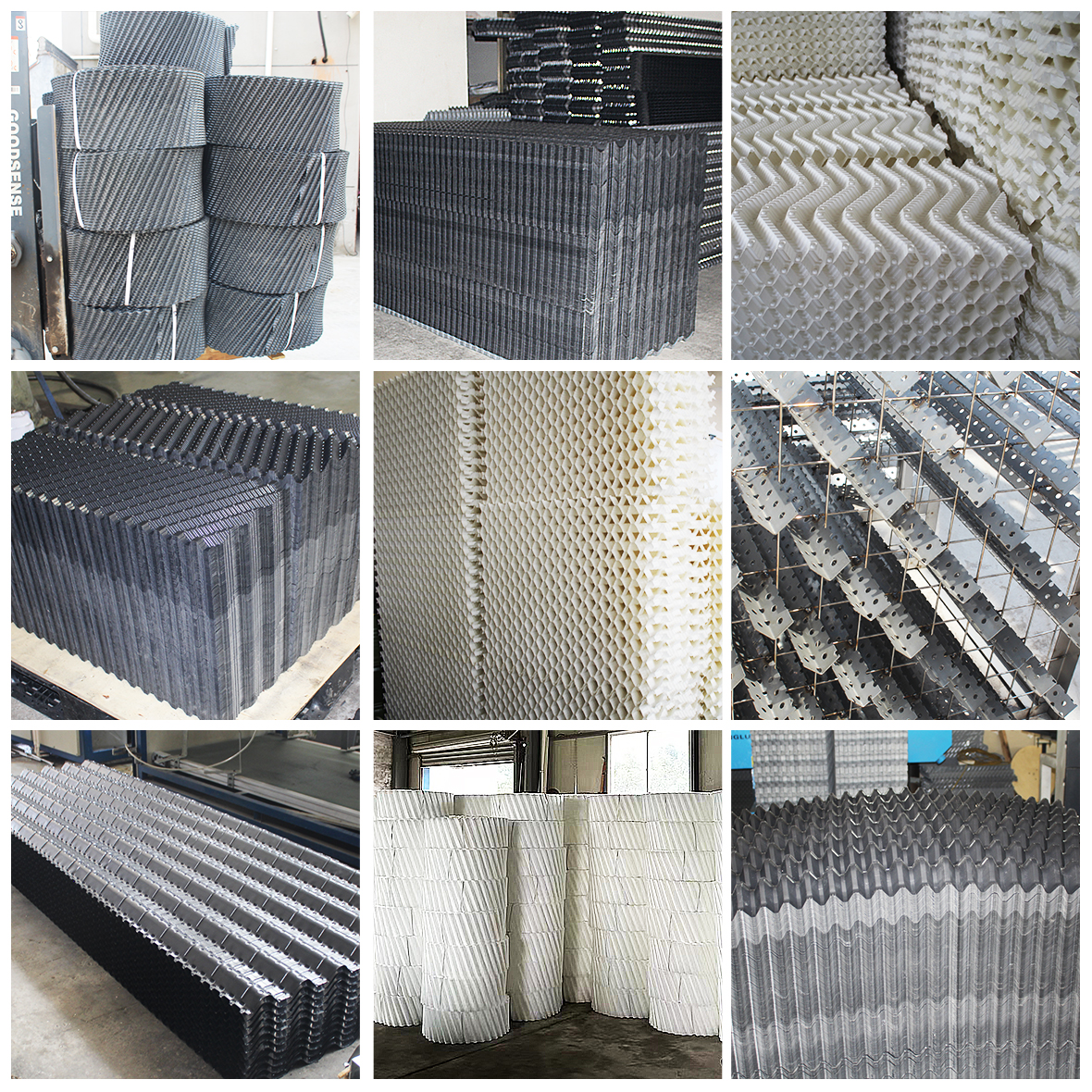
It is commonly manufactured from polyvinyl chloride (PVC) or polypropylene (PP), although other materials may be used for specialized operating conditions. Fill media features specific surface patterns, channels, or splash elements that control how water spreads and interacts with air.
Its structure influences heat and mass transfer, airflow resistance, water distribution, and the tendency to accumulate deposits. Selecting the right fill media therefore requires more than checking its dimensions. Buyers should consider the tower's thermal requirements, water quality, operating temperature, and maintenance capabilities.
How Does Cooling Tower Fill Media Work?
Warm water enters the cooling tower and flows over or through the fill media. At the same time, air moves through the tower and comes into contact with the water distributed across the fill surfaces or broken into droplets by splash elements.
A portion of the water evaporates, removing heat from the remaining water. The cooled water collects in the basin and returns to the cooling system.
Film fill spreads water into thin layers across closely spaced surfaces, while splash fill breaks water into droplets as it falls. Both approaches support heat transfer, but their performance depends on the fill design, airflow, water loading, and operating conditions.
Proper water distribution is essential. If some areas of the fill remain dry while others receive excessive water, the tower may not use its full cooling capacity effectively.
Why Is Fill Media Important for Cooling Performance?
Fill media affects a cooling tower's ability to achieve the required cold-water temperature under specific operating conditions. Its geometry determines the available contact area and influences the resistance air encounters as it passes through the tower.
A suitable design can support effective heat transfer without creating excessive airflow resistance or becoming difficult to maintain.
However, choosing fill with the largest surface area does not automatically guarantee the best result. Closely spaced channels may be vulnerable to clogging when water contains suspended solids, mineral deposits, or biological material.
The right choice balances thermal performance, airflow, water quality, and long-term reliability.
2. Main Types of Cooling Tower Fill Media
The two main categories of cooling tower fill media are film fill and splash fill. Both are used in HVAC and industrial cooling systems, but each has different characteristics and application requirements.
The best choice depends on the cooling tower's design, water quality, thermal duty, and maintenance conditions. Rather than assuming one type is always superior, buyers should evaluate how each option will perform in their specific system.
Film Fill Media
Film fill consists of formed sheets arranged to create channels that spread water into thin films. This configuration provides a relatively large contact area within a compact volume, making film fill a common choice for HVAC cooling towers and many industrial systems with adequately treated water.
PVC film fill is often selected for conventional cooling-water temperatures, while PP film fill may be considered for applications with higher material-temperature requirements.
Channel spacing, sheet geometry, fill depth, and airflow characteristics all affect performance. Narrow passages can provide useful heat-transfer characteristics but may be more sensitive to suspended solids and mineral scale.
Before selecting film fill, assess water quality, filtration efficiency, and the effectiveness of the existing water-treatment program.
Splash Fill Media
Splash fill uses bars, grids, or other structural elements to break falling water into droplets and redistribute it repeatedly. Its relatively open structure can be useful where water contains suspended solids or where fouling is a major concern.
Splash fill is used in certain industrial cooling towers and other systems with demanding water conditions. However, its suitability depends on the tower's design, required cooling duty, airflow, and available fill volume.
Splash fill should not automatically be treated as a direct replacement for film fill. Changing the fill type can affect the tower's thermal and hydraulic performance, so a technical review is recommended before conversion.
Crossflow and Counterflow Fill Media
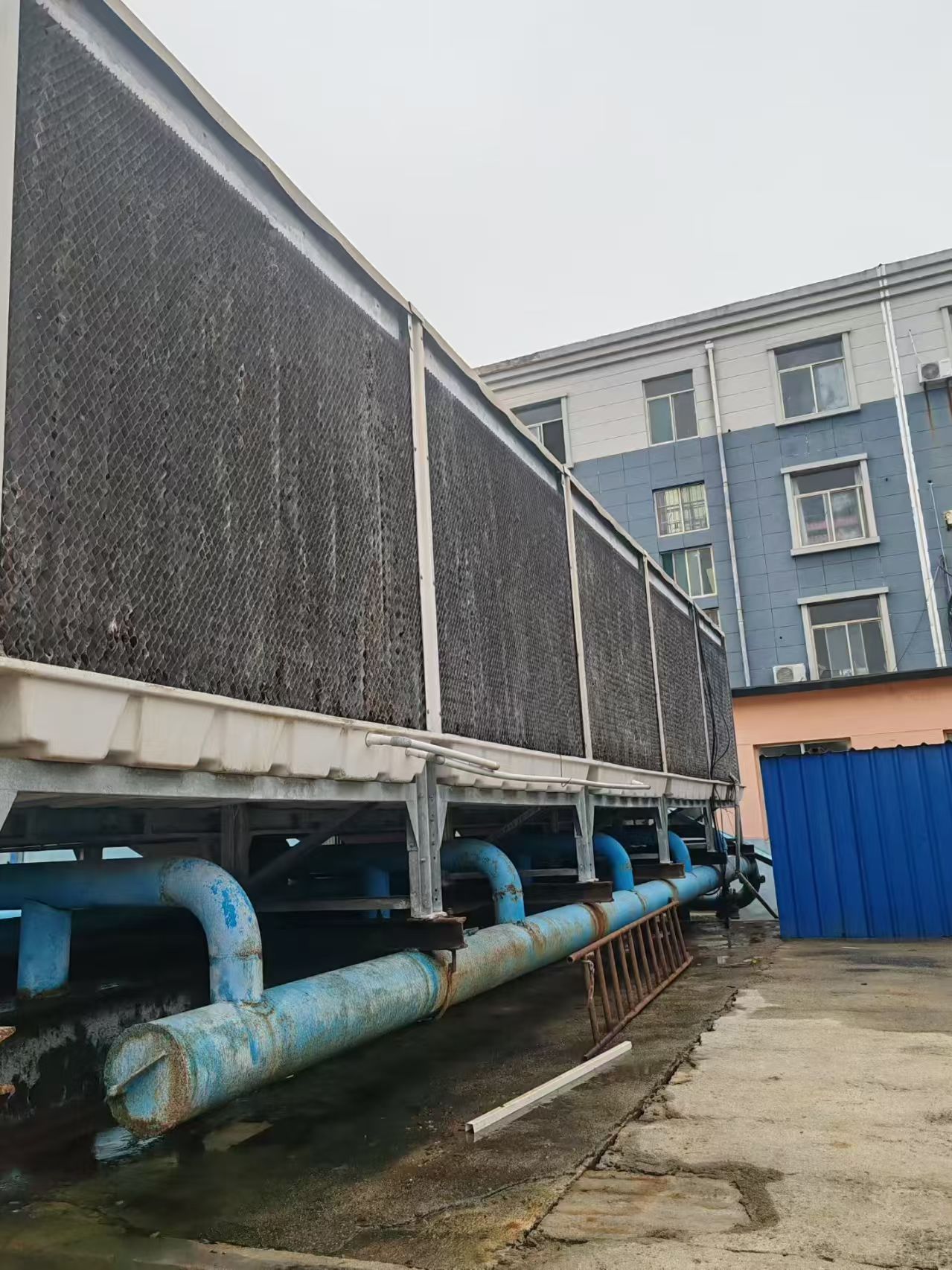
Crossflow and counterflow describe the relationship between air and water movement inside a cooling tower.
In a crossflow cooling tower, water generally moves downward while air passes horizontally through the fill. In a counterflow cooling tower, air travels upward against the downward flow of water.
Fill media must match the tower's original airflow pattern, water distribution system, support structure, and dimensions. Crossflow fill and counterflow fill are not necessarily interchangeable.
Even if a replacement pack appears to fit, differences in channel geometry, depth, or airflow resistance can affect performance. When ordering replacement fill, confirm the tower type and the manufacturer's specifications before production.
3. Common Cooling Tower Fill Materials
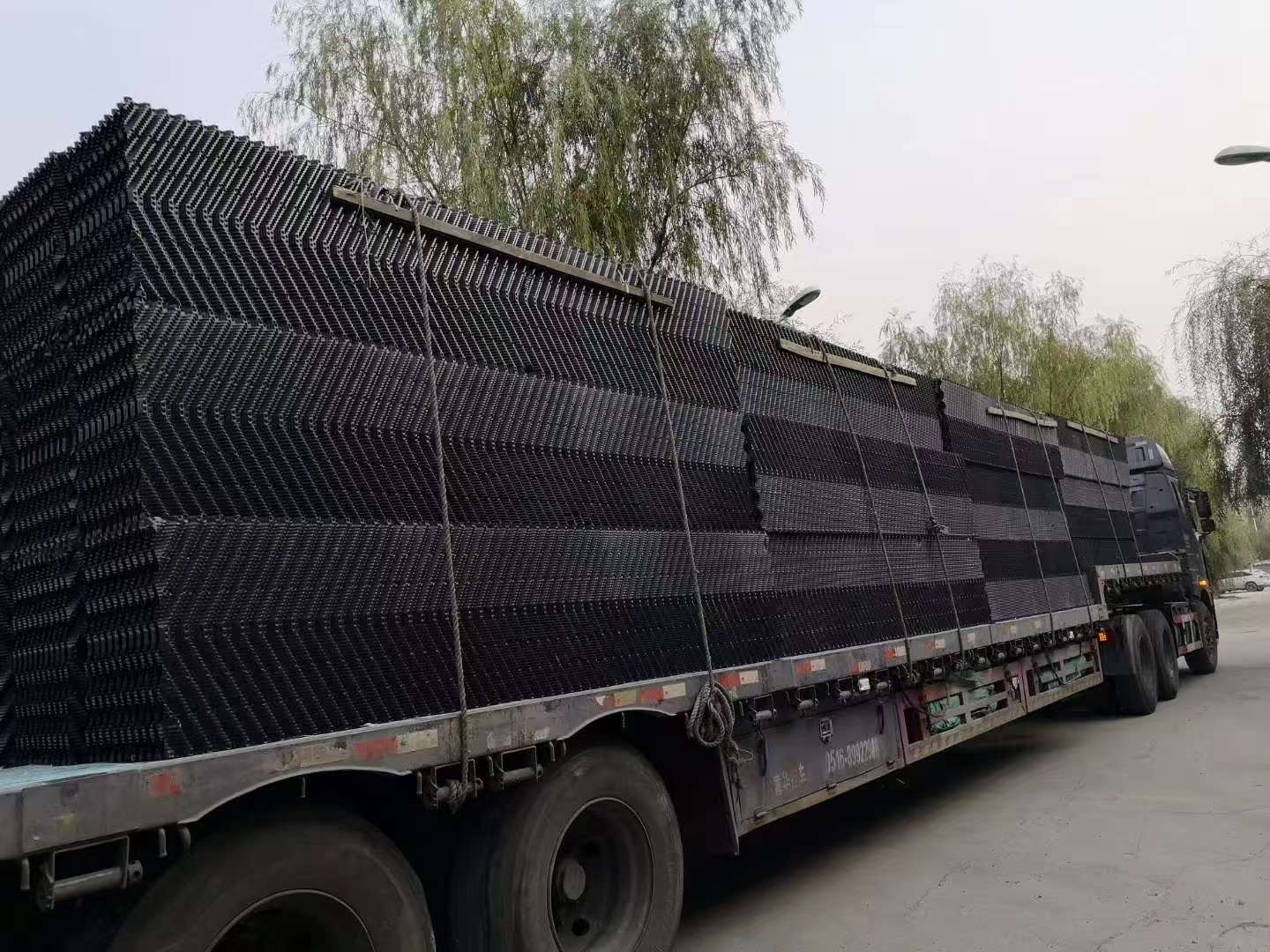
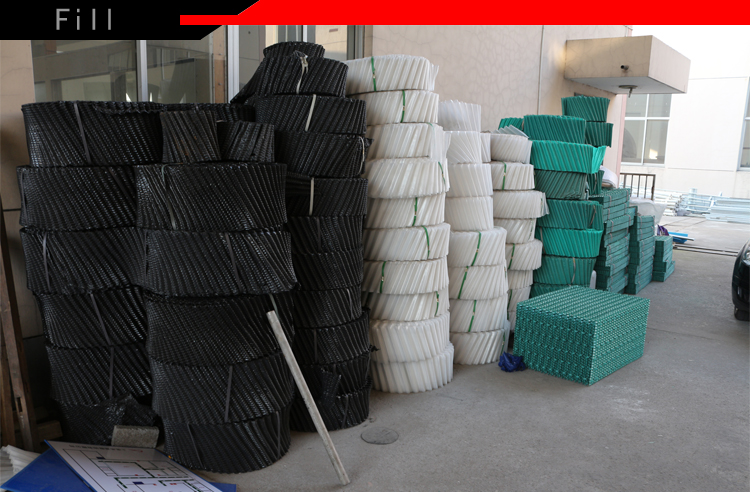
Material selection affects temperature suitability, chemical compatibility, durability, handling, and cost. PVC and polypropylene are two common thermoplastic materials used in cooling tower fill media.
Neither material is universally best. The right option depends on the actual water chemistry, operating temperature, environmental exposure, and fill design. Buyers should review product-specific technical data rather than relying only on a generic material name.
PVC Cooling Tower Fill
PVC cooling tower fill is widely used in HVAC and industrial cooling because it can provide a practical balance of cost, formability, and performance under suitable operating conditions.
It is commonly available in film-fill configurations designed to distribute water efficiently across a large contact area. PVC is often suitable for conventional cooling-water temperatures, but its allowable service temperature depends on the specific formulation, construction, and operating environment.
UV exposure, chemical compatibility, mechanical loading, and water-treatment practices can also influence service life.
Before purchasing PVC fill, verify the product's rated temperature range and compatibility with the system's cleaning chemicals and water chemistry. Do not assume that every PVC fill product has the same operating limits.
PP Cooling Tower Fill
Polypropylene cooling tower fill is another widely used option, particularly when the application requires material properties different from those of standard PVC fill.
PP can be considered for some higher-temperature applications, but the allowable temperature must be confirmed for the actual product and its continuous operating conditions.
Material choice alone does not determine performance. Sheet thickness, forming quality, support conditions, and fill geometry are equally important.
PP fill may also be available in designs intended for particular water qualities or tower configurations. Buyers should compare technical specifications, not just material names or purchase prices.
How to Choose Between PVC and PP
Start by checking the maximum continuous water temperature and any short-term temperature peaks. Next, assess the water chemistry, treatment chemicals, suspended solids, and potential exposure to cleaning agents.
Consider whether the tower operates outdoors, whether UV exposure is significant, and whether the fill will experience unusual mechanical loads during installation or operation.
Ask the manufacturer for the recommended operating range and relevant compatibility information. If the application involves unusually high temperatures or aggressive chemicals, a specialized material assessment may be necessary.
4. Cooling Tower Fill Media for HVAC Systems
HVAC cooling towers typically reject heat from chillers and building cooling systems. They are used in office buildings, shopping centers, hotels, hospitals, campuses, and other facilities with centralized cooling.
These applications often benefit from fill media that delivers consistent heat transfer, manageable airflow resistance, and dependable performance during seasonal changes in cooling demand.
Water treatment and routine maintenance remain essential. Scale, dirt, and biological growth can reduce the effective contact area and restrict airflow, reducing the performance of even a well-designed fill pack.
Commercial Buildings and Office Complexes
Commercial HVAC systems may run for long hours during warm weather, making cooling tower performance an important part of building energy management.
Appropriate fill media helps the tower meet the condenser-water temperature required by the chiller under the specified design conditions. If fill becomes clogged or water distribution becomes uneven, the system may struggle to deliver the required cooling performance.
When selecting replacement fill for an office building or commercial complex, confirm the tower model, fill dimensions, design water flow, and required thermal duty.
It is also useful to evaluate seasonal load patterns and local water quality. A fill pack that performs well under clean, controlled conditions may require more frequent attention in a system with poor filtration or inconsistent water treatment.
Hotels, Hospitals, and Data Centers
Hotels and hospitals depend on reliable cooling for guest comfort, ventilation, and critical building services. Data centers place additional emphasis on continuity, temperature control, and planned maintenance.
In these facilities, fill-media problems can contribute to reduced cooling capacity and unexpected maintenance work. The best choice is not necessarily the most expensive product; it is the one that meets the tower's requirements and can be maintained within the facility's operating plan.
For critical facilities, coordinate fill inspections and replacement planning with the maintenance team, water-treatment provider, and cooling-system specialist.
A proactive maintenance plan can help identify fouling or physical damage before it becomes a major operational problem.
5. Cooling Tower Fill Media for Industrial Cooling
Industrial cooling systems serve a broad range of processes, including manufacturing, power generation, chemical production, metal processing, and equipment cooling.
Unlike many building HVAC systems, industrial towers may encounter variable water quality, higher temperatures, process contaminants, and irregular operating loads. Fill media must therefore be selected according to actual process conditions.
A standard fill product should not be assumed suitable for every industrial application. Correct selection requires an understanding of the tower design and the environment in which the fill will operate.
Power Generation and Manufacturing
Power plants and manufacturing facilities use cooling towers to remove heat from condensers, heat exchangers, and production equipment. In these environments, downtime can affect production schedules and operating costs.
Fill selection should account for the tower's heat load, water circulation rate, operating temperature, airflow requirements, and water-treatment program.
Where water is relatively clean and well controlled, film fill may be suitable. Where suspended solids or fouling are significant, an open splash-fill design may warrant consideration.
The final decision should be supported by the tower's thermal and hydraulic requirements. Selecting fill based only on its initial price may create additional maintenance or performance issues later.
Chemical Processing and Demanding Applications
Chemical plants and other demanding industrial facilities may operate with water containing contaminants or chemicals that affect fill materials.
High temperature, chemical exposure, mineral deposits, and biological growth can all shorten service life if the system is not designed and maintained appropriately.
Before choosing a product, identify the actual contaminants and chemical concentrations rather than relying on broad labels such as "industrial water." Confirm material compatibility with the fill supplier and review whether the proposed geometry can accommodate the site's fouling risk.
For severe conditions, request an application-specific recommendation and relevant technical documentation.
6. How to Choose the Right Cooling Tower Fill Media
The right fill media should match the cooling tower, water quality, and required operating performance.
Begin by gathering the tower model, dimensions, design water flow, entering and leaving water temperatures, airflow arrangement, and available maintenance records. If you are replacing existing fill, document the current fill type and inspect its condition.
These details help a manufacturer determine whether a standard product will work or whether a customized configuration is needed.
Check Cooling Tower Design and Existing Dimensions
Confirm whether the tower uses a crossflow or counterflow arrangement, then measure the available fill space and review the support structure.
Check the pack length, width, depth, sheet configuration, and installation clearances. Also confirm how the fill interacts with water distribution pipes, nozzles, drift eliminators, and air inlets.
An incorrect pack size can create gaps, obstruct adjacent components, or prevent proper water distribution.
For replacement projects, photographs and drawings can help the supplier understand the existing installation. However, they should complement—not replace—verified measurements and technical checks.
Evaluate Water Quality and Fouling Risk
Water quality is one of the strongest factors influencing fill-media selection.
Hard water can produce mineral scale. Suspended solids can collect in narrow channels, while algae and other biological material can form deposits when water treatment is inadequate.
Review hardness, alkalinity, suspended solids, conductivity, treatment methods, and the history of fouling. If the system experiences frequent clogging, examine filtration and water treatment before installing new fill.
Replacing the media without addressing the underlying water-quality issue may provide only temporary relief. In some cases, a more open fill design may be appropriate, provided it meets the tower's performance requirements.
Consider Temperature, Airflow, and Thermal Performance
Temperature requirements influence both material choice and fill design. Check the normal operating temperature, maximum continuous temperature, and any temporary peaks.
Also consider airflow resistance and the tower's required cooling duty. A fill configuration that restricts airflow excessively can affect fan operation and overall system performance.
Conversely, selecting a product based only on low airflow resistance may not deliver the required heat transfer.
Ask the manufacturer to confirm that the proposed fill is suitable for the specific tower design and operating conditions.
Compare Energy Efficiency and Total Cost of Ownership
Purchase price is only one part of the cost of cooling tower fill media.
A low-cost product may become expensive if it clogs quickly, requires frequent cleaning, or fails prematurely. Consider expected service life, maintenance labor, water-treatment requirements, downtime risk, and the effect of fill performance on the wider cooling system.
The best value comes from choosing a product that meets the required duty and remains maintainable throughout its service life.
Ask suppliers for clear specifications and a quotation that identifies material, dimensions, quantity, packaging, and any customization costs. A detailed comparison makes it easier to evaluate the real value of each option.
7. Common Cooling Tower Fill Media Problems
Fill media can deteriorate or lose performance for several reasons. Common problems include scale buildup, biological fouling, blocked channels, physical deformation, and damage caused by unsuitable cleaning practices.
These problems may develop gradually, so operators should compare current performance with historical operating data.
Rising cold-water temperatures, uneven water distribution, unusual airflow conditions, and visible deposits can indicate that inspection is needed. However, fill is not the only possible cause of poor cooling. Fans, nozzles, pumps, air inlets, drift eliminators, and water treatment should also be checked.
Scaling, Clogging, and Biological Growth
Mineral scale can narrow fill passages and create uneven water flow. Suspended particles may collect on the fill surface, while algae and other biological material can form deposits that reduce effective contact area.
These problems may also increase airflow resistance and make the cooling tower harder to maintain.
A good response combines inspection, appropriate cleaning, water-treatment review, and improved filtration where necessary.
Cleaning methods must suit the fill material and the manufacturer's recommendations. Avoid aggressive chemicals, excessive pressure, or mechanical actions that can deform or tear the fill sheets.
Deformation and Material Deterioration
Fill packs may deform because of excessive temperature, poor support, mechanical damage, incompatible chemicals, or long-term material aging.
Warped sheets can change water distribution and airflow, while cracked or brittle components may no longer maintain their intended geometry.
During inspection, look for sagging, separation, broken supports, and permanent deformation. If damage is widespread, cleaning alone will not restore the original structure.
A technical assessment can help determine whether partial replacement is reasonable or whether replacing the complete fill pack is more practical.
8. Cleaning, Maintenance, and Fill Replacement
Routine maintenance helps protect fill-media performance and extend service life.
Inspection frequency should reflect water quality, operating hours, local climate, and the cooling tower manufacturer's recommendations. A maintenance plan should include water-treatment monitoring, checks for uneven water distribution, inspection for deposits, and evaluation of cooling performance.
Record findings so changes can be identified early. For any work inside a cooling tower, follow site lockout procedures, isolate equipment as required, and use appropriate personal protective equipment.
Routine Inspection and Cleaning
Begin with a visual inspection for scale, sludge, biological growth, damaged sheets, and blocked passages.
Check whether spray nozzles distribute water evenly and whether the basin contains excessive sediment. Clean fill using a method approved for the material and installation.
After cleaning, review water treatment and filtration to reduce the chance of recurring fouling.
Maintain records of cleaning dates, chemical treatments, operating temperatures, and observed problems. These records can help the facility distinguish a temporary water-quality issue from gradual fill deterioration.
When Should Cooling Tower Fill Media Be Replaced?
Replacement may be necessary when fill is severely clogged, physically deformed, brittle, chemically damaged, or no longer able to support the required cooling performance after appropriate maintenance.
Repeated fouling can also justify reviewing the original fill design and water-treatment strategy.
Before ordering replacement media, verify dimensions, tower configuration, material, water flow, temperature limits, and performance requirements.
If a change from film fill to splash fill—or from one material to another—is being considered, obtain a technical review. A replacement project is an opportunity to address the root cause of the previous fill's failure rather than simply installing a similar product.
9. Benefits of Working with a Reliable Cooling Tower Fill Media Manufacturer
An experienced manufacturer can help match fill geometry and material to the tower's application, verify dimensions, and identify important compatibility issues before production.
This is especially valuable for replacement projects involving older towers or non-standard dimensions.
When evaluating suppliers, ask for product specifications, available materials, quality-control information, packaging details, lead times, and technical support.
Confirm that the supplier understands crossflow and counterflow configurations and can work from reliable drawings or measurements. Clear communication before ordering can reduce the risk of receiving fill that does not fit or suit the operating environment.
For large projects, provide a complete technical brief covering the intended application, required quantity, water conditions, and operating temperatures. This allows suppliers to assess the request more accurately and helps buyers compare quotations on a consistent basis.
10. Why Consider Power Tower Cooling Technology (Shaoxing) Co.,Ltd?

Power Tower Cooling Technology (Shaoxing) Co.,Ltd provides cooling tower parts and fill-media solutions for customers evaluating maintenance, replacement, and cooling-tower component requirements.
Through its website, https://www.coolingtowerpart.com, buyers can explore cooling tower-related products and make inquiries about their project needs.
When requesting a quotation, share the tower model, fill dimensions, required quantity, application, operating temperature, and water-quality conditions. If you are unsure which product is appropriate, provide photographs and available drawings for review.
A clear technical brief helps the supplier assess the request and recommend a suitable product for further confirmation.
For HVAC contractors, industrial plant operators, maintenance teams, and distributors, selecting fill media based on verified application requirements is an important step toward dependable cooling-tower operation.
11. Frequently Asked Questions About Cooling Tower Fill Media
Which Fill Media Is Best for HVAC Cooling Towers?
Film fill is commonly used in HVAC cooling towers because it provides a large contact area in a compact space. It is generally most suitable when water quality and treatment practices can keep the channels reasonably clean.
The best option still depends on the tower design, required thermal performance, operating temperature, and water conditions.
Is PVC or PP Fill Media Better?
Neither material is best for every application. PVC is widely used in conventional cooling-water systems, while PP may be appropriate for certain applications with higher temperature requirements.
Compare the specific product's rated temperature range, chemical compatibility, mechanical properties, and cost before deciding.
How Often Should Cooling Tower Fill Be Replaced?
There is no universal replacement interval. Service life depends on water quality, temperature, material, maintenance, operating hours, and mechanical conditions.
Inspect fill regularly and replace it when damage or fouling can no longer be managed effectively. Follow the manufacturer's recommendations and your site's maintenance plan.
Can Fill Media Be Customized for an Existing Tower?
Replacement fill can often be supplied to suit verified dimensions and tower configurations.
Before ordering, confirm the fill depth, length, width, material, airflow arrangement, and relevant thermal requirements. Provide drawings or photographs when available, but verify all critical dimensions before production.
Does Better Fill Media Automatically Reduce Energy Consumption?
Not necessarily. Suitable fill media can support effective heat transfer, but total energy consumption also depends on fan efficiency, pump operation, water distribution, ambient conditions, maintenance, and system controls.
The goal is to select fill that meets the required cooling duty without creating unnecessary airflow resistance or maintenance problems.
12. Conclusion: Choose Cooling Tower Fill Media for Long-Term Performance
Cooling tower fill media plays a central role in the performance of HVAC and industrial cooling systems.
Film fill can provide effective heat transfer in applications with suitable water quality, while splash fill may be worth considering where fouling resistance and an open structure are priorities. PVC and PP offer different material characteristics, so temperature, water chemistry, tower geometry, and maintenance requirements should guide the choice.
For reliable results, evaluate the complete operating environment instead of comparing products by price alone. Verify dimensions, understand the tower's thermal requirements, and work with a supplier that can assess your application before you order.
Power Tower Cooling Technology (Shaoxing) Co.,Ltd invites buyers to visit coolingtowerpart.com to explore cooling tower parts and discuss their fill-media requirements.
With accurate specifications and an application-focused selection process, you can make a more informed decision, improve maintenance planning, and support reliable cooling-tower operation over the long term.


