Marley cooling tower fill plays a critical role in heat transfer efficiency, water distribution, and overall cooling tower performance. Over time, however, fill media can accumulate scale, algae, biological deposits, and suspended solids. These problems may reduce cooling capacity, increase airflow resistance, and raise operating costs.
When cooling tower fill becomes dirty or damaged, facility managers face an important decision: should they clean the existing fill or replace it with new Marley-compatible cooling tower fill?
The answer depends on the type of contamination, the condition of the fill material, maintenance costs, and the performance requirements of the cooling system. This guide compares Marley cooling tower fill cleaning vs. replacement to help industrial buyers, maintenance contractors, and cooling tower operators choose the most cost-effective solution.
Why Does Marley Cooling Tower Fill Need Cleaning or Replacement?
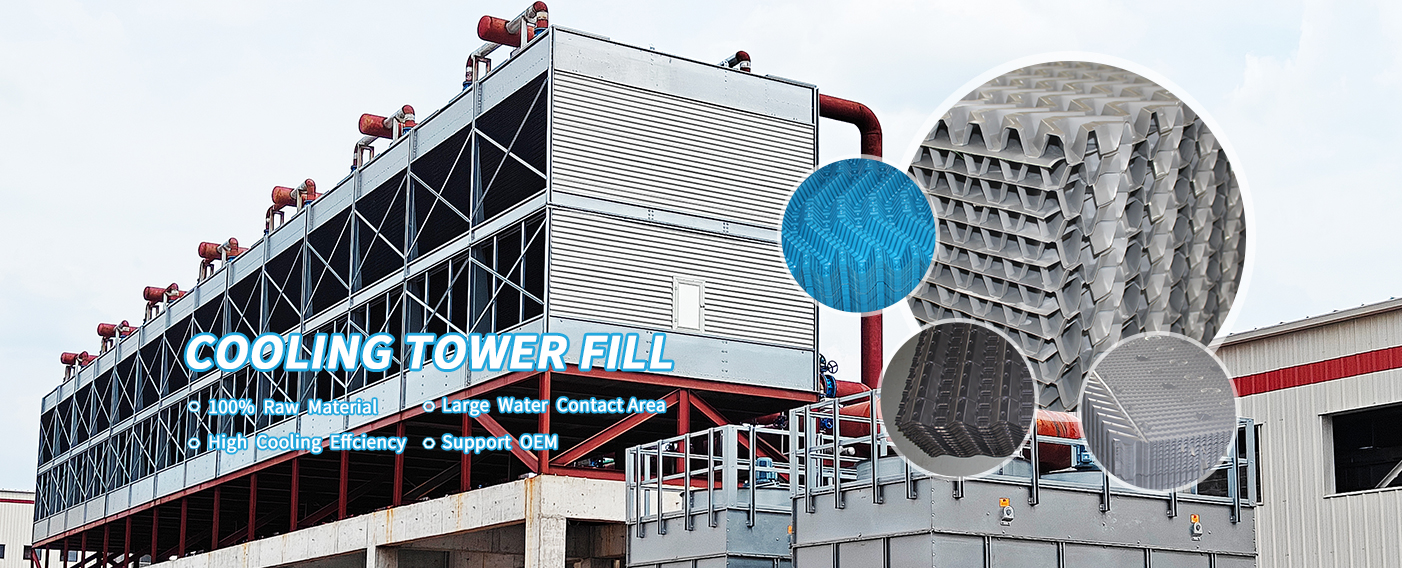
Cooling tower fill increases the contact area between circulating water and air, allowing heat to transfer efficiently. Both film fill and splash fill can become contaminated during normal operation.
Common causes of fill deterioration include:
Mineral scale caused by concentrated circulating water.
Algae and biological growth encouraged by sunlight, nutrients, and unsuitable water treatment.
Sludge and suspended solids entering the cooling tower.
Corrosion products and other deposits from the circulating water system.
High operating temperatures that exceed the fill material's limits.
Mechanical damage, deformation, and aging of plastic components.
As deposits accumulate, water may no longer spread evenly across the fill surface. Blockages can also restrict airflow, reduce heat transfer, and increase the risk of uneven cooling.
Regular inspection helps determine whether cleaning can restore performance or whether cooling tower fill replacement is necessary.
Marley Cooling Tower Fill Cleaning: When Is It the Better Choice?
Cooling tower fill cleaning removes deposits from existing fill media while preserving the original components. It can be a practical option when the fill remains structurally sound and contamination is the main cause of reduced performance.
Benefits of Cleaning Cooling Tower Fill
Lower initial cost: Cleaning often costs less than purchasing new fill, especially when the existing media is in good condition.
Less material waste: Retaining usable fill reduces the amount of plastic waste generated during maintenance.
Potentially shorter replacement work: Depending on the contamination and cleaning method, cleaning may require less material handling than a complete fill replacement.
Performance recovery: Removing suitable deposits can improve water distribution and airflow when fouling is responsible for the performance loss.
When Should You Clean Marley-Compatible Fill?
Cleaning may be appropriate when:
Scale or biological deposits are relatively light or removable.
Fill sheets remain intact and retain their original shape.
Water distribution problems are caused primarily by surface contamination.
The fill has not suffered significant heat damage or chemical degradation.
Inspection indicates that the support structure and fill arrangement remain serviceable.
The cleaning method must match the fill material and deposit type. High-pressure washing, unsuitable chemicals, or excessive mechanical force can damage thin PVC sheets and delicate fill surfaces.
Before cleaning, consult the tower manufacturer's guidance or a qualified maintenance provider. Cooling tower cleaning and disinfection should also follow applicable water-management and workplace safety requirements.
3. Marley Cooling Tower Fill Replacement: When Is It Necessary?
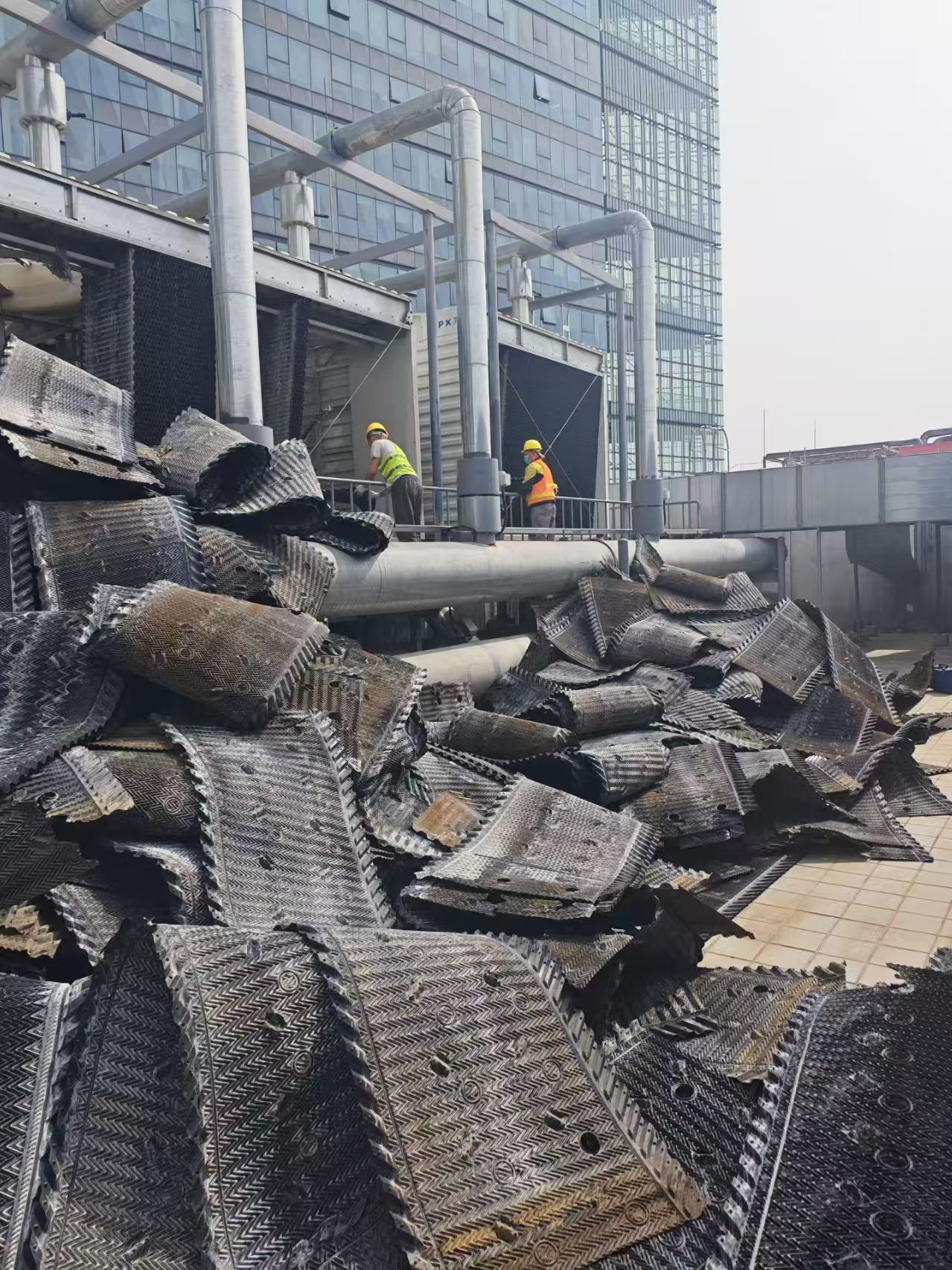
Cooling tower fill replacement involves removing deteriorated or unsuitable media and installing new fill packs. It becomes the better option when cleaning cannot restore the required performance or when the existing fill has reached the end of its service life.
Signs That Fill Replacement Is Needed
1. Cracked or deformed fill sheets
Heat exposure, chemical attack, aging, or mechanical stress may cause plastic sheets to crack, warp, or collapse. Cleaning cannot restore lost structural integrity.
2. Severe or persistent blockage
If deposits cannot be removed safely, or contamination returns quickly because the fill geometry is unsuitable for the water quality, replacement may offer a more reliable long-term solution.
3. Continued loss of cooling performance
If cleaning fails to improve the tower's approach temperature, heat rejection, or operating stability, the fill may be damaged or incorrectly selected. Other causes, such as poor water distribution, fan problems, and inadequate water flow, should also be investigated.
4. Repeated maintenance expenses
Frequent cleaning, recurring blockages, and ongoing performance problems can make continued maintenance more expensive than installing new fill.
5. Changes in operating requirements
A retrofit may require a different fill material or configuration to accommodate water quality, temperature limits, or updated performance requirements. Any change should be checked for compatibility with the cooling tower's thermal and airflow design.
4. Cleaning vs. Replacement: Cost and Performance Comparison
The right choice should consider both immediate expenses and long-term operating costs.
| Comparison Factor | Fill Cleaning | Fill Replacement |
| Initial cost | Usually lower | Usually higher |
| Existing material | Retained | Removed and replaced |
| Suitable condition | Sound fill with removable deposits | Damaged, degraded, or unsuitable fill |
| Performance improvement | Depends on cleaning effectiveness | Can restore intended performance if fill is the problem |
| Downtime | Depends on contamination and access | Depends on removal, installation, and project scope |
| Long-term maintenance | May remain high if fouling recurs | May reduce recurring issues when the underlying cause is addressed |
| Waste generation | Generally lower | Generally higher |
Neither cleaning nor replacement guarantees improved cooling performance. Results depend on the condition of the fill, the effectiveness of the work, water quality, and the overall cooling tower design.
How to Compare the Total Cost
A useful purchasing decision compares the cost of cleaning with the full cost of replacement, including:
Labor and equipment.
Cleaning chemicals and water treatment.
Fill removal and disposal.
New fill material and transportation.
Installation and shutdown expenses.
Expected future maintenance.
Potential energy and production costs associated with reduced cooling performance.
If cleaning only provides a short period of improvement, replacement may offer better lifecycle value. If the fill is sound and contamination is easily removed, cleaning may remain the more economical option.
5. How to Inspect Marley Cooling Tower Fill Before Deciding
A structured inspection can prevent unnecessary replacement and avoid spending money on ineffective cleaning.
Step 1: Assess the Type of Contamination
Identify whether the problem involves scale, biological growth, sludge, or foreign debris. Different deposits require different treatment methods.
Step 2: Check the Fill Material
Inspect PVC or PP fill for cracking, brittleness, deformation, chemical damage, and loss of structural strength.
Step 3: Evaluate Water Distribution
Check spray nozzles, distribution pipes, and headers. Blocked or damaged nozzles can cause uneven wetting that may be mistaken for a fill problem.
Step 4: Review Cooling Performance
Compare current operating data with historical or design conditions, including inlet and outlet water temperatures, circulating water flow, ambient wet-bulb temperature, and fan operation.
Step 5: Estimate the Cost of Both Options
Request a cleaning estimate and a replacement quotation. Compare expected performance, downtime, maintenance frequency, and total lifecycle costs.
6. Choosing Marley-Compatible Replacement Cooling Tower Fill
If replacement is necessary, selecting the correct fill is essential.
Before ordering Marley-compatible cooling tower fill, confirm:
Original cooling tower model and fill configuration.
Required dimensions, including length, width, and height.
Fill type, such as film fill or splash fill.
Material requirements, including PVC or PP.
Operating water temperature and water chemistry.
Airflow resistance and thermal performance requirements.
Support structure dimensions and installation clearances.
Aftermarket fill should not be selected based on dimensions alone. The replacement design must be suitable for the tower's intended water loading, airflow, thermal duty, and operating conditions.
Industrial buyers should request dimensional drawings, material specifications, installation instructions, and relevant performance documentation from the supplier.
7. How to Prevent Frequent Cooling Tower Fill Problems
Preventive maintenance can extend fill service life and reduce the need for emergency replacement.
Recommended practices include:
Maintain an appropriate water treatment and disinfection program.
Monitor scaling, suspended solids, and biological growth.
Inspect fill and water distribution equipment regularly.
Clean deposits using methods approved for the fill material.
Correct blocked nozzles and uneven water distribution.
Monitor cooling performance and investigate unexplained changes.
Avoid operating beyond the material's specified temperature and chemical limits.
A good maintenance program addresses the causes of fouling rather than repeatedly removing deposits without correcting the underlying problem.
8. Frequently Asked Questions
Can Marley cooling tower fill be cleaned instead of replaced?
Yes. Cleaning may be sufficient when contamination is removable and the fill remains structurally sound. Damaged, brittle, deformed, or persistently blocked fill may require replacement.
How often should cooling tower fill be cleaned?
There is no universal cleaning interval. Frequency depends on water quality, operating conditions, environmental exposure, and the effectiveness of water treatment. Inspection findings should guide the maintenance schedule.
Does replacing cooling tower fill improve cooling efficiency?
Replacement can improve performance when deteriorated or unsuitable fill is the limiting factor. However, fan issues, poor water distribution, fouling elsewhere, and operating conditions should also be checked.
Is aftermarket Marley-compatible fill a cost-effective option?
It can be, provided the replacement matches the required dimensions, materials, hydraulic characteristics, and thermal performance. Compare documented specifications rather than price alone.
Should I replace all the fill or only damaged sections?
Partial replacement may be possible if the tower design permits it and the remaining fill is in suitable condition. Differences in fill geometry, age, and performance can affect the overall result, so confirm the approach with a qualified supplier or engineer.
Conclusion
Choosing between Marley cooling tower fill cleaning and replacement depends on the severity of contamination, the physical condition of the fill, and the total cost of maintaining reliable cooling performance.
Cleaning is often the better option for sound fill with removable deposits. Replacement is generally more appropriate when the fill is damaged, severely blocked, degraded, or no longer suitable for operating conditions.
For industrial facilities and cooling tower maintenance contractors, a professional inspection and lifecycle cost comparison provide the strongest basis for making the decision.
Need Marley-compatible cooling tower fill for a replacement project? Provide your cooling tower model, fill dimensions, material requirements, and estimated quantity to a qualified supplier for a technical review and quotation.
Recommended internal links for CoolingTowerPart.com: