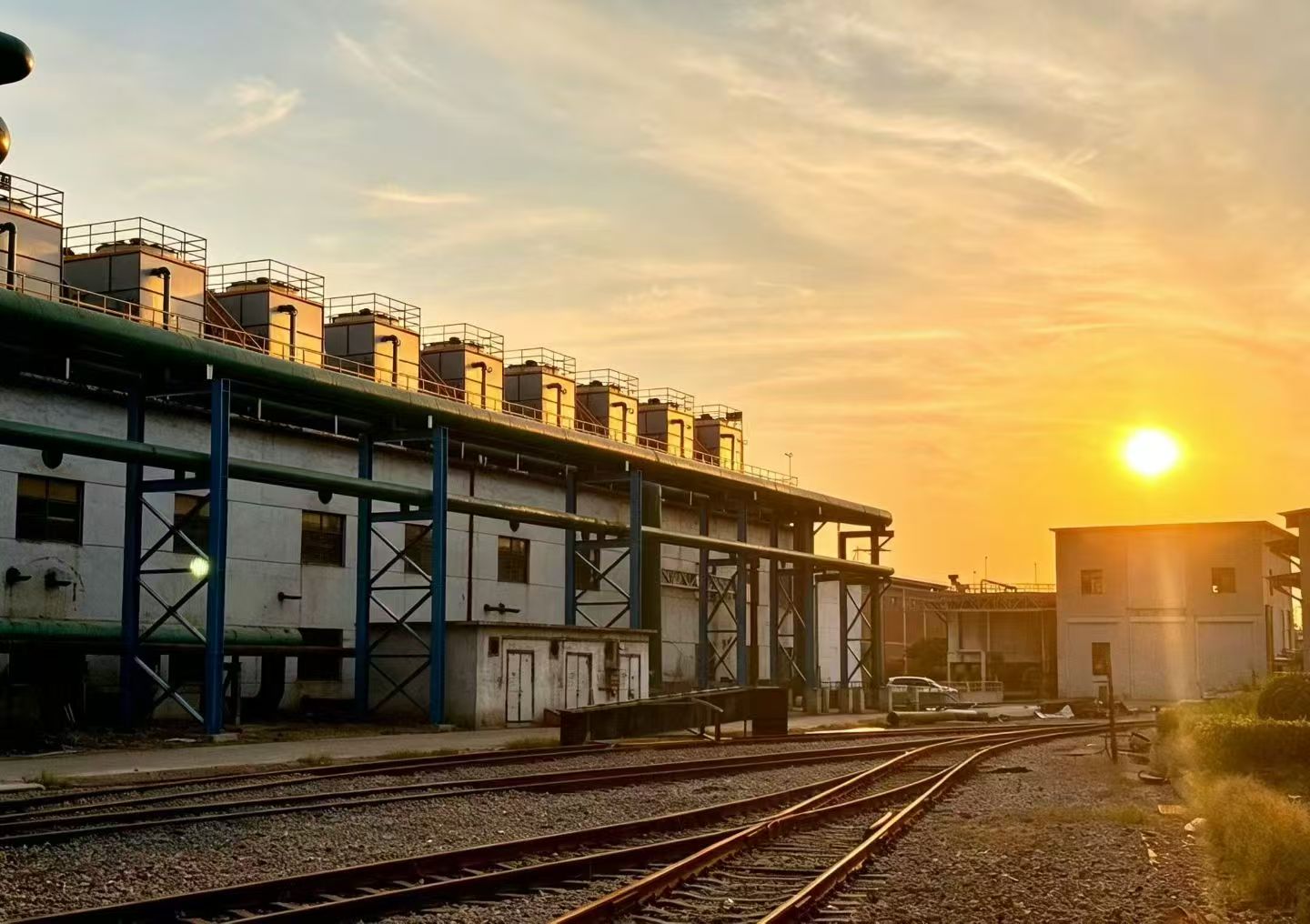
If you operate an industrial cooling tower, you already know how important fill media is to cooling performance. Over time, however, cooling tower fill can become clogged with scale, damaged by poor water quality, or deformed by excessive temperatures. When replacement becomes necessary, many buyers immediately look for original-brand components. But is purchasing directly from the original cooling tower brand your only option?
Not necessarily.
Compatible cooling tower fill can be a practical alternative for Liangchi, Marley, BAC, and Evapco cooling towers, provided the replacement is correctly selected for the specific equipment. The right product must match the original fill configuration, dimensions, material requirements, airflow characteristics, water distribution, and operating conditions.
Power Tower Cooling Technology (Shaoxing) Co., Ltd. provides cooling tower fill solutions for replacement and maintenance projects. Through www.coolingtowerpart.com, buyers can explore fill options and discuss their application requirements.
In this guide, we will explain how to choose compatible cooling tower fill for these four well-known brands, compare common fill materials, and identify the technical details you should confirm before placing an order.
What Is Cooling Tower Fill?
Cooling tower fill, also known as fill media, packing, or infill, increases the contact area between circulating water and moving air. Warm water spreads over the fill surface while air passes through the tower. Heat transfers from the water to the air, and evaporation removes additional heat.
Think of cooling tower fill as a bridge between water and air. The larger and more effective the contact area, the better the tower can transfer heat under suitable operating conditions.
Fill does not generate cooling by itself. Instead, it creates the conditions required for effective heat exchange. Its design affects water distribution, air resistance, contact time, and the overall thermal performance of the tower.
When fill becomes clogged, broken, or deformed, water and air may no longer flow as intended. The cooling tower can then struggle to maintain the required cold-water temperature, potentially increasing energy consumption and reducing production efficiency.
That is why selecting the correct replacement fill is an important part of cooling tower maintenance.
Why Cooling Tower Fill Compatibility Matters
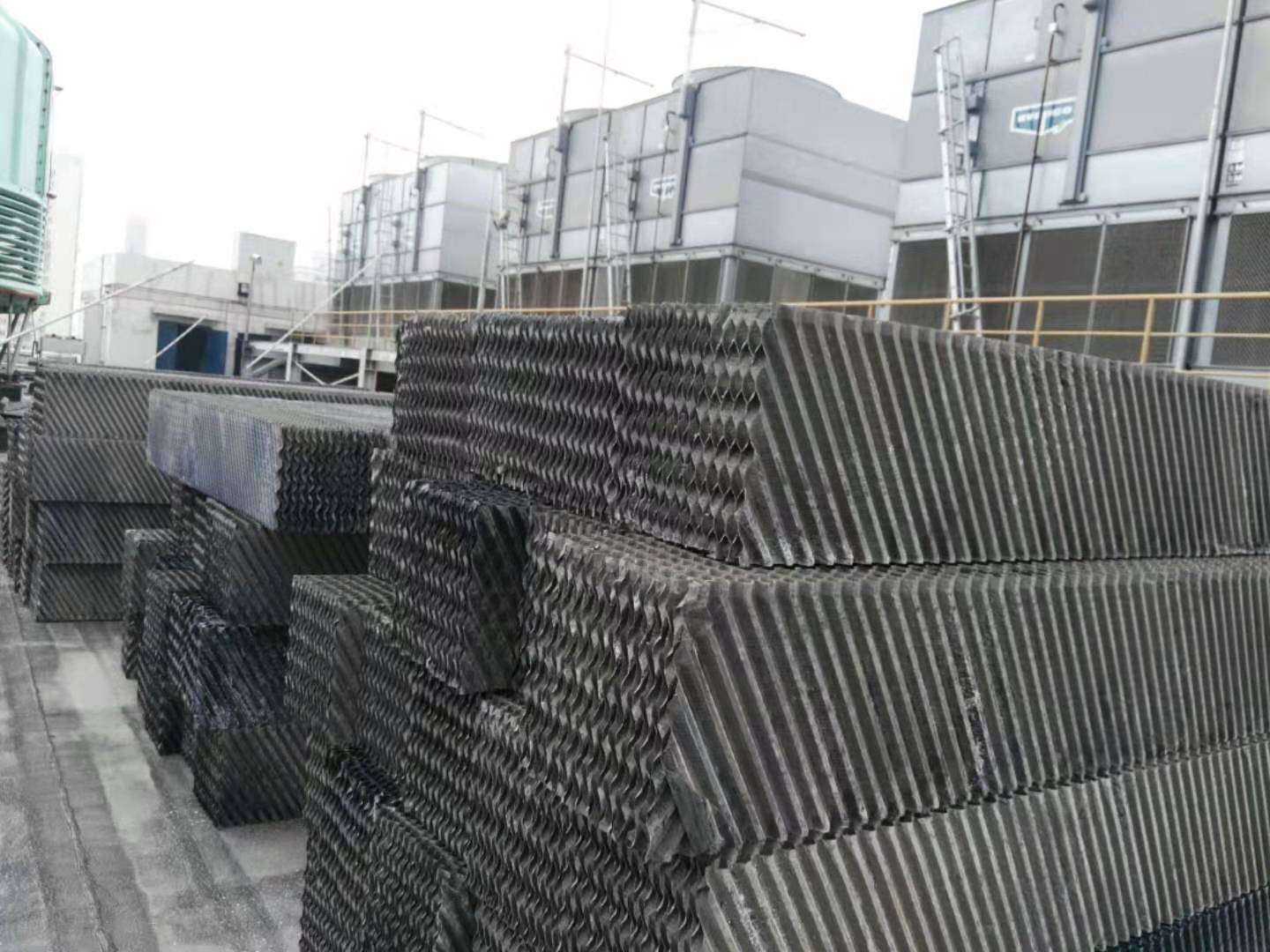
Compatible fill is more than a product that physically fits inside an existing tower. The replacement must match the original design's functional requirements.
For example, two fill blocks may have identical external dimensions but different flute patterns or sheet spacing. These differences can change airflow resistance, water spreading, and heat-transfer performance.
Before choosing a replacement, consider the following factors:
Dimensions: The length, width, and height must fit the available installation space.
Fill geometry: Sheet spacing, flute shape, and surface pattern influence heat transfer and airflow.
Material: PVC and PP have different temperature and chemical-resistance characteristics.
Tower configuration: Crossflow and counterflow towers use different airflow arrangements.
Water quality: Suspended solids, scale, and biological growth can affect which fill design is appropriate.
Installation structure: Supports, hangers, louvers, and drift eliminators may influence the replacement configuration.
Operating conditions: Water temperature, cooling duty, and airflow requirements must be considered.
A replacement that ignores these factors may cause installation problems or reduce cooling performance.
The goal is not simply to find fill that fits. It is to find fill that fits and performs appropriately in the existing cooling tower.
Compatible Fill for Liangchi Cooling Towers
Liangchi cooling towers are used in commercial air-conditioning and industrial cooling applications. When replacing Liangchi cooling tower fill, the first step is to identify the tower's configuration and the type of fill currently installed.
Does the tower use crossflow or counterflow technology? Is the existing fill made from PVC or another material? Are the fill blocks suspended, supported from below, or assembled in a particular arrangement?
These questions help narrow down the suitable replacement options.
For crossflow towers, fill typically allows air to move horizontally across descending water. Counterflow towers generally direct air upward against descending water. Because the airflow arrangements differ, the fill geometry and installation requirements may also differ.
Do not assume that every Liangchi tower uses the same fill specifications. Different models, capacities, and production generations may require different configurations.
Check Liangchi Fill Dimensions and Structure
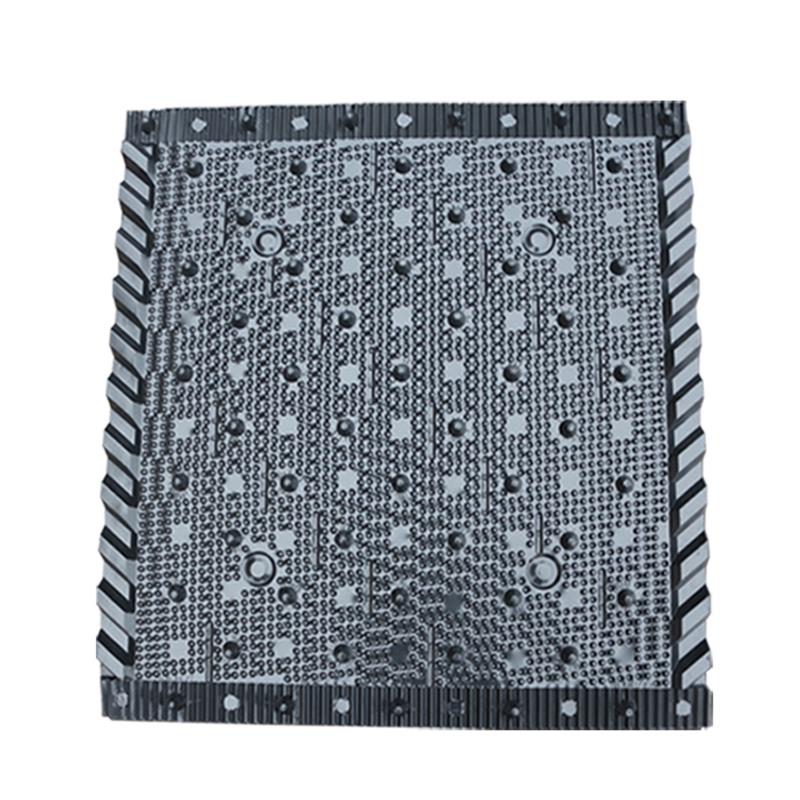
Before ordering replacement fill for a Liangchi cooling tower, record the dimensions of the existing fill blocks.
Measure the length, width, and height. Where possible, also record sheet thickness, sheet spacing, flute pattern, and the way individual sheets or blocks are assembled.
You should also inspect the supporting structure. Some applications use hanging fill sheets, while others rely on assembled blocks or specific support arrangements. If the original fill is integrated with other components, determine whether those components must also be replaced.
Photographs are especially useful when original technical drawings are unavailable. Take pictures of the complete fill section, close-ups of the sheet pattern, and the supporting structure.
Power Tower Cooling Technology can use the information you provide to help assess a suitable replacement configuration. Final compatibility should be confirmed against the actual equipment requirements before production.
Compatible Fill for Marley Cooling Towers
Marley cooling towers are available in different designs and configurations, so replacement fill must be selected according to the specific tower model and application.
A product described as Marley-compatible should not automatically be considered suitable for every Marley unit.
First, determine whether the tower uses film fill or splash fill. Then confirm the tower configuration, block dimensions, material, support method, and operating temperature.
Film fill is commonly used where effective heat transfer is a priority and water quality allows relatively narrow channels. Splash fill may be appropriate for certain applications where an open structure helps manage suspended solids or fouling.
The choice depends on the original design and operating conditions. Replacing one type with another should only be considered after verifying that the cooling tower can accommodate the change.
Marley MX75 and Other Fill Profiles
If your purchasing specification mentions Marley MX75 or another named fill profile, use that designation as a starting point.
Confirm the exact profile, sheet spacing, dimensions, material, and assembly method against the existing installation or an approved technical drawing. Similar-looking fill products may have different performance characteristics because their geometry affects water spreading and airflow resistance.
Do not select a product based on its name alone. Instead, ask the supplier to confirm which equipment configuration the proposed fill is intended to replace.
When requesting a quotation, provide the model information, approximate installation year, photographs, and available drawings. If you already have a sample of the original fill, its dimensions and geometry can also help the supplier evaluate potential alternatives.
This process reduces the risk of ordering fill that looks correct but does not perform as required.
Compatible Fill for BAC Cooling Towers
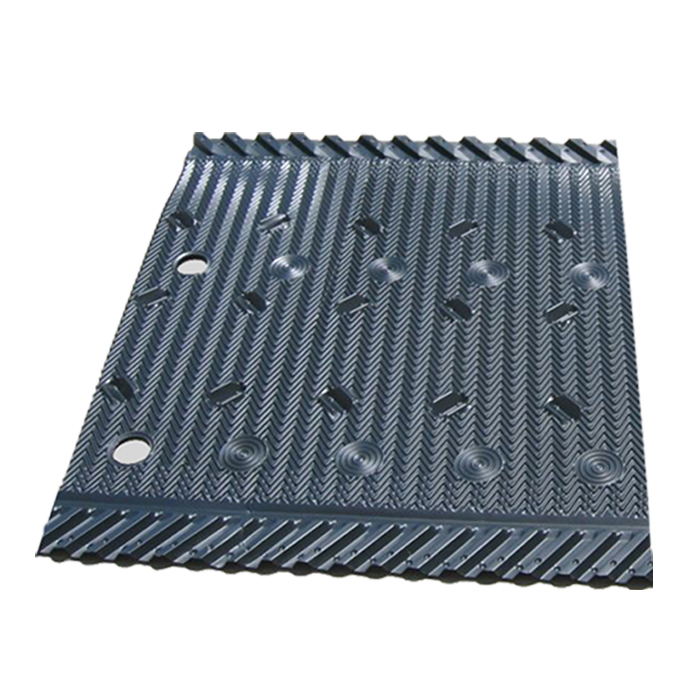
BAC cooling towers use different fill arrangements depending on the equipment design and intended application.
When sourcing compatible fill for BAC equipment, confirm the tower model, fill type, dimensions, material, and installation arrangement. It is also important to determine whether the existing assembly includes separate louvers, drift eliminators, or other components that interact with the fill.
Crossflow and counterflow BAC towers can have different internal layouts. A replacement designed for one arrangement should not be assumed to work in the other.
Water quality is another important consideration. If the circulating water contains high levels of suspended solids or is prone to biological growth, narrow film-fill channels may require more frequent cleaning. In such cases, an alternative fill design may be worth evaluating, provided it is suitable for the tower's engineering requirements.
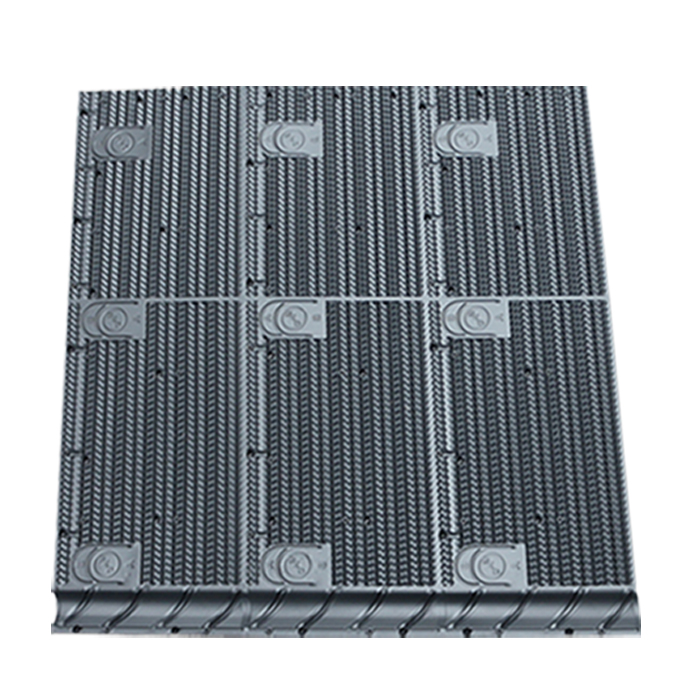
BAC Fill Packs and Integrated Components
Some crossflow cooling tower configurations use fill packs that incorporate air inlet louvers or are installed alongside separate drift eliminators. Other designs use different component arrangements.
This matters because the fill pack is part of a larger airflow and water-management system.
Before ordering BAC-compatible fill, establish exactly what the replacement scope includes. Does the project require fill media only, or does it also involve supports, louvers, drift eliminators, fasteners, or other related components?
A quotation covering fill media alone may not include everything needed to complete the installation.
Check the support clearances, the condition of the existing structure, and access for future maintenance. If related components are damaged or incompatible with the proposed replacement, replacing the fill alone may not solve the underlying problem.
A clear technical specification helps buyers compare quotations accurately and avoid unexpected costs during installation.
Compatible Fill for Evapco Cooling Towers
Evapco cooling towers also require a model-specific replacement assessment. The correct fill depends on the tower configuration, original fill type, support structure, operating temperature, and water quality.
Some replacement fill designs are intended for crossflow towers, while others are designed for counterflow applications. The installation method may also vary, depending on whether the fill is assembled into blocks, suspended, or supported from below.
Do not assume that a fill product suitable for one Evapco model will fit every other model.
Instead, begin by identifying the equipment and documenting the existing fill arrangement. If the original drawings are available, use them to confirm dimensions and technical requirements. If they are not, provide measurements and photographs to help the supplier assess the application.
Crossflow vs. Counterflow Replacement Fill
Understanding the difference between crossflow and counterflow towers is essential when selecting replacement fill.
In a crossflow tower, air generally moves horizontally across water flowing downward through the fill. In a counterflow tower, air moves upward against the descending water.
These arrangements affect fill geometry, water distribution, airflow resistance, and installation requirements.
When sourcing replacement fill for Liangchi, Marley, BAC, or Evapco equipment, confirm the tower configuration before choosing a product.
A fill block designed for crossflow operation should not be substituted into a counterflow tower without engineering verification. Even if the block dimensions appear suitable, its internal geometry may not provide the intended performance.
The same principle applies when comparing different fill profiles within the same tower category. The replacement should be evaluated for the specific application, not selected solely because it belongs to the correct general type.
Can One Fill Product Fit Liangchi, Marley, BAC, and Evapco?
Yes, a suitably engineered replacement fill may serve equipment from more than one cooling tower manufacturer. However, cross-brand compatibility does not mean universal compatibility.
Two towers may use similar PVC film fill but have different block dimensions, support arrangements, flute geometry, or thermal requirements. Even products with the same nominal dimensions can create different airflow resistance and water distribution patterns.
For this reason, be cautious when a supplier claims that one product fits every model from several brands without asking for equipment details.
A responsible compatibility assessment should consider:
The cooling tower manufacturer and model.
The tower's crossflow or counterflow arrangement.
The existing fill type and material.
Block dimensions and sheet geometry.
Water temperature and quality.
Required cooling performance and airflow conditions.
Support structure and installation restrictions.
If the proposed replacement differs from the original fill design, ask the supplier to explain the differences and identify any engineering checks required.
The best replacement is not necessarily an identical branded product. It is a technically appropriate product that can be installed correctly and deliver the performance required by the application.
PVC vs. PP Cooling Tower Fill
PVC and polypropylene (PP) are common materials used in cooling tower fill applications. Each has advantages, and neither is automatically the best choice for every system.
Material selection should account for continuous operating temperature, short-term temperature excursions, chemical exposure, mechanical support, and the manufacturer's product specifications.
When Should You Choose PVC Fill?
PVC fill is widely used in cooling tower applications where its temperature and chemical-resistance characteristics meet the operating requirements.
It can provide an effective balance of thermal performance, weight, ease of installation, and cost. PVC film fill is particularly common in systems where water quality is suitable for relatively narrow fill channels.
However, PVC fill can deform if exposed to temperatures above its rated limits. Storage conditions, direct sunlight, and handling can also affect the product before installation.
Do not rely on a single general temperature limit for every PVC product. Confirm the operating range specified for the actual fill being purchased.
PVC may be a suitable option for many commercial HVAC and industrial cooling systems, but the final decision should reflect the real operating environment.

When Should You Choose PP Fill?
PP fill may be worth considering where the application requires a different temperature-resistance or chemical-compatibility profile.
For some systems operating at higher water temperatures, PP can offer advantages over standard PVC fill. However, PP is not automatically suitable for every high-temperature or chemically aggressive application.
Check the material's rated operating limits, the chemical composition of the circulating water, and any mechanical requirements. If the system experiences frequent temperature changes, the supplier should also confirm that the proposed product is appropriate for those conditions.
A material comparison should be based on actual specifications rather than assumptions that one plastic is always superior to another.
For replacement projects, provide the supplier with the normal operating temperature, peak temperature, water-treatment chemicals, and any known contamination issues. This information helps identify a more suitable material.
Film Fill vs. Splash Fill
Material is only one part of fill selection. The fill structure is equally important.
Film fill spreads water into thin layers over closely spaced surfaces, increasing the contact area available for heat transfer. It is often suitable when thermal efficiency is important and the circulating water is sufficiently clean.
Splash fill breaks falling water into droplets as it strikes a series of surfaces or grids. Its relatively open structure can be beneficial in certain applications where suspended solids or contamination could cause tightly spaced film-fill channels to clog.
However, neither type is universally better.
Film fill may provide effective heat transfer in suitable conditions, while splash fill may be more appropriate for some challenging water-quality environments. The right choice depends on the original tower design, water characteristics, maintenance resources, and required cooling duty.
Replacing film fill with splash fill, or splash fill with film fill, should only be considered after checking the tower's design and confirming that the proposed change is technically appropriate.
How to Select Compatible Cooling Tower Fill
Choosing replacement fill becomes much easier when you follow a consistent process.
Start by collecting the tower model information, original fill specifications, and current operating data. Then verify the physical dimensions, material requirements, and installation arrangement.
If the original documentation is unavailable, photographs and measurements can help. However, these may not provide enough information to confirm thermal performance in every application.
For critical industrial systems, consider a qualified engineering review before approving a replacement.
1. Confirm the Cooling Tower Model
Check the equipment nameplate and maintenance records. Record the manufacturer, model number, serial number, and approximate installation year.
If the tower has been modified or repaired previously, document those changes as well. The current installation may differ from the original factory configuration.
A model number helps narrow down the available options, but it should not be the only basis for selecting replacement fill.
2. Measure the Existing Fill
Measure the length, width, and height of the fill blocks. Where possible, record sheet thickness, spacing, flute pattern, and sheet orientation.
Inspect how the blocks connect to one another and how they rest on or hang from their supports.
Take clear photographs of the complete fill section, the individual sheets, the block edges, and the support structure. If a sample can be removed safely, its dimensions and geometry may provide additional useful information.
Accurate measurements help prevent ordering errors and reduce installation delays.
3. Check Water Quality and Temperature
Water quality strongly influences the selection of cooling tower fill.
Suspended solids, biological growth, scale-forming minerals, oils, and process contaminants can reduce heat-transfer performance or block narrow channels. If the water is heavily contaminated, a more open fill design may be worth evaluating.
Temperature is equally important. The fill material must tolerate normal operating conditions and any expected temperature excursions.
Provide actual operating temperatures rather than only an average. Also share relevant information about water treatment and known contamination problems.
4. Verify Airflow and Water Distribution
The replacement must work with the tower's existing airflow and water distribution systems.
Excessive airflow resistance can affect fan performance and overall cooling capacity. Uneven water distribution can leave some fill areas underused while overloading others.
Review the nozzle arrangement, air inlet configuration, fill depth, drift eliminators, and support structure. Where a replacement profile differs from the original, determine whether additional engineering checks are needed.
The objective is to preserve the operating conditions required for reliable cooling—not simply to fit a block into the available space.
5. Confirm the Scope of Supply
Before accepting a quotation, make sure you understand exactly what is included.
Does the supplier provide loose fill sheets, assembled fill blocks, or complete packs? Are supports, louvers, drift eliminators, fasteners, or other components included? Does the quotation cover only manufacturing, or does it also include packaging and delivery?
Confirm material, dimensions, quantity, tolerances, and the agreed technical specifications in writing.
A clear scope helps you compare suppliers on an equal basis and avoid unexpected costs after the order is placed.
Common Cooling Tower Fill Replacement Mistakes
Even experienced maintenance teams can make mistakes when selecting replacement fill. Fortunately, most can be avoided through a careful review before ordering.
Choosing Fill Based on Price Alone
A low purchase price may look attractive, but incorrect fill can cause installation problems, poor airflow, or reduced cooling performance.
Compare quotations based on material, geometry, dimensions, technical specifications, and scope of supply—not price alone.
Assuming All Models Use the Same Fill
Cooling towers from the same manufacturer may have different fill configurations. Always verify the actual model and internal arrangement before ordering.
Ignoring Water Quality
A fill product that performs well in clean water may be unsuitable for a system with high suspended solids or severe fouling. Consider the water conditions and maintenance schedule when selecting the design.
Overlooking Supporting Components
The fill may be only one part of the replacement project. Damaged supports or incompatible related components can delay installation or compromise the finished assembly.
Skipping Technical Confirmation
A product description or photograph cannot establish compatibility by itself. Confirm the dimensions, material, and intended application with the supplier before production or shipment.
Why Choose Power Tower Cooling Technology (Shaoxing) Co., Ltd.?
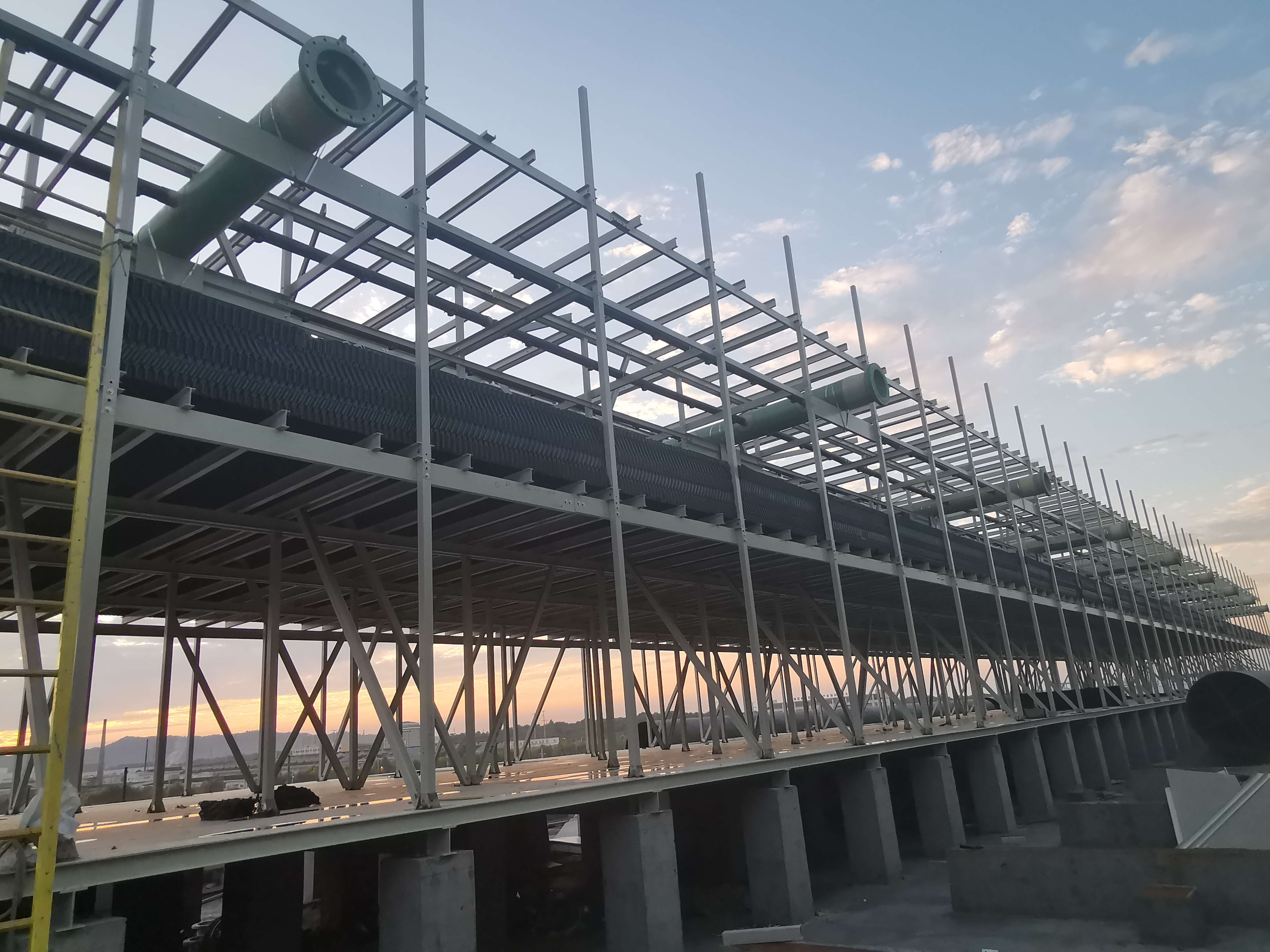
For buyers sourcing compatible cooling tower fill, a manufacturer that understands replacement requirements can help simplify the selection process.
Power Tower Cooling Technology (Shaoxing) Co., Ltd. provides cooling tower fill solutions for maintenance, refurbishment, and replacement applications. Buyers looking for fill compatible with Liangchi, Marley, BAC, or Evapco equipment can share their existing specifications to begin a technical assessment.
Depending on the application, the information reviewed may include:
Cooling tower brand and model.
Existing fill dimensions and profile.
PVC or PP material requirements.
Operating temperature and water quality.
Required quantity and installation arrangement.
Photographs, drawings, or samples of the existing fill.
Where the application requires particular dimensions or configurations, customized options may be evaluated according to the confirmed technical requirements.
The objective is to help buyers identify a suitable replacement rather than assume that one standard product will fit every tower.
To discuss your requirements, visit www.coolingtowerpart.com and provide the equipment details available to you.
Brand names such as Liangchi, Marley, BAC, and Evapco are used to identify the intended equipment applications. Compatibility should be confirmed for the specific cooling tower model; references to these brands do not imply endorsement or universal interchangeability.
Frequently Asked Questions
Can Power Tower supply compatible fill for Liangchi cooling towers?
Replacement options can be assessed using the tower model, fill dimensions, design, and operating conditions. Provide as much technical information as possible so that the required configuration can be evaluated before ordering.
Is compatible fill for Marley the same as original Marley fill?
Not necessarily. A compatible alternative may be designed for a particular Marley application, but its geometry, material, dimensions, and performance requirements should be verified against the existing tower.
Can one replacement fill product work for BAC and Evapco towers?
Potentially, yes. Some replacement designs may suit equipment from different manufacturers. However, the exact crossflow or counterflow configuration, dimensions, support arrangement, and operating requirements must be confirmed.
Which is better for cooling tower fill: PVC or PP?
Neither material is universally better. PVC is widely used in applications within its specified operating range, while PP may be suitable for certain applications requiring different temperature or chemical-resistance characteristics. Always confirm the product specifications.
What information is needed for a cooling tower fill quotation?
Ideally, provide the tower brand and model, existing fill dimensions, material preference, quantity, operating temperature, water-quality information, and photographs or drawings. If some details are unavailable, share what you have and ask the supplier which additional measurements are necessary.
Can I replace only the cooling tower fill media?
Sometimes. The supports, louvers, drift eliminators, and other related components should be inspected to determine whether they can remain in service. If they are damaged or incompatible with the new fill, additional replacement work may be required.
How can I reduce the risk of ordering incompatible fill?
Confirm the tower model, measure the existing fill, provide photographs or drawings, and obtain written confirmation of the proposed replacement specifications. For critical applications, request an engineering review of any significant design differences.
Conclusion
Selecting compatible cooling tower fill for Liangchi, Marley, BAC, and Evapco equipment can give maintenance teams greater sourcing flexibility. However, successful replacement depends on more than matching a brand name or external dimensions.
Start by confirming the tower model and fill configuration. Check the material, operating temperature, water quality, dimensions, airflow requirements, and support arrangement. Then review the quotation carefully to ensure that the proposed product and scope of supply meet the project's requirements.
A well-selected replacement can help restore effective heat transfer, simplify maintenance, and support reliable cooling tower operation.
For compatible cooling tower fill inquiries, contact Power Tower Cooling Technology (Shaoxing) Co., Ltd. through www.coolingtowerpart.com. Share your equipment details to help identify a replacement option suited to your application.
SEO Metadata
SEO Title: Compatible Cooling Tower Fill for Liangchi, Marley, BAC & Evapco
Meta Description: Find compatible cooling tower fill for Liangchi, Marley, BAC and Evapco with custom sizing options.
Suggested URL Slug: compatible-cooling-tower-fill-liangchi-marley-bac-evapco.html
Primary Keyword: cooling tower fill brands
Secondary Keywords: compatible cooling tower fill, Liangchi cooling tower fill, Marley cooling tower fill, BAC cooling tower fill, Evapco cooling tower fill, cooling tower fill replacement, cooling tower fill manufacturer, OEM cooling tower fill


