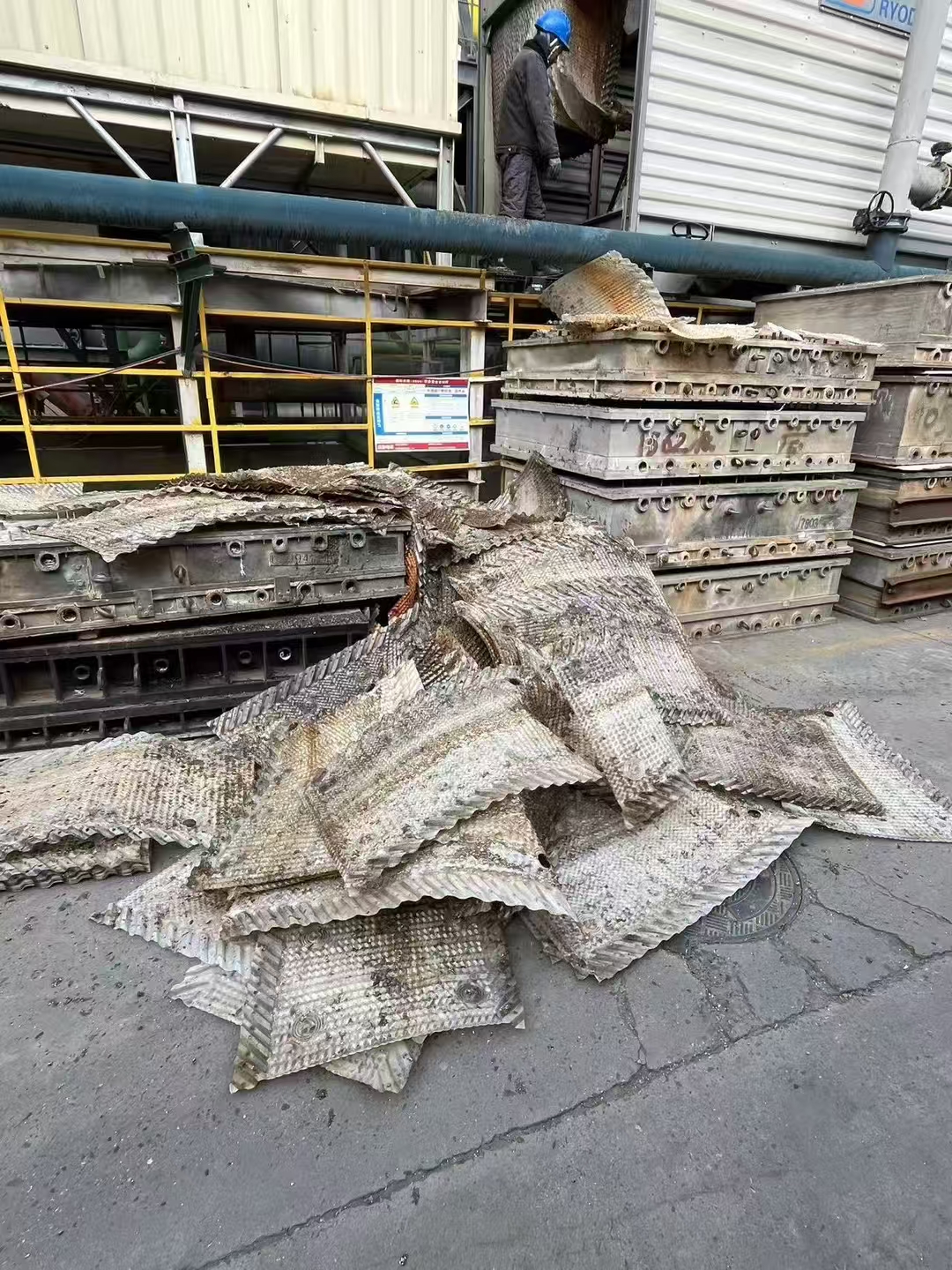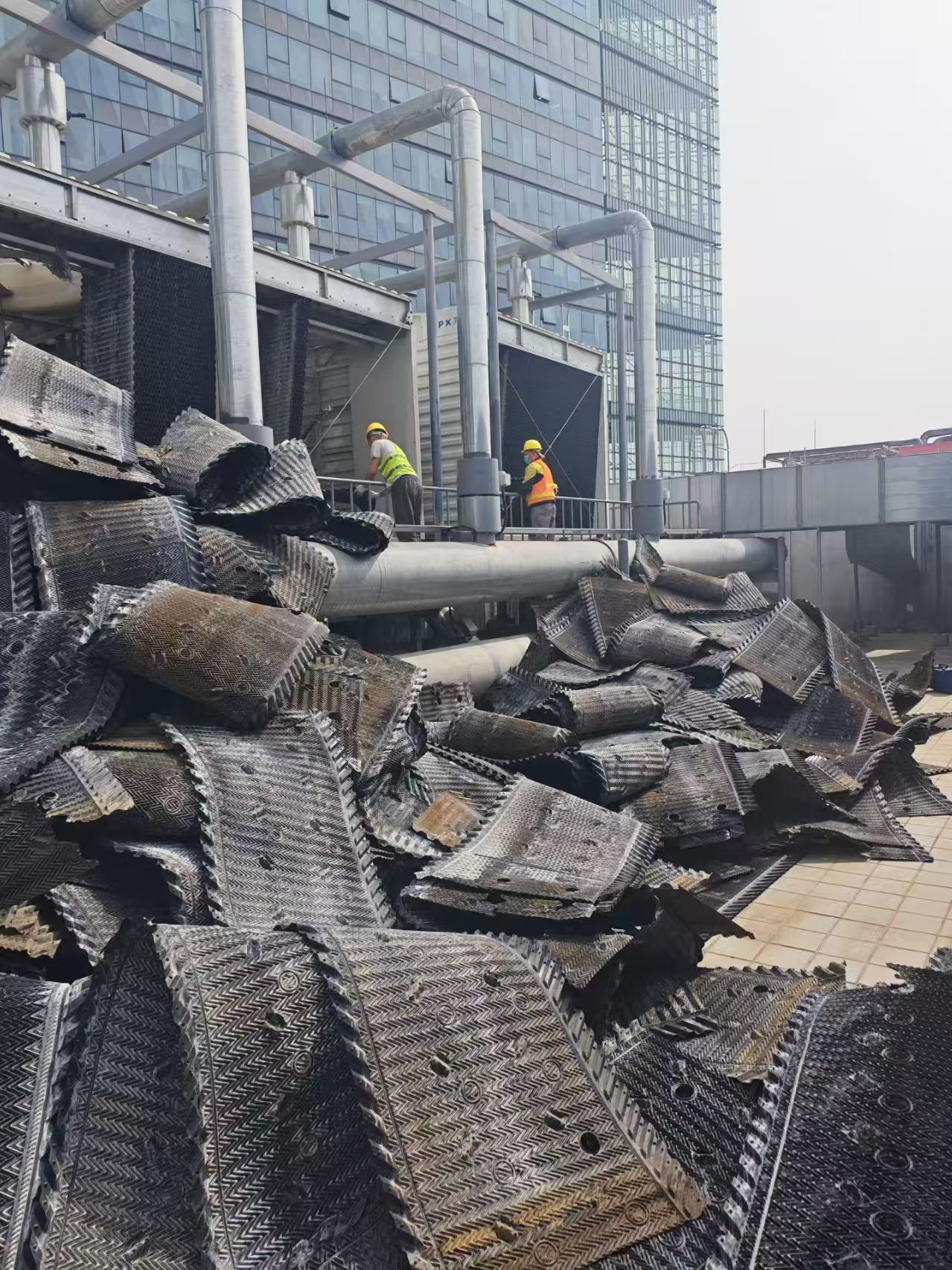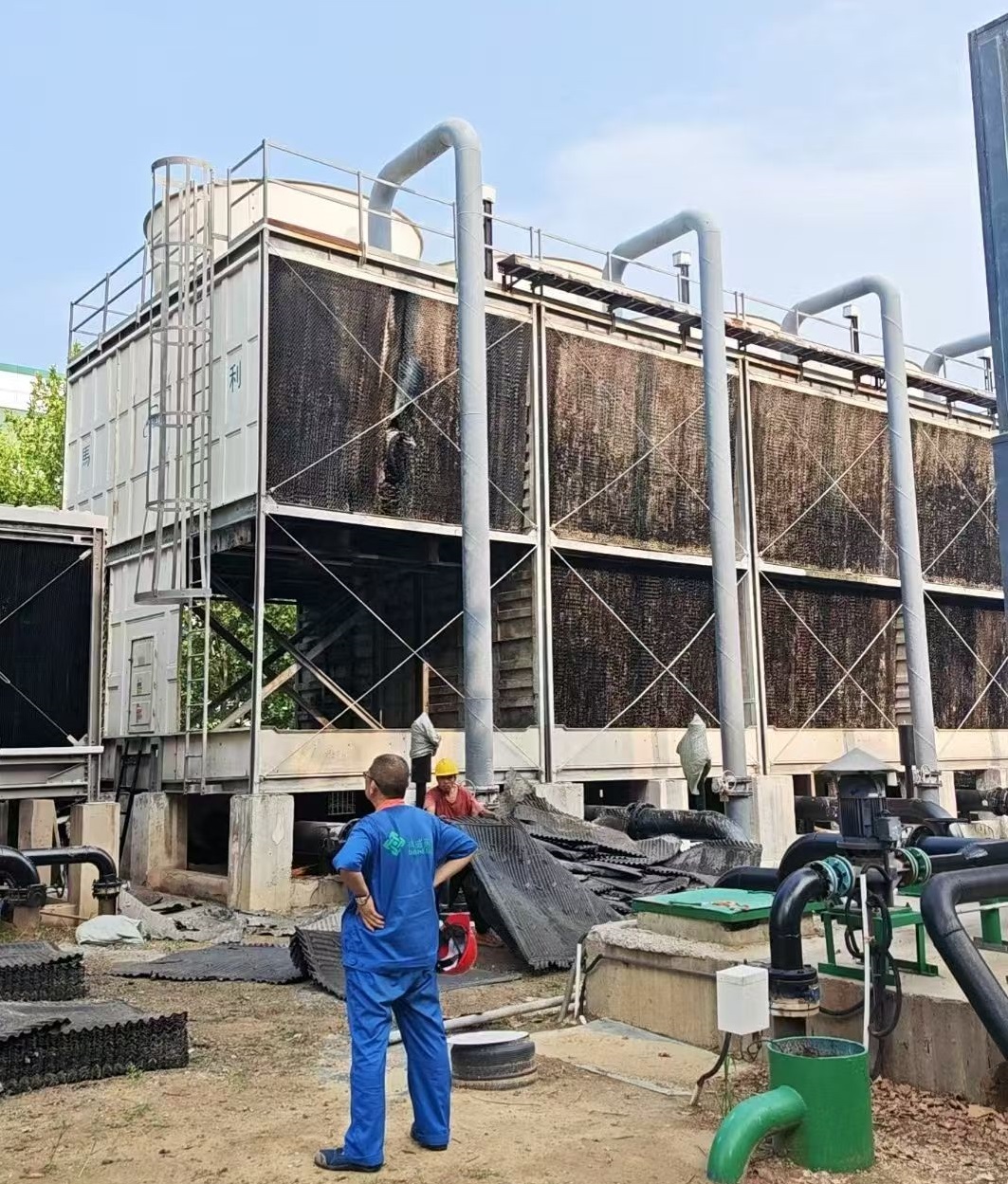
Marley cooling tower fill replacement is an important maintenance project for industrial facilities that need to maintain heat-transfer efficiency, reliable cooling performance, and stable operating costs. Over time, cooling tower fill can become clogged with mineral scale, algae, suspended solids, and other contaminants. Fill sheets may also crack, deform, or collapse because of aging, chemical exposure, or unsuitable operating conditions.
Choosing the right replacement fill requires more than matching the original dimensions. Buyers must consider fill materials, sheet thickness, pack configuration, operating temperature, water quality, and installation requirements.
This guide explains how to select Marley-compatible cooling tower fill replacement, determine the correct sizes, and install replacement fill for industrial cooling towers.
What Is Marley Cooling Tower Fill?
Cooling tower fill, also known as cooling tower packing or fill media, increases the contact area between circulating water and air. This improves heat transfer and allows the cooling tower to reduce water temperature before returning it to the industrial process.
Marley cooling towers use different fill configurations depending on the tower model, application, and operating conditions. Common configurations include film fill and splash fill.
Film fill: Spreads water into thin films over closely spaced surfaces, providing a large heat-transfer area.
Splash fill: Breaks falling water into droplets as it contacts the fill structure, making it suitable for applications where suspended solids or fouling are important considerations.
Specialized fill configurations: Designed for particular airflow, water quality, and thermal performance requirements.
When existing fill is damaged or no longer performs effectively, replacing it with correctly specified fill can help restore cooling capacity and maintain reliable operation.
When Should Marley Cooling Tower Fill Be Replaced?
Before purchasing replacement fill, inspect the existing system to determine whether cleaning or replacement is necessary.
Common warning signs include:
Reduced cooling performance: Cold water temperatures rise under comparable operating conditions.
Severe fouling: Mineral deposits and biological growth restrict water distribution and airflow.
Physical damage: Fill sheets become brittle, cracked, warped, or collapsed.
Increased pressure drop: Blocked passages restrict airflow through the fill.
Frequent maintenance: Repeated cleaning and repairs fail to restore acceptable performance.
Uneven water distribution: Damaged fill or blocked nozzles create dry areas and localized fouling.
Check the fan, water distribution system, water flow, and operating conditions before attributing poor performance entirely to the fill. If the fill is structurally sound, cleaning may be sufficient. Extensive damage or persistent blockage may justify complete replacement.
Materials for Marley Cooling Tower Fill Replacement
Material selection affects service life, chemical resistance, temperature tolerance, and replacement cost.
PVC Cooling Tower Fill
Polyvinyl chloride (PVC) is widely used for cooling tower film fill because it offers a practical balance of cost, formability, and corrosion resistance in suitable applications.
PVC fill is commonly selected for industrial and commercial cooling towers operating within the material's specified temperature and chemical limits.
Advantages include:
Cost-effective material for many replacement projects.
Lightweight sheets that simplify handling.
Good resistance to many common cooling water conditions.
Available in various film-fill configurations.
Buyers should verify the PVC grade, operating temperature limits, and chemical compatibility before ordering.
PP Cooling Tower Fill
Polypropylene (PP) is another option for cooling tower fill replacement. Depending on the grade, PP may provide better temperature tolerance than standard PVC and can be suitable for certain demanding water-treatment environments.
PP fill is worth considering when operating conditions exceed the practical limits of the existing material. Actual suitability depends on water chemistry, mechanical design, and the manufacturer's specifications.
Selecting the Right Material
| Selection factor | What to check |
| Operating temperature | Confirm the continuous and peak temperature limits. |
| Water chemistry | Evaluate chemical treatment, pH, and potential material degradation. |
| Fouling potential | Consider suspended solids, scale, and biological growth. |
| Mechanical strength | Check rigidity, support spacing, and resistance to deformation. |
| Total cost | Compare purchase price, installation, maintenance, and expected service life. |
Do not select replacement material based on price alone. A lower-cost material may perform poorly if it is incompatible with the actual operating environment.
How to Determine the Correct Marley Cooling Tower Fill Sizes
Correct sizing is essential for maintaining airflow, water distribution, and thermal performance. Replacement fill that is too large, too small, or incorrectly configured may not fit the existing tower or perform as intended.
Measure Existing Fill Dimensions
Record the following information before requesting a quotation:
Fill block length, width, and height.
Individual sheet dimensions and thickness, if available.
Number of fill packs or modules required.
Fill arrangement and orientation.
Support spacing and available installation clearance.
Measure representative sections and check whether the existing fill has deformed over time. Original drawings or equipment documentation may provide more reliable reference dimensions.
Confirm Fill Type and Geometry
Sheet spacing, flute geometry, surface pattern, and bonding configuration can affect heat transfer and pressure drop.
A replacement should match the required configuration, not merely the overall block dimensions. Ask the supplier to review drawings or photographs when the original specifications are unavailable.
Calculate the Required Quantity
The required quantity depends on the tower's fill volume, pack dimensions, and internal layout.
For a simple rectangular section:
Fill volume = Length × Width × Height
This calculation provides a preliminary estimate of the occupied volume. The actual order quantity must account for the tower's geometry, support structure, required clearances, and module arrangement.
For large industrial towers, confirm quantities using the original drawings or a site measurement survey.
Marley Cooling Tower Fill Replacement Installation
Correct installation is critical to achieving the intended cooling performance.
Step 1: Shut Down and Prepare the Tower
Follow the facility's lockout/tagout procedures and applicable confined-space requirements. Isolate relevant equipment, control water flow, and establish safe access before removing internal components.
Step 2: Remove the Old Fill
Remove damaged or fouled fill carefully. Inspect the fill supports, structural members, distribution piping, nozzles, and drift eliminators for damage or deposits.
Repair any underlying problems before installing new fill.
Step 3: Clean and Inspect the Installation Area
Remove debris, sludge, and loose deposits. Confirm that support surfaces are stable and that the available space matches the replacement design.
Do not install new fill over damaged supports or unresolved distribution problems.
Step 4: Install the Replacement Fill
Arrange the fill packs according to the approved drawings and supplier instructions. Maintain the specified orientation, spacing, support, and alignment.
Avoid forcing oversized packs into position or leaving unintended gaps that could allow air or water to bypass the fill.
Step 5: Inspect Water Distribution
Check nozzles, headers, and distribution piping for blockage and damage. Confirm that the system can wet the fill evenly and that the fill does not obstruct the intended water flow.
Step 6: Test the Cooling Tower
After installation, restart the tower according to site procedures. Inspect for abnormal vibration, leaks, uneven water distribution, and unexpected airflow resistance.
Record operating temperatures, water flow, and other available performance indicators. Compare results under similar operating conditions to evaluate performance.
How Much Does Marley Cooling Tower Fill Replacement Cost?
The cost depends on the fill material, dimensions, quantity, manufacturing requirements, shipping distance, and installation complexity.
Major cost components include:
Replacement fill materials and fabrication.
Removal and disposal of old fill.
Installation labor and equipment access.
Repairs to supports, nozzles, and distribution components.
Freight, packaging, and delivery lead time.
Production downtime and any temporary cooling requirements.
For budget planning, request quotations based on the same technical specifications. Compare delivered cost, quality documentation, compatibility, warranty terms, and installation support rather than comparing unit prices alone.
OEM and Aftermarket Marley-Compatible Fill
Industrial buyers may consider replacement fill supplied through the original equipment manufacturer or an aftermarket manufacturer.
Aftermarket Marley-compatible cooling tower fill can be a cost-effective option when the supplier can demonstrate appropriate dimensional and performance compatibility.
Before ordering, confirm:
Fill dimensions and pack configuration.
Material grade and temperature limits.
Thermal performance and pressure-drop requirements.
Compatibility with the existing tower structure.
Quality control, delivery time, and warranty conditions.
The term “Marley-compatible” should not be treated as proof of an exact fit. Obtain technical confirmation for the specific tower model and application.
CoolingTowerPart.com is one sourcing option for buyers evaluating cooling tower fill and related replacement components. Provide the required dimensions, operating conditions, and project quantity to support a more accurate technical review and quotation.
Maintenance Tips After Fill Replacement
Proper maintenance can help extend the service life of new cooling tower fill.
Maintain a suitable water-treatment program to control scale, corrosion, and biological growth.
Inspect fill regularly for deposits, cracks, deformation, and blocked passages.
Clean strainers, nozzles, and distribution headers as required.
Remove leaves, debris, and sludge before they accumulate.
Monitor cooling performance and pressure drop where measurable.
Check fill supports and internal components during scheduled shutdowns.
Inspection frequency should reflect water quality, operating conditions, and the manufacturer's recommendations.
Frequently Asked Questions
Can aftermarket fill replace Marley cooling tower fill?
Yes, if the replacement is engineered for the specific tower and meets the required dimensional, material, thermal, and hydraulic specifications. Confirm compatibility before purchase.
Is PVC or PP better for cooling tower fill replacement?
Neither material is universally better. PVC is common for many applications, while PP may be appropriate for certain higher-temperature or chemically demanding conditions. Selection depends on the actual operating environment.
How long does cooling tower fill replacement take?
The duration depends on tower size, access, fill quantity, removal requirements, and repair work. A site inspection and installation plan are needed to estimate the shutdown period.
What information is needed for a replacement quotation?
Provide the cooling tower model, existing fill dimensions, fill type, material requirements, operating temperature, water conditions, quantity, delivery location, and photographs or drawings when available.
Conclusion
Marley cooling tower fill replacement requires careful attention to material selection, dimensions, compatibility, and installation quality. PVC and PP offer different benefits, while the correct fill geometry and pack configuration help maintain heat transfer and airflow.
By inspecting existing fill, confirming technical requirements, comparing qualified suppliers, and following a structured installation process, industrial facilities can reduce unnecessary downtime and improve cooling tower reliability.
For replacement projects, prioritize verified compatibility and long-term operating performance over the lowest initial purchase price.
Recommended internal links for CoolingTowerPart.com: